
Athlete
What is an athlete?
An athlete is someone who has a natural or acquired ability for physical or sports exercise, particularly to be performed in a competitive nature. An athlete is usually physically strong, agile and has endurance to compete and participate in organized and officiated sporting events.
An athlete is a person who practices athletics and trains to improve their performance in disciplines such as degrees, jumps, throws or combined events. In broader use, it is also common to speak of athlete to refer to high-performance sportspeople.
The definition of athlete from the Real Academia Española refers mainly to someone who practices athletics and also retains the historical meaning of people who participated in public competitions in ancient Greece and Rome.
Nowadays, behind a professional athlete there is much more than competition: training, rest, nutrition, technical preparation, recovery, travel and a career that can be intense but relatively short.
What is a sports athlete?
A sports athlete trains systematically to improve abilities such as speed, strength, endurance, coordination or technique.
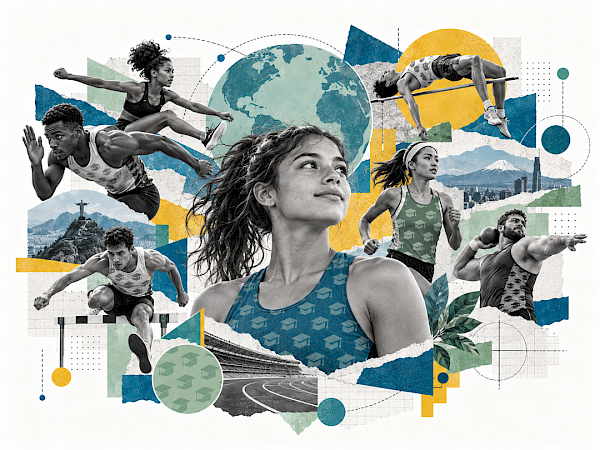
Within athletics there are very different profiles:
- sprinters;
- middle-distance runners;
- marathon runners;
- hurdlers;
- jumpers;
- throwers;
- race walkers;
- combined events specialists.
A sprinter who runs 100 meters and a marathon runner are athletes, but their training, nutrition, physique and strategy can be completely different.
At the professional level, athletes dedicate much of their time to training, studying their performance, working with coaches and trainers and participating in competitions. There is normally no mandatory university degree to become a professional athlete: access depends mainly on performance, experience and sporting results.
What does it mean to be a professional athlete?
A professional athlete is someone who turns sports competition into a work activity and earns income related to their performance.
This does not mean that all professional athletes live exclusively from competing.
There is a huge difference between a famous athlete with international sponsors and a sportsperson who needs to combine training with other activities to financially support their career.
Reaching the professional level usually demands years of preparation, and staying there depends on results, health, opportunities, and the existing competition.
How do athletes earn money?
This is a part of the career that often remains hidden.
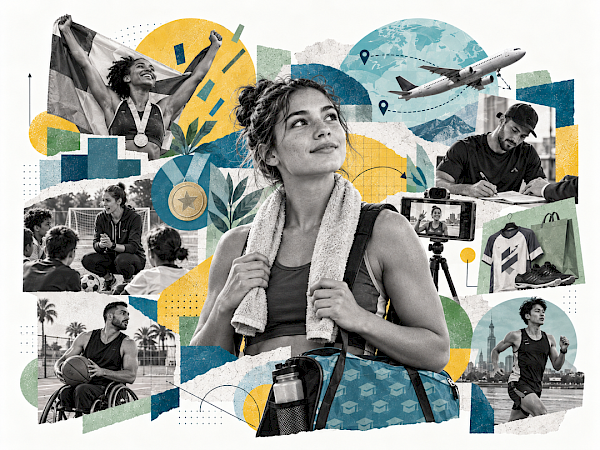
Athletes can earn money in different ways:
- prizes for winning or qualifying in competitions;
- contracts with clubs or teams;
- brand sponsorships;
- bonuses for performance or records;
- payments for taking part in certain competitions;
- scholarships and grants from federations;
- national sports programs;
- advertising and commercial collaborations;
- social media and content creation;
- sports clinics, events, or training other people.
The importance of each source depends greatly on the sport and the level achieved.
Famous athletes and popular athletes
Famous athletes represent the most visible part of this world.
Some well-known examples in athletics are:
- Usain Bolt, a global icon of speed.
- Allyson Felix, one of the most outstanding athletes in sprint events.
- Eliud Kipchoge, recognized worldwide for his marathon achievements.
These popular athletes can generate significant income through competitions and sponsors, but their reality does not represent that of the majority. For every world-famous athlete there are many others who compete professionally with much more modest incomes.
The Enhanced Games: large cash prizes and strong controversy
In 2026, the first edition of the Enhanced Games was held in Las Vegas, a private competition that has sometimes been informally presented as a kind of “private Olympics”.
It is not part of the Olympic movement. One of the aspects that has attracted the most attention is precisely the compensation offered to athletes. In its first edition, each individual event had a total prize purse of US$500,000, with US$250,000 for the winner, in addition to appearance payments and additional bonuses for certain records.
The health problems of a professional athlete
Practicing sports in a healthy way and continually pushing the body toward its competitive limits are not exactly the same thing.
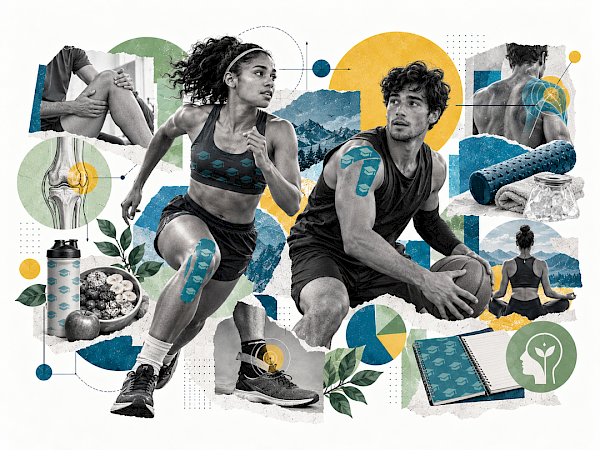
The professional athletes can suffer injuries related both to accidents and to the constant repetition of certain movements. The US labor market itself considers athletes and sports competitors an occupation with significant exposure to injuries.
Problems vary by discipline.
Runners
Sprinters and runners may suffer from:
- muscle injuries;
- tendon problems;
- knee injuries;
- ankle pain;
- stress fractures;
- overuse injuries.
Repeated impact and a high training volume need to be balanced with recovery.
Jumpers
Jumpers subject their ankles, knees, hips, and back to significant forces during takeoff and landing.
Incorrect technique or an excessive accumulation of training can increase the chance of injury.
Throwers
In disciplines such as javelin, discus, or shot put, problems may appear in:
- shoulders;
- elbows;
- back;
- knees.
Explosive and repetitive movements require very precise technique.
Contact sports
If we use the term athlete in a broad sense to include other professional sportspeople, sports such as American football, rugby, boxing, or certain martial arts also involve the risk of blows and concussions.
When training more stops being better
One possible mistake in high-performance sport is thinking that the more you train, the better the results will necessarily be.
The body also needs recovery.
A poor balance between training load, rest, and nutrition can contribute to:
- decreased performance;
- persistent fatigue;
- injuries;
- sleep disturbances;
- mood changes;
- difficulty recovering.
Professional preparation needs to plan for both effort and rest.
Nutrition and lack of energy
Athletes need sufficient energy to sustain training and the body's normal functions.
When for a prolonged period there is a significant difference between the energy consumed and what the body needs, Relative Energy Deficiency in Sport (REDs) can occur.
It can affect men and women and have consequences for bone, hormonal, metabolic, immune and psychological health, in addition to athletic performance.
Therefore, professional nutrition is not simply about “eating healthy” or maintaining a certain weight.
The athlete's mental health
There is also a psychological dimension.
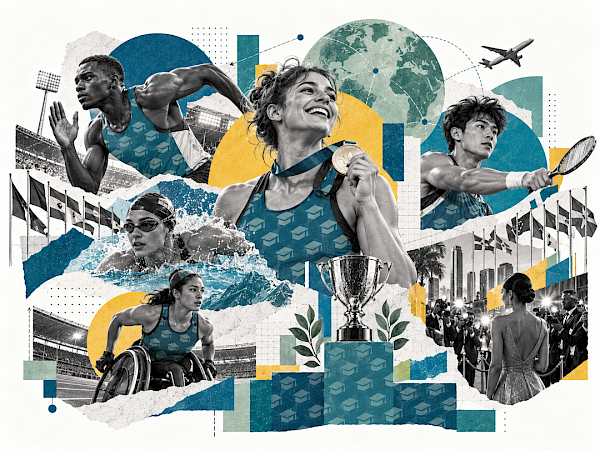
Competing professionally can involve:
- pressure to achieve results;
- public exposure;
- injuries;
- fear of losing one's level;
- economic uncertainty;
- constant travel;
- difficulty balancing sport and personal life;
- transition toward retirement.
The consensus on mental health in elite athletes published by the International Olympic Committee in 2026 notes that symptoms and mental health disorders are common among elite athletes and recommends paying attention to them as part of their general care.
An athlete can be in excellent physical condition and, at the same time, need psychological support.
How long does a professional athlete's career last?
There is no universal age.
It depends on the discipline, injuries, performance and the characteristics of each person.
Some specialties allow competing for many years. Others have relatively short peak performance periods.
This means that many athletes also need to think about what they will do after professional competition.
Some remain involved in sport as:
- coaches;
- trainers;
- commentators;
- managers;
- representatives;
- teachers;
- entrepreneurs;
- content creators;
- sports management specialists.
Others develop a completely different second career.
Planning that future can be as important as planning the next competition.
What skills does an athlete need?
Not everything depends on physical fitness.
A professional athlete usually needs:
- Discipline: training even when there is no immediate competition.
- Perseverance: improving can take years.
- Focus: small mistakes can change a result.
- Pressure tolerance: competing means exposing yourself to the outcome.
- Ability to learn: technique and strategy can always improve.
- Teamwork: although competing individually, they normally work with coaches, physiotherapists, doctors and other specialists.
- Resilience: a bad competition or an injury does not necessarily mean the end of a career.
Athlete, sportsperson and atletista: do they mean the same thing?
The word athlete is correctly used for people who practise athletics.
In everyday language it can also be found with a broader meaning to refer to people with outstanding sports performance. When we talk about any discipline, sportsperson is usually the most general term.
The word atletistas also appears in some searches and informal uses, although in this article we use athletes for those who practise athletics.
That is why, if someone asks about the meaning of athlete, it is worth looking at the context: they may be talking specifically about athletics or using the term more broadly to refer to a sportsperson.
Is it worth trying to become a professional athlete?
For some people, competing can become an extraordinarily fulfilling way of life.
But it is worth knowing the full career. Not just the medals. There are also repetitive training sessions, injuries, recovery, pressure, financial uncertainty, travel and the need to maintain performance against other athletes pursuing exactly the same goal.
If you are interested in this path, look at both the famous athlete who appears on television and the athletes who train and compete for years away from large audiences.
Because understanding what a professional athlete is means knowing both sides:
the excitement of competing and the reality of trying to make a living from sport.