Forensic Science
Studying Criminalistics involves learning to examine evidence, apply scientific methods and prepare reports that help clarify investigated facts.
It is a degree that combines science, legal knowledge and technical training, with an important responsibility: explaining what the findings allow to conclude and what their limits are.
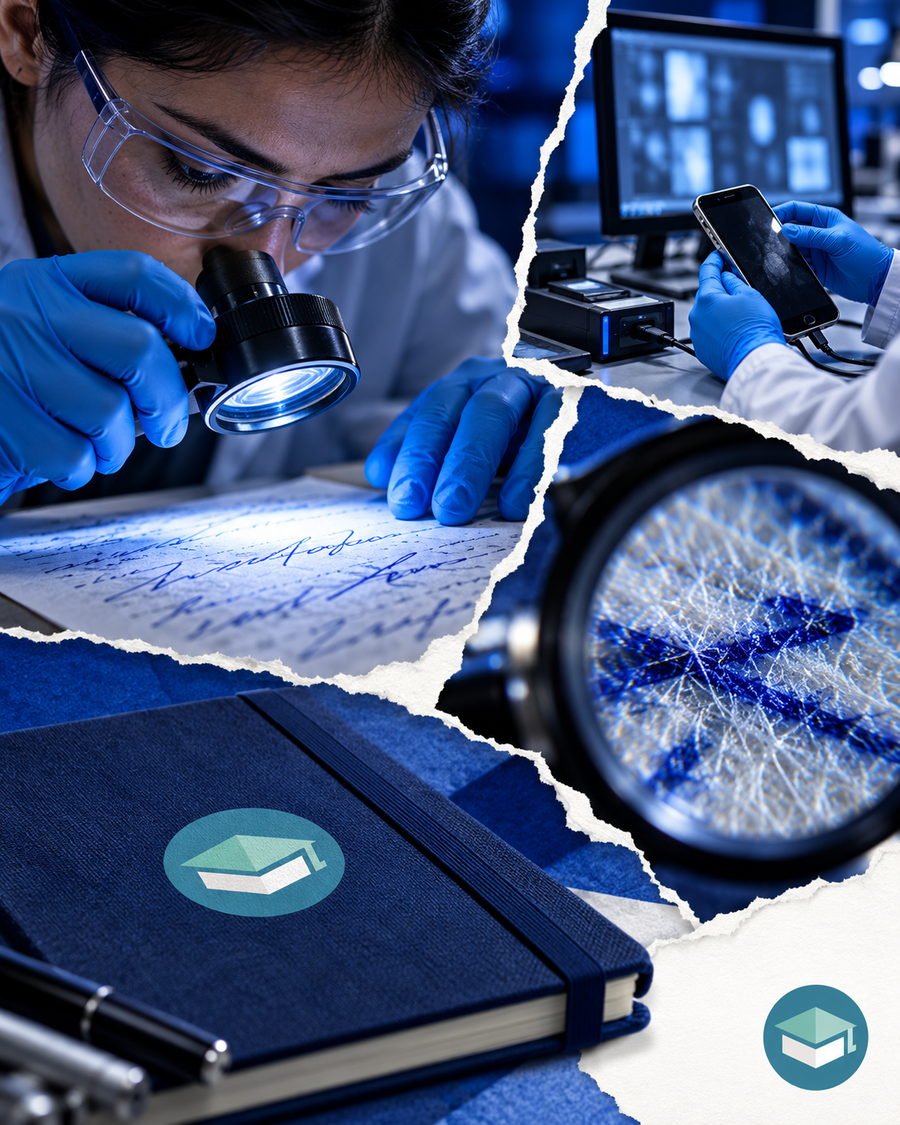
Criminalistics: what is studied, what a criminalist does and where they can work
If you are interested in investigating, understanding how events occurred and working with precision, it may be an option to explore. To decide, it is advisable to learn about its subjects, professional tasks and the requirements to practice in your country.
What is Criminalistics?
Criminalistics deals with the technical and scientific study of evidence related to an investigated fact. It can be involved in its location, documentation, collection, preservation and analysis, depending on the role and specialty of each professional.
Its work helps to test hypotheses and provide relevant information for an investigation. An expert conclusion can also rule out an initially suspected connection or show that the available elements are not sufficient to answer a question.
It is part of the field of forensic sciences, which brings together different disciplines applied to matters of judicial interest. It is not equivalent to mastering all of them: genetics, toxicology, medicine and digital forensics require specialized knowledge.
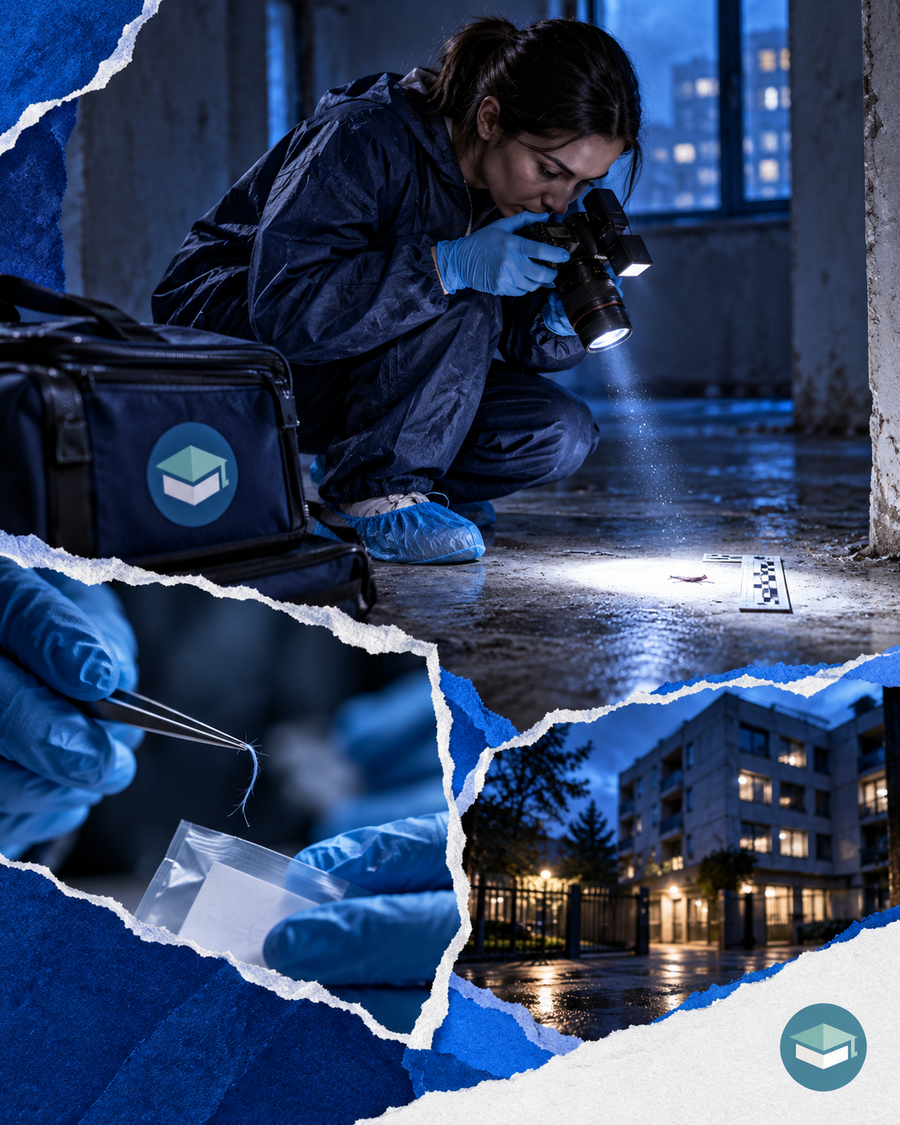
What is the difference between Criminalistics and Criminology?
Although their names are similar and they may share some subjects, they have different approaches:
- Criminalistics: studies evidence and uses technical and scientific procedures to provide information about specific facts.
- Criminology: studies crime, victimization, factors related to delinquency and social and institutional responses, including prevention.
For example, when looking into an investigated incident, a forensic analysis can examine a document or a fingerprint. A criminological investigation can study victimization patterns or evaluate a prevention measure. They are complementary approaches, but their degree programs and roles are not interchangeable.

What does a Criminalistics professional do?
Tasks depend on their training, the position, and the competencies recognized in each jurisdiction. Activities they may carry out include:
- Document the crime scene: record locations, conditions, and relevant elements through photographs, measurements, and other procedures.
- Preserve and examine evidence: apply protocols to reduce risks of contamination, alteration, or loss.
- Perform specialized analyses: study documents, traces, or other elements within their area of expertise.
- Prepare expert reports: describe the procedures used, the results, and the limitations of the study.
- Explain their conclusions: communicate technical information in an understandable way and answer questions about their work when appropriate.
An essential part is the chain of custody: the record that makes it possible to track the collection, transfer, preservation, and handling of the items examined. Taking care of it accompanies the entire process, not just the laboratory work.
What subjects are studied in Criminalistics?
Programs vary across institutions, but they may combine three main areas:
- Basic sciences: Mathematics, Physics, Chemistry, and Statistics, needed to understand measurements, materials, and results.
- Legal and methodological training: Law, Ethics, and Research Methodology.
- Specialized training: Document Examination, Ballistics, Human Identification, Applied Photography, and Accident Investigation, depending on the curriculum.
As a reference, the Bachelor's Degree in Criminalistics at the Universidad Nacional del Nordeste, in Argentina, organizes its training into basic, social, and criminalistics sciences and includes an interdisciplinary professional practice seminar.
To compare contents, you can also check the study plan published by the IUPFA, which includes subjects such as Documentology, Forensic Ballistics, Physics, Chemistry and General and Forensic Psychology.
How long does the degree last?
There is no single duration for all countries and qualifications. In Argentina for example the UNNE bachelor's degree, for example, has an expected duration of four years and is taught in person. That information corresponds to that specific program and should not be automatically applied to other institutions.
You will also find technical degrees, courses and complementary cycles. Before comparing their duration, check the level of the qualification, its access requirements and its professional scope. A complementary cycle may require prior qualifications; a short course is not equivalent to a bachelor's degree.
Where to study Criminalistics or a related degree?
In addition to the Argentine programs mentioned, there are qualifications with other names and approaches. In Mexico, the Universidad Nacional Autónoma de México offers the Bachelor's Degree in Forensic Science, related training that integrates different disciplines.
Access to it is indirect: it requires first enrolling in an accepted bachelor's degree admitted by the university and then taking part in the corresponding selection process. For example for Argentina check the requirements published by the Escuela Nacional de Ciencias Forenses before planning your enrollment.
These examples are useful for comparing programs, they do not constitute a ranking nor do they imply equivalence between qualifications. When choosing an institution, check:
- The official recognition of the qualification and its scope in the country where you want to work.
- The facilities, laboratories and supervised internships available.
- The admission and graduation requirements.
- The experience of the teaching team and the contents of the program.
- The total costs, schedules and course conditions.
Can you study Criminalistics online?
If you find an online or hybrid program, check how it develops practical skills. Ask which activities require in-person attendance, where internships take place, what equipment is used, and how performance is evaluated.
Schedule flexibility is an important factor, but you also need to know what specific preparation the program offers for the tasks that interest you.
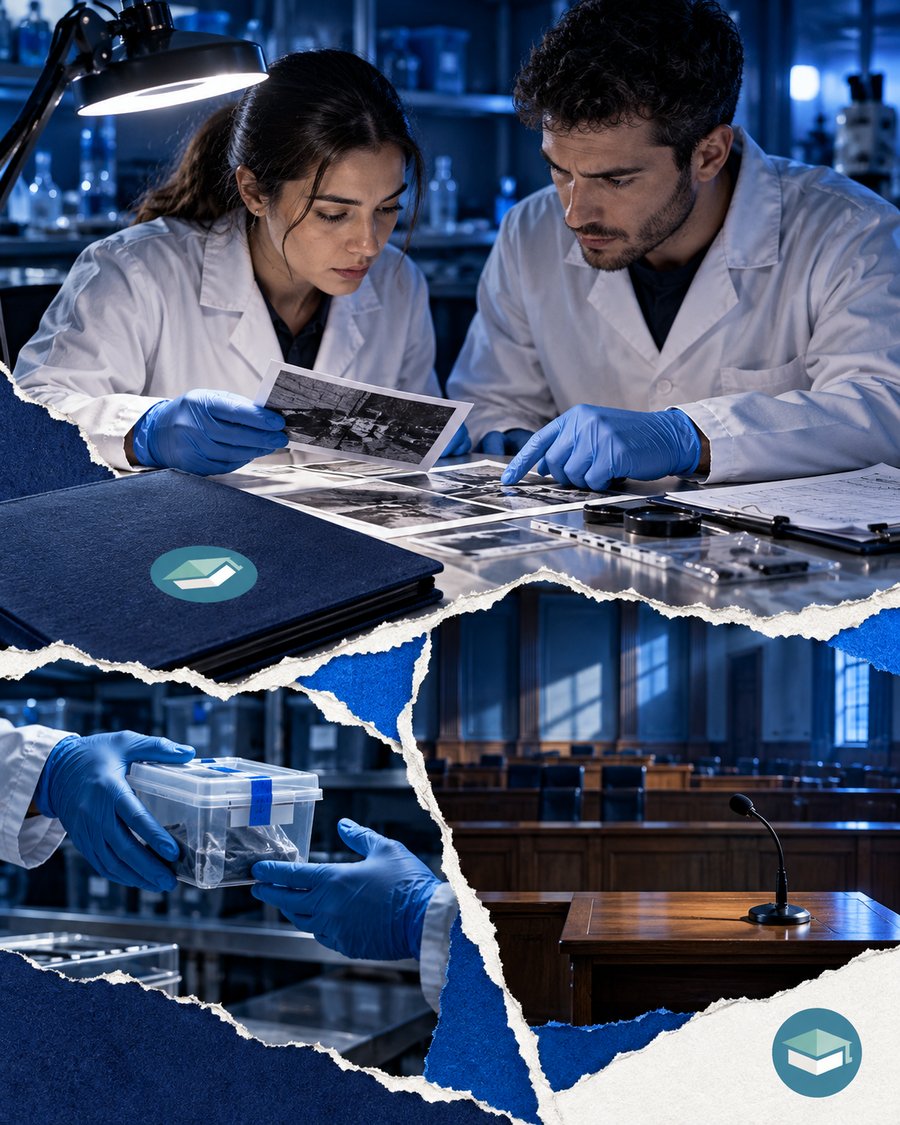
What job opportunities does Criminalistics offer?
Depending on the qualification, the specialty, and the entry requirements, work may involve forensic services, laboratories, research agencies, technical consulting, teaching and academic research.
Private practice may include collaboration with legal teams and forensic analysis within the scope of professional competence. Not all specialties offer the same opportunities, nor do all qualifications allow you to perform the same tasks.
To assess your options, review real job openings in your region: what qualifications they accept, what experience they require, and what selection procedures they use. A university's description of the career field indicates possible areas of work; it is not equivalent to a job offer.
Does studying Criminalistics allow you to automatically join the police?
Do not assume so. Academic training and access to a position are separate processes. If your goal is to work in a law enforcement agency or a public agency, check their entry requirements, the accepted qualifications, and the conditions of each job opening.
What skills should you develop?
The observation and attention to detail are important, but so are the ability to reason, write clearly, and work with other people. You will need to study scientific foundations, follow procedures and justify your conclusions.
The ethics run through all work: respecting people's dignity, protecting sensitive information, and honestly communicating what an analysis can support. Cases may involve difficult situations, so it is also advisable to know the working conditions and the support available.
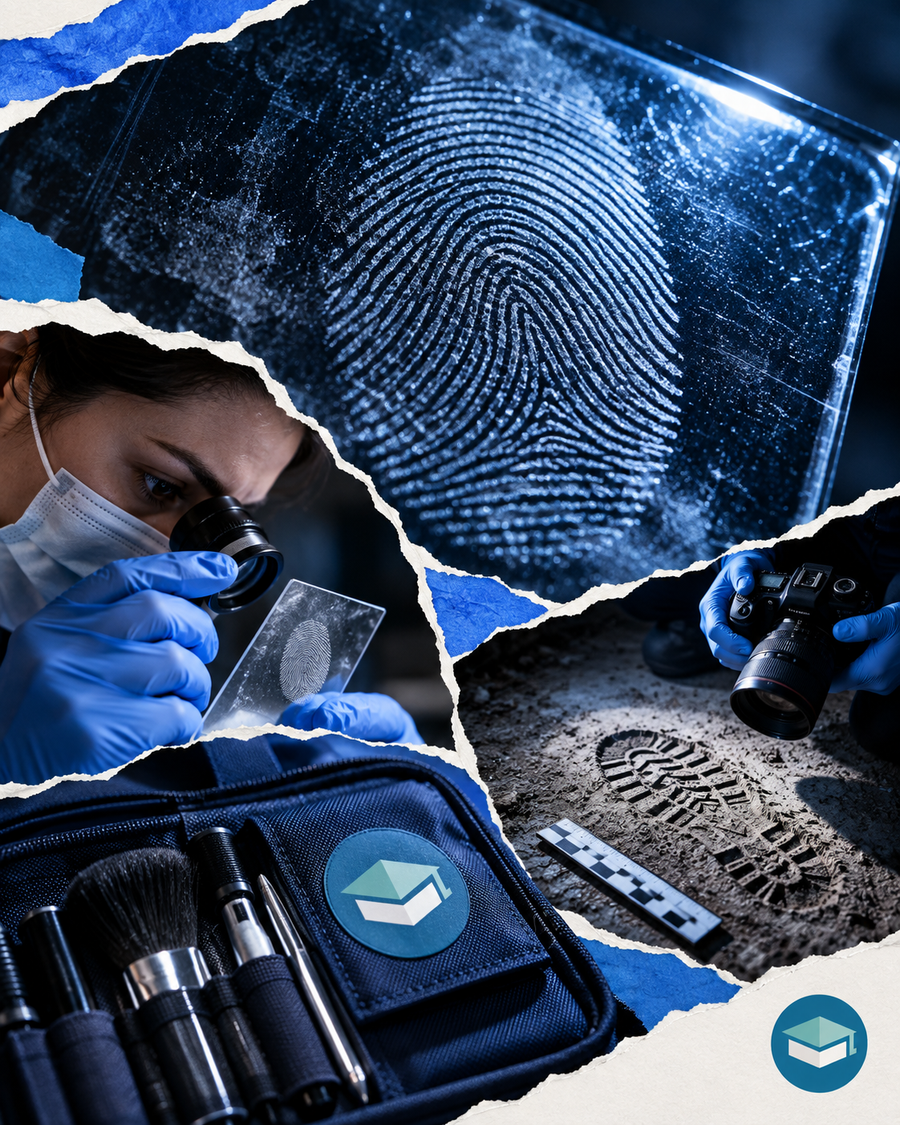
How do technology and professional development influence the field?
The digital tools, image processing, and measuring instruments are part of different forensic areas. However, using software is not enough to correctly interpret its results.
The Instituto Nacional de Estándares y Tecnología de Estados Unidos studies the foundations, capabilities and limitations of forensic methods. This perspective helps to understand a requirement of the career: evaluating scientific evidence and recognizing uncertainty, even when working with advanced technology.
How to know if Criminalistics is a degree for you?
Before deciding, ask yourself if you are interested in the daily work: studying science, recording procedures, reviewing results and preparing detailed reports. Curiosity about criminal cases may spark initial interest, but it is also worth learning about the less visible tasks of the career.
Review curricula, take part in informational activities and talk with students and professionals. If you are still exploring options, the career test from NoSeQueEstudiar can help you organize your interests and consider related degrees. Use that guidance together with specific academic and work information to build your decision.