
Clothing Designer
A costume designer is a fashion professional who is responsible for creating the look of actors and actresses in films, television and theatre productions. The costume designer does this through designing, sewing, researching and buying real clothes and used costumes and selecting or designing the accessories that help define each character.
What is a costume designer?
A costume designer must have in-depth knowledge of film, production, theatre, marketing and fashion design. The ability and desire to research and continuously learn about settings, cultures and periods of history that help show the director's vision are also needed.
The costume designer and their team must ensure that individual accessories and costumes reflect the story being told and portray the character's personalities, cultures, ages, status and relationships. Many costumes may be needed for each character to define the attitude and feeling that can change with each new scene, setting or development.
Costume designer: what they do and where they work
A costume designer creates garments and accessories to meet aesthetic, functional and production needs. Their work is not just about drawing clothes or following trends: they research users and context, define concepts, choose materials, develop prototypes and take part in the decisions that make it possible to manufacture a viable proposal.
They can also provide solutions for sports, work, health, entertainment or everyday life. The work changes depending on the project, so it is advisable to know its stages before choosing training.
What is costume design?
It is a project-based discipline applied to garments, accessories and clothing systems. It starts from a problem or commission: who it is designed for, in what situation the garment will be used, what it should communicate, what movements it should allow and how it can be produced.
Appearance matters, but it is not the only criterion. Fit, comfort, durability, maintenance, cost, and the relationship between the material and the body are also considered. In a commercial collection, brand positioning and the target audience are added; in work or sportswear, protection, ergonomics, and performance may carry more weight.
The degree in Diseño de Indumentaria lets you explore this combination of creativity, technique, and production.
Clothing design and costume design are not the same thing
Both fields work with garments and may share knowledge of textiles, patternmaking, history, and garment construction. However, they serve different purposes.
Clothing design usually develops products for specific users or markets. Costume design for film, television, theater, or dance builds the appearance of characters within a story. In this second case, the script, direction, time period, stage movement, lighting, and continuity between scenes guide the decisions.
Stage costume can be a specialization or one of the professional fields for someone who studied clothing design, scenography, or theater. The name and the course of study vary between countries and institutions.
What does a clothing designer do?
The process begins with defining the problem. The brief is analyzed, the context of use is researched, and requirements are established. From there, the following tasks may arise:
- Developing a concept and a visual direction.
- Creating sketches, fashion figures, flat drawings, and technical sheets.
- Selecting fabrics, trims, colors, and finishing processes.
- Working with patternmaking, volumes, and proportions on the body.
- Preparing or coordinating samples, prototypes, and fitting tests.
- Evaluating changes before moving into production.
- Communicating specifications to patternmakers, garment makers, suppliers, and product managers.
- Reviewing quality, costs, timelines, and manufacturing feasibility.
How these tasks are distributed depends on the size of the team. In a small business, the same person may design, find suppliers, and organize production. In a larger company, they may focus on one category, one stage, or one product line.
What does a clothing designer do?
Every costume design job begins with the designer carefully reading the script. It is important for the costume designer to have a good idea of the overall plot, the director's approach and intent, as well as the personalities, roles and relationships that various characters have throughout the production.
Once the costume designer has a good idea of the production's direction, they can research the clothing, designs and materials indicative of the particular location or time period. Next, the designer will create costumes that follow the characters through the progression of the production, changing their outfits when appropriate.
Do you need to know how to sew?
Understanding how a garment is constructed allows you to design more accurately, anticipate difficulties and communicate with the people who make it. For this reason, training programs usually include patternmaking, production techniques and prototype development. However, the design role does not necessarily require making every final piece.
It is worth distinguishing it from the work of the tailor or dressmaker, who usually focuses on making, altering or repairing garments, often custom-made. In practice, the boundaries can overlap: one person may combine design and garment-making, especially on independent projects.
How do you design a character's costume?
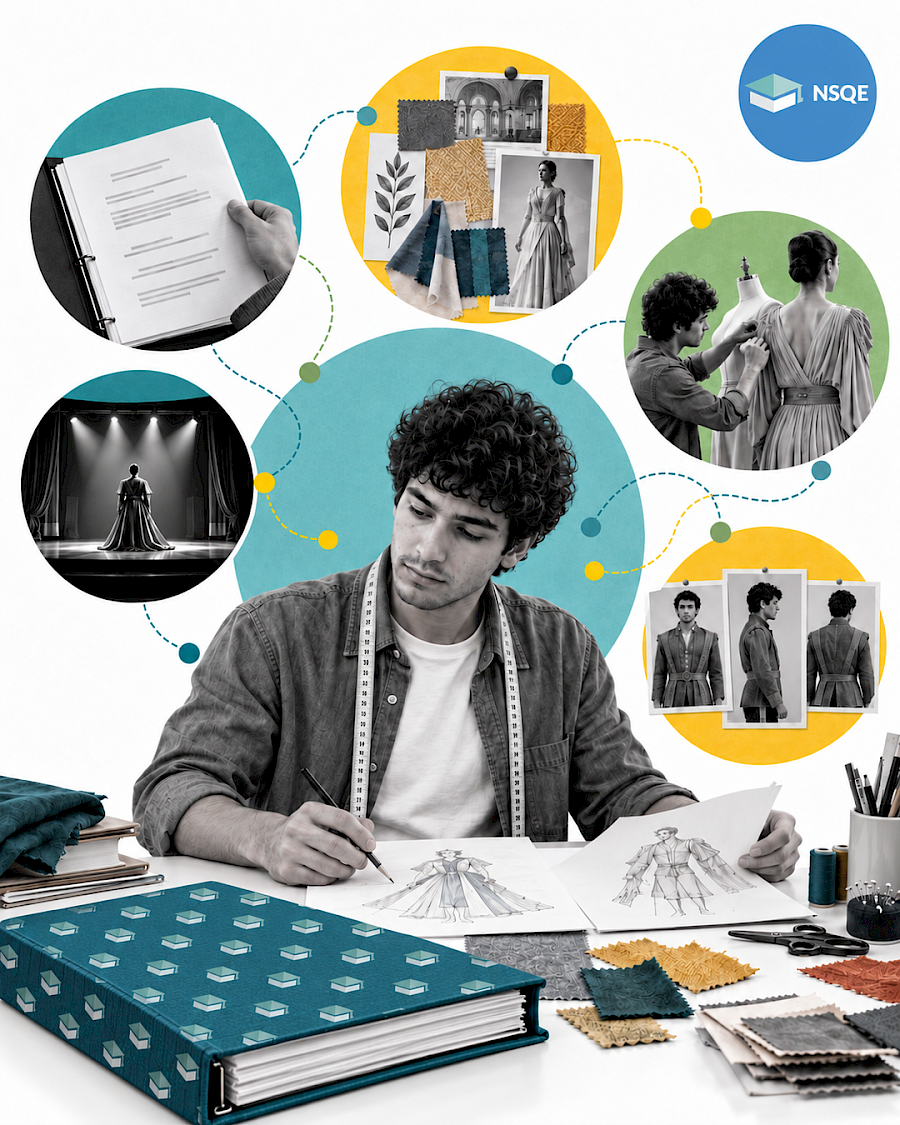
In a narrative production, the work starts with reading and analyzing the script. The period, the social setting and visual references are researched; then there are discussions with directing, art, cinematography, makeup and production to define a coherent proposal.
The costume should help convey the character without standing apart from the rest of the staging. It also needs to work during the performance, withstand repeated use, quick changes or duplicates, and maintain continuity between takes or performances. Depending on the project, garments may be designed and made from scratch, adapted, rented or bought.
What is a costume designer's workplace like?
Costume designers are employed in every major city with audiovisual productions. Designers work on film and television productions, stage productions, theatre and even festivals. The more experience a designer has, the greater their chance of being hired.
Most costume designers start with university or regional theaters and then television and film. Whether a novice or experienced designer, the hours are often long and demanding. From the moment the designer reads the script until the show begins, they are always on the move.
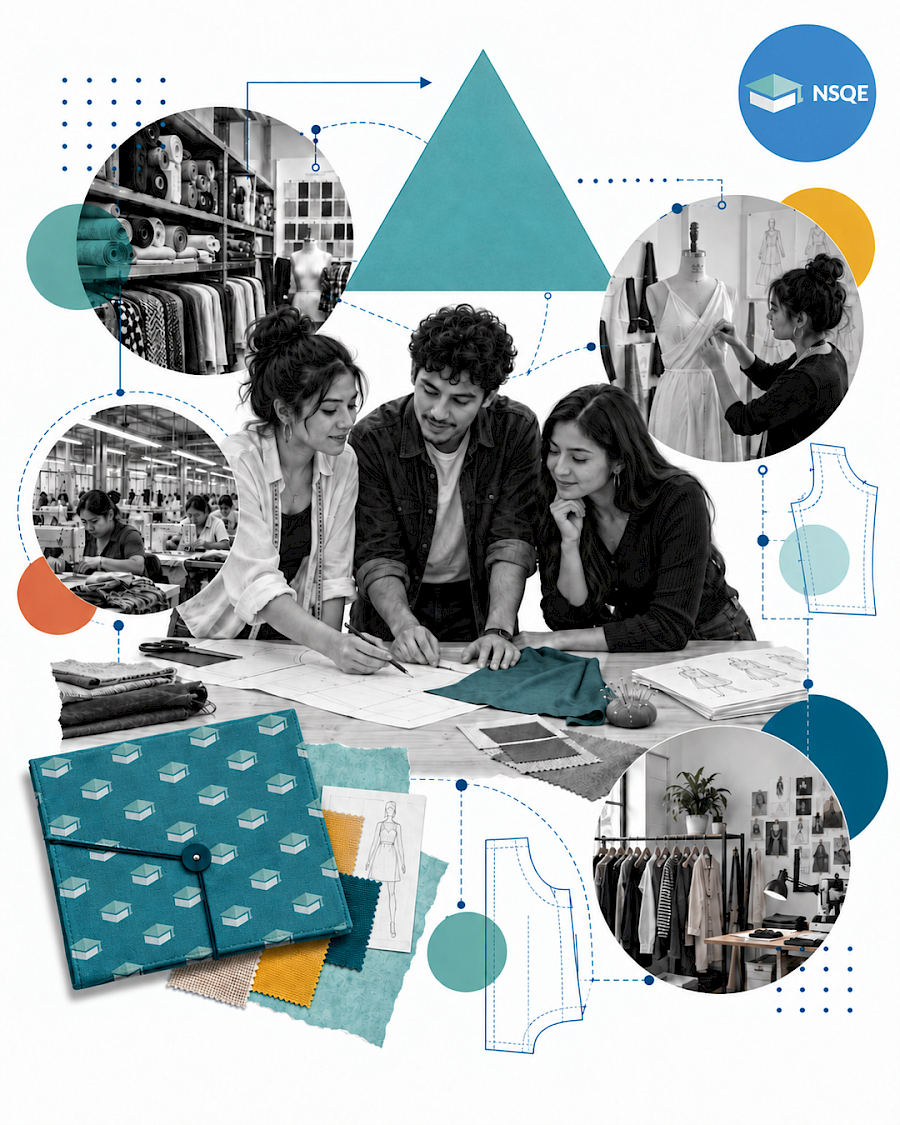
Where does a costume designer work?
They can join clothing brands, design studios, factories, workshops, sports or workwear product companies, and development teams. They can also create their own brand, provide services by project, collaborate with textile suppliers, or work in stage and audiovisual costume.
There is no single workplace. Part of the work is done with sketches, documentation, and digital tools; another part happens among samples, mannequins, materials, fitting tests, and production meetings. Launches, shoots, performances, and deliveries can concentrate tasks and require reorganizing schedules. The intensity depends on the project, and it should not be presented as an identical condition for the entire career.
What skills does this profile need?
Creativity is useful when accompanied by observation and the ability to review decisions. Also helpful are the perception of shape, color, and proportion; knowledge of materials; visual representation; pattern-making and construction; communication; and organization.
Digital tools make it possible to draw, document, prepare specifications, or develop three-dimensional representations, depending on the work environment. At the same time, it is advisable to learn to evaluate a proposal beyond its image: how it is used, how much material it requires, whether it can be produced, and what happens during its useful life.
Researching trends can be part of the process, but it does not replace cultural, technical, and production understanding. Designing also involves asking questions, testing alternatives, receiving feedback, and justifying choices.
What should you study to work in clothing?
Options include degrees in Clothing Design, Fashion Design, Textile Design and programs related to costume or set design. The names do not mean exactly the same thing. Before choosing, it is advisable to review the curriculum and check how much space it devotes to design workshops, pattern-making, textiles, production, history, technology, management, and professional practice.
Also consider verifying the degree awarded, the duration, the admission requirements, the format, the material costs, and access to workshops or equipment.
A portfolio is usually important to show the process, not just the result. It's a good idea to include research, decisions, tests, corrections, and technical documentation that show how each project was solved.
How to explore the career before choosing
A brief experience can start with an everyday garment that presents a specific problem. First define who will wear it and in what situation. Then create two alternatives, select a possible material, and build a simple prototype in paper, inexpensive fabric, or a reused garment.
When you finish, record which part generated the most interest: researching, drawing, solving the fit, working the material, documenting, or coordinating production. This experience can also be compared with analyzing the costumes in a scene to recognize whether product design or narrative character building attracts you more.
A career test can help organize interests and relate them to other areas, but it does not replace reviewing programs or direct experience with the tasks.
Don't know what to study? Start with our career test.