War Correspondent
Since ancient times, with accounts of combat captured in writings and chronicles, war journalism has been crucial for documenting conflicts.
The War Correspondent
Over the centuries, war correspondents have evolved, adapting to technologies and changing narratives of society, maintaining their fundamental role in global news.
Origins of war journalism
War journalism has its roots in the human need to document conflicts. Chroniclers in ancient times already described battles, but it was with the advance of the printing press and the circulation of newspapers that correspondents gained relevance, reporting from the front for a wider audience.
Transformation of the role in modern conflicts
Over time, war correspondents have adopted new technologies to report in real time. The arrival of the Internet and social media has changed the immediacy and reach of war news. Now, information circulates quickly, exposing journalists to greater risks and the need to verify sources rapidly.
What do you study to become a War Correspondent?
Becoming a war correspondent requires a unique combination of skills, knowledge, and experience. Although there is no specific educational path to become a war correspondent, there are areas of study and skills that can be beneficial for those who aspire to this career. Here are some areas that future war correspondents might consider:
Journalism: Getting a university degree in journalism, Communication Sciences or related fields provides a solid foundation in journalistic ethics, writing, research and news production. It is important to learn reporting techniques, news writing, and become familiar with how the media works.
Conflict and international politics studies: Understanding international politics, global conflicts, world history and regional dynamics is essential to contextualize and report on events in conflict areas. Courses in international relations, peace and conflict studies, as well as specific courses on troubled geographic areas, can be useful.
Languages: Mastering several languages, especially those common in conflict areas, is invaluable for communicating effectively with local sources, translating materials and understanding the cultural context of a region.
Safety skills: It is crucial to have training in personal safety, first aid and risk management in dangerous environments. Many journalists who work in conflict zones receive specialized training in security and are familiar with safety protocols.
Photography and video: The ability to capture high-quality images and videos is essential to complement written reports and convey the reality of a situation on the ground. Basic knowledge of photography and videography is beneficial, along with media editing skills.
Resilience and interpersonal skills: Working as a war correspondent can be stressful and emotionally challenging. Emotional resilience, the ability to work under pressure and interpersonal skills are essential to handle difficult situations and maintain objectivity and professional ethics.
In addition to formal education, it is often crucial to gain practical experience through internships, freelance work or collaborations with local or international media outlets. It is also important to closely follow global trends, keep up with technological developments in journalism and stay informed about safety and ethics issues in war journalism.
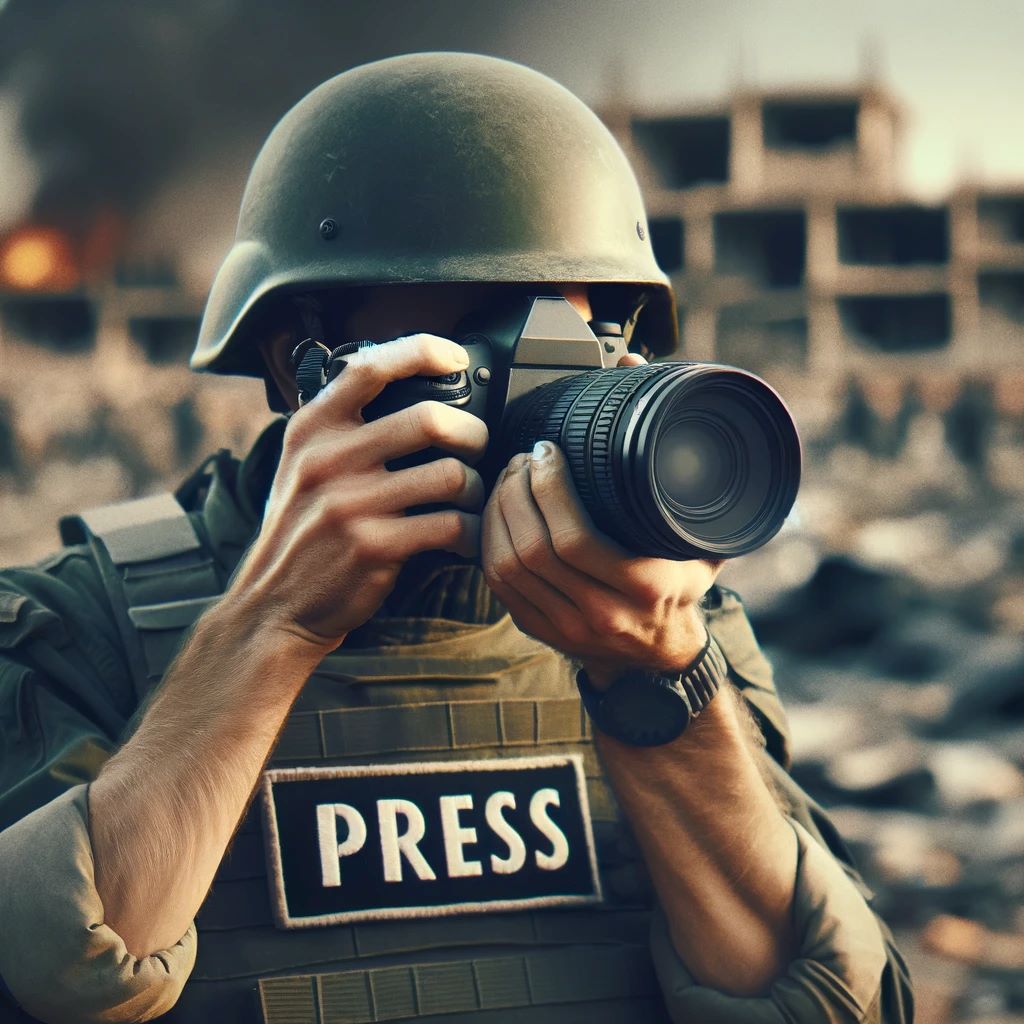
The Role of the War Correspondent
The war correspondent has the primary mission of reporting on armed conflicts, offering a close and truthful perspective. This figure of war journalism serves as a link between the reality of the front line and public perception, often at personal risk to shed light on the truth behind the turmoil of war.
Key functions of the correspondent
The war reporter is the figure who lays bare the harsh reality of the conflict. These journalists take on the task of reporting events in real time, analyzing political contexts, and humanizing the story of war through testimonies, always staying close to danger to accurately convey developments from the front.
Ethical and emotional challenges
The war correspondent faces difficult ethical dilemmas, such as protecting sources or deciding which images to publish. In addition, the emotional impact is inevitable, dealing with trauma and the constant pressure of coverage. These journalists must find a balance between objectivity and their humanity.
Tools and Technologies in War Coverage
The war correspondent must have advanced equipment to report effectively. This includes:
- Cameras and drones: to capture images in real time.
- Satellite communications: which allow broadcasts from remote areas.
- Bulletproof vests and helmets: essential for personal protection.
- Editing software: to process content quickly.
These tools are indispensable for effective and safe war journalism.
Essential equipment for war coverage
The war correspondent requires specific tools such as high-resolution cameras, drones for aerial shots, satellite communication systems for uninterrupted broadcasts and bulletproof vests for protection. Equally important are mobile devices and editing software that allow the rapid dissemination of news from the front.
Technological advances in conflict reporting
War correspondents now have advanced technology that transforms their work. Drones, 360-degree cameras and encryption applications are key tools. These devices allow for broader and safer coverage, providing the public with real-time, high-definition images from conflict zones.
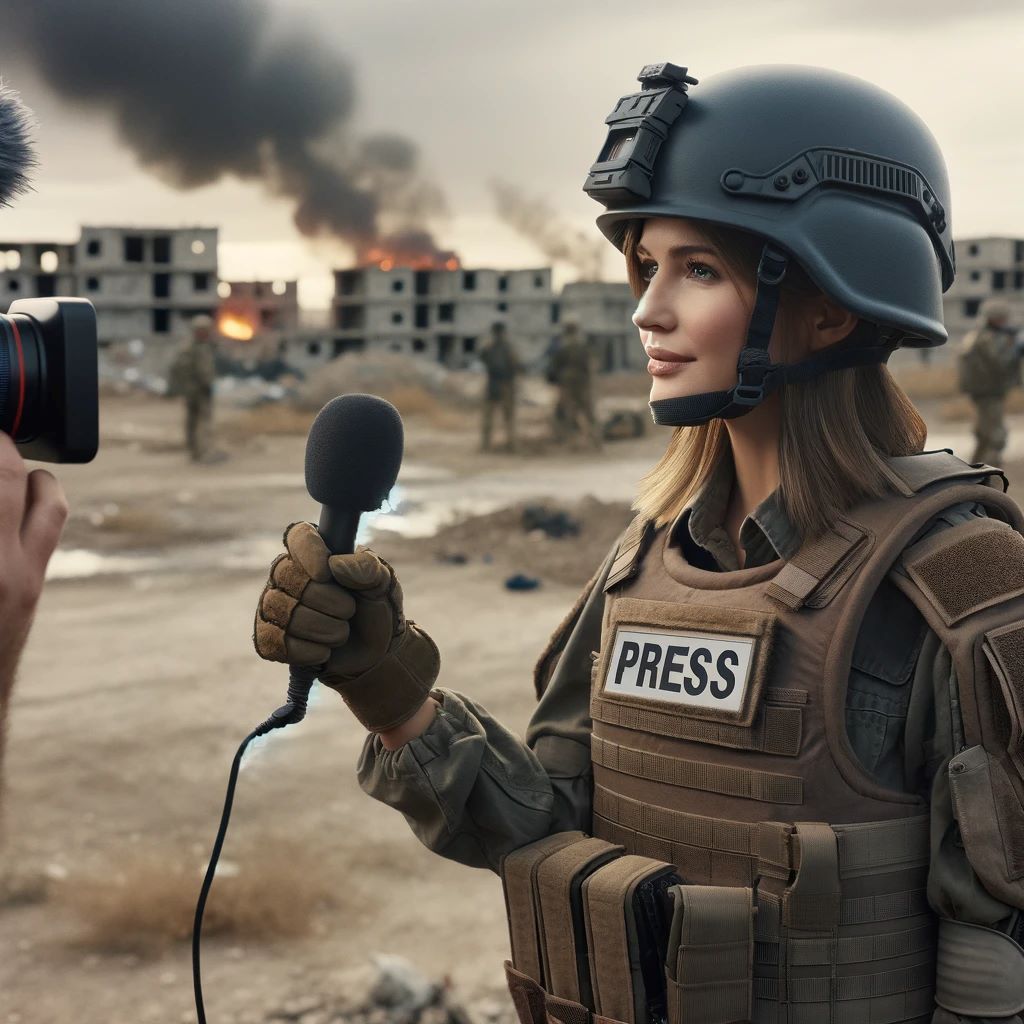
Famous War Correspondents
Among the prominent war correspondents is Marie Colvin, known for her reporting in conflicts like Chechnya, Syria and Sri Lanka. Another is Robert Capa, famous for his D-Day photographs in Normandy. Their coverage not only informed the world but also shaped war journalism, becoming examples of bravery and professional dedication.
Safety in the War Zone
The safety of war correspondents is vital. They use bulletproof vests, helmets and armored vehicles for protection. In addition, they receive training in first aid and handling high-risk situations. Psychological support is essential to cope with the emotional impact of reporting from conflict zones.
Protection measures for correspondents
War correspondents take strict precautions to safeguard their safety. They wear bulletproof vests and helmets, and travel in armored vehicles. They receive specialized training in first aid and tactics for hostile environments. The importance of having psychological support platforms is emphasized to mitigate the harsh emotional impact of war journalism.
Psychological impact of conflict on reporters
War journalism takes a high emotional toll on journalists. They are exposed to traumatic situations, which can lead to disorders such as post-traumatic stress. It is vital that correspondents have access to psychological support and tools to manage these repercussions, ensuring their mental well-being in carrying out their informative role.
Challenges and psychological challenges in war journalism
War correspondents face numerous psychological challenges and their mental health can be significantly affected by practicing their career. Some of these challenges include:
-
Post-traumatic stress: Constant exposure to violence, death and suffering can lead to the development of post-traumatic stress disorder (PTSD), characterized by flashbacks, nightmares, anxiety and depression.
-
Anxiety and depression: The constant fear of being injured, uncertainty about what will happen next, and isolation from family and friends can generate high levels of anxiety and depression.
-
Desensitization: Prolonged exposure to violence can lead to emotional desensitization, where the correspondent may begin to show indifference toward human suffering or death as a defense mechanism.
-
Burnout syndrome: Also known as professional burnout, it can occur due to chronic stress and the intensity of work in conflict zones, leading to fatigue, cynicism and a sense of ineffectiveness.
-
Difficulties in personal relationships: The nature of their work can make it difficult to maintain stable relationships, due to distance, lack of communication and the inability to share traumatic experiences with others who may not understand them.
-
Survivor guilt: Some correspondents may experience guilt for surviving or for being unable to help the people who are suffering in conflict zones.
-
Impact on physical health: Chronic stress can also have a negative impact on physical health, including cardiovascular problems, insomnia, and a weakened immune system.
To manage these challenges, it is crucial that war correspondents have access to professional psychological support, including therapy and counseling.
Media organizations also play an important role in providing their employees with the necessary resources to manage stress and trauma, as well as in establishing policies to limit exposure to extremely traumatic situations and ensure adequate rest periods.
Expected evolution of war correspondence
War correspondence anticipates greater adoption of advanced technology to report in real time. Journalists will face more complex ethical and security challenges, requiring adaptability and resilience. The evolution of war journalism will also demand a new perspective on the narrative and focus of the content to be distributed.