
Sound Editing
The sound editing is a career in constant demand in the entertainment and media industry.
The ability to edit and manipulate sound is essential in film, television, music and video games. In addition, with the growth of podcasts and streaming platforms, the need for sound editing professionals continues to increase.
This degree offers the opportunity to work on exciting and creative projects, and allows sound editors to leave their mark on each production.
We will explore the importance of the degree in sound editing, the different fields of work, the fundamentals and basic concepts of sound editing, recording techniques, sound design in the film industry, related degrees and study and training opportunities.
Discover everything you need to know about this exciting degree in sound editing!
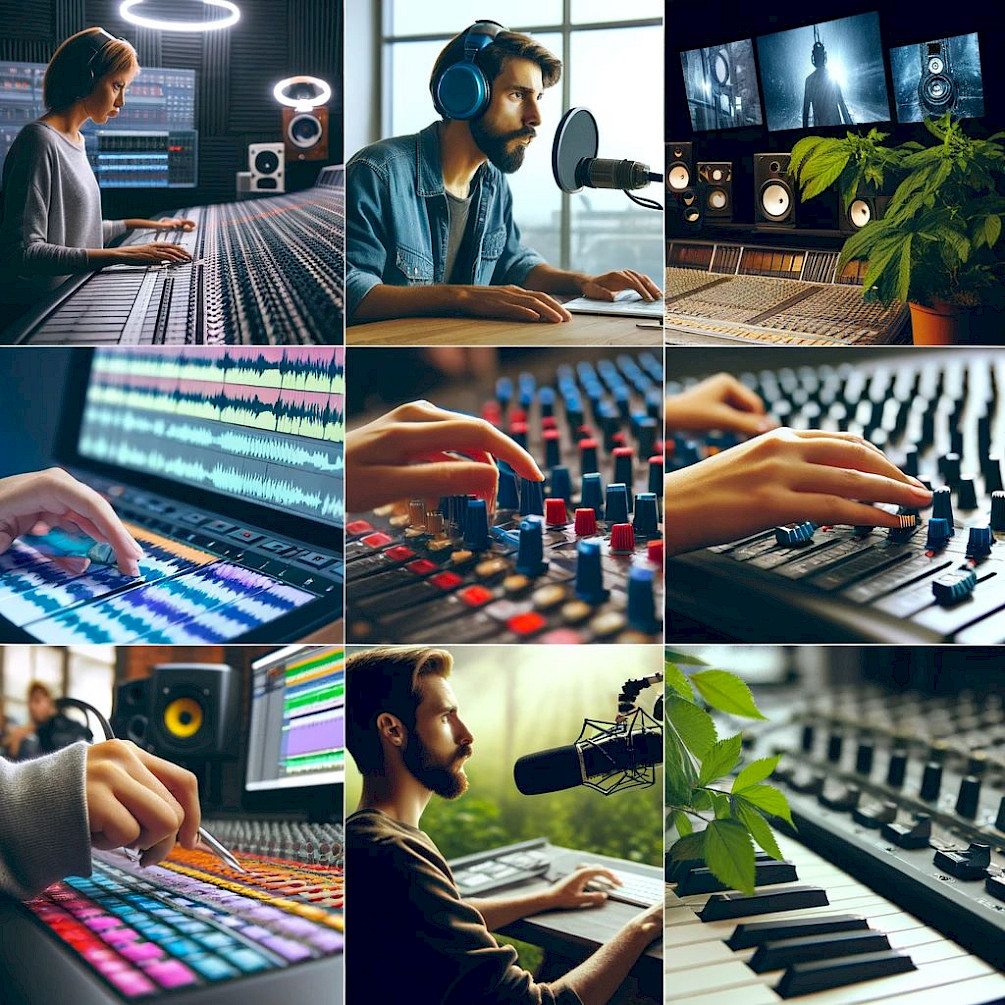
Degree in sound editing
The degree in sound editing is of vital importance in the entertainment and media industry.
Sound editors play a key role in creating high-quality audiovisual productions, ensuring that sound is well recorded, arranged and mixed correctly. Their technical and creative expertise can transform a scene, adding special effects, music and dialogue to create an immersive listening experience. Without sound editing, films, television shows, music and video games would not be as exciting and engaging for audiences.
The length of the degree in sound editing may vary depending on the type of educational program and the institution offering it. Here is a general idea:
Certification Programs
- Duration: They can last from a few months to a year.
- Focus: These programs are usually intensive and are designed to teach specific skills in sound editing and use of related software.
Associate Degree Programs
- Duration: Generally, they take about 2 years to complete.
- Focus: They offer broader training in audio production and sound editing, combining theory and practice.
Bachelor's Degree Programs
- Duration: Most bachelor's degree programs take 4 years to complete.
- Focus: They provide a comprehensive education that includes fundamentals of sound editing, sound design, acoustics, music, and project management. These programs usually include professional internships.
Where to study it:
The choice of where to study sound editing depends on your location, budget and professional goals. Some recognized institutions in the field of sound production and editing include:
- Berklee College of Music (USA) - Offers programs in music production and technology, including aspects of sound editing.
- Full Sail University (USA) - Known for its programs in entertainment, media, art and technology, including audio production.
- Vancouver Film School (Canada) - Offers programs in sound production for film and television.
- SAE Institute - With campuses in various parts of the world, offers programs in audio production, sound engineering and more.
- La Universida de Sevilla (Spain) offers the Digital Audio Editing and Post-Production program.
The different fields of work in sound editing
Sound editing offers a wide range of fields of work in which sound editors can specialize. Some of the common areas include dialogue editing, where voice recordings are cleaned up and enhanced; sound effects editing, where sounds are created and manipulated to add realistic or fantastic elements to a production; music editing, where the right songs and compositions are selected and adjusted for each scene; and final sound mixing, where sound is balanced and mixed to deliver an optimal listening experience.
The sound editors can also work in the post-production of films, television programs, video games, theatrical productions and other audiovisual media.
Sound Editing
Sound editing is a fundamental discipline in the audiovisual industry. It consists of the process of manipulating and improving the sound captured during film production, television programs, video games and other audiovisual media. Sound editors use different tools and techniques to clean, adjust and combine the various sound elements, such as dialogue, sound effects and music, with the goal of achieving an optimal listening experience.
Sound editing also involves the creation and manipulation of special and atmospheric sounds to enrich the narrative and aesthetics of a production.
Fundamentals of sound editing
Sound editing is a fundamental discipline in the audiovisual industry, and to master it it is necessary to understand some key fundamentals.
These fundamentals include the precise manipulation of audio waveforms, understanding the different types of sound and their function in the narrative, as well as the ability to use sound editing tools efficiently. It is also essential to have a good ear to detect and correct sound problems, such as unwanted noise or distortion.
Sound editing requires attention to detail and technical skills to achieve professional results.
Basic sound editing concepts
Sound editing is a discipline that involves manipulating and adjusting different audio elements to create a high-quality listening experience. Some basic sound editing concepts include:
- Waveforms: Waveforms visually represent sound and allow the editor to see the volume level, duration, and other aspects of the audio.
- Cuts: The technique of cutting and trimming audio segments to remove unwanted parts, such as background noise or recording errors.
- Crossfades: Crossfades are smooth transitions between two audio tracks, to avoid abrupt cuts and achieve a more natural transition.
- Equalization: Equalization is used to adjust the frequency spectrum of an audio track, boosting or attenuating certain ranges to achieve a balanced sound.
- Sound effects: The addition of sound effects, such as reverb, delay, or compression, to improve the quality and expressiveness of the audio.
- Mixing and mastering: Mixing and mastering are final processes in sound editing, where all audio tracks are combined and the overall sound levels and quality are adjusted.

Tools and software used in sound editing
Programs for audio editing
There are various specialized programs for audio editing that are widely used by professionals in the field. Some of the most popular programs are:
- Avid Pro Tools: It is considered one of the most powerful and complete programs for audio editing. It offers a wide variety of tools and features for sound editing and mixing.
- Adobe Premiere: This program is widely used in the film and music industry. It has an intuitive interface and offers a wide range of audio editing and processing functions.
- Cubase: It is a very versatile and complete program, used by both professionals and amateurs. It offers high-quality sound editing and mixing tools.
- Logic Pro X: It is a very popular tool among music producers. It features a wide variety of effects and plugins that allow the creation of high-quality audio tracks.
These are just a few examples of programs used in audio editing. The choice of program depends on the type of work that needs to be done and the sound editor's personal preferences.
Sound recording and editing techniques
In the sound editing degree, it is essential to learn sound recording and editing techniques in order to create high-quality productions. As for sound recording, microphone and positioning techniques are taught to get the best possible sound.
Techniques for editing and manipulating recorded sounds are taught, such as removing unwanted noise or mixing audio tracks.
These skills are essential to create professional audio projects and meet clients' needs.
Microphone and sound recording techniques
When it comes to sound recording, it is crucial to master different microphone techniques to achieve optimal quality. There are different types of microphones that are used in various situations, such as condenser microphones for studio recordings and dynamic microphones for live performances.
It is important to know the proper positioning techniques to get the desired sound. For example, the "close miking" technique consists of placing the microphone close to the sound source to capture more detail and minimize ambient noise.
It is essential to have knowledge of these techniques to obtain professional, high-quality sound recordings.
Editing and manipulation of recorded sounds
A fundamental part of the degree in sound editing is the ability to edit and manipulate recorded sounds. This involves working with various audio editing tools and software, such as Pro Tools and Adobe Audition. Sound editors are responsible for cutting, pasting, and moving audio segments to achieve a coherent, high-quality final result. They can also apply sound effects, such as reverb or delay, to improve quality or create special effects. Editing and manipulating recorded sounds is essential to achieve professional sound productions and meet the specific needs of the project.
Sound design in the film industry
Sound design in the film industry plays a fundamental role in creating an impactful and immersive listening experience for the viewer. Sound designers are responsible for creating and manipulating all the sound elements of a film, from dialogue and special effects to music and soundscapes. They use advanced tools and techniques to achieve the perfect balance between all these elements, thus contributing to the narrative and overall atmosphere of the film. Sound design in film is a constantly growing specialized career, with growing demand and exciting opportunities for those interested in sound editing in film.
The role of the sound editor in the film industry
The role of the sound editor in the film industry is crucial to creating an immersive listening experience for the viewer. The sound editor is in charge of selecting, editing, and mixing all the sound elements of a film, including dialogue, sound effects, and music. They work closely with the director and the production team to ensure that the sound fits the picture perfectly and contributes to the narrative of the film. The sound editor uses specialized software to manipulate and enhance sound, thus achieving professional, high-quality results. Their work helps create realistic and exciting atmospheres in films, adding an element of immersion for the viewer.
What is the role of a sound editor in the film industry?
The sound editor is responsible for manipulating and organizing audio elements to create a unique sound experience in a film. This includes removing unwanted noise, mixing different sound tracks, and incorporating special effects.
What programs are used for sound editing?
There are several programs used in sound editing, such as Pro Tools, Adobe Audition and Logic Pro. These programs offer advanced tools and features to manipulate and edit audio recordings.
What are the job opportunities in the sound editing degree?
Sound editors have job opportunities in film, television, video games, music, podcasts and other areas of audiovisual media. In addition, they can work freelance or in content production companies.
The demand for professionals in sound editing is constantly growing due to the rise of streaming platforms and the need for quality content.
Creating atmospheres and sound effects in films
The creation of atmospheres and sound effects in films is a fundamental aspect of audio post-production. The sound editor is responsible for selecting and manipulating the right sounds to achieve the desired ambience and emotions in each scene. This can include everything from recreating realistic sounds, such as footsteps or ambient noises, to creating special effects and imaginary sounds.
Through the use of sound editing tools and programs, the editor can bring the film to life and immerse the viewer in the story. The combination of proper sound selection and careful mixing contributes to the overall atmosphere and narrative of the film.
Degrees related to sound editing
There are various degrees related to sound editing that offer exciting and rewarding opportunities. Some options include being a sound designer, sound mixer, post-production sound supervisor, or sound recording engineer. These careers allow you to work in different industries, such as film, television, music and advertising.
Training programs and specialized studies in sound editing that offer the opportunity to acquire the knowledge and skills necessary to excel in this career. Sound editors can also work independently, offering their services to audiovisual projects on a freelance basis.
Options for related degrees in sound editing
There are various options for related degrees in the field of sound editing. Some of these options include:
- Sound designer: responsible for creating and designing sound effects for movies, television shows and video games.
- Sound mixer: in charge of mixing and balancing the different sound elements in an audiovisual production.
- Post-production sound supervisor: responsible for supervising and coordinating sound editing work in the post-production stage.
- Sound recording engineer: in charge of sound recording and production in music studios or in audiovisual productions.
These are just some of the career options available in the exciting field of sound editing.
Studies and training programs in sound editing
There are various study options and training programs in sound editing.
Many universities and technical schools offer specialized programs in this area, where students can learn advanced sound editing and manipulation techniques.
These programs usually include hands-on courses that allow students to work with professional sound editing equipment and software.
There are also courses and tutorials available for those looking to learn independently. Upon completing these studies and training programs, students will be prepared to enter the workforce as professional sound editors.
University Degree in sound editing
The university degree in sound editing is a solid option for those who wish to gain in-depth knowledge and advanced techniques in this field.
University programs in sound editing offer a comprehensive education covering topics such as sound editing fundamentals, sound recording and manipulation techniques, sound design in the film industry and more.
These programs usually combine theory and practice, giving students the opportunity to work with professional sound editing equipment and software. Upon completing a university degree in sound editing, graduates will be well prepared to enter the workforce and develop a successful career as professional sound editors.
The degree in sound editing offers students comprehensive training in all key areas of this field. University programs provide solid knowledge of sound editing fundamentals, as well as advanced sound recording and manipulation techniques.
The graduates will be prepared to work in the film industry, creating atmospheres and sound effects that enrich film productions. There are also various related degrees options in the field of sound editing, offering graduates the opportunity to explore different work areas.
A degree in sound editing is an excellent option for those passionate about sound and who want to develop solid skills in this field.
The future and opportunities in the sound editing degree
As in all areas related to technology and media, the field of sound editing is constantly evolving. With the advancement of digital technology, new opportunities are opening up both in film and in other audiovisual media.
Movies, television shows, video games and even podcasts increasingly demand more professionals specialized in sound editing.
The growing popularity of streaming platforms and the podcast industry offers a broad field for sound editors. Therefore, those who decide to pursue a degree in sound editing can be sure that they will have multiple job opportunities in the future.