
Therapeutic companion: what it is, what it does and where to study
What does a therapeutic companion do
A therapeutic companion supports a person in everyday activities, such as getting back to a workshop or attending classes, within a plan agreed upon with them and their treatment team. What sets this work apart from keeping company is the purpose of the support and coordination with the team.
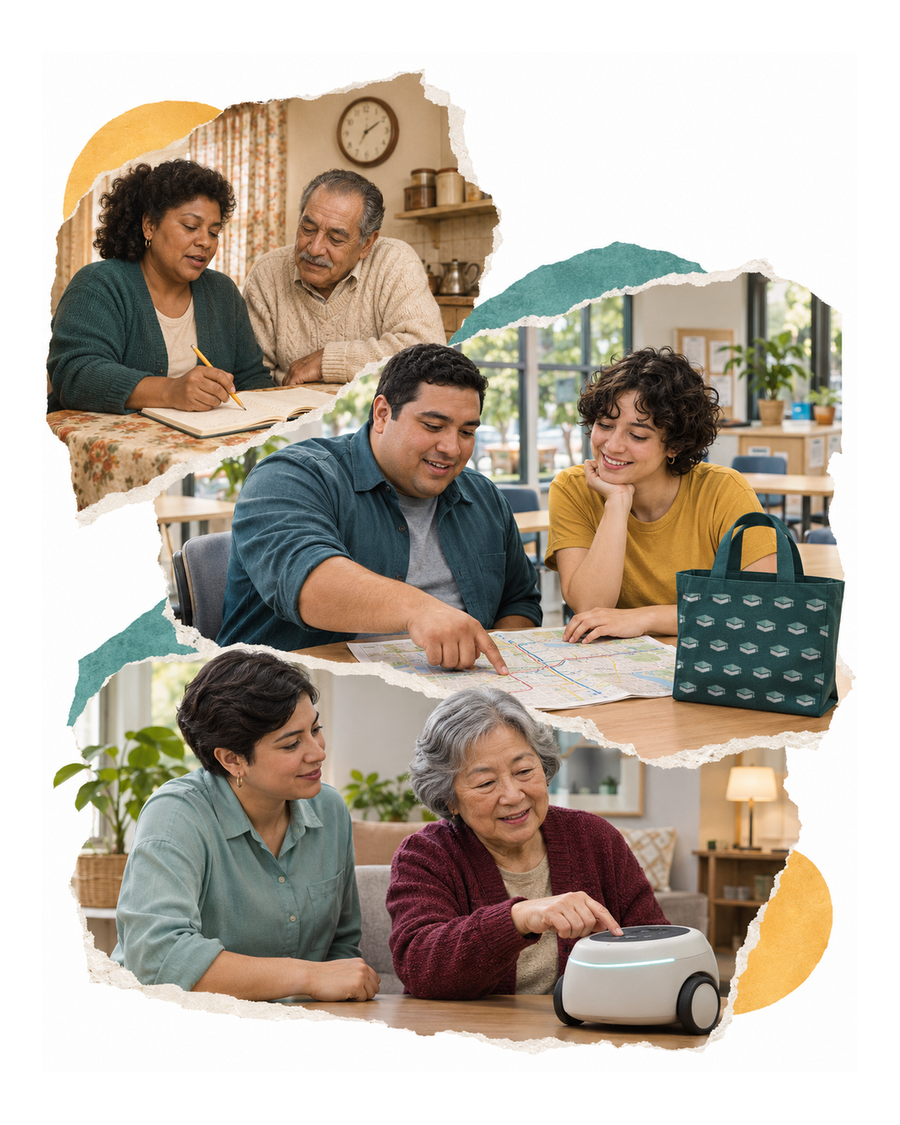
What therapeutic accompaniment is
The therapeutic companion, also called AT, puts the goals agreed upon with the person into concrete situations: recovering a routine, taking part in an activity, or identifying what barriers make it difficult.
Examples: In Argentina, the Chubut Law X No. 58 (opens in another tab) describes its role within interdisciplinary health work. In Neuquén, the Neuquén Law 3147 (PDF; opens in another tab) provides that the companion works with written instructions from the health team and records what was done for the medical record.
In Uruguay, the Universidad Católica del Uruguay graduate profile (opens in another tab) explains how the treatment team's goals are carried into the person's routines and how work is done with their family. In Chile, the Psychosocial Accompaniment Program in Primary Care (opens in another tab) shows another way of organizing support: a social work professional and a community manager help reestablish contact with the health center when a child, adolescent, or young person interrupts their care.
Why support in everyday life matters
A difficulty can be seen more clearly in the place where it happens. If a person wants to return to a workshop but struggles with the journey, the team can agree on support for the trip without intervening in the activity itself. Having autonomy also means being able to decide what support you need and how you want to receive it. What is observed helps review whether to keep, modify or remove that support.
Work settings at home, in the community and in institutions
The role changes depending on the situation. At home it can focus on an agreed routine; in the community, on resuming an activity; and in an educational setting, on facilitating participation without replacing the teacher. The UFLO Acompañamiento Terapéutico fact sheet (opens in another tab) details care, educational and home settings.
In Santa Fe, Argentina, the Universidad Nacional de Rosario (opens in another tab) describes a profile that includes participating in health and prevention projects with interdisciplinary teams, also in educational, judicial and community settings.
In Uruguay, the Mental Health Program of the Ministerio de Desarrollo Social (opens in another tab), which operates in departments such as Canelones and Salto, offers another example of community work: it combines individual or group therapeutic care with support for housing, education and employment. The same person may need help in more than one of those areas to sustain their daily life.
What a therapeutic companion does
The AT agrees on the goal and limits of the support with the person and the team. During the meeting, they facilitate the planned activity and observe which supports work. Afterwards, they record relevant facts and communicate them through the agreed channels. The team uses that information to review the plan.
Differences between therapeutic accompaniment and other roles
The word companion also appears in care services and searches about aviation. The cases in this section are illustrative: they show how responsibility changes depending on the purpose and the country.
Uruguay
A person with severe dependency who lives at home may need help getting dressed or moving around. The Uruguay Personal Assistants Program (opens in another tab) explains who can access support to hire a qualified person. The purpose is to facilitate everyday activities, not to carry out a treatment plan as an AT.
Spain
Think of a female student in a situation of dependency who needs help getting around and preparing her materials. The Imserso personal assistance benefit (opens in another tab) seeks to make it easier to hire support for daily life, education or employment. The person assisting the student facilitates her participation; they do not do her academic work or take the teacher’s place.
Mexico
If by cabin companion you mean someone who works aboard a commercial airplane, the Article 85 of the Mexican civil aviation regulations (opens in another tab) uses the term sobrecargo and defines its safety, emergency and passenger service responsibilities. For example, before takeoff, the crew verifies that carry-on baggage is secured. The Passenger Cabin Crew Member profile lets you explore aviation training. It is not a specialty of therapeutic companionship.
Skills for providing support
Listening, upholding agreements, writing clear records and requesting supervision on time are skills that are learned and practiced. The AT does not diagnose, prescribe medication or replace psychotherapy. If you are interested in training to assess and intervene from another role, the profile for Psychology lets you compare its academic and professional path.
Where to study therapeutic accompaniment and what distance options are available
The Therapeutic Companion degree profile is useful for exploring the training profile. To choose a program, check what qualification it awards and where the in-person requirements take place: studying at a distance does not mean taking exams or completing all the practical training from home.
Public universities in Argentina
The 2026 call for applications from Universidad Nacional de Tucumán (opens in another tab) describes a three-year technical program with online classes, in-person exams and practical training in San Miguel de Tucumán. That cohort included tuition fees. Check the dates and requirements for the next one before planning your enrollment.
The Bachelor's in Therapeutic Accompaniment from Universidad del Chubut lasts four years, is free and includes an undergraduate technical qualification. The official curriculum from Universidad del Chubut (opens in another tab) details the practical training and in-person exams in Rawson, Esquel, Puerto Madryn or Sarmiento.
Private universities in Argentina
The Tecnicatura from Universidad FASTA (opens in another tab) lasts two and a half years and requires joining a support unit. The FASTA study plan (PDF; opens in another tab) specifies that the professional practice in the final semester is in person.
The UFLO virtual modality for the Patagonia region (opens in another tab) combines live classes and supervised internships at institutions in its students' localities.
Uruguay and Chile with specific training
In Uruguay, Universidad Católica del Uruguay offers a two-year Tecnicatura in Therapeutic Accompaniment in Salto (opens in another tab). The description of the blended modality (opens in another tab) indicates that there is one mandatory in-person Saturday per month and supervised second-year internships in the department of residence. The university reports that the new curriculum is in the process of recognition by the Ministerio de Educación y Cultura: check which curriculum applies to your cohort.
In Chile, the Instituto Profesional Providencia publishes the Higher-Level Technician in Therapeutic Accompaniment (opens in another tab). It is two years of online classes, live and recorded. The curriculum includes professional records and a work placement in the final semester. Check where that placement takes place and whether it requires attending a center: the class format alone does not make that clear.
Spain with vocational training in dependency care
If you are interested in everyday support for people in situations of dependency, you can explore the public intermediate-level cycle of Technician in Care for People in Situations of Dependency. The IES Luis Buñuel de Zaragoza (opens in another tab) started the 2026–2027 virtual course and the Junta de Extremadura (opens in another tab) included the cycle in its virtual modular offering for the same period. It is related training for care and personal assistance, not a technical degree in therapeutic accompaniment.
Before enrolling, confirm what qualification each program awards, where exams and placements take place, and what study and travel costs you will have. If you plan to work in another country, check recognition of the qualification and the job conditions at the destination before choosing your training.
Tools for organizing and documenting support
An accompaniment plan sets the goal, the schedules, and the agreed supports. The record of each meeting lets you note what happened and what remains to be reviewed. A planner or calendar can help prepare the activity, as long as the person finds them useful. To share sensitive information, use the channel authorized by the team.
Work process
Imagine a person receiving outpatient care wants to return to a neighborhood workshop. She and her team agree that the therapeutic companion will initially accompany her on the way there. If she prefers to arrive with support but go in alone, that decision guides the meeting. Afterwards, the therapeutic companion records what happened and the team reviews with her whether to keep that support or adjust it.
Good supervision and confidentiality practices
Agreeing from the start what information is shared, with whom and for what purpose prevents disclosing unnecessary data. It is also advisable to define who to turn to if a situation arises that goes beyond the agreed functions. Supervision makes it possible to raise that difficulty without improvising a response outside one's own role.
Mistakes that hinder support
Doing a task for the person without asking them can take away their room to decide. Recording a judgment instead of a fact also makes it harder to review the support: “completed the journey and asked to take a break before entering” is more useful than “refused to cooperate.”
Employment opportunities and income for therapeutic companions
You can explore mental health teams, day centers, community programs and home-based interventions. Before accepting a job, check what diploma, license or registration the position requires in that jurisdiction. The requirement varies depending on the place and on whether it involves therapeutic companionship or personal assistance.
Examples of therapeutic companion licensing
In Chubut, the Secretaría de Salud del Chubut (opens in another tab) includes technicians and graduates in therapeutic companionship among those who must obtain a license. In Río Negro, the provincial licensing guide (opens in another tab) states that for the therapeutic companion category the process is completed with a technical diploma. If the diploma is from another province, the guide requires having it validated by the Ministerio de Educación.
In the province of Buenos Aires, the Ministerio de Salud bonaerense (opens in another tab) distinguishes registration for certain technical programs from enrollment in a specific registry for those who certify other recognized training paths. That distinction matters: a course and a technical program are not submitted through the same channel.
Requirements for personal assistance jobs in Uruguay and Spain
In Uruguay, to offer services in the personal assistants program for people with severe dependency, the Decree 117/016 (opens in another tab) requires authorization from the Secretaría Nacional de Cuidados and registration in the Banco de Previsión Social registry. It is a requirement of that personal assistance program.
In Spain, the state agreement on personal assistance published in the BOE (opens in another tab) includes the qualification of Technician in Care for People in Situations of Dependency among several qualifications accepted in the dependency system. Check how the qualification is certified in the autonomous community where you want to work.
When comparing a salaried job with an hourly-paid service, do not equate a salary with total billings. Ask how many hours are paid, how much time travel and reports take, and what happens if a session is canceled. Those conditions change what you can actually earn and the availability you will need.
AI, risks and the future of therapeutic support
Part of the workload happens outside sessions: travel, record-keeping and coordination. If schedules or contact channels are not agreed upon, availability can extend beyond what was planned. Before accepting a case, it is advisable to clarify who supervises, what is expected of the role and who to contact in an emergency.
A possible use of generative AI is to prepare a record template with no patient data. It is different to ask it to interpret a clinical situation or to upload case notes to an unauthorized app. The OMS explanation of generative AI risks in health (in English; opens in another tab) identifies errors and risks to patient information.
Robots already used in hospitals, care homes and private homes
The Kawasaki company in Japan. In March 2026, the Hospital Universitario de Kobe started using a robot to distribute materials inside the hospital. The device moves between floors by elevator and takes over part of the routes previously done by staff. The hospital announcement with a video in operation (in Japanese; opens in another tab) shows what was automated: the transfer of objects, not patient care.
Hug from FUJI in a Japanese care home. In Sasazuen Kasuga, in Toyama, the team introduced a robot that assists staff in moving a person from bed to wheelchair. The case documented by WAM NET (in Japanese; opens in another tab) explains how mechanical assistance reduces the need to lift weight during the transfer. It is physical assistance with staff involvement, not an autonomous therapeutic intervention.
Hyodol in South Korea. In August 2026, the municipality of Hwaseong reported on the use of Hyodol in its home health program (in Korean; opens in another tab). The robot converses by voice and supports eating, medication and physical activity routines for older people living alone. The city reported 93 units in operation through four health centers. A reminder alone does not verify that the person has taken their medication nor does it replace a visit.
What changes for those who provide support. If the treating team introduces a device, the AT can contribute observations about whether the person wants to use it and what supports they need to do so. The team must agree on who responds if the device fails, what data it collects, and what alternative the person has if they prefer not to use it.
If you are thinking about studying therapeutic support, ask two institutions to describe a supervised practicum to you. Ask who you would work with, what task you would be responsible for, and how you would receive feedback.
Don't know what to study? Start with our career test. It helps you organize your interests and explore options, it doesn't decide for you.