
Interview with Valentina Ilic Vigil
Tell us about your background:
I did my career internship at the Ministerio del Trabajo y Previsión Social of the Government of Chile and there I began to develop the Program for the Eradication of Child Labor and the Protection of the Working Adolescent. I was hired as National Head of said program until 2016, which was the year in which I was awarded the Beca Chile (100% funding) to study a Master's in Public Policy at King 's College London. After finishing my studies, I worked in the Mexico offices of the Banco Interamericano de Desarrollo (BID), in the Social Sector (which includes the areas of Labor, Health and Education). In 2019, I returned to Chile to take over the direction of the Centro de Estudios e Investigación sobre Familia (CEIF) of the Universidad Finis Terrae and the direction of the Family Sciences degree. In October 2021 I will have spent 2 years in said position.
What motivated you to study the Bachelor's Degree in Social Sciences with a specialization in Family?
I had two certainties: I wanted to choose a degree that would allow me to help others and I wanted a degree that would give me a broad education because I felt that no discipline or degree by itself fulfilled me. I felt that I liked some things about law, some about sociology, some about psychology but none fulfilled me completely. That is how I found this bachelor's/degree that allowed me to address family and social issues from an interdisciplinary social sciences perspective.
As an expert Family Scientist, could you tell us what a day-to-day in your work is like?
A work day for a family scientist will depend a great deal on what area or sector one is working in. I have been involved mainly in public policy and lately with research topics. A work day always begins with a review of the main news and current issues (something always happens that relates to what we do), I continue with a review of emails and meetings to have updated information on the status of the projects we are implementing. I always try to leave room to design and create new projects, to shape ideas that come up or to finish developing projects that are in progress. My days are quite different from one another, but I think they always have the common element of following up on ideas or projects that are about to be born or that are already being implemented.
Do you use other languages in the practice of your career?
Currently I work mainly in Spanish, but English is an extremely necessary language for research in Social Sciences and for the design of projects or public policies.
Based on your experience, does training in Social Sciences with a mention in Family have applications in multiple industries or is it a degree specific to one sector?
I can say without a doubt that Family Sciences is one of the degrees with the greatest variety of options and work field alternatives. We can work in a great many areas and that will depend exclusively on the interest the professional develops. For my part, I have worked in government, in international organizations and in study centers. I think that reflects very well the variety of options.
How have the Internet and new technologies affected your career?
The Internet and new technologies are the sources of the main cultural, social, family and individual transformations of recent times. For us it is a central topic to study and where important spaces are generated for the design of projects and policies. Added to that and just like many other careers, new technologies have allowed us greater connectivity with our surroundings.
Would you say you chose a career that allows you to travel the world?
100%. Since I studied my degree I knew it was going to be the main platform for traveling, connecting with people from other countries and for working abroad. Personally, I see my career as a career without borders since the study of social and family issues and the design of projects/public policies is something that happens in every country without exception. I would even dare to say that our career is even more enriched if it develops in constant contact with other countries and cultures.
What satisfactions has your career given you? And what dissatisfactions?
I think the main satisfaction is feeling confident that I am good at what I do and that is thanks to the training I received. Then, I think that when you design projects or public policies, you have the satisfaction of designing or creating solutions to social problems and that is very satisfying for someone who decided to make that passion their career.
About annual salaries and compensation, in what range would a Family Scientist with more than 5 years of experience be?
from 35,000 to 40,000 Euros
What advice would you give to a person who is thinking about studying Social Sciences with a mention in Family? Is it a degree with a future?
I always say that Family Sciences is a degree OF the future. Social and family problems are increasingly complex, more and better solutions are needed all the time and we already know (almost for certain) that addressing issues from diverse disciplines allows us to understand much better what is happening. Those are characteristic elements of my degree and I believe it will be increasingly necessary to have professionals with our profile.
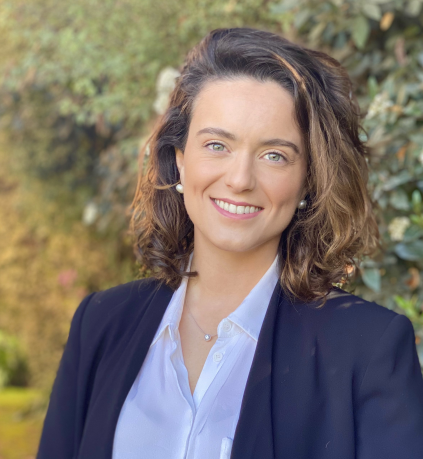
Valentina Ilic Vigil
Director of the Centro de Estudios e Investigación sobre Familia (CEIF)
Family Sciences Degree
Linkedin
Instagram