Degrees of the future
Reach your goal with courses and university degrees with the greatest future potential.
Where to study degrees of the future?
Trends in the labor market
The labor market is constantly changing and evolving, and it is important to stay up to date with current and emerging trends.
Some of the current trends include increased demand for professionals in fields related to technology, sustainability and health. In addition, technology is changing the way we work and creating new opportunities in different fields.
Degrees and jobs of the future
Where to study degrees of the future?
Which degrees are for the future?
The degrees of the future are those that are in high demand and are expected to grow in the future.
We will explore the degrees of the future in detail, offering a complete overview of the most promising careers today. From artificial intelligence to sustainability, we will analyze opportunities in the labor market, along with practical tips for those looking to build a successful career in these constantly evolving fields.
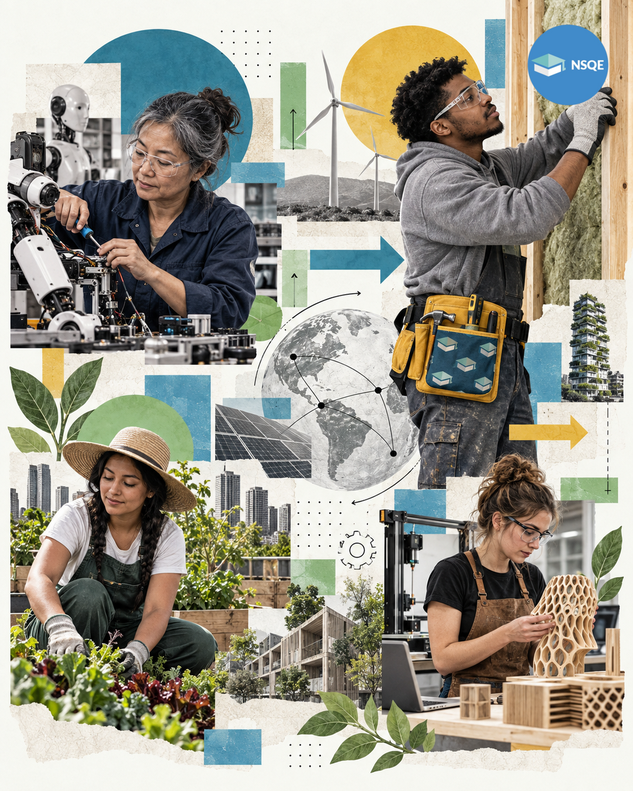
Manual jobs can have a promising future
- Craftsmanship and Specialized Trades: estimates an increase in demand for artisanal jobs and specialized trades due to the value placed on handmade and unique products.
- Repair and Maintenance of Advanced Technology: with the advancement of technology, the need for trained technicians to repair and maintain electronic and robotic equipment is seen as essential.
- Sustainable Construction and Renovation: jobs focused on sustainability and energy efficiency have growth potential due to growing environmental awareness.
- Work in the Automotive Industry: adaptation to new technologies in vehicles, as well as their repair and maintenance, are relevant areas.
- Personal Care and Styling: services such as hairdressing and makeup will continue to be in demand due to the importance society places on appearance and well-being.
- Construction and Infrastructure Maintenance: the need to build and maintain roads, bridges, buildings in growing urban areas will continue.
- Gardening and Landscaping: the design and maintenance of green spaces will continue to be valued in urban and residential environments.
- Jobs in the Food Industry: there will continue to be a need for professionals in food production and processing, such as bakers, chefs and butchers.
- Jobs in the Textile and Fashion Industry: clothing manufacturing and fashion design could have new opportunities with customization and sustainable production.
- Jobs in the Shipbuilding and Ship Repair Industry: these will continue to be necessary for transportation and tourism.
The fusion of manual jobs with technology is an emerging trend, which will require training in technical skills and the ability to adapt to new tools.
How are current degrees adapting to the future?
The potential transformations in various degrees due to factors such as technological advances and economic and social changes.
Here are a few examples:
Programming and Software Development: It is expected that, with the emergence of low-code and no-code tools, there is a possibility that people will be able to build applications and solutions without requiring expert coding skills. Thus, programmers could evolve into 'creator' roles.
Artificial Intelligence and Data Science: As data analysis tools become more accessible, interpreting results and making data-driven decisions become essential skills. Experts in this area could shift from creating models to understanding and effectively applying the data generated by automated systems.
Cybersecurity: With the increase in cyber threats, cybersecurity remains essential. However, advances in automated security could shift this career toward system oversight and strategic decision-making for information protection.
Health and Medicine: With the rise of telemedicine, healthcare professionals could focus more on interpreting medical data and consulting with patients. Collaboration between medicine and technology will be key.
Virtual education: With the evolution of online learning platforms, educators can focus more on designing effective, personalized learning experiences rather than giving traditional classes. Instructional design skills and an understanding of how people learn will become increasingly important.
Despite this shift toward more accessible technological tools, it is recognized that understanding fundamental concepts and the ability to solve problems will remain valuable.
Adaptability and the ability to learn new skills will remain fundamental in any career.