
Poultry Farmer
What is a poultry farmer?
A poultry farmer is someone who raises domesticated birds such as geese, ducks, turkeys or chickens for the purpose of producing meat or eggs for sale and consumption. A poultry farmer typically raises a single type of poultry, with more than half of the poultry industry raising chickens.
What does a poultry farmer do?
There are typically four types of poultry that a poultry farmer can raise:
Chickens
The most common type of poultry farms raises chickens. Chickens can be raised for their eggs or meat.
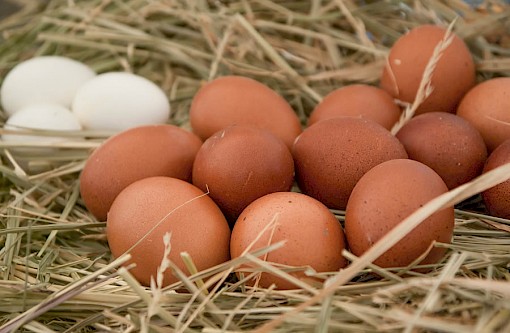
Chicken poultry farmers are in charge of making sure that their facilities are cleaned regularly of all fecal matter to reduce the risk of spreading disease among the chickens. They also make sure that the chickens have fresh food and water in the morning.
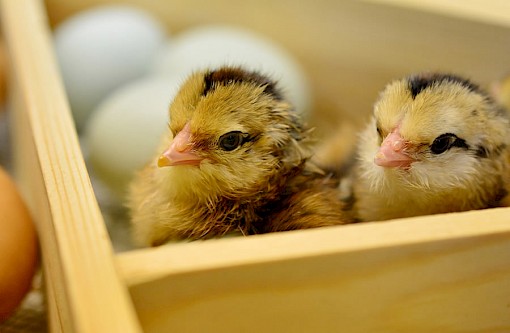
Farmers will walk through the chicken coops a few times a day for two reasons: they want the chickens to get used to people and it allows the poultry farmer to see if there are any chickens that look sick or injured. They also ensure that ventilation and temperature are at an ideal level for the chickens.
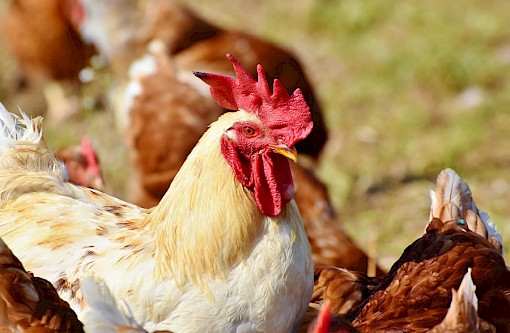
Some chickens may spend their entire lives in a barn. Here, they are fed, watered and then sent to the production plant for slaughter. On some farms, chickens are classified as free range, which means they are free to roam outside in an enclosed space such as a field. Both habitats have their advantages and disadvantages.
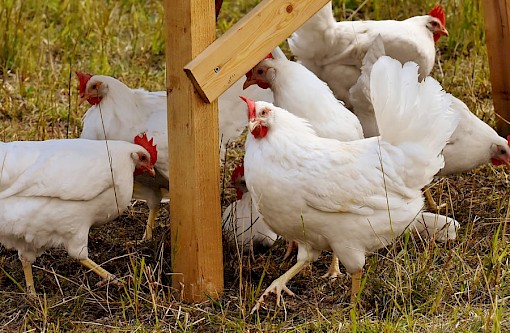
In recent years, there has been an increase in demand for ethically raised poultry, which includes proper health care and enough space to roam where chickens can interact with each other and peck at objects they find interesting. It is important that chickens are able to express their normal behavior.
Ducks
Commercial duck farms are operations similar to chicken farms. Therefore, duck meat production is a full-time business that requires investment in time and money.
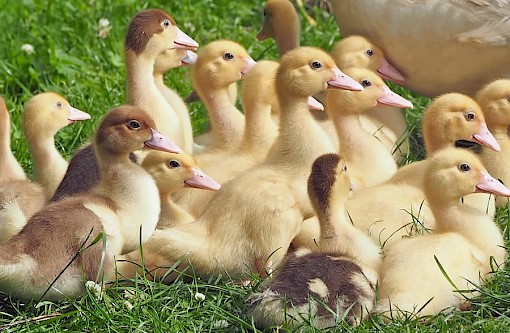
While duck farming is quite small compared to chicken farming, it is expanding rapidly, with increasing global demand. This makes duck farming an attractive option for those considering it as a career. There are more than 40 breeds of domestic ducks, but the Pekin duck is the most common variety for eggs and meat (not to be confused with the Peking duck dish).
Typical tasks include supplying water and feed, monitoring food consumption, cleaning housing and maintaining specific hygienic standards, monitoring temperature and humidity, tracking growth and mortality rates. Ducks are fed corn and soy fortified with vitamins and minerals, and their feed contains no animal by-products. Almost all ducks are raised indoors to protect them from predators, as well as to collect their manure, which is used elsewhere selectively as fertilizer.
Geese
Geese are kept mainly for meat production, so breeding birds are selected on the basis of their rapid growth, early maturity and fleshy bodies. There are differences in goose breeds, so their characteristics must be evaluated in order to better meet the producer's needs. If the birds are to be kept for breeding, then egg production and reproductive efficiency are important things to consider. If geese are raised only for the market, market meat production and body requirements are of great importance.
The growing demand for young commercial geese has resulted in the construction of large farms where geese are raised in henhouses under controlled conditions and with automatic feeding and watering equipment. Geese are quite hardy and are not susceptible to many common poultry diseases, so medicated feed is generally not necessary.
Turkeys
Most turkeys are raised in an environmentally controlled structure that provides protection against bad weather and predators.
An average turkey farm produces six to seven thousand turkeys, three times a year. A hatching-egg farm will raise breeding turkeys to produce eggs that are collected, disinfected and sent to a turkey hatchery. Hatcheries will then hatch the eggs into young turkeys (or poults), which are then sent to commercial turkey farms, where they are housed and raised into adult turkeys. Once the turkeys reach a desired market weight, they are transported to the processor. This growth cycle usually runs until the turkeys grow to be 10-18 weeks of age.
What is a poultry farmer's workplace like?
Many farmers own their own farms, especially small-scale farms with only a few hundred birds. Larger facilities housing thousands of birds will have more farmers on hand to raise them.
Poultry farmers work seven days a week, sometimes all day to make sure their birds are cared for. It is very important for a farmer to be very clean before entering the chicken coop to prevent the spread of disease. Much of their work is done outside or inside the poultry housing.