Why Study Agricultural Engineering?
A crop may grow poorly due to lack of water, excess moisture, soil problems, or a disease. Applying more fertilizer without identifying the cause can increase costs and worsen the problem. The Engineering in Agronomy trains professionals to understand those differences, test hypotheses, and make decisions about agricultural systems.
Studying Engineering in Agronomy
Studying this degree may interest you if you are drawn to connecting biology, technology, food production, and the environment. It also requires accepting a reality: you work with living processes, limited resources, and results that depend on the climate, markets, and other people's decisions. Its advantages and difficulties appear precisely in that combination.
What is Engineering in Agronomy and what does an agronomist do?
Agronomic Engineering integrates biological, soil, environmental, technical, and economic sciences to analyze and manage agricultural systems. The training usually includes chemistry, mathematics, statistics, plant physiology, health, crops, water, and economics. Depending on the degree and specialization, it also covers animal production, infrastructure, and rural management.
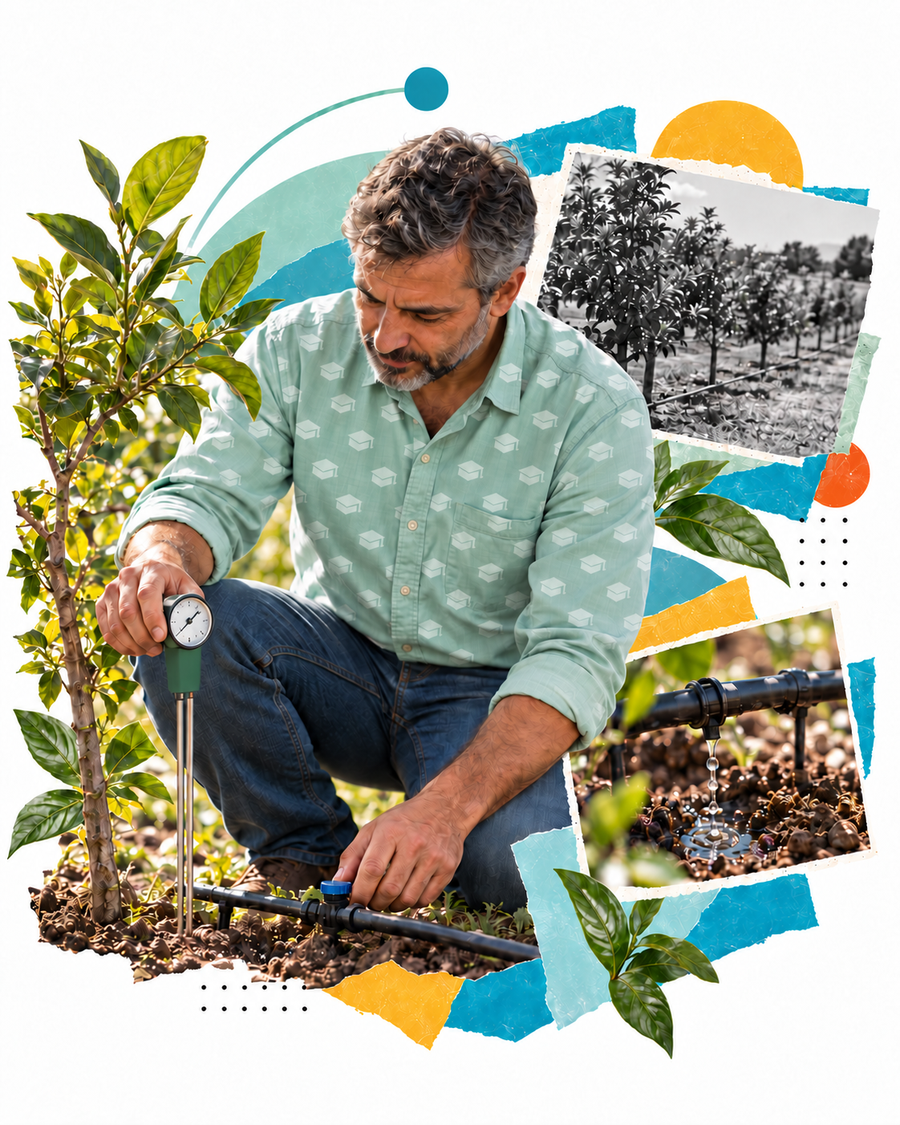
An agronomist can interpret soil analyses, evaluate seeds, design trials, monitor pests, organize irrigation, or calculate whether an intervention is viable. They need to distinguish an association from a cause: that two areas of a field yield differently does not prove that the difference is due to fertilizer. Soil, water availability, or previous management may also change.
Professional scope depends on the degree and the regulations of each country. Our Agronomy degree guide expands the general information. Participating in livestock production is also not the same as practicing veterinary medicine: if your main interest is the clinical care of animals, you can consult the Veterinary degree.
What academic programs exist to study Agronomy?
Training in Agronomy includes university degrees, technical programs, refresher courses, and postgraduate studies. Each option responds to a different need: acquiring broad professional training, preparing for specific technical tasks, or deepening knowledge in an area after graduation.
When comparing options, distinguish the name of the degree, the degree awarded, and its academic level. One institution may call its program Agronomy and award the title of Agricultural Engineer; another may offer an Agronomic Engineering program at the undergraduate degree level.
What is the degree called and how long does it last in each Latin American country?
The following cases show examples of specific program durations. The duration shown corresponds to the study plan, not a rule for the entire country. It is also a good idea to check whether it includes foundation courses, internships, community service, and a graduation project.
- Argentina: a common name is Agronomía, Ingeniería Agronómica, with the title of Ingeniero Agrónomo or Ingeniera Agrónoma. The Universidad Nacional del Nordeste reports a duration of 5 years.
- Bolivia: it is found as Ingeniería Agronómica at the licenciatura level. The Universidad Autónoma Juan Misael Saracho establishes 10 semesters, equivalent to 5 years. It distinguishes the degree of Licenciado en Ingeniería Agronómica from the national-provision title of Ingeniero Agrónomo.
- Brazil: Agronomia and Engenharia Agronômica appear. The UFVJM ofrece un bacharelado en Agronomia with a minimum duration of 5 years. The Portuguese term bacharelado identifies a university degree; it is not equivalent to the school baccalaureate of other countries.
- Chile: Agronomía and Ingeniería Agronómica are used. The Universidad de Chile presenta Ingeniería Agronómica with 10 semesters, equivalent to 5 years.
- Colombia: Ingeniería Agronómica is a frequent name. The programa de la Universidad Nacional de Colombia in Medellín reports 10 semesters, equivalent to 5 years. If you find news about a reform, check that the new curriculum is already approved and applies to your cohort.
- Ecuador: the program may be called Agronomía and grant the title of Ingeniero Agrónomo. The Universidad Técnica de Cotopaxi establishes 10 semesters, equivalent to 5 years.
- Paraguay: the Universidad Nacional de Asunción offers Ingeniería Agronómica in 9 semesters, equivalent to 4 and a half years. Its admission includes a Curso Probatorio de Ingreso, which should be considered separately when calculating the total path.
- Peru: there are programs called Agronomía and Ingeniería Agronómica, as well as combined names. The Universidad Católica de Santa María offers Ingeniería Agronómica y Agrícola in 10 semesters, equivalent to 5 years. Its profile distinguishes the Bachiller degree from the professional title of Ingeniero Agrónomo y Agrícola.
- Uruguay: the degree is presented as Ingeniería Agronómica and leads to the title of Ingeniero Agrónomo. The Facultad de Agronomía de la Universidad de la República organizes the training in 5 years and 450 credits.
- Venezuela: Ingeniería Agronómica is used with the title of Ingeniero Agrónomo. The institutional publication de la Universidad Central de Venezuela documents a path of 10 semesters, equivalent to 5 years. For new enrollment, confirm the current curriculum and admission requirements with the faculty.
- Mexico: there are Ingeniero Agrónomo titles with different guidance tracks, within the licenciatura level. In Chapingo, Ingeniería Agronómica Especialista en Fitotecnia comprises 4 years of professional training. The total path depends on the admission route: those who have already finished high school must consider the 2-semester propaedeutic course. The word “especialista” is part of this undergraduate degree title and does not indicate, in this case, a postgraduate degree.
- Guatemala: the Universidad de San Carlos offers Ingeniería Agronómica en Sistemas de Producción Agrícola and Ingeniería Agronómica en Recursos Naturales Renovables. Its guía de ingreso indica 10 semestres para estas carreras, equivalent to 5 years. The guidance tracks distinguish the production emphasis from natural resource management.
- Honduras: Ingeniería Agronómica is found. The programa de Zamorano lasts 4 years. Also compare the distribution of academic terms and the intensity of practical training, because two programs of the same duration may require different levels of dedication.
- El Salvador: the Universidad de El Salvador, in its Facultad Multidisciplinaria Oriental, offers Ingeniería Agronómica with a duration of 5 years.
- Nicaragua: the Universidad Nacional Agraria presents Ingeniería Agronómica with a duration of 5 years. Its proposal includes a Técnico Superior Agrónomo exit option in the third year, subject to meeting the corresponding requirements.
- Costa Rica: the Tecnológico de Costa Rica ofrece Ingeniería en Agronomía at the licenciatura level with a 5-year curriculum. Check the exit level: in this system, the university bachillerato and the licenciatura are different degrees.
- Panama: there are programs with specific guidance tracks, such as Ingeniería Agronómica en Cultivos Tropicales. Universidad de Panamá describes 8 semesters, corresponding to 4 years, plus the summer terms in the curriculum. It is important to include those summers when evaluating the course load.
- Dominican Republic: Ingeniería Agronómica and Ingeniería en Agronomía are found. The Universidad ISA reports 4 years for Ingeniería Agronómica.
- Haiti: the title appears in French as Ingénieur-agronome. The Facultad de Agronomía y Medicina Veterinaria de la Université d’État d’Haïti describes a 5-year training program.
Courses and diploma programs: learning a tool or updating knowledge
Courses allow you to address specific topics, for example substrate management, horticultural production or technologies for agriculture. Diploma programs usually bring together several modules around one area. Duration is best expressed in hours, weeks or months and should be checked in each program, along with its admission and assessment requirements.
The PROCADIS program of INTA offers distance training through courses, diploma programs and other educational activities. Before choosing, check whether the certificate certifies attendance or passing and whether the content includes exercises, tutoring or assessment. These options complement your education; they do not by themselves grant the degree of Agricultural Engineer.
Specializations, master's degrees and doctorates
After your undergraduate degree you can deepen your knowledge in a specific field. Specializations usually focus on problems of professional practice; master's degrees may have a professional or research guidance. Therefore, in addition to the name, check the required final project, the lines of research and the expected time commitment.
One example with a defined duration is the Master of Science in Horticulture from Chapingo, designed for 2 years and full-time students. “Maestría”, “magíster” and “máster” are terms you will find in different institutions; in Brazil mestrado is used. The name alone does not indicate duration or modality.
The doctorate focuses on developing original research and a thesis. The Doctorate in Science in Horticulture from Chapingo has a 4-year plan and requires full-time dedication. It can be a relevant path if you are interested in producing knowledge, conducting advanced research or developing an academic career. Its demands are not limited to taking courses: it includes experimental work, analysis, scientific writing and defense of results.
In-person, hybrid and distance modalities
The learning format should be read together with the practical training conditions. A distance program may require travel, laboratories or field activities. The UNED de Costa Rica requires mandatory in-person practical activities and residence in the country for Agronomic Engineering.
To choose a program, connect the curriculum with the training you are looking for: how in-depth it is in soils, plant health, production, water, economics and the environment; what practical training it offers; and how much time it requires outside the classroom. Factor travel, connectivity, materials and the possibility of combining coursework with your work into the calculation.
Advantages of studying Agronomy Engineering
You can work on problems whose results can be measured
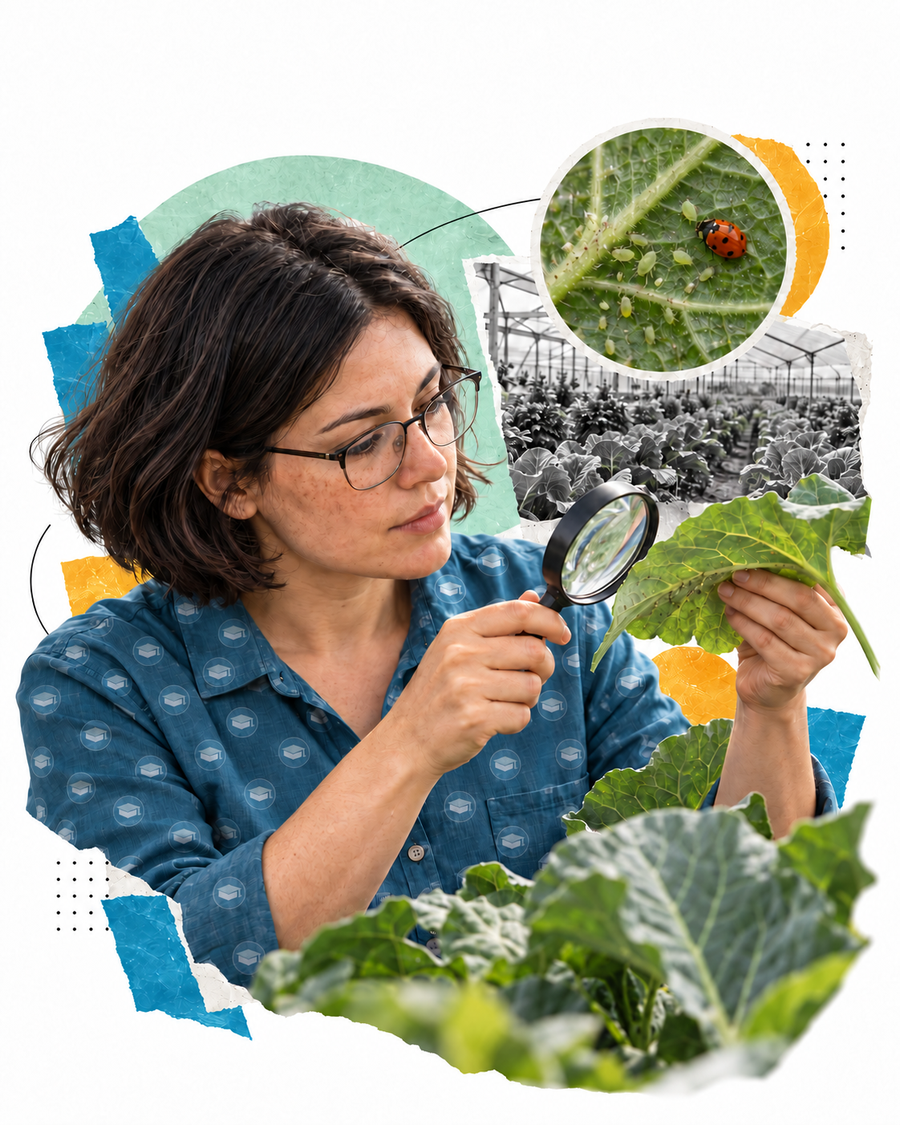
The career allows you to evaluate changes in yield, quality, water consumption, costs or soil condition. This can be stimulating if you are interested in understanding how a system works and seeing what improved. The contribution does not always consist of producing more: avoiding an unnecessary application, detecting a disease in time or maintaining fertility also has value.
The ability to measure requires patience. Some results appear during a growing season; others, such as changes in soil properties, require long-term monitoring. You learn to interpret variability and to recognize when the data do not yet allow a conclusion.
The training lets you explore different specialties
You can direct your path toward seeds, horticulture, fruit growing, plant health, soils, irrigation, pastures, research, extension or data analysis. This lets you change the type of problem you tackle as you gain experience. The work can combine field and office, or focus on a laboratory, a company or a public agency.
Not all transitions are immediate: moving from crop advising to plant breeding, for example, may require additional training. The advantage is having a scientific foundation that helps you understand different systems, without having to know all of them in the same depth.
Technology expands diagnostic tools
Satellite images, sensors, maps and models make it possible to detect differences that an isolated field visit may overlook. The professional interest lies in interpreting them: a sign of slower growth can have several causes. Knowing how to compare digital information with field observations and measurements keeps you from turning a tool into an automatic recipe.
These skills can be useful in precision agriculture teams and in research. Their usefulness depends on data quality, costs, and access to connectivity and equipment; buying technology does not replace agronomic knowledge.
You can contribute to food and resource conservation
Agronomic decisions influence the availability and quality of food, but also the water and soils that sustain future production. There are tasks where the goal is to reduce losses, adapt a crop to difficult conditions, or support producers who have little margin for taking risks.
This contribution requires listening to local knowledge and recognizing economic constraints. A technically interesting proposal may be unfeasible if it requires investments, labor, or inputs that the farming family cannot sustain.
There is the possibility of developing an independent practice
With experience and the corresponding authorizations, you can offer advice, crop monitoring or specialized services. This allows you to build your own way of working and choose an area of specialization. You don't need to own a field to practice the career.
Autonomy also involves budgeting, charging, documenting recommendations, and covering transportation, insurance, or instruments. Independence should not be confused with stable income or complete freedom of schedule.
Disadvantages and difficulties of the degree and the work
You make decisions with incomplete information
The weather can change after a recommendation; prices can fall and a pest can behave differently than expected. A reasonable decision does not guarantee a good result. Part of the work consists of making assumptions explicit, comparing risks, and revising what was decided when new data appear.
This can create pressure, especially when a recommendation involves a major investment. You need to communicate uncertainty without promising what you can't control and keep records that allow you to evaluate what happened.
Production rhythms can affect your daily life
In field positions, the planting, monitoring, or harvest windows can concentrate tasks and require travel or schedule changes. Rain can reschedule visits; a health emergency can appear outside regular working hours. The distance between farms also adds driving hours and expenses.
Intensity varies greatly between roles. Before accepting a job, it is important to know who covers travel, how on-call shifts are organized, and what rest periods exist during peak activity. A position in a laboratory or in data analysis has different demands.
Sector diversity does not guarantee employment or good income
The opportunities depend on the region, specialty, experience, and sector investment. Some contracts are tied to seasons or projects. In consulting, there may be months with little income and ongoing costs. In research, stability depends on hiring conditions and funding.
An isolated salary does not describe the entire career: you need to consider dedication, mobility, tools, coverage, and contract type. The breadth of the job field is a possible career path, not an economic guarantee.
There may be conflicts between technical judgment and commercial pressure
If you work for a company that sells inputs, there may be tension between recommending what a system needs and meeting sales targets. There may also be pressure to obtain immediate yield even when the measure increases environmental risks or future costs.
The challenge is to uphold justified recommendations, report alternatives, and recognize conflicts of interest. The professional responsibility includes consequences for producers, workers, neighbors, and natural resources; it does not end with the result of a harvest.
Staying up to date is a permanent part of the job
Varieties, diseases, product resistance, and analysis tools change. Learning to read evidence and recognize its limits is as necessary as knowing a technique. Experience with one crop and region does not automatically transfer to another environment.
What environmental impact does Agricultural Engineering have?
The impact depends on the decisions you support. The career can help reduce harm, but it can also take part in systems that generate it. To evaluate a practice, you have to look at its effects over time and outside the farm, in addition to its yield.
Soil, water, and land transformation
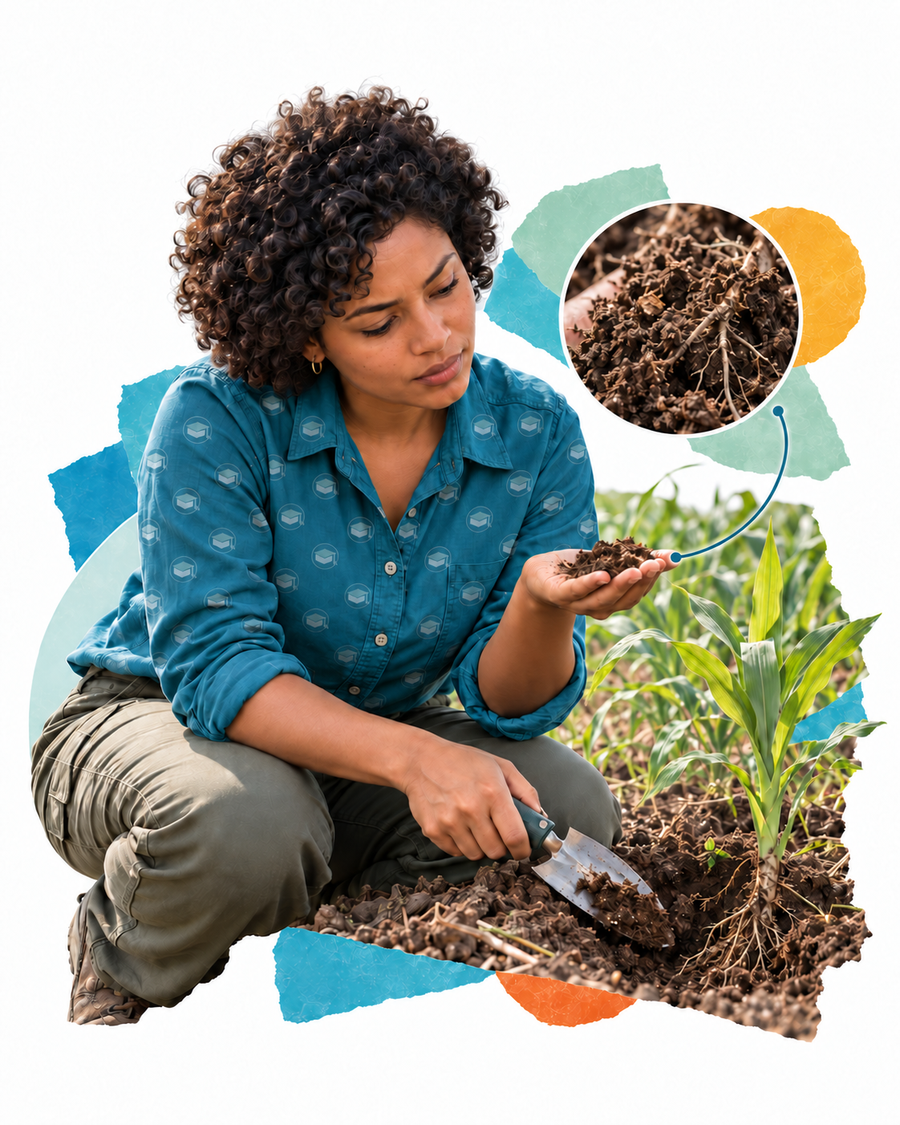
Loss of cover and improper management can promote erosion and degradation. Poorly managed irrigation can contribute to salinization: salts accumulate and hinder plant growth. Converting forests or other ecosystems to expand production can also release carbon and disrupt habitats.
The IPCC chapter on land degradation explains these processes and the possibilities of sustainable management. In agronomic work, this translates into evaluating cover, rotations, drainage, water quality and field conditions. An improvement within the plot must be weighed against its effects on the watershed and nearby ecosystems.
Fertilizers: avoiding both deficit and excess
Extracting nutrients for years without replenishing them can impair fertility. Applying more than the system can use can increase losses to water and greenhouse gas emissions. The FAO update on nutrient balances distinguishes both problems.
Pests, biodiversity and dependence on products
The integrated pest management explained by FAO combines monitoring, prevention and different control measures to reduce economic, health and environmental risks. It involves identifying the problem and deciding whether intervention is needed; not assuming that any insect requires an application.
Diversification can also bring benefits. The synthesis by Tamburini and colleagues, published in Science Advances in 2020, brought together 98 meta-analyses and found overall improvements in biodiversity and ecosystem services without an average reduction in yield.
How can working in this career affect the body?
There is no single physical effect of “being an agronomist”. Exposure depends on the tasks, the length of workdays, the environment and prevention measures. Evidence on agricultural workers helps identify hazards, but does not allow attributing the same risks to someone who works mainly in an office.
Heat, solar radiation and noise
Prolonged field rounds can expose you to heat and sun. Intense heat can cause exhaustion or heat stroke; sun exposure can cause burns and increase the risk of skin cancer. Near machinery, loud noise can damage hearing.
Prevention requires organizing schedules, breaks, water and shade, and providing protection appropriate to the task. For heat, NIOSH also recommends a gradual adaptation of new workers or those returning to hot environments. Personal tolerance does not replace preventive organization of work.
Back, neck, joints and fatigue
Taking samples by crouching repeatedly, carrying equipment or maintaining uncomfortable postures can strain the back and joints. Driving hours and dashboard tasks also need an ergonomic assessment.
The NIOSH guide on ergonomic risk factors helps to understand these loads. Suitable tools, aids for moving equipment and workstation adjustments can reduce demands. It should not be assumed that all professionals will develop pain or injuries.
Chemicals, dust and safety conditions
In tasks related to pesticides there may be exposure through contact, inhalation or entry into treated areas. The risk depends on the product, the dose, the route and the conditions of use. Not all agronomists prepare mixtures or apply products. NIOSH maintains a pesticide illness and injury surveillance program, which shows why these exposures require prevention and recording.
Depending on the task, you also need to assess dust, laboratory substances, and moving equipment. The ILO compendium on safety and health in agriculture addresses hazard assessment and control. Protection is not just about wearing gloves: it includes procedures, training, maintenance, and task organization.
Work focus, travel, and responsibility for costly decisions can also cause fatigue and stress. When choosing a position, it is worth considering breaks, technical support, and working conditions alongside pay.
Where do they work?
You can work in production farms, cooperatives, seed companies, nurseries, laboratories, research teams, extension services, consulting firms, and public agencies. The following examples cover Latin American countries.
Argentina: interpreting differences within a crop
In Urundel, Salta, INTA documented the use of satellite imagery and LiDAR in sugarcane fields to compare management zones with crop structure. An agronomist on a precision agriculture team can integrate maps, measurements, and field visits to investigate why sectors differ. This INTA study on sugarcane illustrates the diagnostic process.
Bolivia: adapting quinoa management to the environment
In systems of altiplano quinoa, an advisor can connect soil, water availability, and the characteristics of the cultivated materials. The FAO platform on quinoa production describes the diversity of environments and ecotypes. The professional challenge is to assess which combination works locally, also considering the knowledge and resources of the farming community, without treating all areas as equivalent.
Brazil: combining crops, livestock, and trees
The Embrapa crop-livestock-forest integration line works with systems that integrate productive activities in the same area. An agronomist can participate in rotation design, pasture evaluation and pasture monitoring and tracking interactions with trees. Integration requires aligning timelines, resources and investments; its benefits do not appear automatically just by bringing components together.
Chile: adjusting irrigation after heavy rains
INIA Intihuasi published recommendations for Coquimbo orchards after heavy rains in 2026. The case shows a specific role: assessing soil moisture, irrigation system condition and root risks before resuming work. The INIA guidance for fruit tree management shows that advising also involves deciding when to suspend a routine practice and when to resume it.
Colombia: evaluating an agroforestry system with cacao
The AGROSAVIA manual on agroforestry systems with cacao integrates productive aspects and implementation costs. A professional can work with a producer association to evaluate shade, component layout and economic viability. The challenge is keeping the system working for several years: competition between plants, labor required and investment payback times must be considered.
Ecuador: linking breeding and cacao quality
The Programa Nacional de Cacao del INIAP links research on genetic materials with quality evaluation. This illustrates jobs that combine field and laboratory work. A specialized agronomist can participate in trials and evaluation of materials, considering productivity and product characteristics. Choosing only for harvested volume can leave out attributes relevant to its commercial destination.
Paraguay: trialing sugarcane varieties
The campo experimental del IPTA en Natalicio Talavera describes trials of varieties, propagation materials and sugarcane health problems. A professional can compare agronomic performance, health and industrial suitability. The task does not end with identifying the variety with the highest production in a trial: its adaptation to other environments and its performance over successive cycles also matters.
Peru: managing risks in potato production
The manual de manejo integrado de papa del INIA addresses pests, diseases and constraints such as frost or drought. An agronomist can support producers in evaluating materials and management decisions. The challenge is to separate causes that produce similar damage and propose viable measures for family farming, considering product quality and yield.
Uruguay: linking pastures and livestock production
The area of pasturas y forrajes del INIA de Uruguay shows a specialty linked to livestock systems. An agronomist can evaluate forage availability and seasonal changes to support grazing decisions. Their work seeks to reconcile animal nutrition and vegetation persistence. A short-term improvement must be evaluated together with its effects on the resource that sustains subsequent seasons.
Venezuela: prevention and management of agricultural risks
The FAO project portfolio in Venezuela includes assistance for risk management in comprehensive agricultural health and nutrition during 2025–2027. As an example of a role, an agronomist can contribute plant diagnosis, record-keeping and risk communication in interdisciplinary teams. These are prevention and coordination tasks; this reference does not allow attributing specific results to the project or substituting the health responsibilities of other careers.
Mexico: improving corn management with limited resources
INIFAP has shared technologies for efficient corn production in Baja California Sur. An advisor can compare management alternatives and costs before recommending changes. Follow-up makes it possible to check whether the result justifies the investment and resource consumption.
Guatemala: corn and adaptation to drought and diseases
The ICTA Corn Program includes adaptation to drought, disease resistance and nutritional quality. An agronomist can participate in evaluating materials and transferring knowledge to small producers. This case brings together different objectives: producing, reducing vulnerability and addressing food characteristics. Adaptation must be verified in local environments; one material alone does not solve all constraints.
Honduras: research and support work on beans
DICTA brings together management guides and fact sheets for bean varieties, including materials such as Lenca Precoz and Deorho. An agronomist can work on material trials and crop monitoring with producers. They need to record the conditions of each plot and distinguish between water, plant health and management problems. Recommendations must respond to the data obtained, avoiding extrapolating the performance of one material to the whole country.
El Salvador: extension work in contact with producers
The CENTA extension agency network illustrates a territorial field of work. An agronomist can support consultations, diagnoses, and adoption of practices on farms. The challenge is not only explaining a technique: it is also understanding available resources, documenting problems, and following up. Close contact with producers requires communicating clearly and recognizing when another specialty needs to be brought in.
Nicaragua: evaluating rice for rainfed conditions
INTA introduced a rice variety developed for rainfed conditions, where the crop depends on rainwater. This makes it possible to imagine a role in experimentation or advisory work: comparing materials under different moisture regimes and recording their performance.
Costa Rica: bean varieties and seed quality
In March 2026, INTA reported on its applied research on beans and provision of quality seed. An agronomist can join teams for evaluation, multiplication, or monitoring of materials. The work requires controls and traceability, as well as field observation.
Panama: coordinating decisions in rice cultivation
The IDIAP recommendations for rice connect water, soil, varieties, weeds, fertilization, and plant health. An agronomist can accompany a rice growers’ association to evaluate those decisions together. The challenge is to avoid isolated changes: a variety, a planting date, or a management practice must be judged within the system and the climate risks it faces.
Cuba: diagnosing soil limitations
FAO documented the strengthening of soil laboratories in Las Tunas, Villa Clara and Matanzas within the IRES project. This soil and water analysis case in Cuba shows an area of work between the laboratory and the farm. An agronomist can interpret results to differentiate limitations and support conservation measures, ensuring that the diagnosis leads to changes that can be verified.
Dominican Republic: integrating management and risks in bananas and plantains
The Dirección General de Riesgos Agropecuarios offers a banana and plantain cultivation guide. An agronomist can support monitoring of a plantation, linking crop status, water and land conditions. The work can also include records to assess production risks. Decisions need to consider continuity of management and costs, as well as market demands.
Haiti: recovering production and livelihoods
FAO describes support actions to recover food production in Haiti. In that context, an agronomist can contribute needs assessment, productive support and follow-up in cooperation teams.
Does this degree fit what you are looking for?
Agronomy may interest you if you are drawn to explaining living processes, working with data and accepting that a recommendation needs to be tested. Also if you want your work to have concrete consequences for food, resources and production decisions. You do not need to be excited about every specialty: what matters is recognizing which problems you would like to understand in depth.
If you still haven't found a clear direction, you can explore your interests before choosing. Start with our career test. Use the result to identify what attracts you to Agronomy: understanding plants and soils, doing research, solving problems with technology, or supporting production decisions. That difference can help you recognize a specialty that interests you; the test raises questions about your preferences and does not determine your aptitude nor guarantee that a degree is the right fit.