
Librarian
What is a librarian?
A librarian is a professional trained in information sciences. Working in a school, a local library, or even for the government, a librarian helps those who need informational items and services, while also handling the management and organization of those materials.
Librarians are responsible for a vast amount of information, from the classic management of books and periodicals to more modern responsibilities that include audio and video recordings, as well as digital resources.
What does a librarian do?
There are different kinds of librarians in this modern era, including public service librarians, reference and research librarians, technical services librarians, collection development librarians, archivists, systems librarians, electronic resources librarians, outreach librarians and school librarians. The general duties of each of them are described below.
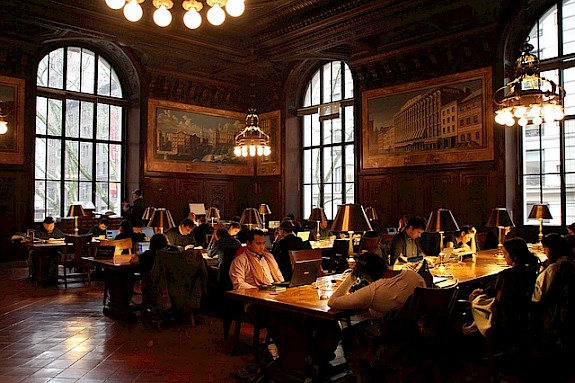
Public Service Librarians
They spend their time working with the public in many local libraries around the world. They provide appropriate material for each age range from child to adult. A public service librarian advocates for reading proficiency with many libraries offering services for children that help with early learning.
Reference and Research Librarians
They specialize in research assistance. An interview is often conducted with the individual requesting research help to help organize the appropriate materials and services that will be needed for the research. Research often involves a very specific subject and a reference and research librarian will give directions on the appropriate database, along with locating and organizing any specialized material that is needed.
Technical Services Librarians
The staff involved in ordering materials and subscriptions, as well as any other equipment needed by the library. Librarians working in this department will oversee new materials, supervising the processing and cataloging of each one. Excellent organizational skills are required for this position and strong communication skills are suggested, as well as a keen interest in research.
Archivists
They are often specialized librarians. They manage many manuscripts, documents and records, which vary by country or region. There are many paths to this career and duties may vary between countries.
Systems Librarians
They are responsible for maintaining the systems used in the library. They often troubleshoot problems that arise in library cataloging, as well as developing those systems as needed. Systems librarians must have a strong background in computing, since these librarians are responsible for maintaining the computer systems used for record keeping.
Electronic Resources Librarians
They are responsible for managing databases. Librarians in this field will need experience with licensing for electronic resources, including individual journals, databases and e-books. They will also need to have strong problem-solving skills and a good knowledge of the use of these resources. The ability to obtain, compile and analyze usage data is strongly recommended given the large number of resources that must be handled in this field.
Librarians
They are responsible for promoting library resources and services, as well as working to develop research skills in students. This type of librarians will be active in social media forums on campuses, making visits to dorms, and even developing physical and online exhibits. Excellent communication skills are suggested for this field, as this type of librarians will deal directly with students to help further their education.
School Librarians
Help with students' educational needs directly, through the latest information technologies as well as traditional materials. This type of librarians will work with students, guiding them in the use of the systems available in the library, as well as recommending the right materials needed for research and learning. School librarians help promote student education, helping teachers develop a curriculum and acquire the materials needed for classrooms.
Medical Librarians
They focus on helping people access information about medical sciences and health care. They can be found working in hospitals, insurance companies, medical schools and other facilities that deal with medical information.
Catalog Librarians
They identify: author, title, publication date, place of publication, edition, ISBN number, illustrations, subject, size, etc. of a book. The catalog librarian then puts that information into a machine-readable cataloging format that allows the library catalog to find the book you are looking for when you perform a search.
What is a librarian's workplace like?
A librarian can be found working in many places, including university campuses and universities, law offices, courts, local library buildings, public schools and even in museums. The duties of each position often vary, with a recurring educational theme in their work.