
Botanist
Botany focuses on the study of plants, their growth cycle, structure, function, classification, distribution and reproduction.
Botany is a branch that depends on biology.
Botany is diverse and has many specialties, it studies plant life and its relationship with soils, the atmosphere, and other living beings.
If you are interested in the environment, you are very curious, organized, a plant lover, you enjoy biology, botany may be a degree for you, botanists have a deep love for plants and nature.
What is a botanist?
Botanists are scientists who study plants in their entirety from their habitat, their cellular structure to their reproduction.
Botanists who specialize in agriculture or agronomy try to develop new varieties of crops that better resist diseases, or may try to improve the productivity of some crops.
Botanists dedicated to research work in research centers within universities, reserves, schools, botanical gardens.
Ecologists study the connection between plants and animals and the physical environment. They can restore native species in areas, repair damaged ecosystems, help restore lost or altered ecosystems, clean up pollution and carry out species control and work on pollution problems.
Forest ecologists focus on forest species and their habitats, such as forest wetlands. Related studies include forest genetics and forest economics. Jobs in forestry include working in the management, maintenance and improvement of forest species and environments.
Mycologists study fungi and apply their findings in agriculture, medicine and industry for the development of drugs, medicines, molds and yeasts. They may specialize in research and development in a field such as antibiotics.
Ethnobotanists research how human beings relate to their plant environment, they study how plants are used by a particular culture or ethnic group.
Plant cytologists use powerful microscopes to study plant tissues in order to discover why some cells become malignant (unhealthy) and cause the plant to get sick or die.
The toxicologists study the effect of toxic substances on organisms, including plants. The results of their work can be used in regulatory actions, product labeling and other areas.
Places where a botanist works
Botanists work in a wide variety of settings from greenhouses, nurseries, botanical gardens and herbaria. A botanist can spend a lot of time outdoors, rain or shine.
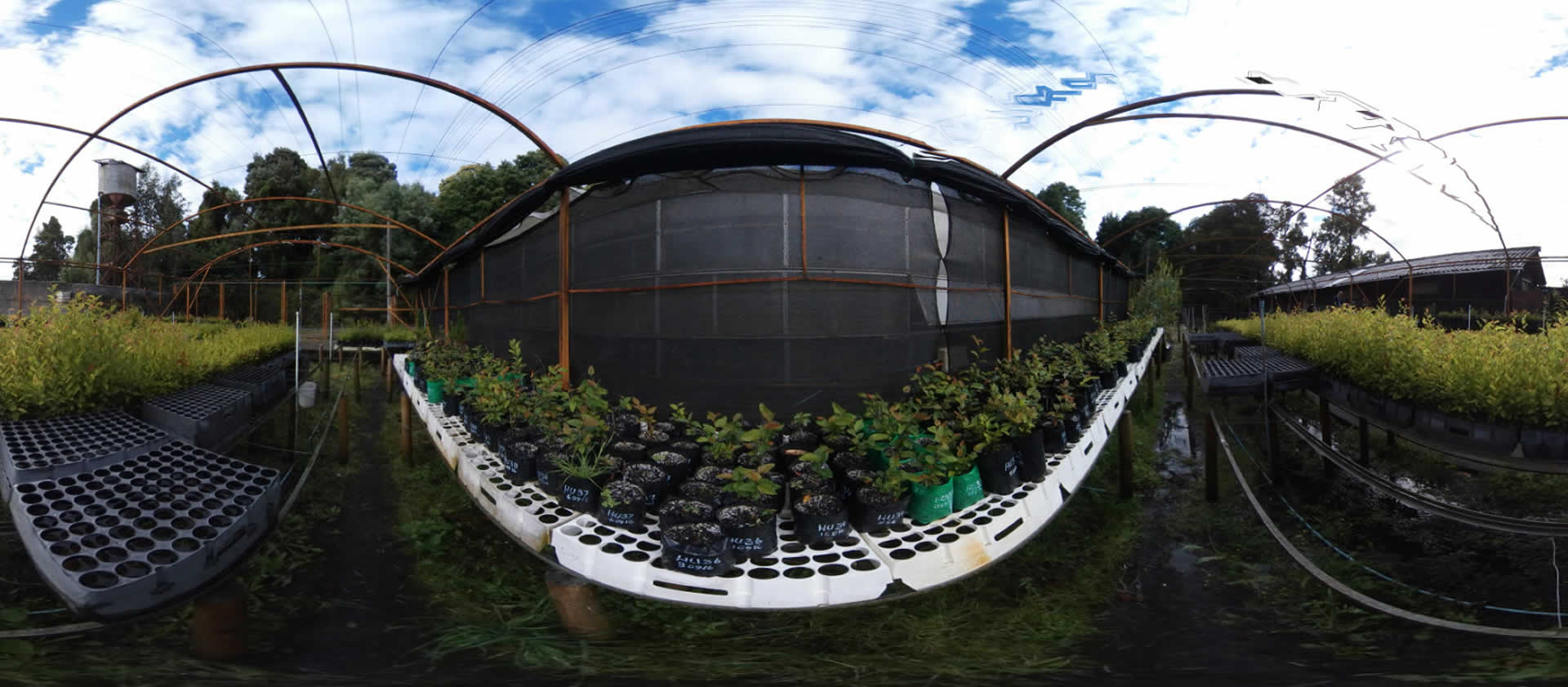
The botanists work in different settings for both the private or public sector, for example within government agencies, within a ministry (Agriculture or Environment), within Hospitals or Public Health Services, within the Biological Control Agency, in Aeronautics, etc.
Some botanists work in public parks or greenhouses, others give lectures and teach classes sharing their experience in the field, in other cases depending on the project botanists spend their days inside a laboratory analyzing and writing the results of a research project.
In the early years of career the first work experiences that a botanist develops in many cases are as, helper, assistant or laboratory technicians.
Botanists can work:
- Within a government entity, in agencies, government research centers, in Public Health, within the Department of Environmental Protection, Ministry of Agriculture or in industries such as food or pharmaceutical, etc.
- In the creation of new products.
- In seed and nursery agribusinesses or fruit production.
- In companies producing biological, chemical, environmental supply, food, wood and paper.
- In the food industry, when working in sectors of agriculture, agronomy, conservation, forestry and horticulture.
- In nature centers and reserves, parks, arboretums, etc.
- In the educational area in research and teaching institutions for the public and private sector within schools, centers and in universities.
- In biotechnology, biological, chemical, environmental supply, food, wood and paper, pharmaceutical, for greenhouses, petrochemicals.
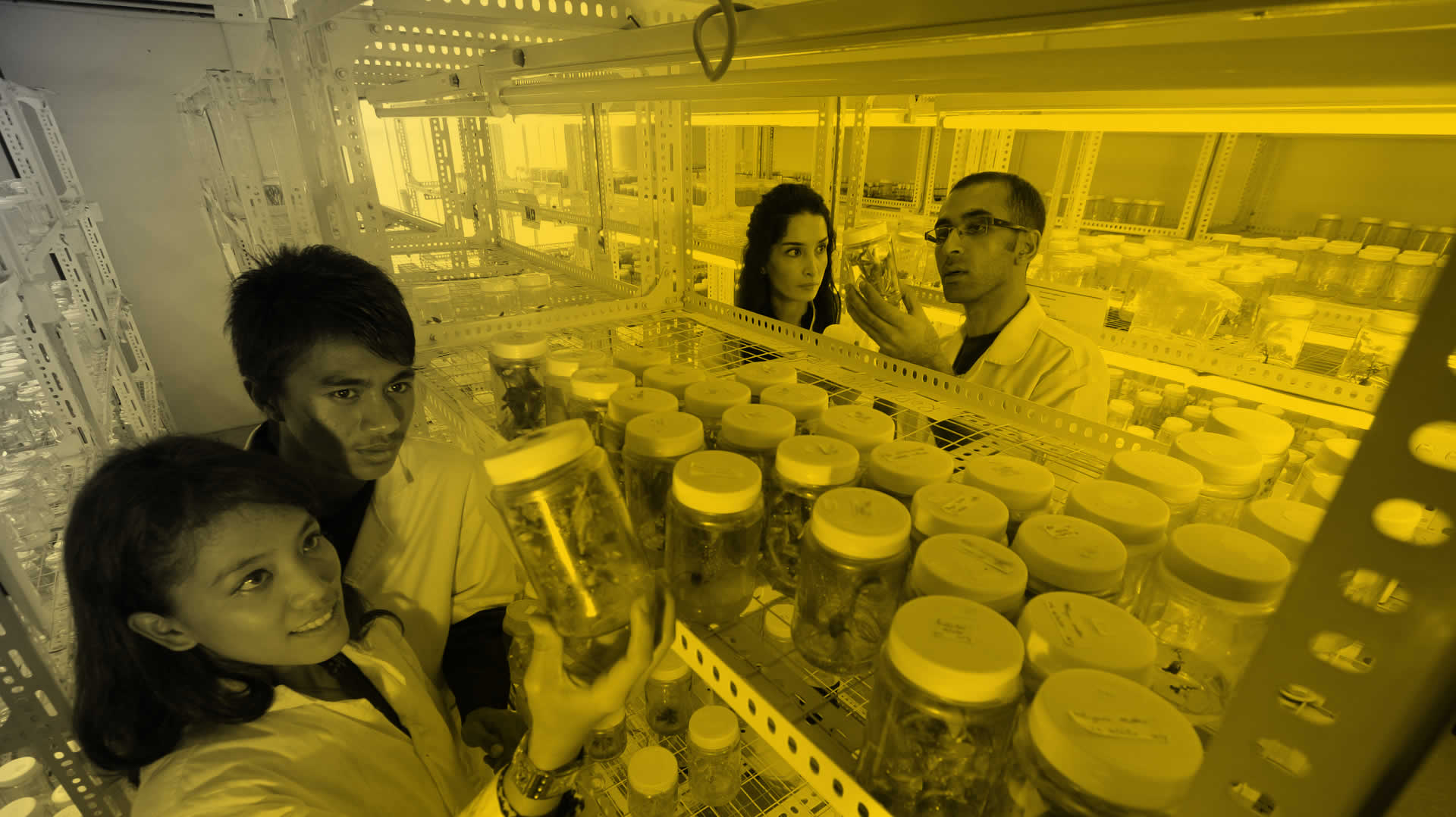
A botanist's research is carried out in laboratories, experimental stations (research sites found at many universities), botanical gardens and other facilities.
Activities a botanist can perform
- Manage tasks related to biodiversity conservation in a given geographic area.
- Manage social policies aimed at strengthening people's economy through the sustainable use of resources.
- Organize and lead interdisciplinary teams.
- Design teaching and training processes, working as a knowledge-multiplying agent.
- Formulate and evaluate research projects.
- Advise and lead productive projects that benefit the population.
- Provide training, workshops and courses to communities.
- Develop and lead natural resource conservation programs.
- Develop conservation strategies for a country's species.
- Analyze issues related to natural resource conservation and its social impact, propose solutions associated with the use, management and conservation of the country's resources.
- Analyze and propose plants of economic importance that are part of the diversity of the national flora.
- Develop research and development projects in the area of botany.
- Manage and negotiate programs and projects for sustainable development and resource conservation.
- Work in higher education as a teacher and researcher, in government entities focused on natural resources and international organizations.
- Design, manage, evaluate development programs and projects related to the management and conservation of a region's botanical resources.
- Participate in training and conservation processes for citizens.
- Plan and lead development processes involving the use of flora so that they lead to its use, conservation, rational and sustainable use, emphasizing multiple use as a source of development at the local, regional and national level.

Do you think you are interested in Botany?
Activities you can do to find out if botany is for you:
- Visit natural centers, botanical gardens, Arboretum, parks, and natural science museums.
- Attend scientific exhibitions.
- Practice hiking, camping, sailing, canoeing, swimming or photography.
- Develop gardening and floral design activities.
- Practice outdoor hobbies.
- Collect flowers, leaves, indoor plants.
- Work part-time or as a volunteer in a greenhouse, nursery, state park, or camp.
- Read scientific publications.
- Support or participate in natural resource preservation efforts.
- Undertake nature studies or rural expeditions.
Become a Botanist
To prepare for a career in botany, high school students should explore their interests in biology, doing science projects involving plants, working during the summers on square or park care projects.
To become a botanist, you need to learn at university level, therefore you need to have your high school diploma to be able to attend university to study for at least 4 years and obtain a bachelor's degree in Botany, although training never ends and you can later specialize by taking specialization courses, postgraduate studies or a master's degree.
The subjects you should pay special attention to during high school are subjects related to biology, science, chemistry, physics, computing, mathematics and as a language preference English, since most scientific publications are first published in that language.
With a bachelor's degree, a botanist's first job may be as an assistant within a project or technician for a laboratory. Those with a master's degree could get work at a university within a research project. Someone with a doctorate could get a job in research and development for example in the pharmaceutical industry.
As scientists, botanists need to be patient since some research spans many hours to years of work.
As a botanist you need to have the ability to work independently, although in various projects scientists work in contact with other scientists and cooperate with one another, comparing the results of their work.
The tasks that a botanist can perform cover a broad spectrum of work: from researching the medicinal properties of plants to classifying the various species of vegetables. But what degree is most suitable to pursue the career of botanist?
People who work in botany usually come from these degrees.
What degree should you study to be a botanist?
- Degree in Biological Sciences.
- Degree in Agronomic Engineering.
- Degree in Biology (specializing in botany or plant biology).
- Degree in Forestry Engineering and the natural environment (specializing in botany).
- Degree in Montes Engineering (specializing in silviculture).
What skills should a botanist have?
- Precise and attentive to detail.
- One of the skills you need to be a Botanist is to feel love and passion for nature; it is a completely curious profile, with a great interest in public health and safety.
- Perseverance and great tolerance for frustration; you need to have great observation skills, patience and concentration for long periods of time during research and in collecting and analyzing data.
- Botanists are great readers, committed to continuous training in their field, with skills in writing, speaking and memorizing.
- They have communication skills to clearly explain a scientific project.
- They have physical endurance, good vision and manual dexterity, and are inclined to carry out outdoor activities.
- To practice competently in the world of botany you need:
- Organizational skills to plan projects and experiments.
- Ability to work in a team.
- Ability to work methodically on field and laboratory tasks.
- Patience and perseverance to repeat experiments.
- Interest in the environment and bioethics.
- Ability to explain the results obtained concisely.
- Ability to learn about the use of different types of equipment and technology.
Although botany has traditionally been considered a branch of biology, botanists come into contact with other areas in their day-to-day work.
Some branches of Botany
- Plant anatomy or organography.
- Applied botany.
- Marine botany.
- Plant systematics.
- Pure or general botany.
- Systematic botany or plant systematics.
- Plant cytology.
- Dendrology.
- Plant ecology.
- Phycology.
- Plant physiology.
- Phytogeography or geobotany.
- Phytography or descriptive botany.
- Plant histology.
- Mycology.
- Plant morphology.
- Paleobotany.
- Palynology.
Main branches of botany
Phytochemistry
Phytochemistry is the study of phytochemicals, which are chemicals derived from plants.
Cell biology
Cell biology is a branch of botany and biology that studies the different structures and functions of the cell and focuses mainly on the idea of the cell as the basic unit of life.
Cell biology explains the structure, physiological properties, metabolic processes, signaling pathways, life cycle and interactions with its environment. Research in cell biology is closely related to genetics, biochemistry, molecular biology, immunology and developmental biology.
Histology
Histology is an essential tool of botany, biology and medicine. Histology is the study of the microscopic anatomy of plant and animal cells and tissues. It is commonly performed by examining cells and tissues under a microscope, after the sample has been sectioned, stained and mounted on a microscope slide.
Phytopathology
Plant pathology is the scientific study of diseases in plants caused by pathogens and environmental conditions. Phytopathology also involves the study of pathogen identification, disease etiology, disease cycles, economic impact, epidemiology of plant diseases, resistance to plant diseases, and how plant diseases affect humans and animals.
Phytogeography
Botanical geography is the branch of biogeography and botany that deals with the geographic distribution of plant species and their influence on the earth's surface.