
Biotechnology
The Biotechnology (biological technology) combines and applies science and technology to living organisms.
Biotechnology is an integrative discipline that brings together a group of disciplines that study living beings, with the aim of deepening knowledge and obtaining goods and services using different genetic engineering techniques, for example to alter and transfer genes from one organism to another.
In recent years Biotechnology has unfolded its potential with the development of modern techniques of molecular biology, cellular, genetics (the science that studies heredity, that is, the transmission of the traits that a living being passes on to its offspring) in combination with engineering and it is also complemented with knowledge in the fields of bioinformatics, bioethics, legislation, economics and administration.
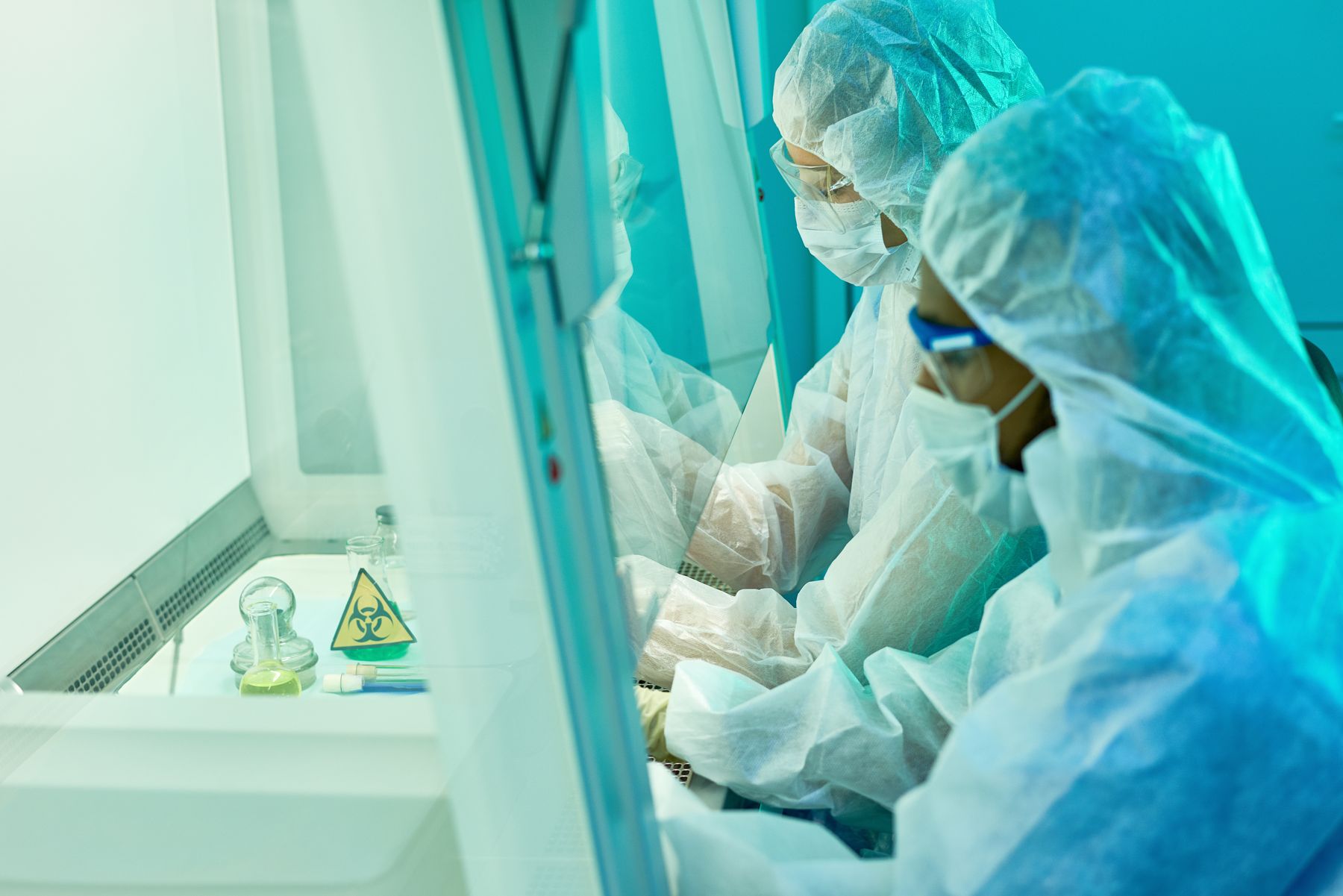
The degree in Biotechnology awards after 3 years of coursework (in some cases) the intermediate qualification of Higher Technician in Chemistry and Biotechnology and the final qualification of Licenciatura en Biotecnología, Grado en Biotecnología, or with a double degree as is the case of the Licenciatura en Biotecnología y Biología Molecular.
In Spanish-speaking countries the coursework is generally in Spanish and some curricula include subjects in English (especially for the use of specific terminology). In most Universities the Faculty that teaches this degree is the Faculty of Science or Biological Sciences.
Objectives of the Biotechnology degree
- The objective of the degree in Biotechnology is generally to train university professionals with solid knowledge in biological sciences and molecular biology techniques to carry out biotechnological projects.
- To prepare scientific leaders with technical capabilities and tools to develop knowledge-based processes. Professionals in Biotechnology use biology to improve people's quality of life.
- To foster professionals with a scientific profile and capacity for experimental design, the application of science and technology with an integrative vision of processes on an industrial scale.
- To train professionals with integrative capabilities and solid knowledge in experimental work methodologies, application of living organisms and production processes.
- To develop professionals with solid scientific-technological knowledge focused on biological study and production.
Entry profile
Motivated student with a great interest in science and technological applications.
Graduate profile
The Biotechnology degree graduate must know the techniques to improve industrial processes and develop new processes based on knowledge.
The University graduate has the ability to execute, deduce, modify and develop working methodologies, including the extraction, purification, modification and preservation of macromolecules of biological importance, such as proteins and nucleic acids.
The graduate has a deep knowledge of Biological Chemistry, Molecular Biology, Cell Biology, Genetics and Microbiology, Physics, Mathematics and Statistics and solid training in scientific research.
The Bachelor's Degree in Biotechnology trains professionals with 2 distinct profiles:
Researcher/Teacher
The work field of a Researcher or Teacher includes public scientific and technological research centers, University research centers, private research centers and Research and development (I+D+i) departments of companies, among others.
Industrial Biotechnologist
The Industrial Biotechnology professional is trained to join teams dedicated to the analysis of biotechnological processes and the management of research teams, control of biotechnological processes in plants and production units, design and development of new products, creation of goods and services.
Career opportunities in Biotechnology
The career opportunities for Biotechnology graduates:
- Teaching in private or public centers.
- Consulting in centers, Universities, Government Agencies, Public and Private companies, Industries, biotechnology centers, microbiology laboratories, chemical analysis laboratories, pharmacology laboratories, quality control laboratories, microbiology laboratories, Research and Development centers.
- Development and control of Research tasks in universities, public or private hospitals, research institutes.
- Development and research in the pharmaceutical, agri-food, veterinary or environmental industry.
- Innovation in biological processes for pest control, animal and plant production and protein engineering, microbiology, genetics, bioremediation, molecular diagnostics, immunology.
- Optimization of processes for exploiting biological resources at industrial level.
- Analysis and exploitation of biological resources in companies in the agri-food, environmental, biomedical, pharmaceutical sectors, etc.
- Develop innovative projects.
- Lead multidisciplinary teams dedicated to the design, development and analysis of biotechnological processes aimed at obtaining products, goods and services,
- Manage and control biotechnological processes in plants and production units.
What does a Biotechnologist do?
- A Biotechnologist is trained to carry out studies and research related to Biology, Biochemistry, Cell Biology and Molecular Biology.
- Develops products originating from genetic manipulation of cells.
- Controls the quality of products and raw materials in industries.
- Develops different laboratory diagnostic systems in humans, animals and plants, based on biotechnological applications of Immunology and Molecular Genetics.
- Consulting and expert assessment in relation to its biotechnological applications.
Why study Biotechnology?
- Because it has a multidisciplinary approach that brings together the scientific aspects that pave the way from basic research to its application.
- Because it is the use of bio-medical scientific knowledge with the objective of developing products and services for society and the environment.
- Because it uses living organisms to generate resources and services.
- Because through Biotechnology, it is possible to produce fuels, medicines, food products, vaccines, chemical products, enzymes (protein that promotes or activates a chemical process without being altered or destroyed.) and plastics, etc.
- Because you work in a scientific and creative environment, in the development of resources and services useful for society.
- Because Biotechnology directly impacts the productive structure of any country, improving the conditions and quality of life of its inhabitants.
Biotechnology has applications in different areas such as agriculture, industry, the environment, health. Its field of study is between biology, biochemistry and chemical engineering, and it has, in addition to this, an enormous influence in fields such as medicine, pharmacology, microbiology, among others.
In the environment, the application of Biotechnology is involved in:
- Detection of substances: Use of fungi, plants, microorganism (microscopic organism), bacteria (microorganism composed of a single cell characterized by not having a nucleus) and others that function as biosensors by detecting the presence of specific substances.
- In the treatment of contaminated liquid waste For example during the cleaning of oil spills using bacteria.
- In the treatment of solid waste for example use of fungi for the degradation of organic waste.
In Industry, the application of Biotechnology is involved in:
- In the manufacture of food products and beverages, such as beer, wine, cheese and bread.
- In the production of citric additives which for example is obtained naturally by extraction from citrus fruits.
- In the production and application of flavorings in liquid or paste form, they are preparations of substances extracted from nature or artificial substances, of legally permitted use, that act on the senses of taste and smell.
- Use and application of colorants, for example indigo blue which is used to produce the denim fabric with which blue jeans are made.
- The production and use of fuel alcohol and the impact that waste generates on the environment.
- In the production of detergents.
In Agriculture, the application of Biotechnology is involved in:
- Detection and development of disease diagnostic systems.
- In the use of living organisms or the substances produced to improve crop productivity or for pest and weed control.
- For genetic improvement (Improvement: set of procedures used to obtain offspring of plants or animals with better characteristics than the parents.) and in vitro cell and tissue culture.
- For large-scale plant production.
- Manipulation of plants and animals through crossbreeding (Mating between two individuals of the same species to produce offspring) of those previously selected for their qualities.
- For improvement programs and generation of diversity, evolution, population genetics studies.
In the area of human and animal Health, the application of Biotechnology is involved in:
- Detection and development of disease diagnostic systems.
- Gene therapy: it involves introducing specific genes into a patient's cells to fight certain diseases. It is the treatment for diseases of genetic origin through the replacement and/or modification of genes that function abnormally.
- Creation of vaccines, for example the hepatitis B vaccine obtained through the modification of yeast (single-celled fungus that can take part in fermentation processes).
- Production, evaluation and control of antibiotics, vitamins, insulin.
- Molecular identity: it allows the identification of people through genetic sequence patterns for paternity testing and forensic genetics.