
Why study Biotechnology?
Technology is the use of techniques and science to manufacture products or modify processes. Biotechnology is the use of living organisms, also known as "bio", to manufacture products or modify processes.
What Is Biotechnology About?
Biotechnology is the use of cells and the cellular process to improve our world and help fight disease, develop renewable fuels, reduce our environmental impact and grow more food.
Before we can move on to the application, we have to understand how living beings work. In fact, that is why every major breakthrough in biology knowledge is followed by a new biotechnology. For example, in 1865, Gregor Mendel discovered the Law of Heredity, which basically says that biological traits are transmitted to the next generation through particular proportions and are expressed according to dominance. Later, this would lay the foundations for artificial breeding in agriculture, where animals and plants are selectively bred to develop specific biological traits.
Today, the central principle of biology lies in genetics or DNA. DNA is building blocks: A, T, G and C, which can be seen as a kind of code of life that is universal to all living beings. A string of these life codes grouped in a particular sequence instructs the formation of specific proteins that result in life as we know it.
This is similar to how alphabets and languages can be considered communication codes and universal to all words. A string of letters or communication codes grouped in a particular sequence instructs a particular word that results in communication as we know it.
The technological application to the understanding of genetics resulted in many applications ranging from transgenic crops and agriculture to gene therapy in medicine. It usually employs the method of introducing DNA from one species into another or silencing existing genes to achieve specific biological traits.
So, in short, biotechnology is the technological application of biology oriented toward serving our lives.
What Is the Profile of a Biotechnology Professional Like?
Anyone who aspires to study Biotechnology should show interest in the area of health, as well as the area of food and agriculture, since these are the fields where they will most be able to perform and apply their professional knowledge.
Biotechnologists also use their knowledge for the development of biodegradable plastics and alternative fuels such as bioethanol and biodiesel.
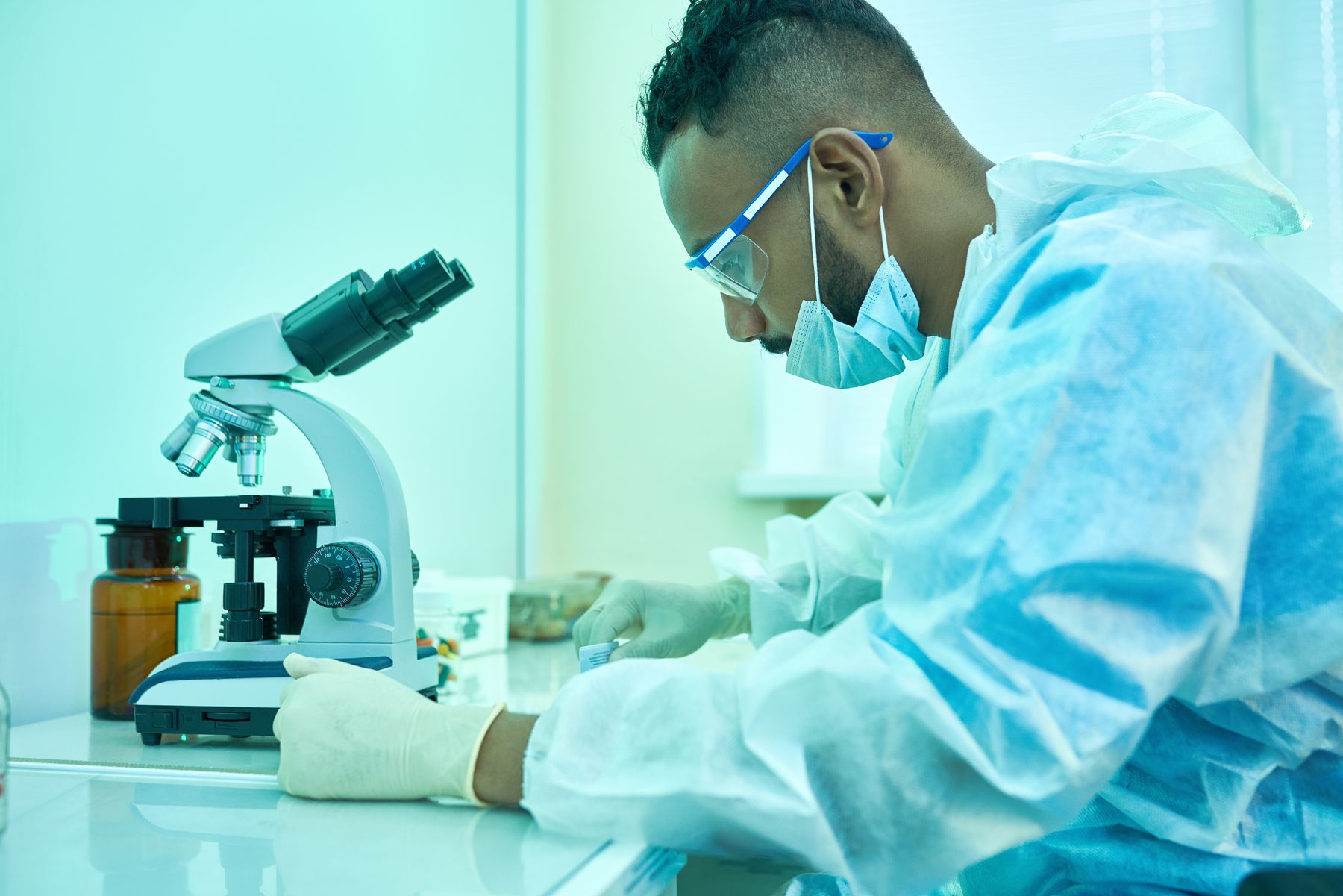
All of the above are processes that are carried out in laboratories, so you must be a person who feels comfortable working in them.
Other qualities that the Biotechnology professional should have are:
- Patience: Their work will require being a methodical and organized person in developing the processes they research.
- Decisive: Problems will arise that the biotechnologist will have to solve decisively.
- Good communication: They must have the ability to explain processes and results precisely and concisely, not only orally but also by writing reports and accounts.
- Numerical skills: The use of statistics is important in biotechnology, so it must be another skill that the biotechnologist has.
- Technological skills: The ability to use new technologies, including information and communication technologies, is another quality they must have.
- Teamwork: Their work will not be the responsibility of one person alone, but of a group, so they must have skills for relating to other people.
Most frequently asked questions about the Biotechnology degree
How long is the degree?
There are schools where the degree is studied in 4 years. However, there are also universities where it lasts 5 and 6 years.
How much does it cost to study Biotechnology?
The lowest price for the first year of the Biotechnology degree is €738 at the Universidad de Oviedo. The highest is at the Universidad Ramon Llull in Barcelona with €14.717. Between the two there are different variations ranging from €757, through €1.200, up to €12.000.
What are the best universities in Spain to study Biotechnology?
According to the 2019 ranking of the best universities in Spain published by the newspaper El Mundo, the best ones to study Biotechnology are:
1. Universidad Politécnica de Valencia
2. Universidad Politécnica de Madrid
3. Universidad Autónoma de Barcelona
4. Universidad de León
5. Universidad Francisco de Vitoria
What cutoff grade is needed to study Biotechnology?
There are universities where the cutoff grade is not applied to study Biotechnology, such as the Universidad Europea de Madrid or the Universidad Francisco de Vitoria. The Universidad Politécnica de Madrid is the highest with 12,914. At the Universitat de València it is 11,980 and at the Universidad de Castilla - La Mancha it is the lowest with 5.
General subjects in Biotechnology
Each school in Spain where the Biotechnology degree is taught has its own curriculum, however, the following subjects are common when studying it:
- Cell Biology
- Physics
- Chemistry
- Genetics
- Plant Physiology
- Mathematics
- Biochemistry
- Statistics
- Bioprocesses
- DNA Technology
- Microbiology
- Bioinformatics
- Biotechnology
- Genomics, Proteomics and Interactomics
- Immunology
- Virology
- Cell Cultures
- Biological Macromolecules
- Metabolism
- Thermodynamics and kinetics
- Advanced Bioethics
- Agrobiotechnology
- Molecular Pathology
- Instrumental Techniques
- Laboratories
Career opportunities and salary
Upon graduating from university as a Biotechnology professional, the salary is about €16,900, which will increase as you continue to train professionally with postgraduate degrees and doctorates, as well as the job level and the research areas where you have developed.
The pharmaceutical, veterinary, agrifood and chemical industries, as well as those related to the environment and mining, are the main ones where a person with a biotechnology degree can find career opportunities.
How to know if this degree is for me?
If you feel a special affinity for laboratory work, for biology, for technology and for genetics, the Biotechnology degree could be an option to consider when choosing your professional future.
Remember, as we said in the section on the profile a biotechnologist should have, that patience, teamwork, problem-solving skills and good communication are other qualities you should consider whether you have or not, before entering this world.