
What is Cloud Computing?
Machine learning, artificial intelligence and computer science converge in a revolutionary synergy that is transforming the way we interact with technology and opening unexplored horizons in solving complex problems.
What is cloud computing?
Cloud computing is a technology that allows access to computing services and resources via the Internet.
Instead of storing and processing data on a local device, such as a computer or a server, remote servers located in cloud service providers' data centers are used.
The main difference between cloud computing and local storage is that in the cloud, data and applications are stored and processed on remote servers, while in local storage, data and applications are stored and processed on local devices.

How does cloud computing work?
Cloud computing is like having a kind of "magic computer" on the Internet. Instead of saving your things (like photos, music or programs) on your own computer, you save them on this magical and virtual "computer". You can access all your things from anywhere using the internet, as if you were using your computer, but without carrying it with you!
Imagine you have a game on your computer (computer or PC), but your friend wants to play too. With cloud computing, you could let your friend play from their own computer, even if the game is saved on the "magic computer". Plus, if you need more space or power to do things, you can ask the "magic computer" to give you more without having to buy a new computer.
Cloud computing is like having a giant virtual backpack where you can put your things and use them from anywhere.
Cloud infrastructure is made up of servers, storage, networks and software that are used to offer cloud services.
Cloud service providers
Cloud service providers offer different types of services, such as data storage, web applications and computing services.
The market of companies offering communication services encompasses a variety of providers that offer cloud services. These providers, which can be of different sizes and approaches, provide technological solutions that allow companies to store and access data and applications online. Among the prominent leaders are large companies such as Google Cloud, Microsoft Azure and Amazon Web Services (AWS), which are considered the main and established players in this field.
There are also smaller providers or those specialized in specific areas, such as IBM, Alibaba, Oracle. Each of these providers has its own advantages and unique features that can be beneficial for different types of companies and needs.
The interesting thing is that many companies are opting for a more diversified strategy by combining cloud services from several providers instead of relying on just one. This choice allows them to select the solutions that best suit their particular requirements.
For example, a company may choose to use a provider that is strong in data analysis and another that specializes in artificial intelligence, taking advantage of the strengths of each one.
In addition, providers that adopt a more open approach to the cloud offer their clients the flexibility to move their data and applications between different environments, whether in the cloud or in on-premise systems, according to their changing needs.

This freedom to choose and customize communication services is a growing trend in today's market.
When using a cloud service provider, such as Google Cloud or amazon web services aws, they gain several advantages:
- Business Flexibility and Speed: Specialists take care of maintenance, allowing you to focus on innovating.
- Cost Optimization: Pay only for what you use, avoiding large upfront investments.
- Simplified Growth: Scale easily as your business expands.
- Reliable Operation: Experts guarantee solid performance.
- Effective Centralization: Access all your services in one convenient place.
- Cutting-edge Technology: Keep your systems up to date with the latest innovations.
- Access from Anywhere: Use your cloud services anytime and anywhere.
- Backup in Difficult Times: Recover quickly from problems thanks to solid contingency plans.
Using the cloud provides flexibility, savings, and peace of mind in case of difficulties.
Private cloud, Public cloud and Hybrid cloud
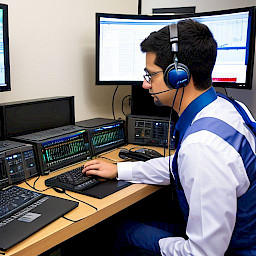
There are three cloud deployment models: private cloud, public cloud, and hybrid cloud. In the private cloud, the infrastructure is located on the organization's premises and is managed by the organization itself.
In the public cloud, the infrastructure is owned by the cloud service provider and is shared by multiple organizations. In the hybrid cloud, the private cloud and public cloud models are combined.

Benefits of cloud computing
Cloud computing offers several benefits, such as accessibility and flexibility, cost savings, and scalability and storage capacity.
Accessibility and flexibility refers to the ability to access data and applications from anywhere and at any time, as long as you have an internet connection.
Cost savings are due to not having to invest in IT infrastructure, such as servers and storage devices. Scalability and storage capacity refers to the ability to increase or decrease storage and processing capacity according to the organization's needs.

Data storage
Data storage in computing is like saving things in a kind of digital box. Imagine you have photos, music or documents on your computer. Instead of leaving them on your dashboard or in a drawer, you put them in this "digital box" so they are safe and you can find them when you need them.
This "digital box" can be a hard drive unit in your computer or an online space, like in the cloud. When you save something in this box, it becomes information that your computer can remember and use later. It's like putting your toys in a toy box so they don't get lost and you can play with them later.
Data storage in computing is essential because it lets you save all kinds of important things, like your favorite photos, schoolwork or even the levels you've completed in a video game. Without storage, every time you turn off the computer, you would lose everything you did. It's as if every time you left the room, your toys disappeared.
Data storage ensures that your things are available when you need them, like having your toys ready to play when you want to have fun!
Disadvantages of cloud computing
Despite the benefits, cloud computing also has some disadvantages, such as dependence on the internet connection, security and privacy issues and service failures.
Dependence on the Internet connection can be a problem if the connection is slow or unstable. Security and privacy issues can arise if data is not encrypted correctly or if the cloud service provider does not meet security standards. Service failures can occur if the cloud service provider experiences technical problems or if there are interruptions in the Internet connection.
What is computing and what are its branches?
Specializations in Computing
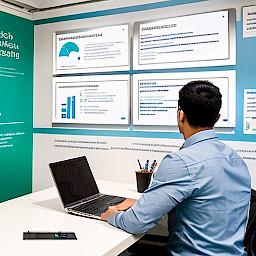
When computing began, in its early stages, it focused mainly on solving mathematical calculations and creating algorithms for scientific and military applications. As technology advanced, its scope expanded to cover areas such as software design, the creation of operating systems, hardware development and data management, giving rise to a technological revolution that has profoundly transformed our society and the way we interact with the digital world.
Administrative Computing: Uses computer technology to manage and optimize administrative processes in organizations and companies. This includes task automation, human resources management, accounting, inventory tracking and other aspects of business administration. Administrative computing seeks to improve efficiency and decision-making in the business environment through specialized computer systems and applications.
Forensic computing: is like being a computer detective. When something bad happens on a PC or tablet, such as information theft or a cyberattack, forensic computing experts investigate what happened. What forensic computing is directly impacts the resolution of legal and criminal investigations by analyzing and recovering digital evidence from electronic devices, such as computers, mobile phones and servers.
This multidisciplinary field uses advanced techniques to discover, authenticate and preserve relevant digital data, which plays a crucial role in presenting evidence in courts and in fighting cybercrime, fraud and other illicit acts in the digital world.
They gather digital clues, such as files, emails and records, to discover who did it and how they did it. It's a bit like solving an online mystery to protect security and uncover the truth in the world of technology.
Legal Computing: Applies computer technology in the field of law to facilitate legal research, case management and legal document administration. It uses computer systems and tools to analyze and organize legal information, search legal databases, manage documents and streamline judicial processes. Legal computing seeks to improve efficiency and accuracy in legal work, allowing legal professionals to access and use relevant information more quickly and effectively.
Environmental Computing: Uses computer technology to monitor and manage data related to the environment, such as air and water quality, to make informed decisions in protecting the environment.
Medical Computing: Applies computing in the healthcare field to manage electronic medical records, conduct medical research and improve healthcare overall.
Educational Informatics: Focuses on the use of computer technology in teaching and learning, creating digital educational tools and resources.
Financial Informatics: Uses computing to analyze financial data, manage transactions and develop tools for decision-making in the financial world.
Automotive Informatics: Combines computer technology with automotive engineering to design and develop control and diagnostic systems in vehicles.
Industrial Informatics: Applies computing to the automation and control of industrial processes, improving efficiency and productivity in factories and manufacturing.
Gaming Informatics: Focuses on video game development, including graphics design, gameplay programming and the creation of interactive virtual worlds.
Space Informatics: Uses computing to analyze and process space data, such as satellite images and astronomical data, for space exploration and study.
Legal Informatics: Applies computer technology in the legal field to manage and analyze data related to legal cases and court proceedings.
Business Informatics: Uses computing to optimize business processes, manage resources and make strategic decisions in the business world.
Bioinformatics: Applies computing to the analysis of biological data, such as DNA sequences, to better understand genetics and biology.
Computer Security: Focuses on protecting systems and networks from cyberattacks and ensuring the privacy and integrity of information.
Cloud computing is a technology that provides access to computer services and resources over the internet. It offers several benefits, such as accessibility and flexibility, cost savings, and scalability and storage capacity, but it also has some disadvantages, such as dependence on an internet connection, security and privacy issues, and service outages.
If you want to learn about computer programming, there are options such as the university technical degree in computer programming, computer, programming and systems courses, and jobs in computer programming.
Learn about computer programming with online courses and gain the skills you need to bring your tech ideas to life and build innovative solutions in the digital world.
For individuals and businesses considering cloud computing as a data storage and processing solution, it is important to keep these factors in mind and carefully evaluate cloud service providers and service level agreements. If used correctly, cloud computing can help you achieve your goals efficiently and accessibly.