
What is Computer Forensics?
Forensic computing plays an essential role in the investigation and prosecution of digital crimes, involving the gathering and presentation of legal evidence.
This branch or specialty of Computing focuses on identifying, collecting, preserving, and analyzing evidence from computer equipment, such as networks and storage devices, for use in legal proceedings. Its scope ranges from securing the integrity of network infrastructure in cybersecurity incidents to protecting data and complying with regulations.
The forensic computing investigation process comprises three phases: pre-investigation, where the framework and resources are established; investigation, where evidence is acquired, preserved, and analyzed; and post-investigation, where the actions are documented and a clear, concise report is generated for presentation.
Overall, forensic computing not only tracks and prosecutes those responsible for digital crimes but also contributes to the prevention of and response to cybersecurity incidents, providing security in both the legal and technological spheres.

Forensic computing experts play a key role in the identification and prosecution of cybercriminals, tracking and prosecuting the guilty parties and interpreting and presenting admissible evidence in court. In addition, forensic computing is applied in the protection of intellectual property, the resolution of labor disputes, damage estimation, and the creation of investigation standards.
Types of forensic computing
There are different types of forensic computing, depending on the type of device or system being investigated. Some of the most common are:
Network forensic computing
This type of forensic computing focuses on the investigation of computer networks, including the identification of intrusions and the recovery of data from servers and network devices.
Mobile forensic computing
Mobile forensic computing deals with the investigation of mobile devices, such as smartphones and tablets. This may include the recovery of deleted data and the identification of suspicious activity.
Hard drive forensic computing
Hard drive forensic computing focuses on the investigation of storage devices, such as hard drives and USB flash drives. This may include the recovery of deleted data and the identification of hidden files.
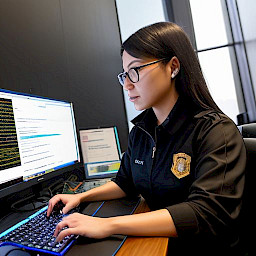
Tools used in the computer forensics process
To carry out a computer forensics investigation, different specialized tools and software are used.
Some of the most common are:
Forensic analysis software
This type of software is used to analyze and extract information from digital devices, such as hard drives and mobile phones. Some examples of forensic analysis software are FTK® Imager and EnCase® Forensic.
Data recovery tools
These tools are used to recover deleted or damaged data from digital devices. Some examples of data recovery tools are Recuva and EaseUS Data Recovery.
Network analysis tools
These tools are used to analyze network traffic and detect intrusions or suspicious activity. Some examples of network analysis tools are Wireshark and Nmap.
Computer forensics process
The computer forensics process consists of three main stages: identification and preservation of evidence, analysis of evidence and presentation of evidence.
Identification and preservation of evidence
In this stage, the relevant digital evidence is identified and measures are taken to preserve it and protect it from possible alterations. This may include creating a forensic image of the device or system under investigation.
Evidence analysis
In this stage, digital evidence is analyzed to extract relevant information and determine its relevance to the case in question. This may include recovering deleted data, identifying hidden files and reconstructing digital activities.

Presentation of evidence
In this stage, the analyzed digital evidence is presented in a readable and understandable format for the judges and lawyers involved in the case. This may include detailed reports and graphic visualizations of the evidence.
Benefits of computer forensics
Computer forensics offers a number of benefits for individuals and organizations in different situations, including:
Help in solving criminal cases
Forensic computing can be used as evidence in criminal cases to help identify those responsible and establish the truth of the facts.
Protection of intellectual property
Forensic computing can be used to investigate and prevent the violation of intellectual property rights, such as patents and trademarks.

Prevention of data loss
Forensic computing can be used to recover lost or damaged data in the event of technical failures or human errors.
Forensic computing has become an essential field in today's digital era. Forensic data analysis and digital forensic investigation are fundamental practices for uncovering proof and evidence in court cases and legal situations. The digital forensic analysis process involves the extraction and thorough examination of data stored on electronic devices, rigorously respecting the chain of custody to guarantee the integrity of the evidence.
In the field of forensic computing, computer forensic analysis plays a crucial role in examining computer systems, networks and devices for possible security breaches, cybercrimes and suspicious activities. Strictly necessary cookies, although common in web browsing, can also play a role in digital forensic analysis, as they can provide clues about an individual's online interaction.
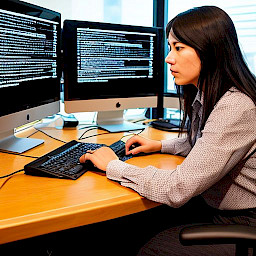
Collaboration between forensic computing experts and legal experts is essential to ensure that proper procedures are followed and ethical standards are respected in digital forensic investigation. The results of a computer forensic analysis can significantly influence the resolution of legal cases and the search for the truth.
Forensic computing and digital forensic analysis play a crucial role in the investigation and clarification of crimes and violations in today's digital environment. Proper handling of the chain of custody, thorough data analysis and interdisciplinary collaboration are key elements for the success of any digital forensic investigation.
Computer forensics is an important branch of computing that focuses on the investigation and analysis of digital data for legal purposes. With the growing use of digital technologies in society, computer forensics is becoming increasingly relevant and necessary for solving criminal cases, protecting intellectual property, and preventing data loss. In the future, computer forensics is likely to remain a key tool in the investigation and analysis of digital data.
Computer forensics is a branch of computing that focuses on the investigation and analysis of digital data for legal purposes. In other words, it involves applying computer techniques and tools to identify, preserve, analyze, and present digital evidence in court cases.
Today, computer forensics is increasingly important due to the growing use of digital technologies in society. From communication via email and social networks to cloud data storage, the amount of digital information available is enormous and can be used as evidence in legal cases.