
Cosmetology
Studying Cosmetology can be an option for those interested in the aesthetic care of the skin, the responsible use of cosmetic products, personalized attention and practical work. However, before enrolling it is important to understand that in Latin America the word “cosmetology” can refer to courses, job certifications, technical programs or university degrees with very different scopes.
Cosmetology does not automatically qualify you to diagnose diseases, prescribe medications or perform medical procedures. The professional field depends on the training obtained and on the regulations in force in the country, state, province or municipality where you want to work.
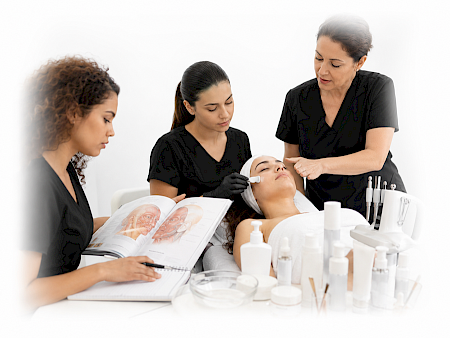
What is Cosmetology?
Cosmetology deals mainly with the hygiene, preservation and improvement of the external appearance of healthy skin and its appendages through cosmetic products, superficial procedures and permitted non-invasive techniques.
For reference, the Administración Nacional de Medicamentos, Alimentos y Tecnología Médica de Argentina defines cosmetics as preparations for external use intended to cleanse, perfume, change the appearance, protect or keep in good condition different parts of the body. You can consult the official ANMAT information on cosmetic products.
Cosmetology is not a branch of Dermatology. Dermatology is a medical specialty dedicated to the diagnosis, prevention and treatment of diseases of the skin, hair and nails. Both fields can be related, but they have different training, responsibilities and legal powers.
Do cosmetology, cosmiatry and comprehensive aesthetics mean the same thing?
Not necessarily. The names vary between countries and institutions:
- Cosmetology: usually focuses on cosmetic products, hygiene, superficial skin care and non-invasive aesthetic procedures.
- Cosmiatry: generally includes deeper training in skin, cosmetic chemistry, equipment-based techniques and supporting indications prescribed by health professionals. The name alone does not grant medical authority.
- Comprehensive aesthetics: may bring together facial cosmetology, body aesthetics, makeup, hair removal, manual techniques, spa and service management.
- Dermocosmetics: relates to knowledge and advice on cosmetic products intended for the care of different visible skin characteristics.
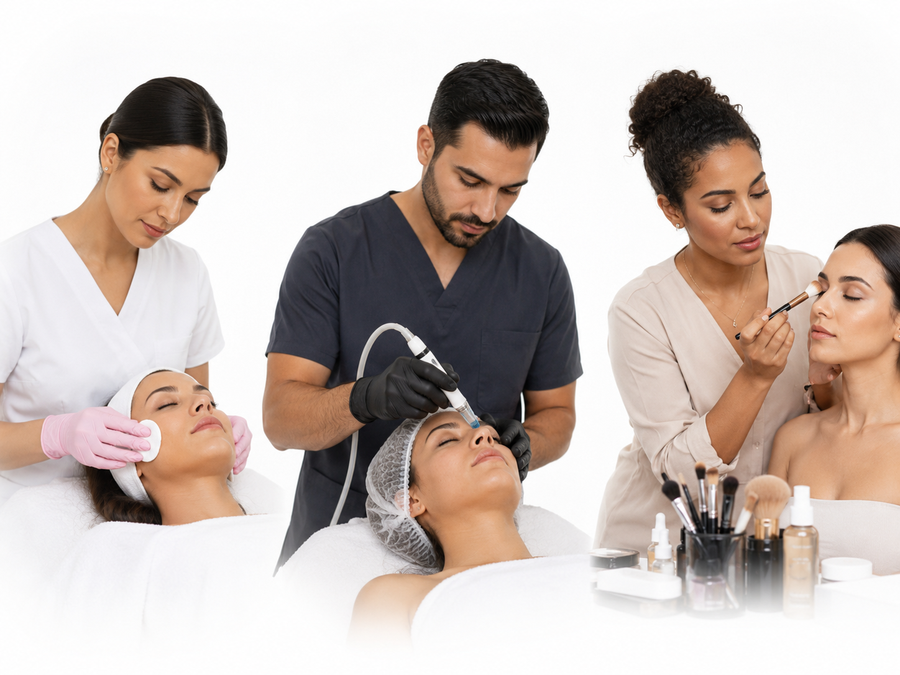
The program name is not enough to know its quality or scope. It is necessary to review the academic level, training hours, supervised practice and official recognition.
Is Cosmetology a course or a degree?
It can be both. In Latin America there are different training pathways:
- Introductory courses: present basic techniques and usually provide private certificates.
- Job training programs: prepare for specific competencies and may be recognized by local education authorities.
- Technical degrees: offer more extensive training, with scientific, technical and practical content.
- University technical programs or technologist programs: belong to higher education and grant a degree issued by a recognized institution.
- Bachelor's degrees: usually include broader training in science, management, research, cosmetic development or service management.
- Top-up cycles and postgraduate programs: require a prior degree and allow expanding technical or university training.
A course of a few months is not equivalent to a two- or three-year technical program or a bachelor's degree. Nor does it automatically offer the same professional scope.

How long does the Cosmetology degree take?
The length depends on the type of program. A course may last a few months, while technical training may require two to three years. Bachelor's degrees may reach four years or more.
Length alone does not determine quality. A short program can teach a specific technique responsibly, but it should not be presented as equivalent to a higher-level degree.
It's also a good idea to check the actual workload. Two “one-year” programs can be very different if one has short weekly classes and the other includes many hours of supervised practice.
What is studied in Cosmetology?
Study plans vary, but solid training usually includes:
- Anatomy and physiology.
- Structure and functions of the skin.
- Skin biotypes and phototypes.
- Microbiology.
- Biosafety.
- Facial and body hygiene.
- General chemistry and Chemistry in cosmetics.
- Ingredients, formulations and label reading.
- Facial cosmetology.
- Body aesthetics.
- Superficial exfoliations.
- Masks and care products.
- Manual techniques.
- Aesthetic equipment.
- Contraindications and adverse reactions.
- First aid.
- Legislation and professional ethics.
- Communication and customer care.
- Service management.
- Supervised professional practice.
What is studying Cosmetology like?
Training combines theory and practice. During the program, activities may include:
- Preparing a treatment room.
- Cleaning and disinfecting materials.
- Recognizing visible skin characteristics.
- Analyzing cosmetic ingredients.
- Practicing facial and body protocols.
- Applying products under supervision.
- Learning to use permitted equipment.
- Recording backgrounds and procedures.
- Identifying contraindications.
- Stopping a procedure when there is risk.
- Referring cases that need a health evaluation.
- Calculating costs and managing supplies.
It is not purely hands-on training. Studying anatomy, microbiology, chemistry and biosafety is necessary to reduce risks and understand why a technique may be indicated or contraindicated.
In Studying cosmetology you can learn more about the program and professional preparation.
What does a cosmetologist do?
Specific duties depend on qualifications and local regulations. Within their scope of practice, professionals may:
- Conduct an initial interview.
- Record relevant background information for the safety of the procedure.
- Observe visible skin characteristics.
- Recognize skin biotypes for cosmetic purposes.
- Perform superficial facial or body cleansing.
- Apply authorized cosmetic products.
- Perform permitted superficial exfoliations.
- Apply masks, emollients, moisturizers and other care products.
- Use equipment authorized for their level of training.
- Provide guidance on non-therapeutic cosmetic routines.
- Explain how to correctly use a product.
- Provide aftercare information.
- Keep treatment records.
- Recognize signs that require referral.
Assessing cosmetic characteristics is not equivalent to diagnosing a disease. In the presence of a suspicious lesion, an infection, an open wound, a severe reaction or a persistent alteration, the procedure should be suspended and consultation with a health professional should be recommended.
What can a Cosmetology professional not do?
Training in cosmetology alone does not qualify you to:
- Diagnose skin diseases.
- Prescribe medications.
- Indicate medical treatments.
- Discontinue medication.
- Treat infections or open wounds.
- Perform surgeries.
- Inject substances.
- Apply fillers, botulinum toxin or other injectable products.
- Perform invasive procedures reserved for health professionals.
- Use equipment for which they have no training or authorization.
- Promise cures or guaranteed results.
Working in a medical office does not turn a cosmetology professional into a physician nor does it automatically expand their responsibilities. Tasks must comply with the qualification obtained, the regulations and the required supervision.
Is Cosmetology regulated in Latin America?
There is no single regulation for all of Latin America. The professional scope may vary between countries and even between regions within the same country.
- Colombia: the Law 711 of 2001 regulates the practice of cosmetology and establishes limits, responsibilities and conditions related to aesthetic health.
- Chile: the Decree 88 on cosmetology activities requires health authorization and limits the treatment of diseases, therapeutic indications and the use of medical products.
- Brazil: the Law 13.643 of 2018 regulates the careers of esthetician and cosmetologist and of esthetics technician.
- Argentina: cosmetic products are under national health control, while the conditions for practicing, opening an establishment or using certain equipment may depend on provincial and municipal regulations.
Before studying or starting to work, you need to consult the educational and health authority of the corresponding jurisdiction. Having a private certificate does not guarantee registration, a license or a business permit.
How to check if a Cosmetology degree has official recognition?
Verification must be done through the country's official source. Some useful systems are:
- Colombia: the SNIES allows you to review higher education programs. Work training programs can be checked in the SIET.
- Mexico: the SIRVOES de la Secretaría de Educación Pública allows you to verify the Recognition of Official Validity of Studies for programs offered by private institutions.
- Brazil: the sistema e-MEC is the official database for checking institutions and higher education degrees.
The fact that an institution legally exists does not mean that all its programs are recognized. Verification must be done for the specific degree, its campus, modality and curriculum.
How to choose good training in Cosmetology?
Before paying an enrollment fee, you should request specific information in writing about:
- Exact name of the program.
- Type of diploma or certificate.
- Academic level.
- Official resolution, registration or recognition number.
- Total duration.
- Number of theory hours.
- Number of practical hours.
- In-person, hybrid or distance modality.
- Campus where the practical training takes place.
- Admission requirements.
- Curriculum contents.
- Training and experience of the teachers.
- Equipment included.
- Biosafety protocols.
- Professional scope of the diploma.
- Registration or health authorization requirements.
- Total cost of tuition, materials and procedures.
Responsible training should include anatomy, cosmetic chemistry, microbiology, biosafety, contraindications, supervised practice, legislation, ethics and referral criteria.
Be wary of offers that promise guaranteed income, medical results, authorization to inject substances or mastery of invasive procedures after just a few classes.
Can you study Cosmetology at a distance?
Theoretical content can be taught remotely, especially cosmetic chemistry, anatomy, legislation, administration or product analysis. However, manual dexterity, hygiene, preparation of materials, use of equipment and response to an adverse reaction require supervised practice.
Before choosing a fully virtual modality, it is important to check how the practical training is carried out, who supervises it and whether the diploma allows you to meet the professional requirements of the place where you want to work.
How much does it cost to study Cosmetology?
The cost depends on the country, the institution, the duration and the materials included. In addition to tuition or fees, there may be expenses for:
- Cosmetic products.
- Gloves and disposable items.
- Work clothing.
- Instruments.
- Models for practical training.
- Books and study materials.
- Transportation and food.
- Accommodation, when the campus is in another city.
- Exams, certificates and graduation procedures.
- Professional registration or authorization.
Where does a cosmetologist work?
Depending on their training and local legislation, they can work in:
- Aesthetic centers.
- Spas.
- Beauty salons.
- Wellness centers.
- Cosmetic product stores.
- Dermocosmetic companies.
- Hotels and tourist resorts.
- Interdisciplinary teams.
- Clinics, within the permitted scope.
- Training and product demonstration.
- Home services, when regulations allow.
- Own businesses.
Income stability is not guaranteed. It may depend on the country, experience, number of clients, specialization, location, cost of supplies and type of employment.

Can you start a business after studying Cosmetology?
Yes, but the diploma or certificate is only one part of the process. To work independently, you may need:
- Business license.
- Health authorization.
- Professional registration.
- Suitable space conditions.
- Cleaning and disinfection protocols.
- Waste management.
- Authorized products within their expiration date.
- Maintenance of equipment.
- Client records and consent forms.
- Protection of personal data.
- Cancellation policy.
- Budgeting, inventory and cost calculation.
- Responsible advertising.
It is not advisable to buy expensive equipment before verifying whether it is authorized, what training it requires, what maintenance it needs and whether it can be used legally in the jurisdiction.
What specialties exist within Cosmetology?
Areas of further study may include:
- Facial cosmetology.
- Cosmiatry.
- Body aesthetics.
- Dermocosmetics.
- Professional makeup.
- Cosmetic trichology.
- Product advice.
- Aesthetics for older adults.
- Non-medical oncological aesthetics.
- Management of beauty centers.
- Technical and commercial training.
- Cosmetic formulation, when additional scientific training exists.
A specialization does not automatically expand legal attributions. To learn about another related activity see Why study Professional Makeup?.
What skills does a Cosmetology professional need?
- Manual dexterity.
- Observation skills.
- Hygiene and tidiness.
- Clear communication.
- Respectful listening.
- Ability to follow protocols.
- Attention to detail.
- Product knowledge.
- Recognition of risks and contraindications.
- Respect for professional boundaries.
- Confidentiality.
- Administrative organization.
- Willingness to keep up to date.
It is also important to work without imposing a single beauty standard. Professional care must respect diversity of ages, bodies, skin tones, identities and expectations.
What are the advantages of studying Cosmetology?
- It allows you to apply what you have learned in a practical way.
- It offers different areas of specialization.
- It can combine care, advice and management.
- It allows working in organizations or independently.
- It facilitates progression to technical or university studies.
- It develops knowledge about products, hygiene and aesthetic care.
- It allows gradually building a client base.
Close contact with people can be rewarding, as long as realistic expectations are maintained and misleading medical or commercial promises are not made.
What are the disadvantages of studying Cosmetology?
- Income can be variable.
- Products and supplies require ongoing investment.
- Equipment can be expensive.
- You need to update your skills frequently.
- Regulations vary between jurisdictions.
- The work may require standing for long periods or adopting repetitive postures.
- There is frequent exposure to chemical products.
- Irritation, allergies or adverse reactions may occur.
- Cleaning and disinfection require time and discipline.
- Independent work also requires knowledge of management and customer service.
How to start a professional career in Cosmetology?
- Define your goal: decide whether you are looking for an introduction, a specific job opportunity, a technical qualification or a university degree.
- Check the regulations: check what qualification, registration or authorization is required where you want to work.
- Compare programs: review accreditation, practical hours, content, format and real costs.
- Prioritize supervised practice: start with procedures appropriate to your level of training.
- Learn biosafety: master cleaning, disinfection, contraindications and reaction management.
- Work within your limits: do not perform diagnoses or procedures for which you are not qualified.
- Build experience: document protocols and results with consent, without using client images without authorization.
- Continue studying: update your knowledge of ingredients, equipment, regulations and safety.
Some training programs also include content on the History of care practices and cultural changes in image. Others are linked to Fashion Design, makeup and image consulting.
How can artificial intelligence be used in Cosmetology?
Artificial intelligence can be used as a supporting tool to organize appointments, manage inventories, prepare educational materials, write aftercare instructions, organize records and analyze consumer trends.
There are also applications that analyze photographs and classify visible skin characteristics. Their results may be affected by lighting, the camera, skin tone, data quality or the biases the system was trained with.
These tools should not be used to diagnose diseases, prescribe medications, or decide on high-risk procedures. In-person evaluation, contraindications, hygiene, manual dexterity, and professional responsibility continue to depend on trained people.
The facial photographs and personal history may be sensitive data. Before uploading them to a platform, you need to have authorization, know how they will be stored, and avoid services that do not adequately explain their privacy and data protection policies.
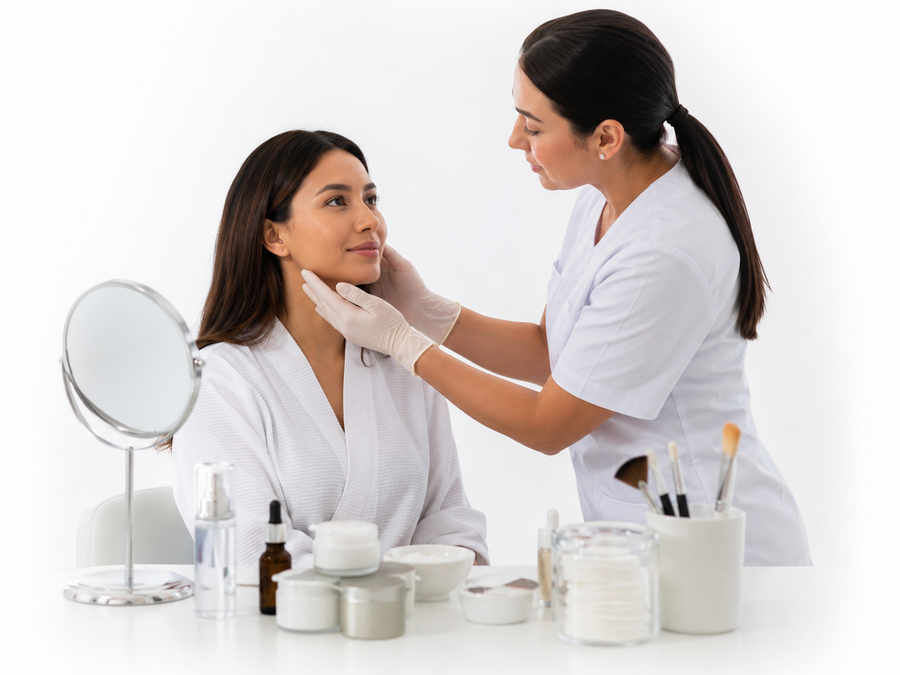
How to tell if Cosmetology is a good option for you?
It may be a suitable alternative if you are interested in:
- Aesthetic skin care.
- Hands-on, detailed work.
- Learning about products and ingredients.
- Serving and guiding other people.
- Following hygiene protocols.
- Combining scientific and practical knowledge.
- Updating your knowledge throughout your professional life.
- Working within clear ethical and legal boundaries.
It may not be the most suitable option if the main goal is to diagnose diseases, prescribe treatments, or perform medical procedures. In those cases, you should research healthcare degrees and, subsequently, the required specializations.
To continue evaluating this choice, see Why study Cosmetology? and the complete guide on Cosmetology.