Forensic Psychology
Forensic Psychology is a specialization that applies psychological assessment and research to justice-related problems. Professionals may intervene in criminal, civil, family, labor, prison or child protection proceedings.
To work professionally, you need to verify that the core program is recognized by the country's regulatory body and that it qualifies you to obtain the corresponding professional license, registration or registry.

The safest path is usually:
- Study a qualifying university degree in Psychology.
- Obtain the professional registration, license or registry.
- Complete postgraduate studies in Legal or Forensic Psychology.
- Gain supervised practical experience.
- Train in psychological assessment, psychometrics, legislation and report writing.
- Register on expert witness registries when necessary.
- Maintain continuous professional development.
Foundational training is important because forensic work requires mastering clinical Psychology, psychopathology, human development, interviewing, statistics, research methodology and psychological assessment before applying that knowledge to the judicial field.
How long does it take to become a forensic psychologist?
The length depends on the country.
In much of Latin America and Spain, the bachelor's degree in Psychology usually lasts between four and six years. Afterwards, a specialization or master's degree of one to three years can be added.
In the United States, the professional path is usually longer. After the university degree, those who perform forensic psychological assessments as licensed psychologists usually complete a doctorate in clinical Psychology, counseling psychology or another qualifying branch, supervised practice and the state licensing requirements. The American Psychological Association explains that Forensic Psychology is applied to the legal system, but professional qualification depends on doctoral training, supervised experience and the corresponding license.
In the United Kingdom, the title “forensic psychologist” is legally protected. To use it, you must complete the recognized professional pathway and register with the Health and Care Professions Council.

What is studied during training?
The initial degree in Psychology provides general knowledge of the career. Common areas include:
- Clinical psychology.
- Psychopathology.
- Psychological assessment.
- Psychometrics.
- Developmental psychology.
- Social psychology.
- Neuropsychology.
- Research methodology.
- Statistics.
- Professional ethics.
Forensic training includes more specific content:
- Legal psychology.
- Criminal, civil, family and procedural law.
- Criminology and victimology.
- Psychology of testimony.
- Assessment of psychological harm.
- Assessment of parental capacity.
- Violence risk assessment.
- Forensic interview.
- Prison psychology.
- Juvenile justice.
- Preparation of expert reports.
- Presenting and defending conclusions before courts.
- Data protection and limits of confidentiality.

The goal is not to turn the psychologist into a lawyer, but to teach them to work properly within judicial proceedings and to answer legal questions using psychological methods.
The forensic psychologist applies knowledge of Psychology to justice-related situations. They assess people involved in judicial proceedings, analyze relevant information, prepare expert reports and explain their conclusions to judges, prosecutors, lawyers or other authorities.
They may work on criminal cases, family conflicts, civil proceedings, child protection, violence, assessment of psychological harm, fitness to stand trial, risk of reoffending and other situations in which a legal decision requires specialized psychological information.
Their job is not to discover on their own whether a person is guilty or to decide a sentence. Nor do they replace the judge, the prosecutor, or the lawyer. Their role is to provide a technical, objective, and well-founded evaluation that helps to understand psychological aspects that are important for the process.
Forensic Psychology is at the meeting point between Psychology and Law. For this reason, professionals need to know psychological evaluation methods, psychopathology, interviewing, report writing, professional ethics, and how the judicial system works.
What path should a student follow?
First stage: study Psychology
The first step is to choose an officially recognized Psychology degree that allows you to practice in the country where you want to work.
Before enrolling, it is advisable to check:
- The official validity of the degree.
- Whether it allows you to apply for professional registration or a license.
- The authorized modality.
- The campus where it is taught.
- The internships included.
- Recognition of the degree in other countries, if you plan to emigrate.
A Criminology degree, Law or Forensic Sciences can be useful for working in justice-related areas, but it normally does not qualify you to carry out psychological evaluations or to present yourself professionally as a psychologist.
Second stage: obtain professional authorization
After graduating, each country establishes different requirements.
They may include:
- Registration with a professional association or board.
- State license.
- Health registration.
- Supervised internships.
- Professional exam.
- Background check certificate.
- Professional liability insurance.
- Mandatory ethics training.
Forensic specialization does not replace these requirements. A person may have a master's in Forensic Psychology and still not be authorized to practice as a psychologist if their basic degree does not meet the country's regulations.
Third stage: complete a forensic postgraduate program
The postgraduate program allows you to gain in-depth knowledge of expert evaluation, legislation, violence, victimology, prison systems, and communication with courts.
It is advisable to prioritize programs that include:
- Teachers with professional experience.
- Supervised practice.
- Case analysis.
- Training in psychological testing.
- Report writing.
- Ethics training.
- Knowledge of the local judicial system.
- Official recognition or professional accreditation.
A diploma or short course can serve as an introduction, but it does not necessarily equal a university specialization nor does it by itself grant new legal competencies.
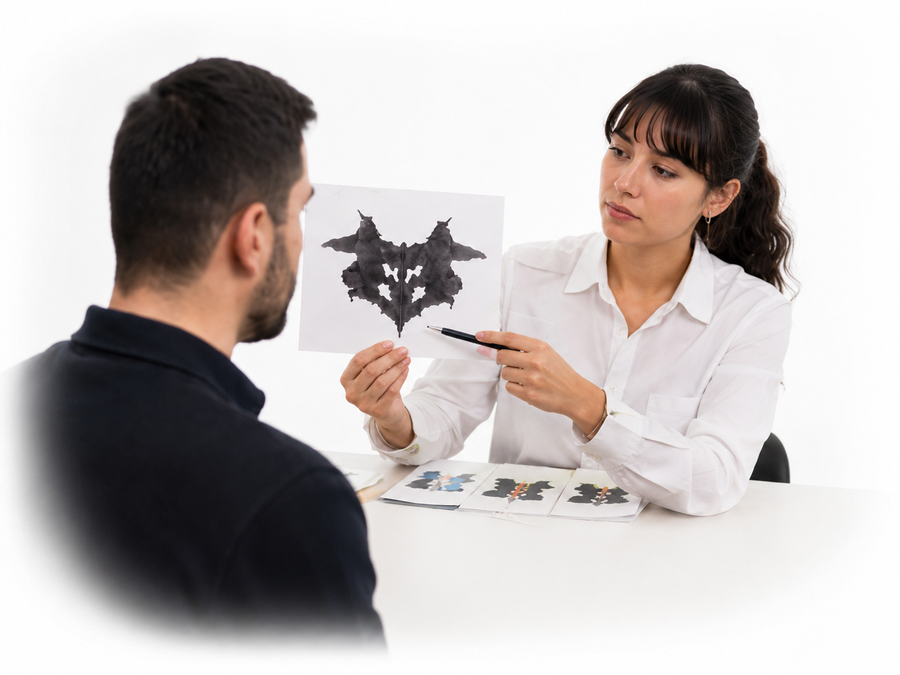
Fourth stage: gain supervised experience
Practical experience is essential because a forensic evaluation can affect decisions about freedom, custody, protection, liability, treatment, or compensation.
First experience can be gained in:
- Judicial teams.
- Correctional services.
- Juvenile justice programs.
- Victim care centers.
- Child protection services.
- Hospitals.
- Offices of experienced professionals.
- Universities and research projects.
Students must learn to interview, select tests, integrate information, recognize limitations, and technically defend their conclusions.
Fifth stage: work as an expert witness or specialist
In some countries, to submit reports to courts it is necessary to register on expert lists or registries. In others, the professional may be hired by one of the parties or join technical teams through public competitions.
Access may require previous experience, a valid license, specific training, and no professional sanctions.

What problem does a forensic psychologist solve?
In a judicial process, questions may arise that cannot be answered solely through laws, documents, or statements.
For example:
- Does a person understand the judicial process in which they are participating?
- Are there psychological consequences related to a reported event?
- What needs does a child involved in a family conflict have?
- Is there a risk that violent behavior will happen again?
- Does a person show psychological conditions relevant to the case?
- What conditions should be considered to protect a victim?
- What parenting capacities do the evaluated adults have?
- Is there a disability or limitation that affects certain decisions?
The forensic psychologist helps answer these questions through interviews, psychological testing, document review, background analysis, and other professional techniques.
Then they organize the results into a report that is understandable to judicial authorities. That report does not automatically determine the final decision, but it can become an important element within the body of evidence and background information in the case.
What does a forensic psychologist do?
The specific duties depend on the type of case, the institution where they work, and the legislation of each country.
Among their most common tasks are:
- Interviewing people involved in judicial proceedings.
- Performing psychological evaluations for expert purposes.
- Applying psychological tests appropriate to the case.
- Reviewing files, medical reports, background information, and judicial documentation.
- Analyzing a person's emotional, cognitive, and behavioral functioning.
- Evaluating possible psychological harm or aftereffects.
- Assessing risk and protective factors.
- Analyzing the risk of violence or reoffending when the case requires it.
- Evaluating parental capacities in family conflicts.
- Examining the psychological needs of children and adolescents.
- Assessing a person's capacity to understand or participate in certain acts.
- Preparing clear and well-founded expert reports.
- Answering specific questions posed by judges, prosecutors, or lawyers.
- Explaining and technically defending their conclusions in a hearing or trial.
- Advising judicial, prison, or protection institutions.
- Participating in interdisciplinary teams.
Does the forensic psychologist investigate crimes?
They can participate in judicial investigations, but their role is different from that of a detective, a police officer, or a criminal investigator.
The forensic psychologist analyzes psychological aspects related to people and behavior. They can evaluate a defendant, a victim, a witness, a minor, or a family, whenever there is a professional request and a defined objective.
They are not usually in charge of collecting fingerprints, analyzing weapons, investigating bank movements, or physically reconstructing a scene. Those tasks correspond to other specialists.
In some areas they may collaborate in behavior analysis, threat assessment, or developing hypotheses about psychological patterns. However, criminal profiling represents only a small and specialized part of the field, and it is not the everyday activity of most forensic psychologists.

The day-to-day life of a forensic psychologist
The workday can combine interviews, reading case files, administering tests, analyzing results, professional meetings, and writing reports. Watch the video in English by Dr Kelly Watkins "A day in the life of a forensic psychologist. What being a forensic psychologist is really like" shows that forensic psychology is not just about “analyzing criminals”. Its goal is to deeply understand people, assess risks, guide judicial decisions, and offer treatments that reduce the likelihood of reoffending.
A forensic psychologist's day can begin with reviewing case documentation and planning pending tasks. Depending on the setting where they work, they may work in a prison, a secure hospital, a juvenile center, or a probation service.
An important part of their day consists of conducting clinical interviews. Through open-ended questions, they seek to learn about the person's history, their mental health status, and the circumstances that may have influenced their behavior. To obtain reliable information, they must create an atmosphere of trust and adapt the interview to the needs of each case.
They may also administer questionnaires and psychological tests to assess aspects such as anxiety, trauma, self-esteem, personality, or specific emotional difficulties. In addition, they conduct structured assessments to identify the risk of violence or other problematic behaviors.
However, they do not focus solely on risks. They also analyze protective factors, that is, the personal, family, or social conditions that can reduce the likelihood of a behavior happening again.
With the information obtained, they develop a psychological formulation that integrates the individual's history, personal characteristics, difficulties, and strengths. This makes it possible to better understand their needs and guide the most appropriate interventions.
Finally, they write clear reports, share their conclusions with other professionals, and may take part in treatments or programs aimed at improving emotion management, reducing violent behavior, and promoting rehabilitation. Their work may also include team meetings, research, supervision, and support for professionals working in complex settings.
What is the difference between a forensic evaluation and therapy?
A forensic psychological evaluation does not have the same objective as a clinical consultation.
In therapy, the psychologist works primarily to help the patient understand and improve their emotional or behavioral situation. The relationship is treatment-oriented and is usually protected by broad confidentiality.
In a forensic evaluation, the objective is to answer a question related to a legal process. The information obtained may be included in a report and be known to judges, lawyers, or other authorized persons.
For this reason, before starting the evaluation, the professional must explain:
- Who requested the intervention.
- What the objective of the evaluation is.
- How the information will be used.
- Who may receive the report.
- What the limits of confidentiality are.
In addition, the psychologist acting as an expert witness should avoid simultaneously taking on the role of therapist for the same person, because both roles pursue different objectives and can create ethical conflicts.
What tools do they use?
The forensic psychologist works primarily with evaluation, documentation, and analysis tools.
They may use:
- Forensic psychological interviews.
- Structured and semi-structured interviews.
- Personality tests.
- Cognitive and neuropsychological tests.
- Instruments for assessing psychological symptoms.
- Violence or recidivism risk scales.
- Family and parenting evaluation instruments.
- Protocols for interviewing children and adolescents.
- Court records.
- Authorized clinical histories and professional background.
- School, work, social, or medical reports.
- Audiovisual records.
- Scientific databases.
- Legislation and case law related to the case.
- Statistical programs and test scoring tools.
- Digital document management systems.
Psychological tests do not work like machines that automatically uncover the truth. Their results must be interpreted together with the interviews, the background, the observed behavior, and the limitations of the case.
How do they use artificial intelligence?
The artificial intelligence can help organize documents, search for scientific information, classify large amounts of data, transcribe authorized interviews, or detect elements that require more detailed review.

It can also be used as support in administrative tasks and in the initial review of extensive case files.
However, an artificial intelligence tool should not decide on its own whether a person poses a risk, is telling the truth, has a disorder, or should receive a particular judicial measure.
In Forensic Psychology, results must be explainable and reviewable. In addition, information is often sensitive and may include health data, judicial records, testimonies, and data on minors.
Therefore, the professional must check:
- What data the tool uses.
- How it protects privacy.
- Whether it can produce biases or errors.
- Whether its results are scientifically valid.
- Whether its use is allowed by legislation and the institution.
- Whether the conclusions can be verified by a professional.
Artificial intelligence can be an auxiliary tool, but it does not replace the interview, professional judgment, ethical responsibility, or the explanation of conclusions before a court.

Areas of Forensic Psychology
Criminal forensic psychology
It intervenes in cases related to crimes. It can evaluate the psychological state of defendants, victims or witnesses, the capacity to participate in the proceedings, possible psychological aftereffects, and factors related to the risk of violence.
The psychologist does not decide whether the accused is guilty. They provide technical information so that the judicial authority can make a decision considering all the evidence.
Family forensic psychology
It participates in custody disputes, personal care, family communication, adoption, protection of minors, and other decisions related to children and families.
It can evaluate bonds, parental capacities, the needs of minors, and factors that could affect their well-being.
Child and juvenile forensic psychology
It works with children and adolescents who participate in judicial proceedings as victims, witnesses, protected persons, or young people involved in conflicts with the law.
Interviews must be adapted to the age, development, and emotional condition of the minor. The professional must also avoid suggestive questions that could alter the account.
Victimology
It focuses on understanding the psychological consequences a victim may experience and their relationship with the judicial system.
It can intervene in cases of violence, abuse, accidents, threats, discrimination, harassment, and other potentially traumatic events.
Prison psychology
It takes place in prisons, centers for the enforcement of measures, and reintegration programs.
It may include assessment, intervention, violence prevention, risk analysis, program design and support for social reintegration processes.
Prison Psychology is related to Forensic Psychology, although they are not exactly the same. In the prison setting there are also treatment and follow-up tasks that do not strictly belong to expert assessment.
Police and security psychology
It may include personnel selection and assessment, training, risk prevention, crisis negotiation, care for professionals exposed to traumatic situations and analysis of behaviors relevant to security.
Not all forensic psychologists work with the police, and not every police psychologist acts as a judicial expert.
Civil forensic psychology
It may intervene in proceedings related to legal capacity, psychological harm, accidents, professional liability, disability and other civil disputes.
Labor forensic psychology
It participates in assessments related to workplace accidents, disability, harassment, psychological harm, working conditions and conflicts that require specialized psychological evaluation.
What do you study to become a forensic psychologist?
The usual path begins with a university degree in Psychology that allows professional practice in the corresponding country.
Afterwards, the graduate can complete a specialization, master's degree, postgraduate program or professional training in Legal and Forensic Psychology.
Depending on the country, they may also need:
- Professional registration or membership.
- Authorization to practice as a psychologist.
- Registration in expert registers.
- Specific training in forensic assessment.
- Supervised professional experience.
- Knowledge of local legislation.
- Continuing training.
A short course is usually not enough for a person without a Psychology degree to practice as a forensic psychologist. The name of the degree, the requirements and the legal competencies vary between countries, so the regulations of the place where you wish to work should always be checked.
Important subjects and knowledge
Training may include:
- Clinical psychology.
- Psychopathology.
- Psychological assessment.
- Psychometrics.
- Psychological interview.
- Developmental psychology.
- Social psychology.
- Neuropsychology.
- Criminology.
- Victimology.
- Criminal law.
- Civil law.
- Family law.
- Procedural law.
- Ethics and deontology.
- Risk assessment.
- Family and gender violence.
- Child abuse and protection.
- Preparation of expert reports.
- Research methodology.
- Statistics.
- Oral communication before courts.
Important skills
Forensic Psychology requires technical knowledge and also a great ability to work with sensitive information.
Among the most important skills are:
- Analytical ability.
- Objectivity and professional independence.
- Attentive listening.
- Clear communication.
- Precise writing.
- Critical reasoning.
- Interpretation of psychological tests.
- Ability to integrate information from different sources.
- Attention to detail.
- Knowledge of professional boundaries.
- Responsible handling of confidential information.
- Tolerance to pressure.
- Ability to explain complex concepts.
- Emotional control.
- Continuous updating.
- Ability to recognize errors and limitations.
It is also important to be able to maintain a professional attitude when faced with accounts of violence, abuse, loss, family conflicts and other emotionally intense situations.
Where can you study Forensic Psychology?
The following proposals show different training models. The current call should be checked, because dates, modalities and admission conditions may change.
Argentina
In Argentina, the usual path consists of first obtaining the title of Psicólogo or Licenciado en Psicología and then completing a specialization.
The Universidad de Ciencias Empresariales y Sociales offers a Specialization in Forensic Psychology aimed at Psychology graduates. Its program includes expert practice, juvenile justice, family, damages, penitentiary institutions and interdisciplinary work. The university reports CONEAU accreditation and admission requirements linked to the Psychology degree.
Spain
The Universidad de Valencia offers a Permanent Training Master's in Legal Psychology. The program covers civil, criminal, family and employment expert assessments, victimology, mediation and penitentiary institutions.
To practice in Spain, studying a forensic master's is not enough. The professional must also meet the general requirements applicable to practicing Psychology and the registration or licensing criteria corresponding to the activity performed.
United Kingdom
The United Kingdom has a particularly structured career path.
The University of Portsmouth offers the MSc Forensic Psychology, accredited by the British Psychological Society. The program lasts one year full-time or two part-time and represents the first of the two training stages to become a chartered and registered forensic psychologist.
The master's alone does not authorize use of the protected professional title. Afterwards the second stage of practical training or an approved doctoral route must be completed, in addition to registration with the HCPC. British regulation expressly protects the designation “Forensic Psychologist”.
To access these programs, a degree in Psychology recognized by the BPS or conversion training granting Graduate Basis for Chartered Membership is usually required.
United States
In the United States there is no single national psychologist license. Each state regulates professional practice.
The most common path to conduct independent forensic evaluations is:
- Earn a bachelor’s degree.
- Complete a PhD or PsyD doctorate in a qualifying area of Psychology.
- Complete internships and supervised experience.
- Meet the state licensing requirements.
- Obtain specialized training in Forensic Psychology.
- Optionally obtain specialized professional certification.
The APA warns that a master’s in Forensic Psychology does not automatically make you a licensed forensic psychologist. Independent professional practice usually requires doctoral training and a license.
International students should carefully check whether the program is accredited, whether it provides access to licensure, and whether their internships meet the requirements of the state where they want to practice.
Australia
In Australia, professional use of the psychologist title depends on national registration and the training pathways recognized by the Psychology Board of Australia.
Some universities offer training in Psychology, mental health, criminal behavior or forensic sciences, but not all programs lead to registration as a forensic psychologist. For example, Monash University offers a Master’s in Forensic Medicine, but it is aimed at medicine, biomedical sciences and radiography, it is not qualifying training in Forensic Psychology.
Can you study Forensic Psychology online?
There are online or hybrid programs, but the online format does not eliminate the need for internships.
A good remote program should explain:
- How internships are carried out.
- Who supervises the student.
- How competencies are assessed.
- Whether the degree is recognized.
- Whether it provides access to professional practice.
- In which countries it is valid.
- Which activities require in-person attendance.
Theoretical training can be completed online, but learning interviews, psychological assessment, test administration and defense of reports requires supervised practice.
Can you become a forensic psychologist by studying Criminology?
Studying Criminology does not normally qualify you to practice as a psychologist.
The criminologist analyzes crime, its prevention, criminal policies and how the criminal justice system works. The forensic psychologist evaluates psychological processes using methods specific to Psychology.
A person with a degree in Criminology can work in research, prevention, criminal analysis or correctional institutions, but should not carry out diagnoses or psychological evaluations unless they also hold the degree and professional license of a psychologist.
Which program should you choose?
Before enrolling, students should ask five questions:
Does the base degree allow you to practice as a psychologist?
This is the most important check. A program with the word “forensic” in its name may be academic, but not necessarily qualifying.
Is the postgraduate program officially recognized?
It should be verified with the university and the relevant educational or professional body.
Does it include real, supervised practice?
Exclusively theoretical training is insufficient to undertake complex assessments.
Is it designed for the legal system where I want to work?
Laws, procedures and the role of the expert witness vary between countries.
What professional requirements remain?
After the postgraduate program, a registration, license, expert witness registry, experience or exam may be required.

Where does a forensic psychologist work?
They can work in:
- Courts and tribunals.
- Public prosecutor's offices and district attorney offices.
- Public defender's offices.
- Institutes of legal medicine and forensic sciences.
- Prisons and correctional facilities.
- Juvenile justice centers.
- Child and adolescent protection services.
- Victim support offices.
- Security agencies.
- Interdisciplinary technical teams.
- Hospitals and specialized public services.
- Universities and research centers.
- Social organizations.
- Consulting firms.
- Insurance companies.
- Law firms as an external consultant.
- Private practice as a party-appointed expert or independent professional.
What requirements are usually requested?
Requirements vary by country, institution, and position.
They may require:
- University degree in Psychology.
- Valid professional license or registration.
- Postgraduate training in Legal or Forensic Psychology.
- Experience in psychological assessment.
- Knowledge of psychometric tests.
- Ability to prepare expert reports.
- Knowledge of legislation and judicial procedures.
- Experience with victims, minors, families, or prison populations.
- Registration on an official roster of expert witnesses.
- Availability to attend hearings.
- Ability to work in interdisciplinary teams.
- No conflicts of interest.
- Continuing training and ethical updating.
To join public agencies, you may also need to pass competitive examinations, exams, background checks, or selection processes.
What responsibility does a forensic psychologist have?
Their reports can influence important decisions about freedom, protection, custody, compensation, treatment, legal capacity, and other personal matters.
That is why they must:
- Use appropriate and scientifically accepted methods.
- Work only within their areas of competence.
- Avoid opinions they cannot support with evidence.
- Explain the limitations of the assessment.
- Distinguish facts, results, and interpretations.
- Avoid conflicts of interest.
- Protect sensitive information.
- Treat all individuals assessed with respect.
- Maintain independence from whoever hires their services.
- Not alter their conclusions to benefit one of the parties.
Being hired by one party does not mean they must defend that party’s position. The psychologist must maintain their professional judgment and report both favorable and unfavorable findings.
Can a forensic psychologist recommend treatment?
They can point out psychological needs, risk factors, or possible lines of intervention when this is part of the expert question.
However, recommending an assessment or treatment does not automatically mean becoming the therapist of the person assessed.
In many cases it is more appropriate for treatment to be provided by another professional, to avoid mixing the expert role and the clinical role.
Difference between a forensic psychologist and a clinical psychologist
The clinical psychologist focuses primarily on assessing, diagnosing, and treating psychological problems for care purposes.
The forensic psychologist evaluates psychological issues related to a legal question. His report is directed to the judicial system and is not necessarily intended to begin treatment.
Both can use interviews and tests, but the purpose, the relationship with the person being evaluated, and the limits of confidentiality are different.
Difference between forensic psychologist and criminologist
The forensic psychologist studies and evaluates the psychological functioning of individuals or groups within a legal context.
The criminologist analyzes crime as a social phenomenon, its causes, forms of prevention, statistics, security policies, and the functioning of the criminal justice system.
A criminologist is not necessarily a psychologist nor is authorized to conduct clinical or forensic psychological evaluations.
Difference between forensic psychologist and forensic psychiatrist
The forensic psychologist has university training in Psychology and uses interviews, psychological tests, and evaluation methods specific to his career.
The forensic psychiatrist is a physician specialized in Psychiatry who applies his knowledge to the legal field. He can evaluate mental illnesses from a medical perspective and, in accordance with the law, prescribe medication.
Both professionals can collaborate, but their training and competencies are not identical.
Difference between forensic psychologist and criminal profiler
Criminal profiling attempts to formulate hypotheses about the probable characteristics or behaviors of an unknown person based on information related to certain crimes.
Forensic Psychology is a much broader field. It includes evaluations in criminal, civil, family, labor, prison, and child protection matters.
Most forensic psychologists do not spend their workday chasing offenders or creating profiles as happens on television series.
Advantages of studying Forensic Psychology
- It allows you to apply Psychology to concrete problems in the judicial system.
- It offers different areas of specialization.
- It makes it possible to work in public institutions or in private practice.
- It combines psychological evaluation, research, analysis, and communication.
- It allows you to participate in the protection of victims and minors.
- It can offer opportunities in courts, prisons, prosecutors' offices, universities, and consulting.
- It is a field that requires continuous learning and updating.
- It allows you to work with professionals in Law, Medicine, and Social Work.
Disadvantages of studying Forensic Psychology
- Requires first completing a university degree in Psychology.
- May require postgraduate studies and supervised experience.
- Requires studying legislation and judicial procedures.
- Report writing can take up many hours.
- Some cases carry a strong emotional burden.
- The professional may be intensely questioned during a hearing.
- A poorly grounded conclusion can seriously affect other people.
- There may be competition for stable positions in public agencies.
- You need to stay up to date permanently.
- Income varies considerably depending on the country, experience, and type of employment.
Is it a career for me?
Forensic Psychology may be suitable for people who enjoy analyzing behavior, reviewing information, formulating hypotheses, and explaining conclusions clearly.
It may also be a good option if:
- You are interested in the relationship between Psychology and Law.
- You can maintain objectivity in the face of intense conflicts.
- You like reading and writing reports.
- You have patience to analyze extensive case files.
- You can work with rules and procedures.
- You feel comfortable explaining your professional decisions.
- You understand that an assessment must be based on evidence.
- You can listen to difficult accounts without losing professional judgment.
- You are willing to keep training after the degree.
It may not be the best choice if you are looking for a career focused solely on therapy, if you are not interested in Law, or if you prefer to avoid technical writing, formal procedures, and conflict situations.