
Why study the Geography degree?
Closely observing the different land surfaces is fascinating for many people, and to refer to the experts we will get to know the Geography degree.
Geography is something that surrounds us every day but that we do not usually notice. As a field of study it covers observation, the landscapes we live with and the detection of problems with how soils function. In turn, it is related to the food that is consumed, to combustion and the social activities that humans carry out in the different territories.
It is important to note that Geography has evolved over the years, and by this we mean not only the topics covered throughout the coursework, but also the different tasks a geographer can pursue. It is important to dispel the myth that in the degree you will only learn what you see in the early levels of education.
During the course of the Geography degree you will encounter subjects linked to the human sciences, the transformations that have emerged in societies in relation to territory, and also subjects more associated with science, such as climatology, geology or physics.
Why study the Geography degree?
The Geography degree in many universities is closely related to history, and in some it has become independent. Graduating as a geographer means having learned a bit of history as well, about how nations were founded and how the regions that make them up came to be settled.
It is a degree that provides the necessary tools to learn about natural resources and thus collaborate in a professional way with the ecosystem, respecting it and exploring it. In this sense, it allows the graduate to recognize the physical elements observed in the different territories, the various types of relief, the different geological eras and how they affected the Earth's surface; the climatic aspects that impact the environment, the river currents. In turn, the Geography degree also connects these phenomena with the social area, observing how the soil has been cultivated over time, how societies made use of rivers and diversified their work in agriculture and fishing, how they exploited the lands and what consequences this type of activity has had in the present. They will also learn about the raw materials used by industries; how railroad and ship routes were developed.
In this sense, the degree is interesting, because on various occasions it is the geographer who is in charge, through the use of specific methodologies, of evaluating how man has been changing the geographic space and how that can produce certain effects on society. That is why he is taken into account as a professional to evaluate socioeconomic issues in the public sphere.
What are the advantages of studying Geography?
Regarding the advantages, in this degree we can see that job opportunities in recent years have expanded, and since it is not one of the degrees most chosen by students, the job search is made easier by the small number of graduates who apply.
Universities offer different options, some focus more on the humanities area, others more on new computer systems and others more on the mathematics area. These aspects can be highlighted as a strength of the degree, since it allows the student to choose the guidance that best suits their taste and interest.
In addition, as we mentioned earlier, it is a degree that provides diverse knowledge, which helps the professional to have a complete education.
What can a geographer work as?
The Geography degree allows graduates to pursue different employment fields. In the public sector, where they can develop various research projects and be part of an urban development team, where the best places to lay out routes or build bridges or tunnels are analyzed, to performing more tourism-related tasks regarding the landscapes of a region. They can perform tasks in transportation agencies, in urban development, etc.
They can also work in the private sector, where they can carry out environmental consulting work, offer their services to industries wishing to invest in a particular territory, or anything related to crops or plantations. In this regard, through market advances in different disciplines, a new concept called Geo – marketing has developed, where the geographer also performs consulting tasks, advising different companies on undertaking projects on specific soils or marketing products in new localities, where the professional can use the tools and knowledge acquired throughout the course of study.
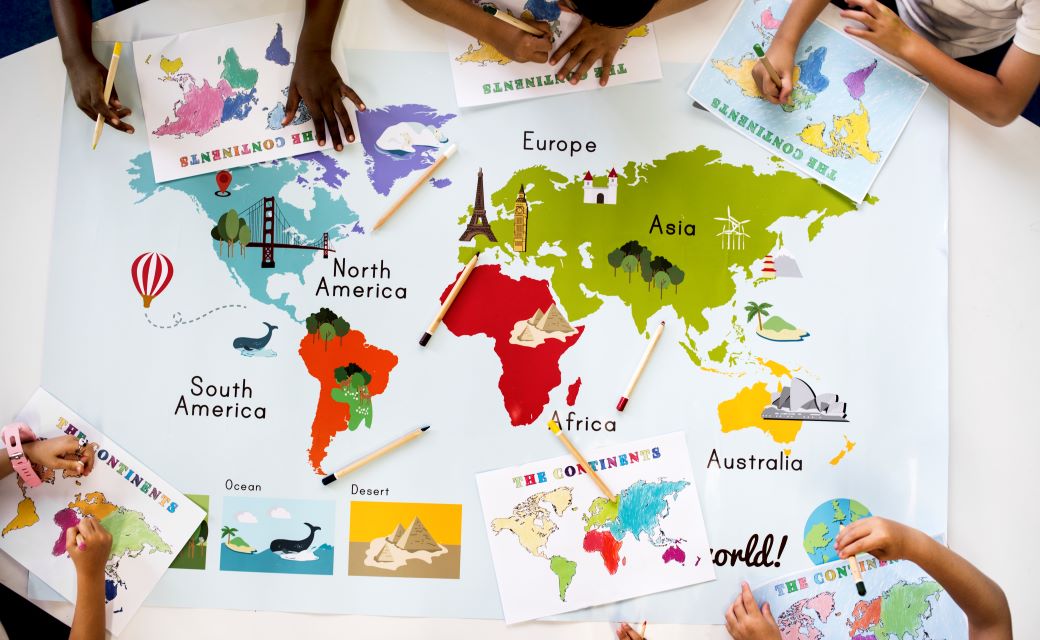
Graduates are trained to handle Geography through technology, with the Geographic Information System, which allows them to make different analyses and interpretations of objects, photographs or data collected through the professional's research. This system is used in the field of cartography, one of the areas that has been growing and where professionals with a Geography degree have open doors to find a job. Regarding the educational field, they can work in training or they can use their knowledge to develop new concepts about the geographic surface, developing content for different academic fields.
Moreover, as we mentioned before, Geography degree graduates have knowledge that connects human beings with their surrounding environment, with those factors that make up the environment, and that is why professionals are often required to conserve various natural resources. Professionals can carry out different projects both for non-governmental organizations and for different areas of the State, such as tourism departments, for example.
During the course of the degree, plans and maps will be one of the fundamental instruments for observing different aspects of surfaces, but when working as a geographer it will be common to set foot on diverse terrains to experience the outdoors.