
Why Study International Trade?
In an increasingly globalized world, professionals who have the ability to negotiate the resources, goods and services exchanged between nations are needed. Each country's imports and exports, for example, are subject to rules that they themselves must know and put into practice. Everything is geared toward offering societies greater variety in the goods they could acquire.
Are you clear on exactly what International Trade is?
Trade itself has existed practically since the beginnings of human civilizations, before the very concept of the nation-state. The resources that human beings have needed to survive –and also to have fun– as we know, are not infinite, and they are not found just anywhere. This led to the establishment of exchange routes where human groups could, through bartering, satisfy their needs and desires. In fact, it is well known that the very concept of money came after societies where the economy was based on exchange.
However, for a concept like international trade to exist, there must be an established order of who those nations are. That is why modern international trade was only inaugurated in the 19th century, when in certain countries independence from colonial powers was still being fought for, and the latter in turn established a system of exploitation for the resources of their existing colonies. In addition, the Industrial Revolution that occurred in that century accelerated the modernization of the transport systems needed to carry goods from one territory to another. The economic power that each country holds today can be traced through history; it is thanks to trade that what we know today as superpowers have been able to line up.
Today, international trade has served to create a world market that, ever more openly, exchanges across borders. However, it should be noted that not all countries have enjoyed the same development as their counterparts. These differences have been given several names (first vs. third world, north vs. global south), but the reasons for inequality have to do with the conditions of their contracts and laws. A person studying the degree in International Trade can be the one to propose and innovate toward a much fairer world economy with greater advantages for all countries, not just a few.
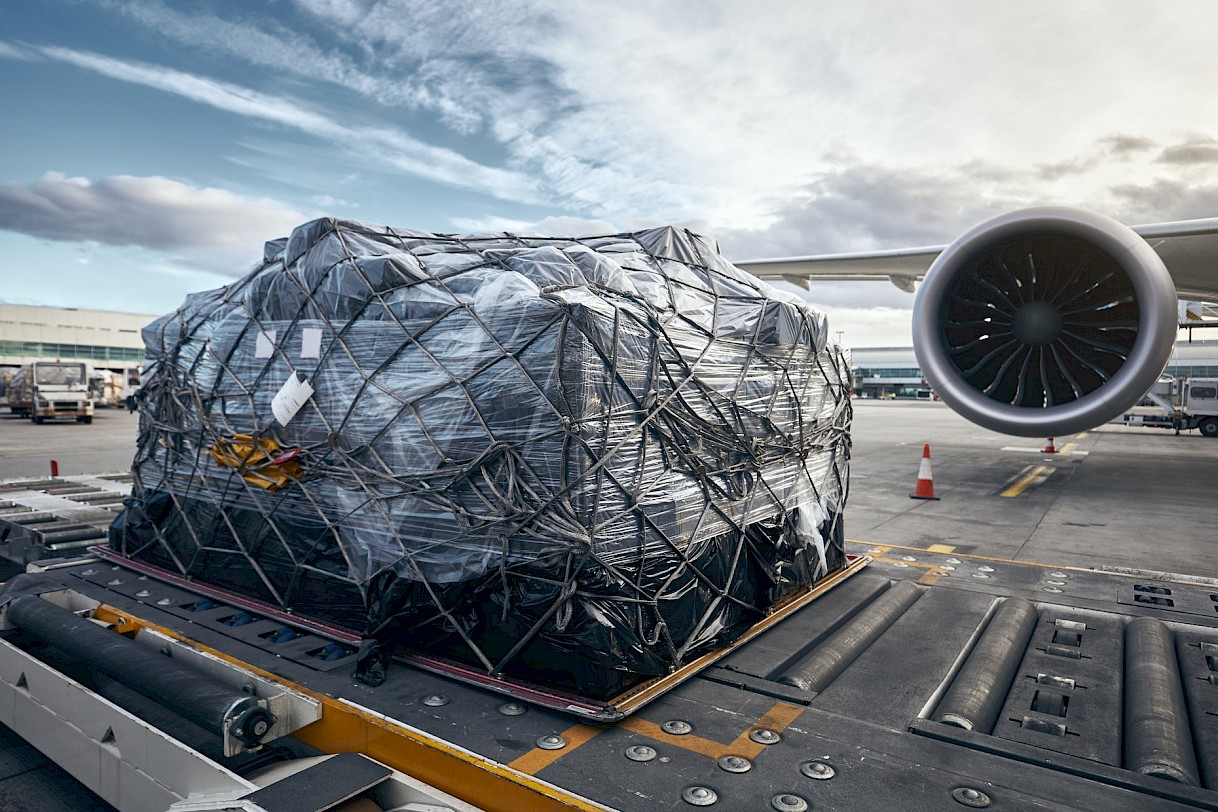
Additionally, strategies developed regarding international trade must adapt to environmental conditions. Climate change, which feels like an unstoppable countdown, must be a central concern among countries that want to negotiate. It is clear that infinite growth of economies is impossible and that natural resources are limited, which is why concern from this business sector for the well-being of the planet is crucial.
What are the admission and graduation profiles like?
In general, those who choose the degree in International Trade find it easy to communicate in more than one language (the norm is to have fluent English). They also tend to have a positive attitude toward service and interpersonal relationships, as they know they will be in contact with clients of great importance to other nations. It is a great advantage to have, from the start, a global vision of world problems that is not limited to the borders of one or two countries. However, it is also clear that they must know how to appreciate the cultures and traditions of each country, in order to create economic relationships that respect them.
The graduate of the degree in International Trade has the advantage of being a strategist with a world vision. That is, they understand how businesses in their country (or the one they work in) should be positioned to obtain the greatest profits while complying with the corresponding regulations. They have to be attentive, for example, to changes that occur in the legislation of the countries they will come into contact with and the way in which these affect the organization they represent. And, in addition to creating business strategies, they are also the ones who put them into action. It is very rewarding for International Trade graduates when their business plans, which cross borders, work correctly.
Upon completing studies in International Trade, graduates will be able to advise organizations that require it on their marketing strategies outside their borders. In addition, they must be able to use the latest technologies for their correct implementation. They are graduates with an entrepreneurial character, a vision that knows how to detect business opportunities where others cannot. Although it is not their specific field of study, they also understand the landscape of political, social, and cultural international relations, since these in many cases define the conditions established for trade.
Frequently asked questions about the degree in International Trade
How long does the degree take?
In this case, the answer varies. Some universities offer a technical degree that can last from 2 years, although in other institutions bachelor's degrees can have a study plan of up to 5 years.
What qualification do those who study International Trade graduate with?
One can be a technician or a graduate in International Trade, and it is really defined by the study plan that has been chosen and the time dedicated to those studies.
Where can a graduate work?
You can work for any organization that operates internationally, whether it is a company, bank or government. For more details, read the career opportunities and salary section.
Could a graduate start their own business?
Yes, since, in general, graduates have an entrepreneurial vision that allows them to innovate and create new strategies for trade between countries. This is a very useful skill for establishing companies.
General subjects in the International Trade degree
The subjects that most institutions usually teach for this degree are in the fields of economics, finance, mathematics, languages, computing and international relations. Below, we list some examples:
- Administration
- Accounting
- Human resources
- Marketing
- Process design
- Microeconomics and macroeconomics
- Business finance
- Mathematics applied to business
- English
- Foreign trade and customs legislation
- Logistics
Career opportunities and salary
A person who has graduated in International Trade can be in high demand in leadership positions in organizations that import and export goods or services. They can also work in banks, since any business between countries must go through hands specialized in the finances that each one has available. Likewise, they can work in consulting firms, companies dedicated to advising other organizations (businesses, governments) on the management and execution of strategies for international trade.
Likewise, a graduate can work for a government. Every government has public agencies, secretariats or ministries dedicated to managing trade between countries. In addition, they are the actors that must innovate in terms of the rules needed to regulate international trade and ensure that everything is done within an adequate legal and fiscal framework. As already mentioned above, and it also applies to employability in the private sector, today there needs to be a concern for caring for the environment and establishing ecologically sustainable trade routes.
How to know if International Trade is for me?
If you have a global view of the world and the relationships between countries, and a special interest in how companies that go beyond borders operate, the International Trade degree is for you. In general, those with an outgoing personality and skill for interpersonal negotiations do very well. Also, it is a suitable degree if you like to stay informed about what happens in the import and export of products and you appreciate that today there is a significant variety of products and services thanks to the existence of a global market. If you meet these interests and characteristics, you will likely enjoy the International Trade degree and it will bring you very satisfying professional development.