
Produce lithium from brines
In the salt flats, brine is an underground solution containing lithium. The plant recovers that lithium and produces compounds such as carbonate. Commercial quality depends on the composition and impurities of the batch. Its destinations include manufacturers of battery materials.
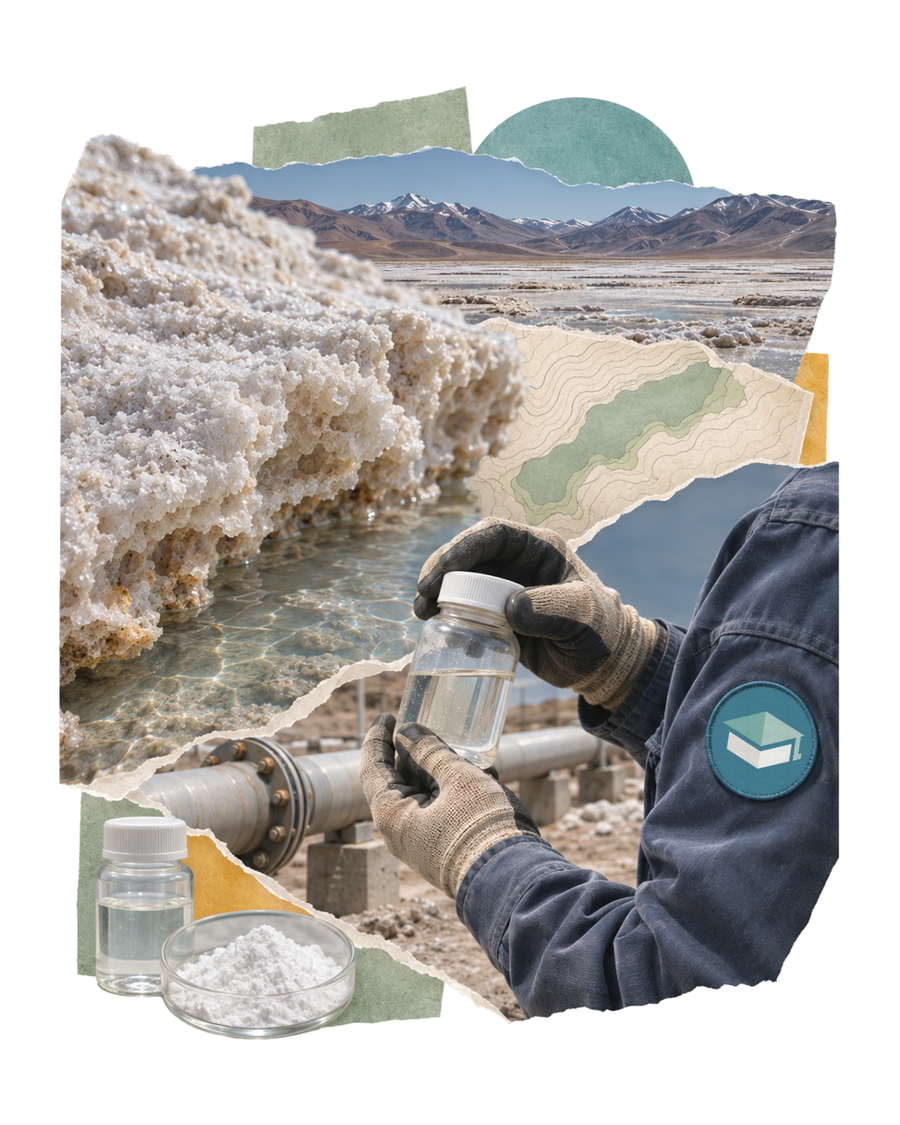
Hydrogeology studies the salt flat. During extraction, operations records the flow rate, composition and origin of the brine. The plant receives characterized material and the environment team has data for monitoring.
During extraction, operations controls recovery and the use of water and inputs. Maintenance services pumps, pipes and instruments. The chemical stage receives an enriched stream whose production method depends on the project.
Laboratory analyzes the purity and impurities of the product. Logistics keeps the batch identification and ships the carbonate with its certificate of analysis. The buyer uses the certificate to check whether the product meets what was agreed. If there is a problem, the batch number helps the plant find its manufacturing records.
What is checked when the brine changes
Operations records where the brine comes from, how much enters the plant and what it contains. If a reading changes, operations checks whether the brine changed. Maintenance checks the instruments and laboratory analyzes the product.
How to get in
Employment. For Salar del Hombre Muerto, a Rio Tinto job posting requested secondary or tertiary technical training and experience operating plants. The job includes monitoring equipment and reporting deviations.
Service. A company can offer inspection or repair of brine pumps. The plant or its contractor receives the repaired equipment and the test report. The Rio Tinto local procurement page explains how it works with its suppliers.
What to study
Chemical Engineering, Universidad Nacional del Sur. Balances and separation operations help interpret what enters, what is recovered and what leaves the plant.
Diploma in Mining Chemistry and Direct Lithium Extraction, Universidad Nacional de Jujuy. The 2026 edition covers recovery processes and their plant application.
In Argentina
Olaroz, in Jujuy, and Fénix, in Catamarca, are lithium operations. Rincón, in Salta, illustrates a capacity expansion with direct extraction.