
Treat and transport crude oil
What comes out of the well can include oil, gas and water. Treatment prepares the crude for delivery to a refinery or terminal. The separated gas can go to collection and treatment. The produced water follows the planned circuit for its management.
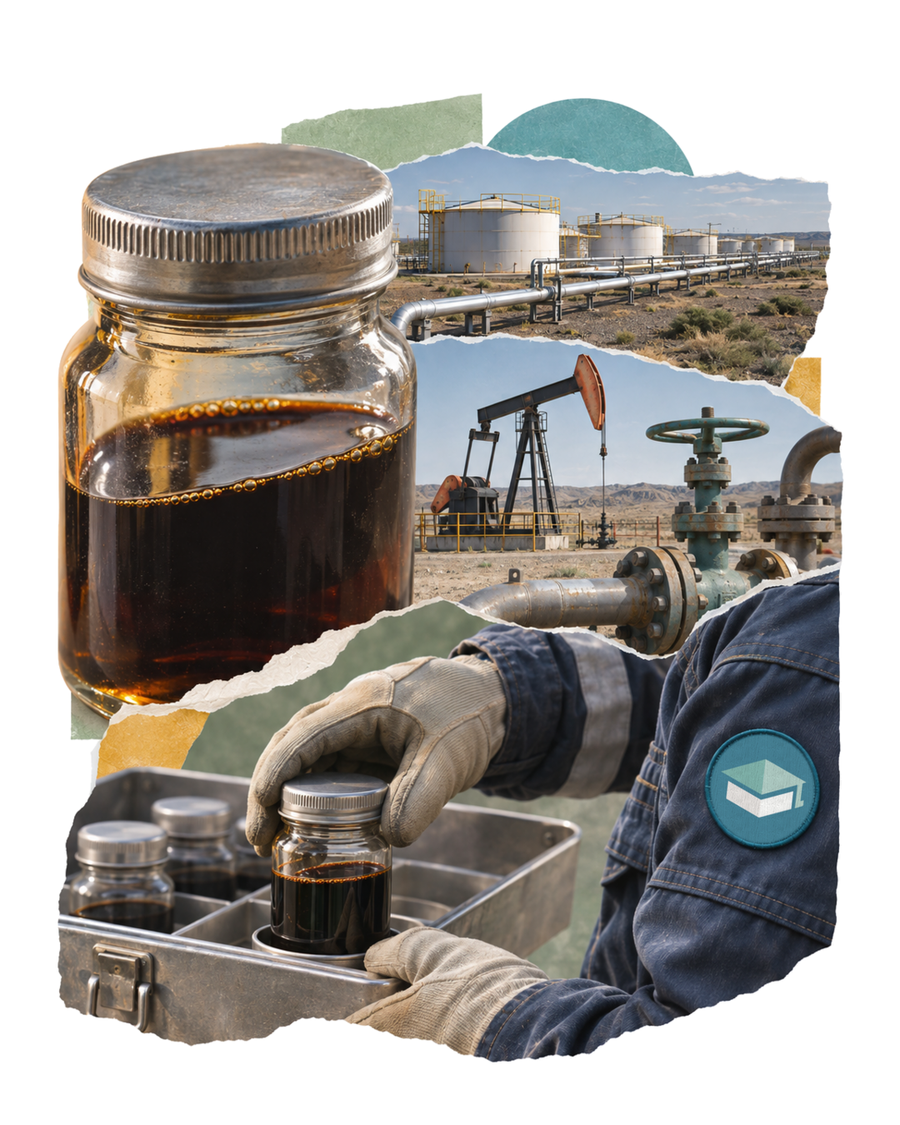
Operations and laboratory identify the streams and record how much there is of each. They also check the quality of the crude received by the carrier.
The carrier schedules shipments. Maintenance checks stations, valves, pumps and pipelines and records repairs. When the crude arrives at the terminal or refinery, the receiver uses the records to check whether it was received under the agreed conditions. Buyer and seller use that data to calculate payment and review differences in quantity or quality.
What each team measures
The field team measures how much crude it delivers. The terminal or refinery measures how much it receives. To compare the data, both must know which delivery they correspond to and what quality the crude had.
How to get in
Employment. Look for operation of treatment plants, pumping stations or pipeline maintenance. Oldelval publishes its employment channel as a carrier.
Services. An inspection or maintenance company can provide diagnostics, repair and testing to the carrier or its contractor. For energy projects in Río Negro, the province publishes a supplier registry.
What to study
Crude Processing, IAPG. Course on oil conditioning and produced water management.
Petroleum Engineering, Universidad Nacional del Comahue. The curriculum covers production, treatment and transportation.
In Argentina
In 2025, Oldelval and Trafigura inaugurated a branch of the Allen-Puerto Rosales pipeline to the Bahía Blanca refinery. The VMOS project illustrates the other outlet, with a pipeline to the Punta Colorada export terminal, Río Negro.