
Biologist
A biologist is a professional dedicated to the study of living beings, including their structure, function, evolution, behavior and relationships with the environment. Biologists research and analyze organisms at different levels, from molecules and cells to complete ecosystems, with the aim of understanding life in all its forms. They can specialize in areas such as marine biology, genetics, ecology, biotechnology, among others, and their work can involve research, teaching, species conservation, drug development and much more.
What is a biologist?
A biologist is a scientist who studies life, specifically organisms and their relationship with their environment. In general, biologists study human beings, animals and bacteria to gain a better understanding of how the body works and how external factors influence each organism.
Biologists apply scientific methods to understand living organisms. In the context of biology, it is useful to consider life as a complex matter that is susceptible to being analyzed through chemical and physical approaches. Biologists have been very successful in focusing on those processes that involve transformations of matter and energy.
What does a biologist do?
A biologist uses basic research methods to collect data, in order to test or refute theories about how organisms work, as well as to help find advances in medicine. They work with agriculture, develop new fruits and vegetables less susceptible to nuisances and pests, and make other agricultural improvements. Biological scientists can also work to help improve some industrial processes.
There are many types of biologists, but the two main subsections of science are macroscopic and microscopic.

Macroscopic biology involves objects that are measurable and visible to the naked eye. On the other hand, microscopic biology requires microscopes to see the objects being studied. Most biologists participate in both types of research at one time or another, so it might be more important to classify biologists by their subject of specialization.
A biologist is a scientist who studies living beings and their relationship with the environment.
Biologists research various aspects of life, including the structure and function of individual organisms, the ecology of communities of organisms, and the evolution of species.
To become a biologist, a four-year university education in biology or another life science-related discipline is normally required. Here are some courses you could take to prepare for a degree in biology:
Cell and molecular biology: This course focuses on the study of cells and their biological processes at the molecular level.
Genetics: This course focuses on the study of genes and heredity.
Ecology: This course focuses on the study of the interaction between organisms and their environment.
Physiology: This course focuses on the study of the processes and systems that allow organisms to function.
Anatomy: This course focuses on the study of the structure of living organisms.
Statistics: This course teaches the statistical analysis methods used in biological research.
Chemistry: This course is fundamental for understanding biological processes and biochemistry.
Mathematics: This course is important for understanding the mathematical models used in biological research.
In addition to these courses, it is also advisable to take courses in computer science, communication, and research skills to complement your education in biology.
What does a biologist do?
Some of the tasks biologists perform include laboratory research, conducting experiments, collecting samples in the field, analyzing data, and publishing results in scientific journals. Biologists can also work in biodiversity conservation, education, and science communication.
There are many types of biologists, who specialize in different areas of study.
Some of the most common types of biologists include:
Marine biologists: they study marine life and aquatic ecosystems.
Cellular and molecular biologists: they investigate the structure and function of cells and the molecules that compose them.
Conservation biologists: they work to protect and preserve biodiversity and natural habitats.
Evolutionary biologists: they study how species change and evolve over time.
Health biologists: they research human diseases and disorders, as well as the impact of environmental factors on health.
Environmental or ecology biologists: they study the interactions between organisms and their environment.
Genetics biologists: they research heredity and genetic variation in populations.
Neuroscience biologists: they study the nervous system and its relationship with behavior and cognition.
These are just a few examples of the many areas in which biologists can specialize.
Biologists and artificial intelligence
Artificial intelligence (AI) is being used more and more in biology to help with research and data analysis. Here are some examples of how biologists use AI:
Data analysis: Biologists use AI to analyze large genetic, image, and sequence data sets. Machine learning algorithms can identify patterns and relationships that humans might not detect.
Modeling of biological systems: Biologists use AI to create mathematical models of complex biological systems, such as networks of chemical reactions in a cell. These models can help predict how a biological system will behave under different conditions.
Drug design: Biologists use AI to help design new drugs. Machine learning algorithms can analyze large amounts of data to identify molecules that could be effective in treating a disease.
Medical diagnosis: Biologists use AI to help diagnose diseases. Machine learning algorithms can analyze large amounts of medical data to identify patterns that indicate a specific disease.
AI is being used in biology to help with tasks that require analysis and processing of large amounts of data, as well as to create mathematical models of complex biological systems.
What tools do biologists use to apply artificial intelligence?
Biologists use a variety of tools to apply artificial intelligence (AI) in their work. Here are some of the most common tools:
Programming languages: Biologists use programming languages such as Python, R and MATLAB to write machine learning algorithms and analyze data.
Machine learning libraries: Biologists use machine learning libraries, such as Scikit-Learn, Tensor Flow and Keras, to implement machine learning algorithms.
Data analysis platforms: Biologists use data analysis platforms, such as MATLAB and Excel, to analyze large data sets.
Data visualization tools: Biologists use data visualization tools, such as Tableau and R Shiny, to create interactive visualizations of their data.
Modeling tools: Biologists use modeling tools, such as NetLogo to create mathematical models of complex biological systems.
Biological databases: Biologists use biological databases, such as GenBank and UniProt, to access genetic and sequence information.
Biologists use a variety of tools to apply AI in their work, including programming languages, machine learning libraries, data analysis platforms, data visualization tools, modeling tools and biological databases.
Some biological scientists along with their most important contributions:
Charles Darwin: Proposed the theory of evolution by natural selection in his book "The Origin of Species". His work revolutionized the field of biology and had a significant impact on many other fields of science.
Gregor Mendel: Established the laws of inheritance in peas, which laid the foundations of modern genetics.
Anton van Leeuwenhoek: He is considered the founder of microbiology for his discovery of microorganisms with the microscope.
Louis Pasteur: Conducted important research on fermentation, pasteurization and the causes of disease, which led to advances in medicine and agriculture.
These are just a few examples of biological scientists and their important contributions to science. There are many other notable biologists and their discoveries have led to important advances in biology and other areas of science.
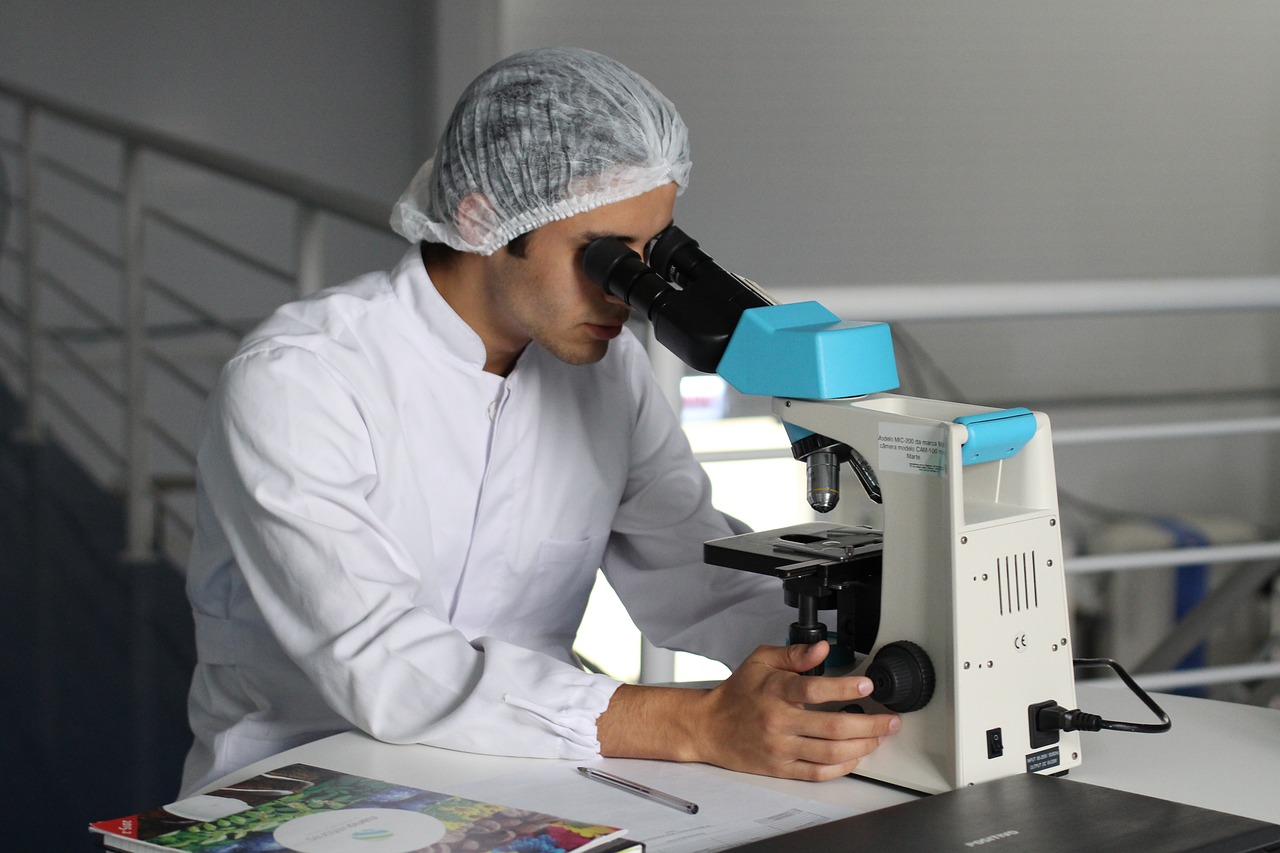
The biologist career can have a significant impact on society and the environment in several ways:
1. Scientific and technological advances: Research in biology has led to major advances in medicine, genetic engineering, agriculture, biotechnology, and other areas. These advances have improved people's quality of life and have created new opportunities for innovation and economic development.
2. Environmental conservation: Biologists play an important role in conserving the environment and protecting biodiversity. Their work in identifying and monitoring endangered species, restoring ecosystems, and public education about the importance of environmental conservation can have a significant impact on the sustainability of the planet.
3. Improvement of human health: Biologists work on developing medical therapies and treatments for a variety of diseases and conditions. Their efforts in disease research, identifying new medications, and genetic engineering can have a positive impact on people's health and well-being.
4. Economic development: Biology is a fast-growing field that offers opportunities for economic development and job creation in areas such as biotechnology, agriculture, and medical research. Biologists can play an important role in developing new technologies and products that generate jobs and improve quality of life.
The biologist career can have a significant impact on society and the environment, through scientific and technological advances, environmental conservation, improvement of human health, and economic development.
What is a biologist's workplace like?
Most biologists are employed by the government, a university, or a private industry laboratory. Many university biologists are also professors, so they spend part of their time teaching students research methods, helping with the development of student projects, as well as working on their own projects.
Biological scientists employed in private industry and by the government are able to focus more on their projects and those assigned by their superiors. Some examples of biologists who would likely be working in private industry are zoologists and ecologists, who could be employed by zoos and environmental agencies.
Regarding the physical workplace, depending on the type of biology, the scientist might spend all of their time in the laboratory, or most of their time in the field. Botanists, ecologists, and zoologists, for example, spend a lot of time in the field, studying plants and animals in various climates and habitats while often living in primitive conditions. Marine biologists may spend a lot of time in the water.
In general, most biological scientists do not experience much in the way of dangerous situations. Those who study dangerous or toxic organisms take a series of special precautions to prevent contamination and any possibility of spreading the virus or bacteria.
Can a biologist work in a hospital?
Yes, a biologist can work in a hospital in various areas.
For example, a biologist can work in clinical laboratories, where they perform tests and analyses of biological samples such as blood, urine, and tissue to diagnose diseases.
They can also work in the development and production of medicines and gene therapies, in disease research, and in conducting clinical studies. In addition, biologists can also work in hospital administration and in the education and training of doctors and medical staff.
There are multiple roles for a biologist in a hospital, and their work can be essential for the diagnosis, treatment, and prevention of diseases.
How do biologists study living organisms?
The broad panorama of life is too complex to be studied in its entirety by a single researcher. The world of living beings can be studied by dividing organisms into various types and specializing in one or another of them.
Within biology, classification systems for living organisms have been built that allow the relative isolation of one type of organism or another for organized research. Living organisms were subdivided into two groups: plants (botany) and animals (zoology). Biologists who study furry four-legged creatures that nurse their young (mammals) are called mammalogists. Those who research soft-bodied animals with shells are malacologists. The study of simple plants such as mosses is carried out by bryologists.
The biological disciplines can also be differentiated according to how living organisms are studied. For example, the morphologists focus on structure, while the physiologists consider function. The taxonomists are devoted to the science of classification, and cytologists study cells, which are the basic units of all life. The ecologists deal with the interaction of organisms with one another and with their external environment. A relatively new branch of biology is the molecular biology, which is the study of life in terms of the behavior of macromolecules such as proteins and nucleic acids. It is this branch of biology that has allowed us to understand life at the molecular level and even to change the hereditary characteristics of certain organisms to serve the needs of society.