
Energy Plant Operator
An energy plant operator is the professional who controls, supervises and supports the daily operation of facilities where energy is produced, transformed, treated or distributed.
They can work in power stations, industrial plants, gas plants, refineries, oil and gas facilities, treatment plants, generation centers or companies that operate energy systems continuously.
Their work is key because many energy plants operate 24 hours a day. That means there must always be people monitoring variables, checking equipment, recording data, responding to alarms and ensuring that the operation stays within safe parameters.
An energy plant operator does not just “watch machines”. Their task consists of observing, verifying, communicating and acting quickly when something is not working as it should.

What problem it solves
The energy plant operator solves a central problem: how to keep an energy plant running without interruptions, accidents or operational deviations.
In a plant there can be turbines, motors, pumps, boilers, compressors, valves, electrical panels, sensors, pipes, control systems and auxiliary equipment. Each one must operate within certain values of pressure, temperature, flow, voltage, consumption or performance.
If a variable goes out of range, a failure, equipment shutdown, loss of efficiency or safety risk may appear. The operator is one of the first people to detect those changes.
Main tasks
An energy plant operator can perform tasks such as:
- Operate equipment from a control room or directly in the field.
- Check pressure, temperature, flow, voltage, levels or consumption.
- Complete operational checklists.
- Detect alarms, failures, noises, vibrations or abnormal behavior.
- Report defects, deficiencies or anomalies to the maintenance team.
- Perform operational maneuvers following procedures.
- Support first-line maintenance tasks.
- Coordinate with technicians, supervisors and engineers.
- Record operation data.
- Review work permits before an intervention.
- Apply industrial safety standards.
- Respond to emergencies, outages, incidents or service interruptions.
- Maintain communication with other shifts.
- Verify that equipment is left in safe conditions after a task.
It is a job where attention to detail is essential. A poorly recorded reading, an ignored alarm, or a maneuver outside of procedure can have significant consequences.
The day-to-day of an energy plant operator
The day-to-day of an energy plant operator is usually marked by shifts, checks, and procedures.
At the start of their workday, they may receive information from the previous shift: which equipment is running, whether there were alarms, which repairs are pending, which areas are out of service, or which special maneuvers must be performed.
Then they check panels, screens, instruments, meters, or reports. In some plants they work from a control room; in others, they alternate between the room and field rounds.
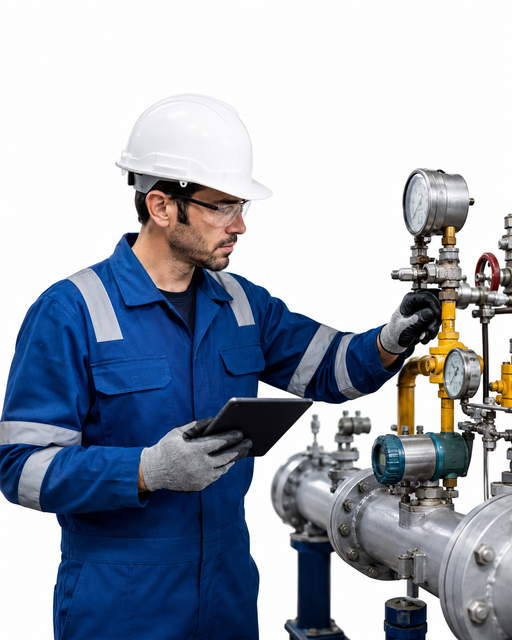
During a round they may observe motors, pumps, panels, valves, pipes, boilers, turbines, tanks, meters, or safety systems. They look for leaks, strange noises, vibrations, abnormal temperatures, odors, alarm lights, or any sign that something is not working properly.
They may also record values in spreadsheets, tablets, or digital systems. In modern plants, part of the work is done with monitoring screens, sensors, SCADA systems (Supervisory Control and Data Acquisition, in Spanish, supervision, control and data acquisition) or platforms that show real-time operation data.
When a fault appears, the operator does not improvise. They follow procedures, notify the supervisor, coordinate with maintenance, and help put the facility into a safe condition.
It is a practical, technical career with a great deal of responsibility.

Tools, equipment, and technologies they use
An energy plant operator may work with:
- Control panels.
- Monitoring screens.
- SCADA systems.
- Pressure, temperature, level, or flow sensors.
- Pressure gauges, valves, panels, and meters.
- Pumps, motors, compressors, boilers, or turbines.
- Electrical systems and auxiliary equipment.
- Radios or internal communication systems.
- Checklists.
- Operation logs.
- Tablets or logging software.
- Safety procedures.
- Work permits.
- Personal protective equipment: helmet, goggles, gloves, boots, hearing protection, and industrial clothing.
In oil, gas, or industrial plants, they may also work near pipelines, tanks, separators, treatment plants, pumping systems, process valves, and measuring equipment.
Areas where they can specialize
An energy plant operator can specialize in different types of operation.
Power plant operation
Works in facilities where electricity is generated. May operate or control equipment related to thermal, hydroelectric, renewable generation, cogeneration, or auxiliary systems.
Industrial plant operation
Focuses on energy processes within industries that consume a lot of energy, such as chemicals, mining, manufacturing, food, paper, cement, or metallurgy.
Gas plant operation
Works in plants where gas is treated, measured, compressed, distributed, or conditioned for industrial, residential, or energy use.
Oil and gas operation
May work in facilities for the production, treatment, pumping, separation, or transportation of hydrocarbons.
Control room operation
Specializes in monitoring variables from screens, SCADA systems, alarms, and control panels.
First-line operation and maintenance
Supports inspections, minor adjustments, basic maneuvers, and early detection of faults before specialized maintenance steps in.
Useful additional training
In addition to technical training, courses in the following can be useful:
- Industrial safety.
- Plant operation.
- Reading instruments.
- Boilers, pumps, compressors, or turbines.
- Industrial electricity.
- Instrumentation and control.
- SCADA systems.
- Work permits.
- Emergency response.
- First aid.
- Process control.
- Oil and gas.
- Gas plants.
- Basic maintenance.
- Energy efficiency.
- Environment and incident prevention.
In sectors such as oil, gas, mining, power generation, or heavy industry, safety is usually a central part of training.
Important skills
To be an energy plant operator you need practical, technical, and personal skills.
Some of the most important are:
- Attention to detail.
- Power of observation.
- Responsibility.
- Discipline to follow procedures.
- Reading instruments.
- Understanding of industrial processes.
- Operational safety.
- Communication with other shifts and areas.
- Ability to record information.
- Quick response to failures.
- Teamwork.
- Ability to work under pressure.
- Order and method.
- Ability to work shifts.
- Logical thinking.
- Continuous learning.
It is a career where trust is built with experience. The better you know a plant, the faster you can detect when something “doesn’t sound”, “doesn’t vibrate”, “doesn’t read” or “doesn’t respond” as it should.
Where they work
A power plant operator can work in:
- Power stations.
- Industrial plants.
- Gas plants.
- Treatment plants.
- Refineries.
- Oil and gas companies.
- Electric power generation companies.
- Energy services companies.
- Oil services companies.
- Chemical industries.
- Mining companies.
- Fuel plants.
- Cogeneration facilities.
- Plants with their own generation.
- Operational control centers.
- Energy infrastructure companies.
- Pipeline or pumping system operators.
- Industrial maintenance and operation companies.
Requirements companies usually ask for
Companies may ask for:
- Completed technical secondary education or related technical training.
- Experience in industrial operations, energy, gas, oil or maintenance.
- Basic knowledge of industrial equipment.
- Ability to work rotating shifts.
- Knowledge of industrial safety.
- Ability to follow procedures.
- Reading instruments and process variables.
- Use of spreadsheets, digital systems or reports.
- Good communication with supervisors and technical teams.
- Availability to work in plants, in the field or in industrial areas.
- Safety certifications, depending on the sector.
- Ongoing training in operations, maintenance or process control.
In critical plants, they may also value experience in emergencies, work permits, lockout and tagout of equipment, control room operation or SCADA systems.
Difference between power plant operator and energy operations engineer
The power plant operator is closer to daily operations. They monitor equipment, check indicators, record data, detect faults and carry out procedures.
The energy operations engineer usually has a broader role in analysis, improvement, supervision, and coordination. They can evaluate performance indicators, solve complex operational problems, plan improvements, and coordinate teams.
Both profiles complement each other. The operator knows the plant from daily practice; the engineer analyzes and optimizes the operation with a more technical and management-oriented perspective.
Difference between energy plant operator and maintenance technician
The energy plant operator focuses on keeping the operation running: they monitor variables, perform maneuvers, and detect deviations.
The maintenance technician focuses on repairing, adjusting, or maintaining equipment when it requires technical intervention.
In many plants they work together. The operator detects an anomaly and maintenance steps in to fix it. That is why communication between both roles is key.
Many people imagine energy only as large machines or cables, but a plant also depends on something less visible: the control routine.
The energy plant operator is part of that critical routine. They check, record, observe, and communicate. It may seem like repetitive work from the outside, but in reality each shift can bring a different situation: an alarm, a failure, a maneuver, an emergency, or a piece of equipment that starts behaving strangely.
That is why it is an ideal career for practical, responsible, and attentive people, who enjoy working with real systems and understanding how an energy facility works from the inside.