
Dentist
What is a dentist?
A dentist is a healthcare professional specializing in the prevention, diagnosis, and treatment of diseases and conditions of the mouth, teeth, gums, and other structures of the oral and maxillofacial system. Their work is not limited to “fixing teeth”: it also includes evaluating soft tissues, the bite, the jaws, the temporomandibular joint, the loss of teeth, and certain signs that may require referral to other health professionals.
The World Health Organization (WHO) estimates that oral diseases affect almost 3.7 billion people. In addition, untreated caries in permanent teeth is among the most common health conditions worldwide. Severe periodontal disease, tooth loss, and cancers of the oral cavity are also part of this global burden.
This explains why modern dentistry has an increasingly preventive component. The dentist does not intervene only when pain appears: they can detect early lesions, assess the risk of caries or periodontal disease, check for changes in the mucosa and oral tissues, and set up regular check-ups based on each patient’s characteristics.
What does a dentist do?
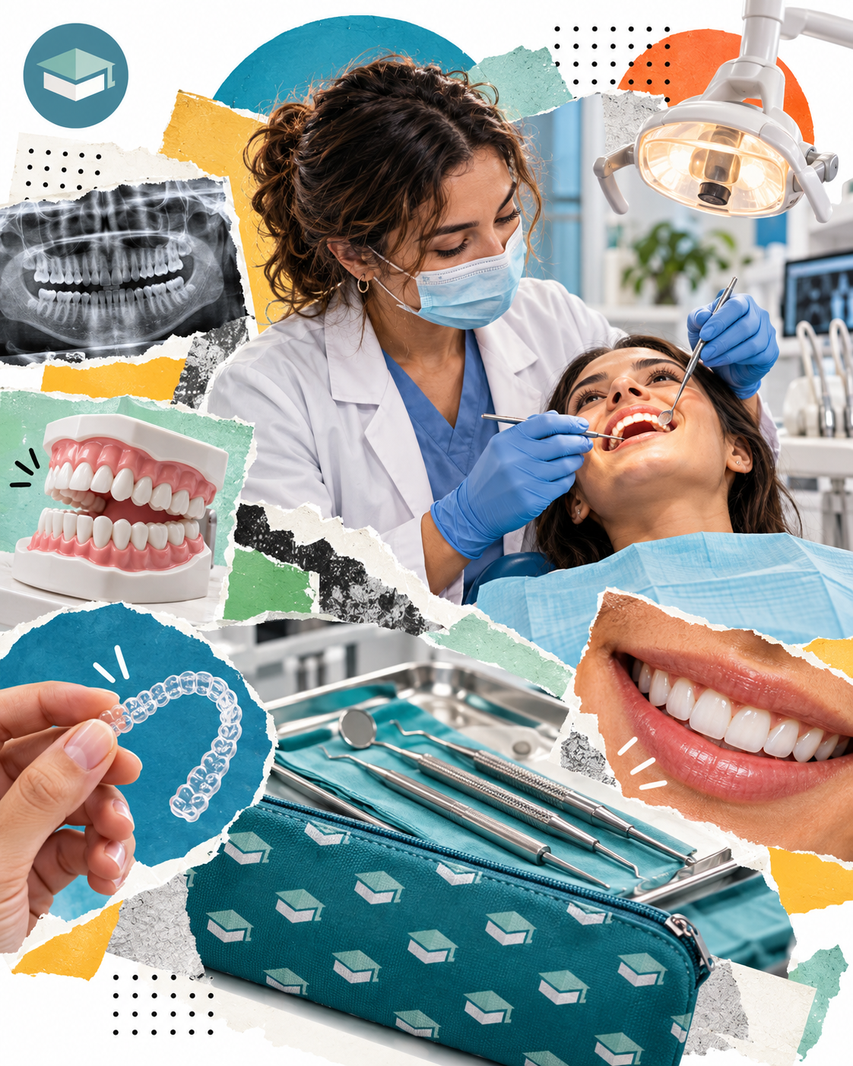
A dentist’s daily work combines prevention, diagnosis, treatment, follow-up, and health education.
During an appointment, they may examine teeth, gums, tongue, mucosa, and jaw structures; review medical and dental history; order or interpret X-rays and diagnostic images; identify caries or periodontal disease; study bite problems; assess dental or facial pain; and decide whether the treatment can be performed personally or requires the involvement of a specialist.
Common procedures in general dentistry may include:
- check-ups and preventive controls;
- diagnosis of caries and gum diseases;
- restorations of damaged teeth;
- cleanings and periodontal treatments;
- tooth extractions;
- emergency treatment for pain, infection, or trauma;
- rehabilitation with crowns, bridges, or other prostheses;
- follow-up of implants and rehabilitations;
- guidance on oral hygiene, diet, and prevention;
- detection of lesions that require further study or referral.
The exact scope of these activities depends on the legislation, training and professional competencies established in each country.
An important aspect of the work is deciding when not to perform a procedure. The dentist must assess medical history, medications, allergies, bleeding risk, infections, chronic diseases and other factors before intervening. The American Dental Association (ADA) considers an up-to-date medical and dental history an important part of safe clinical care.
Dentistry was not always an independent career
Dental care has thousands of years of history.
The historical timeline of the American Dental Association identifies the Egyptian Hesy-Re, who lived around 2600 BC, as one of the earliest known people specifically linked to the treatment of teeth.
Later Egyptian, Greek and Roman texts described dental problems, extractions and different forms of treatment, although for centuries dental care did not constitute a clearly differentiated career as we know it today.
One of the major turning points came in 1723, when French surgeon Pierre Fauchard published Le Chirurgien Dentiste. The work brought together knowledge of oral anatomy, dental diseases, restorations, prostheses and clinical techniques. For this reason, Fauchard is often considered one of the founding figures of modern dentistry.
Another decisive change occurred during the 19th century.
In 1840 the Baltimore College of Dental Surgery was founded in Baltimore, a pioneering institution in the formal teaching of dentistry.
A few years later, dentists such as Horace Wells and William T. G. Morton took part in the development and demonstration of new forms of anesthesia using nitrous oxide and ether. These advances had consequences that went beyond dentistry and contributed to the development of modern surgery.
During the 20th century the career was transformed again, with greater emphasis on prevention, epidemiology and scientific research.
The studies by dentist and epidemiologist H. Trendley Dean were fundamental to understanding the relationship between fluoride and cavity prevention. In 1945 major community water fluoridation trials began.
In 1948 the organization that would later become the National Institute of Dental and Craniofacial Research (NIDCR) was created in the United States, one of the main public centers for dental and craniofacial research.
Specialties within dentistry
General dentistry is only one part of the career. After obtaining the training necessary to practice, a dentist can continue studying and specialize in specific areas.
Recognized specialties and their requirements vary by country.
For reference, the National Commission on Recognition of Dental Specialties and Certifying Boards of the United States currently recognizes different areas of specialization, including endodontics, periodontics, orthodontics, pediatric dentistry, prosthodontics, oral and maxillofacial surgery, oral radiology, oral medicine and orofacial pain.
Endodontics
Endodontics deals mainly with the dental pulp and the tissues surrounding the tooth root.
The best-known procedure is root canal treatment, although the work of the endodontist can also include diagnosis of complex dental pain, trauma, periapical lesions and procedures aimed at preserving compromised teeth.
The goal is not simply to “remove the nerve,” but to try to preserve a tooth whose pulp is inflamed, infected or damaged.
Orthodontics and dentofacial orthopedics
Orthodontics studies and treats alterations in tooth position, bite and certain anomalies related to jaw development.
Treatment may include fixed appliances, aligner systems and other techniques.
The orthodontist needs to analyze growth, occlusion, relationships between the bones and tooth movements. For this reason, their work does not have a purely aesthetic purpose.
Periodontics
Periodontics focuses on the tissues that support the teeth: gums, alveolar bone, periodontal ligament and related structures.
Periodontists diagnose and treat diseases such as periodontitis and can also perform procedures related to implants, tissue regeneration and periodontal surgery.
Prosthodontics or oral rehabilitation
Prosthodontics focuses on restoring function, comfort and appearance when there are missing teeth or deteriorated oral structures.
It can work with crowns, bridges, removable dentures, implants and complex rehabilitations.
For this reason, defining it solely as “cosmetic dentistry” is too limited. Its purpose can be both functional and aesthetic.
Pediatric dentistry
Pediatric dentistry is aimed at babies, children and adolescents, including patients with special healthcare needs.
In addition to treating cavities or trauma, it pays special attention to prevention, the development of the dentition, oral habits and the child's psychological adaptation to the dental visit.
Oral and maxillofacial surgery
It includes surgical procedures related to teeth, jaws and tissues of the oral and facial region.
Depending on the required training and the regulations of each country, it can range from complex extractions to surgery related to trauma, jaw abnormalities and certain pathologies.
Oral medicine and oral pathology
These areas focus especially on diseases and lesions of the mucosa and other oral tissues.
Some changes in the mouth may be related to systemic diseases, side effects of medications or pathologies specific to oral tissues.
Therefore, clinical observation of the mouth can also help identify situations that require further testing or referral to other specialists.
Oral and maxillofacial radiology
It is dedicated to obtaining and interpreting images used to study teeth, jaws and facial structures.
The introduction of digital radiography, cone-beam computed tomography and computer-based analysis tools has made this specialty one of the most technological areas of dentistry.
How is the career changing?
The traditional image of the dentist working only with a mirror, explorer and drill represents less and less of the career as a whole.
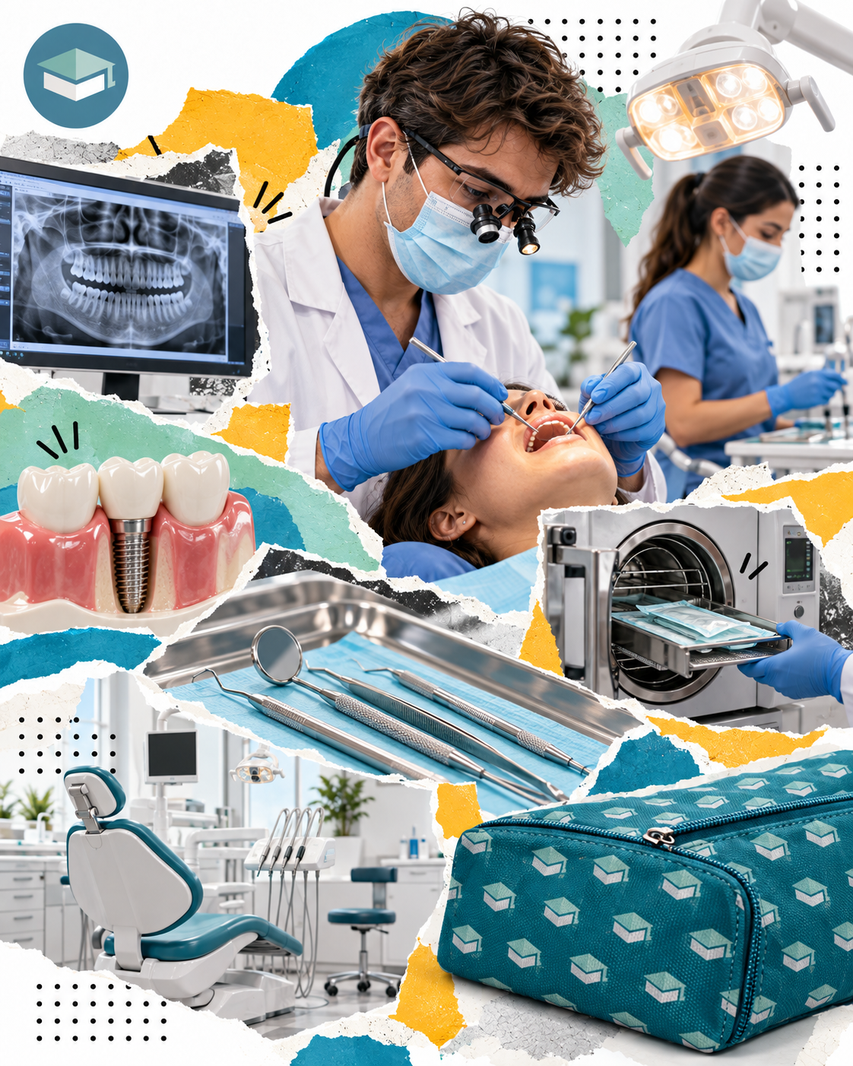
Contemporary dentistry is incorporating digital scanners, 3D printing, virtual planning, new biomaterials, artificial intelligence and techniques aimed at preserving more natural tissue.
Digital dentistry and 3D printing
Intraoral scanners make it possible to create three-dimensional digital representations of teeth and oral tissues without always having to resort to conventional impressions.
These digital files can be used to study the mouth, plan treatments, and manufacture certain devices.
The United States Food and Drug Administration (FDA) describes 3D printing applications in medical devices and materials used to manufacture various dental products.
Applications related to dental models, splints, retainers, prostheses, crowns, bridges, and other devices can currently be found.
Artificial intelligence applied to dentistry
Artificial intelligence is already beginning to be used in certain dental tasks.
Its applications include support in analyzing X-rays, assisted detection of certain conditions, organization of clinical documentation, administrative management, and communication with patients.
According to data published in 2026 by the Health Policy Institute of the American Dental Association, 43.3% of the American dentists participating in its survey used artificial intelligence for at least one task in their practice. 22.8% reported using it in imaging- and diagnosis-related applications.
This data corresponds to the United States and should not be interpreted as representative of all countries, but it shows how quickly these technologies are entering the profession.
The use of AI does not mean that the algorithm replaces the dentist's clinical responsibility either.
The American Dental Association is working on specific standards on artificial intelligence in dentistry, including criteria related to data quality, validation, safety, and potential biases.
Professionals still need to interpret the results, relate them to the clinical history, and decide which treatment is appropriate for each patient.
A more preventive and less invasive dentistry
Another important change is the attempt to preserve as much natural dental tissue as possible.
In 2026, the World Health Organization published an international guideline on prevention and management of cavities that reinforces preventive strategies and minimally invasive treatments.
Among the alternatives studied are interventions such as fluoride varnishes, silver diamine fluoride, sealants, glass ionomer cements and restorative materials.
This approach represents an important conceptual shift. Instead of waiting for a lesion to progress to the point of requiring extensive intervention, modern dentistry tries to detect the problem earlier, control risk factors and preserve natural structures whenever possible.
Regenerative medicine
One of the most interesting experimental areas investigates the possibility of repairing or regenerating tissues through cells, biomaterials and tissue engineering.
The National Institute of Dental and Craniofacial Research funds research related to regeneration of bone, dental tissues, nerves, salivary glands and other craniofacial structures.
Many of these technologies are still under investigation and are not part of everyday dental practice. However, they show a possible direction for future development of the career.
Why is the career still needed?
There is an apparent paradox: many oral diseases can be prevented or treated early, yet they remain extremely common.
The OMS estimates that oral health problems affect billions of people and that there are major inequalities in access to prevention and treatment.
For this reason, the OMS global strategy on oral health proposes progressively integrating these services into primary care and universal health coverage systems by 2030.
The work of the dentist, therefore, is not limited to performing restorations or extractions. It also includes prevention, health education, early diagnosis and, in certain contexts, participation in public health programs.
What is a dentist's workplace like?
The most common setting continues to be the dental clinic or office, but there are many other possibilities.
A dentist can work in:
- private clinics;
- hospitals;
- primary care centers;
- universities;
- research centers;
- specialized clinics;
- public health services;
- educational institutions;
- organizations related to prevention and community health.
As a reference, data from the United States Bureau of Labor Statistics show that most dentists in that country work in dental offices, while another proportion practices independently.
These figures correspond to the United States market and may be different in other countries.
Clinical work requires concentration for prolonged periods and extremely precise movements in a small space.
There is also very close contact with saliva, blood, and aerosols, so infection control protocols are a fundamental part of professional practice.
The dentist routinely uses:
- gloves;
- mask;
- eye protection;
- sterilized instruments;
- suction systems;
- disposable materials;
- disinfection and sterilization equipment.
Those who have their own clinic may also take on business and administrative functions: hiring staff, purchasing and maintaining equipment, financial management, organizing appointments, and complying with health regulations.
What skills does a dentist need?
The profession combines scientific knowledge, technical ability, manual precision, and social skills.
Learning anatomy or knowing procedures is not enough.
Manual dexterity
Much of the work is done inside a very small cavity and around delicate structures.
The dentist needs to control instruments with millimeter precision while observing directly or through a mirror.
Observation skills
Small variations in color, texture, shape, or radiographic density can be clinically relevant.
The ability to identify subtle differences is important for both diagnosis and follow-up.
Clinical reasoning
The same symptom can have different causes.
Tooth pain, for example, can be related to cavities, pulp inflammation, periodontal disease, trauma, bite problems, or even pain referred from other structures.
The professional must gather information, consider possibilities and select the necessary tests before deciding on a treatment.
Communication
Many people feel anxious about a dental appointment.
The dentist needs to explain procedures, risks, alternatives and expectations in an understandable way.
They must also obtain reliable information from the patient and confirm that they understand the available options before certain treatments.
Ability to work with technology
Dentistry increasingly uses digital systems.
A professional may encounter digital radiology, intraoral scanners, three-dimensional planning software, 3D printing, CAD/CAM systems and artificial intelligence applications.
Lifelong learning
Earning the degree does not mean you stop studying.
New materials, techniques, medications, protocols, digital technologies and research require keeping knowledge up to date throughout your professional life.
The future of the dentist
The dentist of the coming years will likely work with a growing amount of digital information.
Electronic records, digital X-rays, three-dimensional images, intraoral scanners, virtual planning, CAD/CAM systems, 3D printing and artificial intelligence may gradually become integrated into the same workflow.
However, automation does not eliminate some of the professional's core functions.
The dentist remains responsible for interpreting the clinical context, correlating the results of different tests, explaining alternatives to the patient, performing procedures that require great manual precision and taking responsibility for treatment decisions.
At the same time, the career seems to be moving from a model focused mainly on repairing damage toward one increasingly based on preventing, detecting early, preserving tissue and performing less invasive procedures.