Everything you need to know about the Medicine degree
Why study Medicine?
Studying Medicine can be an option for those who wish to understand how the human body works, prevent diseases, take part in diagnoses and treatments, and support people in situations of vulnerability. However, it should not be chosen solely for prestige, job stability, or economic expectations.
The degree requires several years of training, continuous study, clinical practice, assessments, ethical responsibility, and contact with pain, uncertainty, disability, and death. It also involves working with other professionals, communicating difficult information, acknowledging mistakes, and making decisions with incomplete data.
Before enrolling, you should ask yourself whether you are really interested in everyday medical work, not just scientific subjects or the social image of the career.

What does Medicine involve?
Medicine is a scientific and professional discipline dedicated to health promotion, disease prevention, diagnosis, treatment, rehabilitation, and the relief of suffering.
It is not limited to identifying a disease and prescribing a medication. Medical care includes listening to the patient, taking a history, performing an examination, formulating hypotheses, ordering tests when indicated, interpreting results, explaining options, and providing follow-up.
It also studies how biological, psychological, social, environmental, cultural, and economic factors influence health.

What is the role of a doctor?
The main role is to provide competent, timely, and respectful care, according to the patient's needs, the available evidence, and professional standards.
Common duties include:
- Taking histories and symptoms.
- Performing physical examinations.
- Developing differential diagnoses.
- Ordering and interpreting tests.
- Indicating treatments.
- Prescribing medications within regulations.
- Performing procedures according to their training.
- Preventing diseases.
- Educating patients and families.
- Recording clinical information.
- Coordinating care with other professionals.
- Recognizing when to refer.
- Supporting chronic diseases.
- Participating in palliative care.

Is the doctor's role to cure?
Curing is one of the possible goals, but it is not always possible. Medicine also seeks to prevent, control symptoms, reduce complications, rehabilitate, relieve suffering and provide support.
In serious or advanced diseases, palliative care seeks to improve quality of life by identifying and treating pain and physical, psychological, social and spiritual problems. The World Health Organization emphasizes that this care should focus on the needs and preferences of the person.
End-of-life care is not simply about “helping ensure a peaceful death.” It requires consent, communication, symptom control, family support, interdisciplinary work and compliance with current legislation.
What is studied in Medicine?
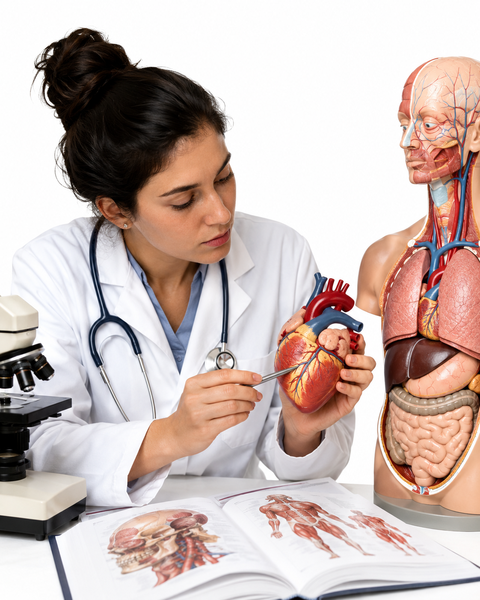
The curriculum varies by country and university, but it usually combines basic sciences, clinical training, public health, ethics and supervised practice.
Common subjects include:
- Anatomy.
- Histology.
- Cell biology.
- Biochemistry.
- Physiology.
- Genetics.
- Microbiology.
- Immunology.
- Pharmacology.
- Pathology.
- Semiology.
- Internal medicine.
- Surgery.
- Pediatrics.
- Gynecology and obstetrics.
- Psychiatry.
- Family medicine.
- Public health and epidemiology.
- Bioethics.
- Clinical communication.
- Research and critical reading.
Clinical training teaches how to interview, examine, document, reason, communicate diagnoses and collaborate with health teams. It is not just about memorizing diseases.
How many years does Medicine take?
The length depends on the education system. In many countries in Latin America and Europe the degree lasts approximately six to seven years, including practical training or internship.
U.S. Bureau of Labor Statistics notes that the usual path requires first a bachelor's degree, then four years of medical school and, subsequently, a residency of three to nine years depending on the specialty. Some subspecialties add one to three years of training.
Graduation does not always allow you to work independently right away. The following may be required:
- Mandatory internship or final practicum.
- Social service.
- National exam.
- Degree revalidation.
- License or professional registration.
- Residency.
- Specialty certification.

What is studying Medicine like?
The experience combines classes, laboratories, simulation, case studies, practicums, and progressive contact with patients.
During the early years, scientific training usually predominates. Later on, rotations in hospitals, health centers, and clinics increase.
A student may have to:
- Read large amounts of information.
- Connect concepts from different subjects.
- Prepare for written, oral, and practical exams.
- Practice interviews and examinations.
- Participate in on-call shifts or rotations.
- Present clinical cases.
- Learn procedures.
- Receive corrections in front of teams.
- Communicate with patients and families.
- Study after clinical days.
The amount of content is high, but the central skill is not memorizing everything. It is learning to find reliable information, prioritize, reason, and recognize the limits of one's own knowledge.
What qualities help with studying Medicine?
There is no single medical personality. Being extroverted, not being bothered by blood, or having wanted to be a doctor since childhood does not guarantee compatibility with the degree.
The following are useful:
- Interest in science and people.
- Ability for sustained study.
- Reading comprehension.
- Clinical reasoning.
- Clear communication.
- Teamwork.
- Attention to detail.
- Organization.
- Willingness to ask for help.
- Ability to receive criticism.
- Respect for confidentiality.
- Tolerance for uncertainty.
- Responsibility.
Empathy is important, but it does not mean emotionally absorbing all suffering. Boundaries, professional support, and self-care strategies are also needed.

Do you have to be mentally strong to study Medicine?
The expression “being mentally strong” can be misleading. No one should indefinitely endure exhaustion, mistreatment, anxiety, or depression to prove vocation.
Medical training can be demanding and burnout is a real risk. The study load, competition, schedules, contact with suffering and responsibility can affect well-being.
Asking for help, using mental health services and setting boundaries does not show a lack of ability. Institutions also have responsibility for learning and working conditions.

What is working as a doctor like?
The work depends a lot on the specialty and the setting. A family doctor, a surgeon, a pathologist, a psychiatrist and a researcher can have very different workdays.
In clinical care, a workday may include:
- Scheduled appointments.
- Emergencies.
- Reviewing results.
- Prescribing and adjusting treatments.
- Procedures.
- Clinical meetings.
- Documentation.
- Consultations.
- Communication with family members.
- On-call shifts.
- Patient follow-up.
U.S. Bureau of Labor Statistics, indicates that many doctors work more than forty hours per week and may have night shifts, irregular schedules or on-call availability.
Is Medicine practiced individually?
No. Although doctors have their own responsibility, modern care is interdisciplinary.
They may work with:
- Nursing.
- Pharmacy.
- Biochemistry and laboratory.
- Psychology.
- Nutrition.
- Kinesiology or physiotherapy.
- Social work.
- Occupational therapy.
- Imaging technicians.
- Health administration.
- Other doctors.
The ability to listen to other professionals and coordinate information directly influences patient safety.
What responsibility does a doctor have?
Medical decisions can produce benefits, adverse effects or delays in care. That is why the work requires documentation, informed consent, staying up to date and recognizing limits.
The World Health Organization reports that about one in ten patients suffers some harm during health care and that more than half of that harm could be prevented. Errors can be related to medications, diagnoses, procedures, infections or communication failures.
This does not mean that every negative outcome is one person's fault. Many incidents are related to system deficiencies, excessive workloads, poor coordination, or unsafe processes.
Where can a Medicine graduate work?
The employment field includes:
- Hospitals.
- Clinics.
- Primary care centers.
- Private practices.
- Emergency services.
- Rehabilitation institutions.
- Nursing homes and long-term care.
- Public health.
- Government agencies.
- Universities.
- Research.
- Pharmaceutical industry.
- Health technology.
- Insurance and medical auditing.
- Humanitarian organizations.
- Occupational medicine.
- Health policy.
There are also non-clinical positions related to research, management, education, regulation, and technology development.
What is the difference between a general practitioner and a specialist?
The general practitioner has broad training to prevent, evaluate, and treat common problems and recognize situations that require referral.
A specialist completes additional training in an area such as pediatrics, surgery, cardiology, psychiatry, or dermatology.
Being a specialist does not necessarily mean having greater ability for any problem. Each professional works within a field and needs collaboration or referral when the case exceeds their competence.
What medical specialties exist?
These specialties and training areas include:
- Family medicine.
- Internal medicine.
- Pediatrics.
- General surgery.
- Gynecology and obstetrics.
- Psychiatry.
- Anesthesiology.
- Cardiology.
- Neurology.
- Dermatology.
- Oncology.
- Traumatology and orthopedics.
- Radiology.
- Pathology.
- Emergency medicine.
- Intensive care medicine.
- Ophthalmology.
- Otorhinolaryngology.
- Urology.
- Preventive medicine.
- Occupational medicine.
- Physical medicine and rehabilitation.
The name, duration, and access to each specialty vary by country.
What are the highest-paid medical specialties?
There is no stable worldwide ranking. Income varies by country, health system, sector, experience, procedures performed, working hours, and type of employment.
In the United States, U.S. Bureau of Labor Statistics: medical pay reported high annual averages for May 2024 in pediatric surgery, cardiology, other surgeries, orthopedic surgery, radiology, dermatology and anesthesiology. These data do not mean that those specialties are the best paid in all countries or that a person should choose them solely for money. Some require extensive training, on-call shifts, high responsibility, complex procedures or significant investments.
Is the Medicine degree profitable?
It can offer high income, but talking about profitability without considering the years of study, costs, residency, working hours and responsibility produces an incomplete picture.
Pay depends on:
- Country and region.
- Specialty.
- Public or private sector.
- Seniority.
- Type of contract.
- Number of on-call shifts.
- Independent practice.
- Local demand.
- Practice costs.
- Insurance and taxes.
Having your own practice also does not guarantee high profitability. It involves rent, staff, equipment, administration, insurance, maintenance and attracting patients.
How much does a doctor earn?
There is no representative salary for all doctors. As a reference for the United States market, the BLS U.S. Bureau of Labor Statistics: Physicians and Surgeons. reports that the annual median for physicians and surgeons was equal to or greater than $239,200 in May 2024. Employment is projected to grow 3% between 2024 and 2034. The figure corresponds to professionals in the United States, not to students, residents or doctors from other countries. It also does not reflect professional expenses or differences between specialties.
Does Medicine always offer job opportunities?
The need for healthcare is permanent, but that does not mean that all doctors immediately get the position, specialty, city or pay they want.
Entry into the field can depend on:
- Availability of residencies.
- Geographic distribution.
- Recognition of the degree.
- License.
- Language.
- Experience.
- Hospital network.
- Health policies.
- System funding.
In some regions there is a shortage of doctors and in others there is competition for certain specialties or centers.
How is artificial intelligence influencing Medicine?
Artificial intelligence can support image interpretation, data classification, documentation, research, epidemiological surveillance, bibliographic searches, and some clinical decisions.
The WHO recognizes opportunities in diagnosis, treatment, research, and public health, but warns about errors, biases, privacy, misinformation, and the use of unevaluated tools.
A system can produce a convincing but wrong answer. That is why it should not replace:
- Clinical assessment.
- Verification of results.
- Informed consent.
- Data protection.
- Communication with the patient.
- Professional responsibility.
- The final decision in complex situations.
The doctor of the future will need to understand how these tools are trained and evaluated, what data they use, and when they should not be applied.
Will artificial intelligence replace doctors?
It does not seem likely to replace the profession across the board. It can automate part of the documentation, classification, and initial analysis.
Medicine includes physical examination, procedures, contextual reasoning, communication, negotiation, support, and legal responsibility. These functions cannot be reduced to generating a response.
It is more likely to change the distribution of work: professionals who know how to use and oversee digital tools will be able to spend less time on some repetitive tasks, but will need to invest more in verification, safety, and explanation.
What are the advantages of studying Medicine?
- The possibility of contributing to the health of people and communities.
- A wide variety of specialties.
- Clinical, academic, scientific, or administrative work.
- Lifelong learning.
- Participation in research and innovation.
- The possibility of working at different levels of care.
- Development of scientific and human knowledge.
- Sustained demand for healthcare services.
What are the disadvantages of studying Medicine?
- Extensive training.
- Heavy study load.
- Competition for some residencies.
- On-call shifts and irregular hours.
- Clinical and legal responsibility.
- Contact with suffering and death.
- Risk of burnout.
- Exposure to infections and other occupational risks.
- Need for continuous updating.
- Possible debt or high cost of training.
- Difficulty balancing personal life and work in certain positions.
The World Health Organization notes that health workers can be exposed to infections, chemical risks, radiation, injuries, violence, fatigue, and mental health problems.
Is the Medicine degree for me?
It may be a good fit for you if:
- You are interested in health sciences.
- You want to work directly with people.
- You accept studying for several years.
- You understand that not all patients are cured.
- You are interested in solving complex problems.
- You can work in a team.
- You are willing to keep learning throughout your life.
- You can acknowledge mistakes and ask for help.
- You respect patient autonomy.
- You accept that the job includes documentation and administrative tasks.
It may be less compatible if the main motivation is prestige, family pressure, the expectation of getting rich quickly, or an idealized view of the job.
Do I need to be comfortable with blood?
Not all specialties have the same level of exposure to blood, wounds, or procedures. Pathology, radiology, psychiatry, public health, and research, for example, have different environments.
An initial queasy reaction alone does not determine the ability to study Medicine. Some people adapt with gradual exposure and training. The important thing is to assess whether you can act safely and professionally.
How to choose a university to study Medicine?
Before enrolling, compare:
- Official recognition of the degree.
- Accreditation.
- Actual duration.
- Hospitals and practice centers.
- Quantity and quality of practical training.
- Student-to-teacher ratio.
- Clinical simulation.
- Academic and mental health support.
- Costs.
- Admission requirements.
- Licensing exam results.
- Residency opportunities.
You should not choose based only on prestige, advertising, or ease of admission. The quality of practical training and clinical supervision is essential.
What questions should I ask myself before studying Medicine?
- Am I interested in the daily work or just the idea of being a doctor?
- Am I willing to study and keep learning for many years?
- How do I react to uncertainty?
- Can I work with people who are different from me?
- Am I willing to accept supervision and corrections?
- What costs does the training involve?
- What requirements exist to practice in my country?
- How does this decision affect my other projects?
- Do I know doctors or students I can talk to?
- Have I researched other health careers?
Present and future of Medicine
Medicine is changing due to population aging, chronic diseases, mental health, genomics, telemedicine, artificial intelligence and the need to improve safety.
Technical knowledge will remain essential, but communication, coordination, ethics, data interpretation and working with informed patients will also become more important.
The career will continue to be necessary, but many tasks will change. Doctors will need to learn to use technology without delegating clinical judgment or losing the human relationship.
So, is it worth studying Medicine?
It can be an excellent choice if you know its demands, are interested in the real work and are willing to take on extensive training and significant responsibility.
You don't need to feel a perfect vocation or be sure of a specialty from the start. It is important to make an informed decision, explore the healthcare field and distinguish between the desire to help, scientific interest, economic expectations and external pressure.
Medicine can offer a meaningful, diverse and stable career, but it does not guarantee wealth, prestige or automatic satisfaction. The choice should be based on a realistic understanding of the training, professional practice and the life you want to build.