
Environmental Sciences
The Environmental Sciences degree aims to provide tools to develop systems sustainable and solve the problems that humans cause in nature.
Environmental Sciences graduates have the ability to understand, propose and plan everything necessary to improve the environment through scientific, natural and human knowledge.
An environmental scientist, who is a specialist in the study and management of the environment, uses a series of tools, field equipment, analysis and modeling software.
In the field, environmental scientists usually work with GPS for mapping and precise sampling, as well as with various instruments to measure aspects such as water quality, air pollution, noise, and other environmental factors. For example, they use sensors and probes to collect data on temperature, pH, and water conductivity.
For the analysis of the collected data, they rely heavily on specialized software. Tools such as Geographic Information Systems (SIG), are used to visualize and analyze spatial data. In addition, they use environmental modeling and statistics programs to predict impacts and assess risks.
The work of the environmental scientist is comprehensive and requires a multidisciplinary approach, so it is also common for them to interact with databases and reports to complement their research and planning of conservation and restoration projects.
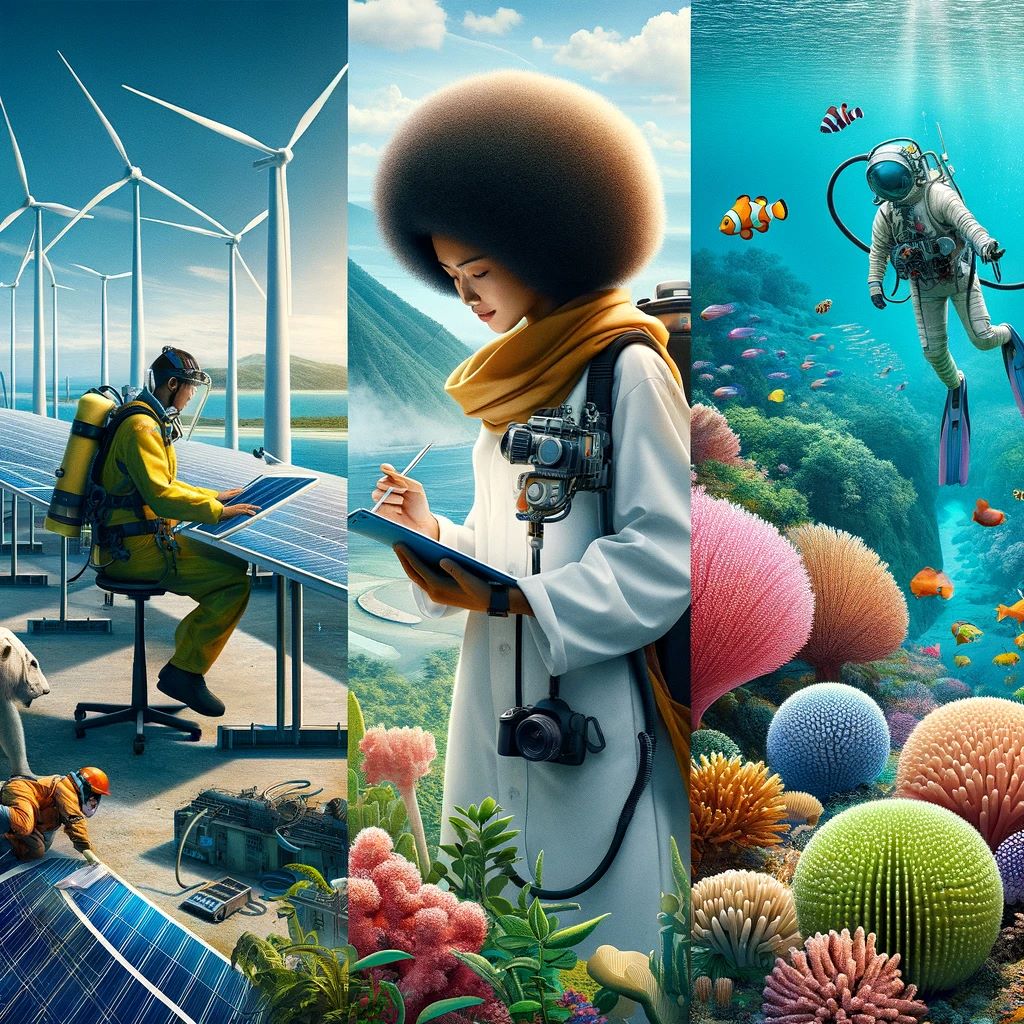
What is an environmental scientist?
An Environmental Scientist or Environmental Scientist, also known as an environmental scientist, is a professional dedicated to the study and management of the various aspects that make up the environment. Their role is key in identifying and analyzing environmental problems, as well as in proposing and implementing sustainable solutions.
Environmental scientists work in a wide range of areas, including biodiversity conservation, natural resource management, environmental impact assessment, environmental education, and environmental planning and policy, among others.
A large part of their work involves collaborating with other experts and actively participating in interdisciplinary projects, where they use their analytical skills and their knowledge of natural sciences to implement strategies that benefit both the environment and society.
They are responsible for ensuring that human activities take place within a framework of respect and care for the environment, which is crucial in the current era, where sustainability is a global challenge.
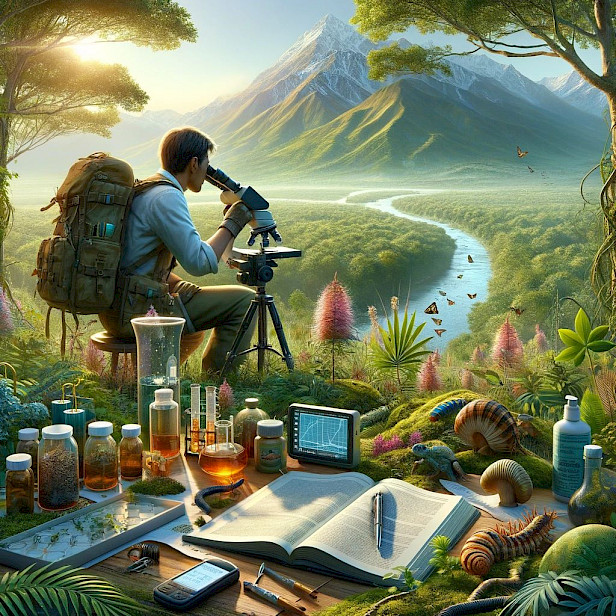
The environmental scientist is a guardian of ecological balance, whose work has a positive impact on present and future quality of life.
The Environmental Science degree is designed for lovers of science and ecology, for those who wish to propose solutions and the search for sustainable resources in favor of human beings and the earth.
Environmental scientists are responsible for promoting the importance of recycling, water care, soil, and air pollution, developing research and studies in environmental sustainability, carrying out commercial and government inspections, and seeking to improve the relationship between society and our environment.
Environmental scientists show a strong interest in ecology, the earth, and the environment, and have extensive knowledge in this area.
They are involved in various activities, such as the design and management of recycling plants, participation in environmental policies, management of natural resources, water and waste resources, the administration of environmental inventories and catalogs, as well as collaboration with ecological industries, private companies, and public institutions.
Environmental scientists are responsible for promoting the importance of recycling, water care, soil care, and reducing air pollution. They conduct research and studies in environmental sustainability, carry out commercial and government inspections, and work to improve the relationship between society and our surroundings.

What Are Environmental Sciences?
Environmental Sciences are the interdisciplinary study of biological, physical, and chemical factors that affect the environment and human health.
Environmental sciences are an interdisciplinary field that combines knowledge from physics, chemistry, biology, geology, and social sciences to understand the environment and solve environmental problems. They focus on the study of how humans interact with their natural surroundings and seek to design sustainable strategies to manage and preserve natural resources.
The need for professionals in this field is growing, given the urgency of addressing issues such as climate change, pollution, and biodiversity conservation.
Choosing a degree in environmental sciences is a commitment to the future of the planet and an opportunity to contribute to the well-being of present and future generations.
Objectives of Environmental Sciences
Environmental sciences pursue a series of fundamental goals for the conservation and improvement of the planet. Among these objectives are:
- Understanding and analyzing the interaction between natural and human components.
- Developing sustainable solutions for environmental problems, such as pollution and the excessive use of resources.
- Public education and awareness about the importance of environmentally friendly practices.
- Promoting environmental policies that ensure the protection and rational use of ecosystems.
- Continuous research to better understand environmental impacts and how to mitigate them.
Choosing a degree in environmental sciences is not only a professional choice, but also a commitment to sustainability and the future of the planet.
Degree in Environmental Sciences
The Environmental Sciences degree is an interdisciplinary discipline that combines knowledge of biology, chemistry, physics, geology, and social sciences to understand, analyze and seek solutions to environmental problems. This degree focuses on the study of how human beings interact with the environment, the impacts of these interactions on natural systems and how to manage these effects sustainably.
Subjects in Environmental Sciences
The Environmental Sciences degree subjects are designed to provide a deep understanding of natural systems and the complexities of environmental problems. Although the curriculum may vary by university, some of the common subjects include:
Ecology: Study of the interactions between organisms and their environment. It focuses on the processes that affect the distribution and abundance of organisms.
Conservation Biology: Focused on the protection of biodiversity and the management of threatened species, habitats and ecosystems.
Environmental Chemistry: Study of the chemical processes that occur in the environment and how pollutants affect ecosystems.
Natural Resource Management: Focus on the sustainable use and conservation of natural resources such as water, soil, and air.
Environmental Policy and Legislation: Review of the laws and policies that regulate the use of natural resources and the protection of the environment.
Environmental Impact Assessment (EIA): Methodology to identify and evaluate the effects of projects and activities on the environment.
Geographic Information Systems (GIS) and Remote Sensing: Technological tools for spatial analysis and geographic data management, useful for environmental mapping and monitoring.
Climate Change: Study of changes in global and local climate patterns, their causes, effects and mitigation and adaptation strategies.
Environmental Economics: Analysis of the relationships between the economy and the environment, including the economic valuation of environmental goods and services.
Sustainable Development: Exploration of development models that seek to meet current needs without compromising the capacity of future generations.
Duration of Environmental Sciences studies
The length of the Environmental Sciences degree varies by country and educational institution. For example:
In Argentina, various universities offer Environmental Sciences programs that generally last between 4 and 5 years, depending on the curricular structure and the specific requirements of each institution.
In Chile, the Universidad de Chile offers programs related to Environmental Sciences, such as Biology with a specialization in Environment and Environmental Chemistry, both with a duration of 10 academic semesters.
In Spain, there are many universities, both public and private, that offer Environmental Sciences programs, standing out for their educational quality and with a general duration of 4 years.
In United States, there are more than one hundred universities with programs in Environmental Sciences, known for their high educational quality and broad job opportunities after graduation. The typical duration in this country is 4 years.
In Peru, the degree is offered at various universities with a focus on the conservation and protection of the country's extensive and varied ecosystems. Options include the Universidad Nacional Agraria La Molina and the Universidad Científica del Sur, among others, with programs typically structured to be completed in 4 years.
In Mexico, the Environmental Sciences degree generally lasts 8 semesters or four years. Professionals in this field are prepared to tackle environmental problems, manage human activities sustainably, and contribute to the development of public policies and conservation projects.

What skills are needed to study Environmental Sciences?
Analytical skills, interest in science and nature, ability to solve complex problems and communication skills are essential in this area.
Studying Environmental Sciences requires a combination of skills that cover both theoretical and practical knowledge.
It is essential to have an intrinsic curiosity for nature and a desire to understand how ecological systems work.
The capacity for critical thinking to analyze and solve complex environmental problems is also valued.
Analytical skills are fundamental; understanding and handling data is an everyday part of the work in this discipline.
Proficiency in basic sciences such as biology, chemistry and physics provides a solid foundation for this field of study.
It is necessary to have or develop excellent communication skills, both written and oral, to share findings and influence science-based decision-making. In addition, collaboration is key since environmental projects often require interdisciplinary cooperation.
A practical approach and the ability to work in the field can be equally important, since Environmental Sciences often involve outdoor research work.
Table with essential skills:
| Skill | Description |
|---|---|
| Curiosity about nature | Interest and inquisitiveness in environmental phenomena. |
| Critical thinking | Analysis and solving of complex problems. |
| Analytical skills | Ability to interpret and manage data. |
| Proficiency in basic sciences | Fundamental knowledge of biology, chemistry, etc. |
| Written and oral communication | Expressing ideas and results effectively. |
| Collaboration | Working together with professionals from different disciplines. |
| Fieldwork ability | Proficiency in conducting research in outdoor environments. |
These skills are key to navigating the challenges and advantages of studying Environmental Sciences, preparing students to contribute positively to the protection and management of our natural environment.
What tools does the environmental scientist work with?
To carry out their work, they use a varied range of tools that allow them to analyze data, assess impacts and design sustainability strategies.
Some of the tools
Geographic Information Systems (GIS): They allow them to analyze and visualize spatial data for land use planning and management.
Environmental monitoring software: It is used to simulate and predict environmental changes and their effects.
Sensors and measuring equipment: Crucial instruments for collecting data on air, water and soil quality.
Statistical analysis tools: Essential for interpreting large data sets and evidence-based decision-making.
Project management and tracking platforms: They facilitate project coordination and collaboration between different stakeholders.
What software is used in Environmental Sciences?
For students of Environmental Sciences, understanding and using specific software is crucial for analyzing, managing and developing projects related to the environment.
Here's how these tools are applied in the field:
QGIS (Quantum GIS)
QGIS is an open-source Geographic Information System (GIS) that offers robust capabilities for visualizing, editing and analyzing geospatial data. It is especially valuable in Environmental Sciences for several reasons:
Spatial Analysis and Cartography: Allows students and professionals to create detailed maps and perform complex spatial analyses. This is crucial for conservation studies, land planning, land cover analysis, and more.
Data Modeling: With QGIS, environmental data can be modeled to predict changes in ecosystems, assess species distribution, or identify critical areas for conservation.
Natural Resource Management: Facilitates the management of water, forest and biodiversity resources, enabling more effective and sustainable planning.
Environmental Monitoring: QGIS is useful for monitoring environmental changes over time, such as deforestation, urban expansion, or glacier retreat, using satellite images and other georeferenced data sources.
Education and Research: It is an excellent tool for teaching and research, allowing students to explore real cases and develop research projects with spatial data.
Accessibility and Community: As open source, QGIS is accessible to everyone, at no cost. In addition, it has a large community of users and developers who constantly contribute plugins, tutorials and support, enriching learning and professional practice in Environmental Sciences.
Presto
Presto is a budgeting, measurement and cost control software for construction. Although it is not exclusive to Environmental Sciences, it can be applied to calculating costs of environmental projects, such as area rehabilitation, construction of water treatment facilities or renewable energy systems, helping students understand the economic viability and financial management of environmental projects.
SimaPro
SimaPro is a leading software in product life cycle assessment (ACV), events or services, from production to final disposal. In Environmental Sciences, it is used to assess the environmental impacts of different products or processes, facilitating more sustainable decision-making. Students can use SimaPro to study the ecological footprint, energy efficiency and the associated environmental impacts with various products or services.
Energy Certification Software (Calener Vyp, LIDER HE, CE3, CE3X)
These programs are designed to assess and certify the energy efficiency of buildings. In the context of Environmental Sciences, this software is essential to design, analyze and improve energy efficiency of buildings, minimizing their environmental impact. Students can learn to use these tools to contribute to the development of more sustainable buildings and comply with regulations on energy efficiency.
The combination of these tools and their correct use are key for environmental scientists to contribute effectively to environmental protection and sustainable development.
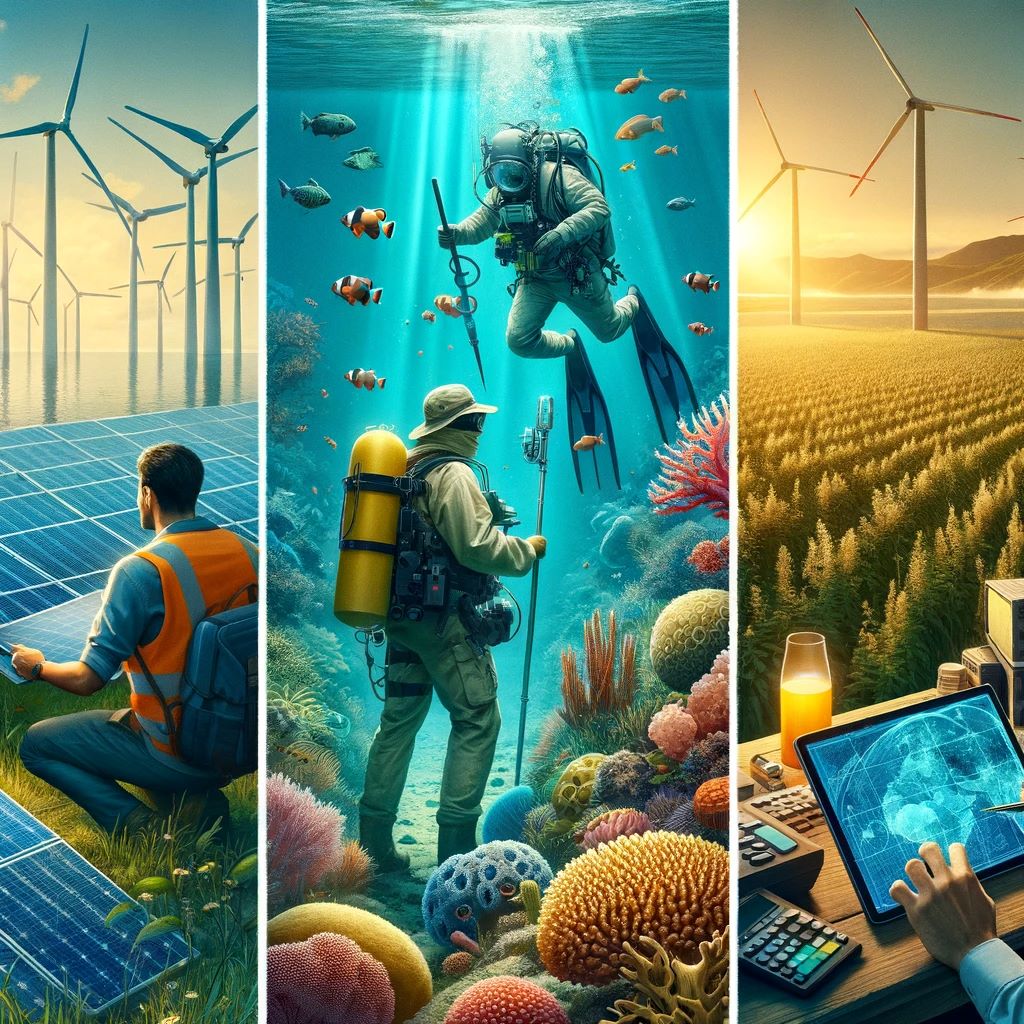
What is the goal of an Environmental Sciences professional?
The goal is to understand and solve environmental problems to achieve sustainable development, protect ecosystems and improve quality of life.
An Environmental Sciences professional seeks to understand and protect our natural environment. Its main goal is to identify, prevent and offer solutions to environmental challenges. It works hand in hand with scientific knowledge and environmental policies to ensure a sustainable and responsible use of natural resources.
The goal is not only to mitigate the negative impact of human activities on the ecosystem, but also to educate and raise awareness in society about the importance of environmental conservation.
What types of jobs can I get with a degree in Environmental Sciences?
Roles range from environmental analyst, consultant, educator, to roles in ONGs, in government and in private companies seeking to comply with environmental regulations.
With a degree in Environmental Sciences, job opportunities are diverse and rewarding. Graduates can explore careers in:
Government Sector: working with regulatory agencies to implement and monitor environmental policies.
Environmental Consulting: advising companies on regulatory compliance and environmental impact management.
Education and Outreach: educating the public or students about the importance of sustainability and environmental protection.
Research: in universities, nonprofit organizations or research centers, developing new knowledge about ecosystems and how to protect them.
Nature Conservation: managing nature reserves or developing conservation programs for flora and fauna.
Innovation and Sustainable Development: designing technological solutions that promote the sustainable use of resources.
The flexibility of the degree allows environmental science professionals to be important advocates for the planet in a wide range of settings, each with the potential to make significant contributions to the future of the environment.
Is it possible to specialize in a specific area?
Yes, there are many specializations available, such as water quality management, biodiversity conservation, climate change and renewable energy.
Specialization in environmental sciences
The fields of specialization within the environmental sciences are diverse and adapt to the multiple challenges facing environmental management. Among them are ecology, conservation biology, natural resource management and environmental education.
Environmental toxicology and climate change are fast-growing areas given the urgency of addressing human impact on the Earth.
The degree in environmental sciences can also lead to specializing in environmental law and public policy, focusing study on the creation and implementation of laws to protect the environment. This wide range of specializations demonstrates the commitment of environmental sciences to a more sustainable future.
What is the importance of ethics in Environmental Sciences?
Ethics is a crucial component in the field, since the decisions made can have a significant impact on communities and ecosystems.
The importance of Environmental Sciences in today's society
The importance of environmental sciences in contemporary society is crucial, given the growing problems such as climate change, biodiversity loss and soil degradation.
These disciplines play a vital role in the development and implementation of strategies for the sustainable use of resources and the conservation of natural habitats. In addition, the degree in environmental sciences train professionals capable of influencing in political and business decisions, guiding them toward more ecological and responsible practices. This field of study is essential to ensure the well-being of future generations and the health of the planet.
The Environmental Sciences degree offers an interdisciplinary approach to understanding and solving the complex environmental challenges we face today. From climate change to the conservation of biodiversity and sustainable resource management, this field covers a wide range of critical topics that have a direct impact on the quality of life and the health of our planet.
If you have a passion for science and an interest in making a positive contribution to society, this could be the degree for you.
The demand for trained professionals in Environmental Sciences is increasing, which means there are many opportunities for those willing to invest in their education and skills.