
Audio Engineering
Audio Engineering is a discipline that deals with the manipulation and reproduction of sound.
It focuses on capturing, processing and improving sound quality in various environments, such as music, film, television and live events.
The audio engineers use specialized equipment and technology to achieve optimal results in sound recording, mixing and reproduction. This field combines knowledge of physics, acoustics, electronics and music to provide a high-quality listening experience.
Audio Engineering plays a fundamental role in the entertainment industry and in creating immersive experiences for audiences.
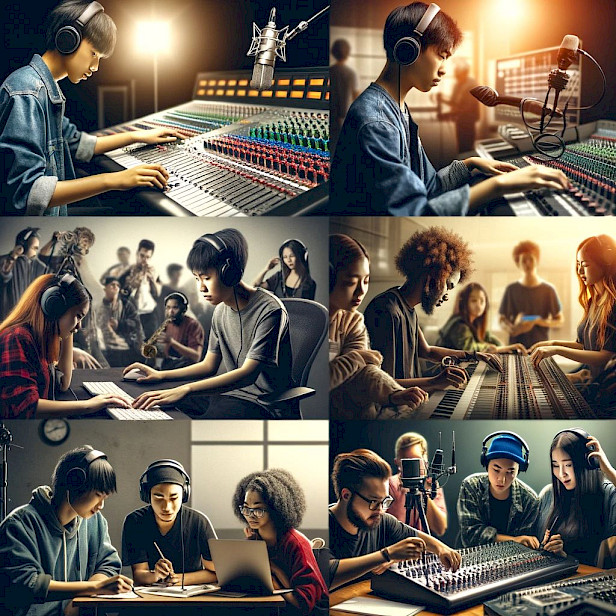
What is Audio Engineering?
Audio engineering is a discipline that focuses on the capture, manipulation and reproduction of sound.
Audio engineers use specialized equipment and technology to improve sound quality in different fields such as music, film, television and live events.
Their goal is to achieve an optimal listening experience, working with the acoustics of spaces, the operation of microphones and mixers, and applying recording and production techniques to obtain excellent results.
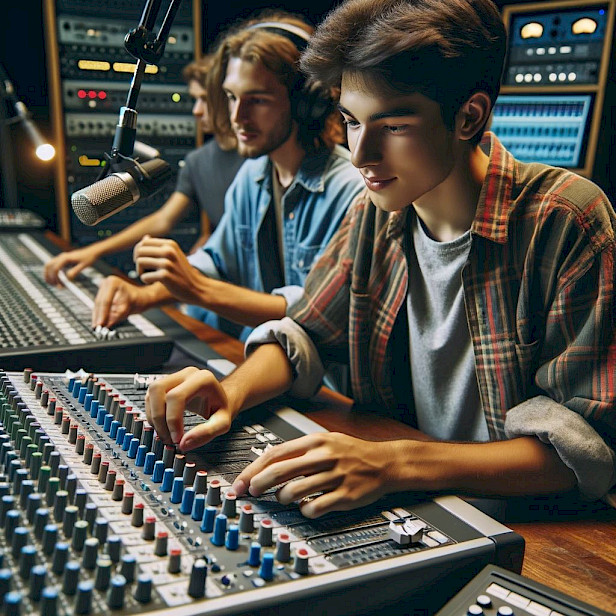
History of audio engineering
The history of audio engineering dates back to the 19th century with the first advances in sound recording. In the 1930s, techniques such as multichannel recording and stereophonic reproduction were developed and perfected.
Over time, significant technological innovations have been developed, such as digital recording and digital mixing consoles, which have revolutionized the audio industry.
Today, audio engineering continues to evolve with the introduction of new technologies and advanced tools.
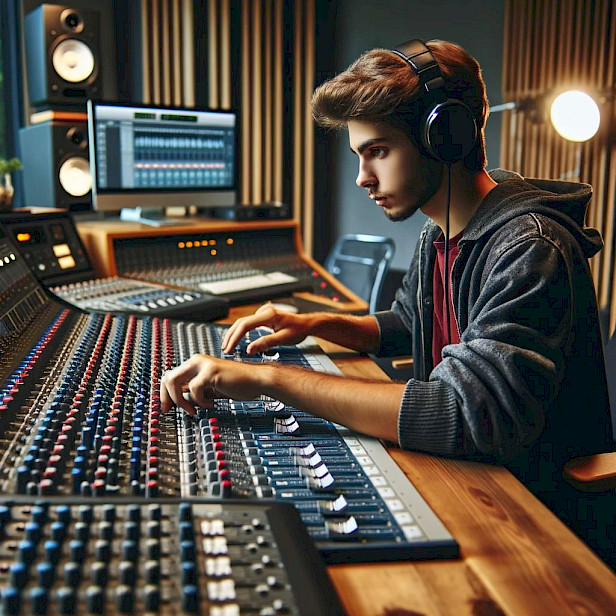
What does an Audio Engineer do?
An audio engineer is responsible for various tasks related to sound recording, mixing and reproduction. Their main role is to ensure the quality and balance of audio in different environments, such as recording studios, concert halls and audiovisual productions.
Among the activities they perform are adjusting and equalizing sound equipment, recording and editing audio tracks, mixing different sound elements and implementing special effects to improve sound quality. They may also participate in selecting and setting up the necessary equipment and in the technical supervision of recording sessions.
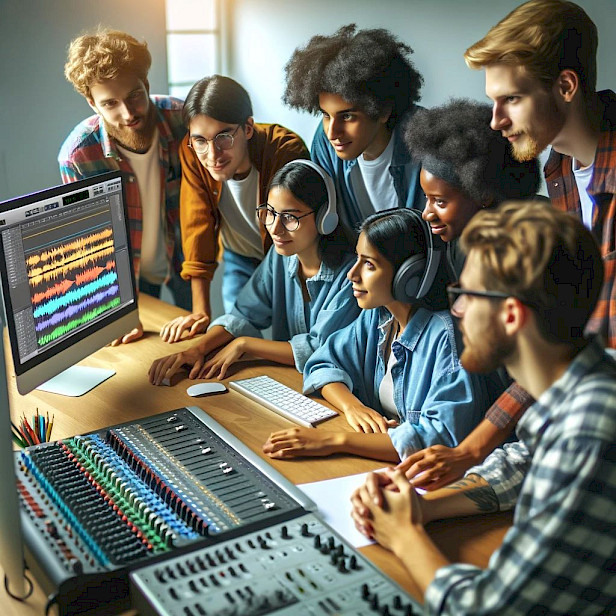
Degree in audio engineering
The university Audio Engineering programs prepare students for a career in the sound industry, covering everything from music production and audio post-production to sound system design and acoustics.
These programs are offered at different levels, including undergraduate, graduate and technical certifications, and can vary significantly in focus and specific content.

University Programs
Audio or Sound Engineering: This is an engineering program that generally lasts 5 years. It prepares students for a wide range of careers in the audio industry, from recording engineering to live sound system design.
Technician or Technology in Audio Engineering: These programs are usually shorter, 2 to 3 years, and are focused on providing practical technical skills for direct work in the industry.
Master's Degree in Audio Engineering: For those looking to specialize further or advance in their careers, master's degrees offer a focus on research, development and advanced management in the audio field.
What profile is required in Audio Engineering?
In the industry, a profile with technical skills and specialized knowledge in the field of sound is sought.
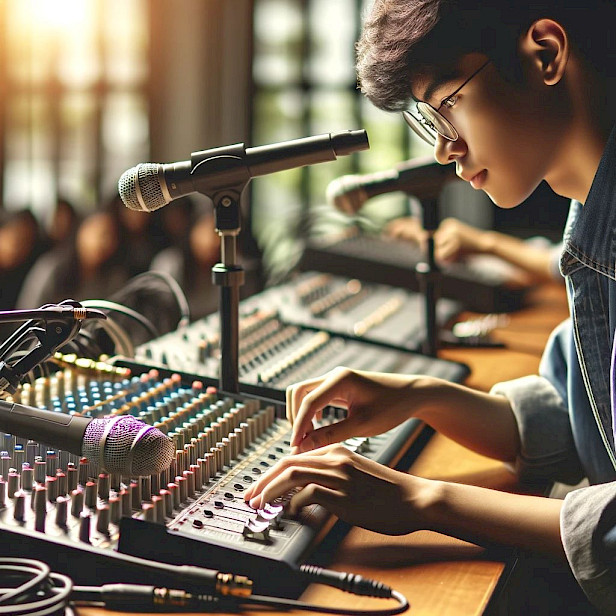
An audio engineer must have knowledge in acoustics, handling of recording and mixing equipment, as well as experience using audio editing software. In addition, they must be creative, have a good ear and excellent communication skills, since they will work as a team with artists, directors and producers to achieve the desired result. Knowledge of music and the ability to adapt to different situations and work environments are also valued.
Student Profile
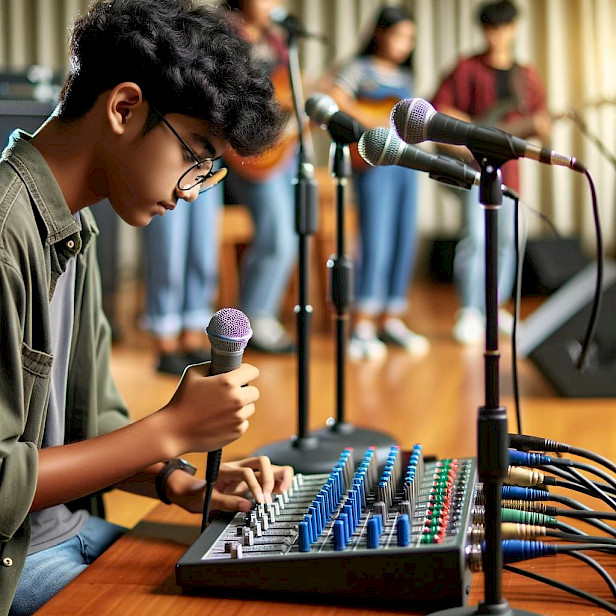
The ideal Audio Engineering student profile includes:
- Passion for music and sound: A deep interest in all aspects of sound and music is essential.
- Technical skills: An affinity for technology, electronics and computing, since the degree involves a lot of technical work.
- Creativity: The ability to think creatively is essential for problem solving and innovation in sound design.
- Attention to detail: Audio engineering requires precision and attention to detail to produce and manipulate high-quality sound.
- Teamwork ability: Collaboration with other sound professionals, musicians and clients is a routine part of the job.
Common Subjects in the Degree
Courses in an Audio Engineering program may vary, but generally include:
- Sound Theory and Acoustics: Fundamentals of sound, sound propagation and perception, and principles of acoustics.
- Audio Technology and Electronics: Study of audio equipment, microphones, mixers, amplifiers, and basic principles of electronics applied to audio.
- Music Production: Recording, mixing and mastering techniques, studio and live production.
- Sound System Design: Creation of sound systems for concerts, events, theaters and other venues.
- Audio and MIDI Software: Use of software for editing, mixing and creating music and sounds.
- Audio Project Management: Planning and management of audio projects, from pre-production to post-production.
- Copyright and Professional Ethics: Legal and ethical standards in the audio industry.
Each program will have its own focus and may offer specializations in particular areas such as sound post-production for film and television, video game design, live sound, among others. Choosing the right program will depend on your interests and professional goals.
Equipment and Technology in Audio Engineering
In audio engineering, equipment and technology play a fundamental role. Audio engineers use a wide variety of equipment and tools to capture, mix, and reproduce sound.
Some of the most common equipment includes microphones of different types and features, mixers for combining and controlling multiple audio sources, and digital recorders for making high-quality recordings. They also use audio editing and processing software to fine-tune and enhance sound.
Knowledge and mastery of this technology is essential to achieve professional results in the field of audio engineering.
Microphones and Their Types
In audio engineering, microphones play a fundamental role in accurately capturing sound. There are several types of microphones used in different applications.
Some of the most common types include condenser microphones, which offer great sensitivity and wide frequency response; dynamic microphones, which are more rugged and suitable for live applications; and ribbon microphones, which are prized for their warm, smooth sound. Each type of microphone has specific characteristics and applications, so it is important to select the right one for each situation.
Mixers and How They Work
Mixers are key components in audio engineering, as they allow you to combine and control sound from different sources. These devices feature multiple input and output channels, as well as volume, equalization, and effects controls.
How a mixer works is based on routing and mixing audio signals to achieve a balanced, quality output.
Modern mixers also include advanced features such as automation and integration with recording and production software.
Applications of Audio Engineering
Audio engineering has a wide range of applications in different sectors. In the music industry, audio engineers are essential in the recording, mixing, and mastering of songs and albums.
In film and television, they are in charge of designing and mixing the sound for movies, series and commercials. They are also used at live events, concerts and theaters to provide high-quality sound. In addition, audio engineering is applied in the gaming, virtual reality and augmented reality industry. Audio engineers play an essential role in creating immersive and enveloping auditory experiences.
Recording and music production
In the music industry, audio engineering is essential in the recording and production process.
Audio engineers work in recording studios to capture and edit the sound of instruments and voices. They use high-quality microphones and recording equipment to ensure excellent sound quality.
In addition, they collaborate closely with music producers to mix and master the tracks, making sure that everything sounds balanced and professional. Audio engineering plays a crucial role in creating a high-quality final product in the world of music.
Sound engineering in film and television
Sound engineering plays a fundamental role in the production of movies and television programs.
Sound engineers work to ensure that dialogue, sound effects and music are captured and mixed properly. They use specialized microphones and recording equipment to capture high-quality sound on the film set or in the recording studio.
In addition, they collaborate closely with directors and editors to ensure that sound complements and enhances the visual narrative. Sound engineering is essential to create an immersive audiovisual experience in film and television.
Future of Audio Engineering
The future of Audio Engineering looks promising, as technology keeps advancing and offering new opportunities. Advances are expected to emerge in areas such as virtual reality, artificial intelligence and augmented reality, which will give audio engineers more tools and creative options to explore. In addition, with the growing demand for streaming content and the expansion of the entertainment industry, there will be a greater need for trained professionals in audio engineering.
Trends and technological advances in audio engineering
In the future of Audio Engineering, trends and technological advances are expected that will improve sound production and experience. Some of them include:
- Development of audio technology, which will allow a more immersive and realistic listening experience.
- Advances in artificial intelligence algorithms and machine learning that will improve audio quality and facilitate sound editing and mixing.
- Use of virtual and augmented reality in music production and in sound design for films and video games.
- Greater efficiency and portability in recording and mixing equipment, thanks to advances in hardware and software technology.
- Advances in high-quality audio transmission through streaming services.
- Incorporation of haptic controllers in sound playback devices for a multisensory experience.
These trends and technological advances will offer audio engineers new tools and creative options, expanding the possibilities and quality of sound projects.
Career opportunities in the audio industry
The audio industry offers diverse career opportunities for audio engineering professionals. Some of the job options include:
- Recording engineer: responsible for capturing and recording sound in the studio or live.
- Mixing engineer: in charge of mixing and balancing the different sound elements in a music or audiovisual production.
- Sound designer: creates sound effects and ambiences for films, video games and other media.
- Mastering engineer: specializes in audio post-production to achieve quality and consistency in the final sound.
- Live sound technician: responsible for the correct setup and reproduction of sound at concerts and live events.
These are just some of the career possibilities in the field of audio engineering, and the continued growth and development of the industry opens new opportunities for professionals in this field.