
Do you want to be an anthropologist?
The study of cultural diversity, the traditions and rites of civilizations, make anthropology a degree with very peculiar details.
Why study Anthropology?
Studying Anthropology is entering a time tunnel and digging into the past of human beings and their diversity. This degree helps students learn about many aspects of society that are usually taken as natural, as precepts that are taught and instilled in us without reflecting on them, it helps to understand and criticize various facets of cultures. It provides an important body of knowledge related to different psychological, historical, linguistic issues, as well as incorporating knowledge about economics and politics, among other disciplines.
What is studied in Anthropology? What is the scope of Anthropology?
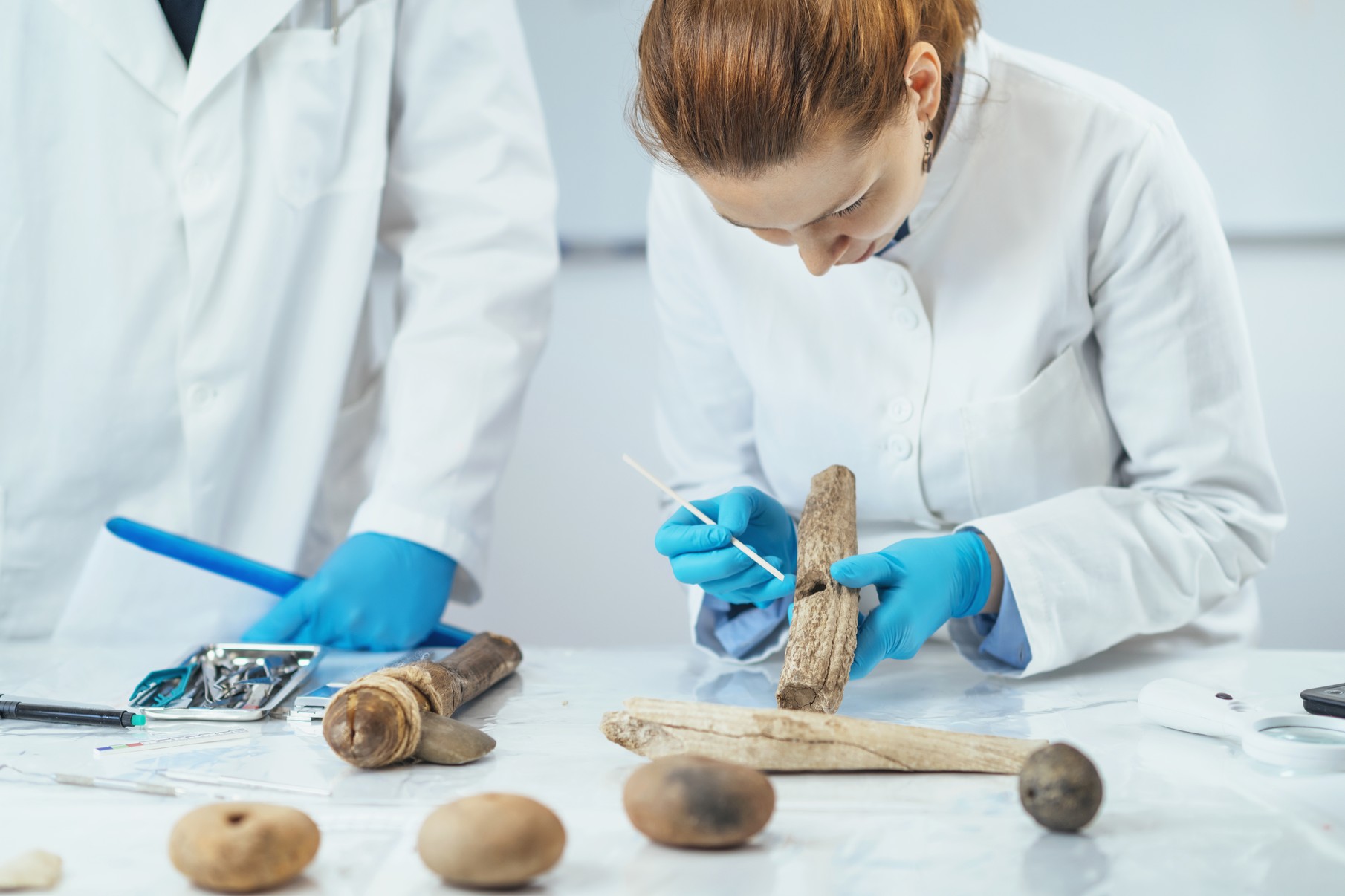
Anthropology has different specializations, such as linguistic anthropology, where you acquire the ability to explain the relationship between languages and the way cultures put their languages and forms of communication into practice. There is also the urban anthropology; the physical anthropology, which includes anthropometry, forensic anthropology (related to the area criminalistics) and biological anthropology; paleo anthropology, which is closely related to archaeological practices, specializes in the search for ancient things, fossil objects and prehistory; the social branch, which covers market research, social research and ethnology; the historical branch.
Is Anthropology a university degree? How many years does it last?
Anthropology is a university degree that offers the possibility of obtaining a bachelor's degree in it. It is found within humanities faculties, since it is linked to sociology, archaeology and the study of humans in their different ways of relating to each other. Depending on the country you live in and the university you choose, it has a course duration of approximately 4 to 5 years, although this may vary according to the subjects taken per quarter or semester.
Advantages of studying anthropology
The fundamental advantage comes from the concepts that are learned, breaking down structures one already had. It can also be combined with other social branches such as sociology, psychology for example and carry out joint work.
Disadvantages of studying anthropology
Job opportunities are a major drawback that this degree can present, since many choose it out of personal taste and desire, rather than for what it may pay off economically given the job offer it provides. The problem may arise of wanting to practice Anthropology as an independent career, and encountering difficulties in doing so, but you can count on an institution that can stand behind the studies carried out and help with the expenses involved, and thus fulfill personal satisfaction.
What is the Anthropology degree for?
To delve into what makes up the culture of society, to resolve paradigms and understand a little more about the present or ancient civilizations. To break with the established, observing and analyzing an object through different theories. The anthropologist is interested in language, social organization, family structures of different ethnic groups, in the ways of carrying out the economy and the characteristics that make different societies unique such as their customs, traditions, rites, myths, dances. The anthropologist can link their work to the discovery of certain objects in a field, and be amazed by their findings, thereby rescuing culinary, craft or musical traditions they never imagined finding.
What work does an anthropologist do? What tasks do they perform?
Anthropologists can carry out sociocultural research and studies, advise and collaborate with public organizations or institutions in preparing planning related to a sociocultural issue. Carry out different work on projects related to archaeological preservation. Another path an anthropologist can follow is leaning toward teaching. In Anthropology, participant observation is used in a field, this means that studies are carried out directly in the ethnic group or place to be observed and analyzed. Usually the anthropologist performs the task of researching for an institution, behaviors or vestiges of past societies. Study projects backed by an organization can also be carried out.