
Why study Archaeology?
Some people are amazed at the relevance, today, of some careers that are still chosen. Archaeology is one of them and that is why here we tell you about the degree.
Nowadays there are many degrees that have been created due to the evolution of technology, needs and tastes of new students, but there are certain degrees that although they are part of the past, are still chosen by various people who wish to pursue that career. Among these degrees is the Archaeology degree, which precisely has to find vestiges of the past in order to reconstruct customs, cultures, among other things.
The Archaeology professional must not only find that evidence from other eras of the societies that inhabited a given place, but will also have to analyze that evidence, and place it in time and space. In this career research is fundamental, it is the basis of all the work they will have to do and in turn they must use their knowledge to preserve the pieces found.
Regarding the origins of the degree, they arise mainly from history, and that is why it is strongly linked to that degree. In many universities Archaeology can be found as an undergraduate degree in the social sciences faculties, and in other educational entities it may be a guidance or specialization within another degree, for example anthropology.
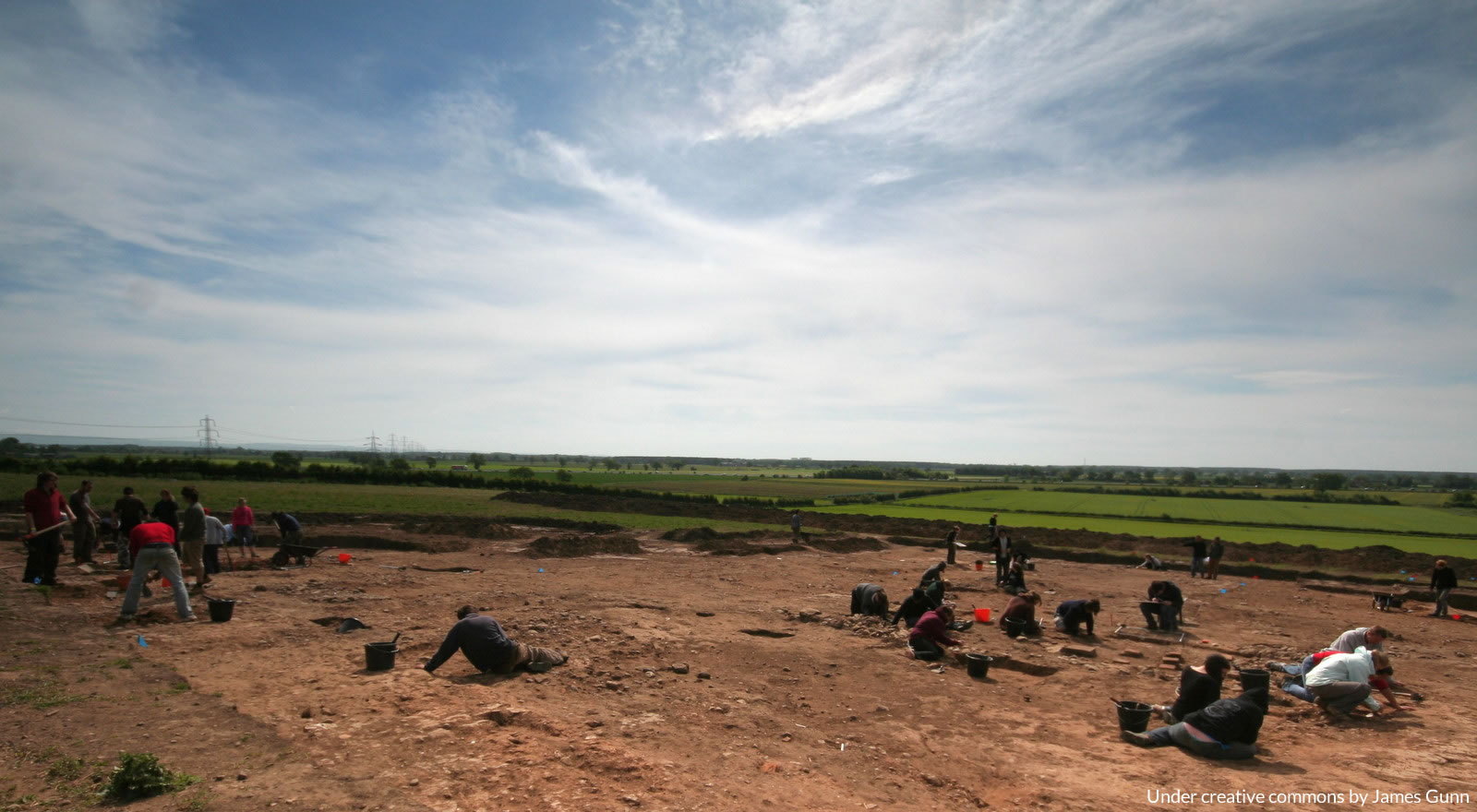
The field of work for archaeologists can be on land or in water, but it is worth noting that it is a career that spends most of its time doing its work outdoors.
Why study the Archaeology degree?
The Archaeology degree, without a doubt, offers the possibility of having a unique career, or a movie-like one for the most eloquent. Throughout the course the student is prepared with various subjects that have to do with methodological, statistical issues, but also about history, geology, prehistory, paleontology. It is important to know ancient societies and their symbols and languages, customs, in order to investigate with certainty when working.
On many occasions you can start from findings related to funeral customs, and from there patterns can be categorized to analyze entire cultures with their beliefs and habits; in these traits lies what graduates of the degree find most interesting. The professional has to find objects, works or sculptures that speak about vanished history. The degree gives the graduate the possibility of reconstructing and discovering some behaviors that ancient societies had, their way of managing the economy; something that is attractive when thinking about a unique career.
What tasks can an archaeologist perform?
It is important to emphasize that the archaeologist will have to focus on the subjects that provide the theoretical and methodological knowledge necessary to carry out the different tasks in fieldwork.
Among the tasks that the Archaeology graduate will be able to perform, we can highlight that among the different possibilities that may be presented to the professional is carrying out a personal project, based on a hypothesis they develop and in this way, working under national or international funding, depending on the interest that the research objective may have. In this way, at first, they will carry out the search for the necessary information about civilizations, for example, to look for sites or traces of past societies.
Then, in this case, the excavations will come, where if any object is found, the archaeologist will have to verify whether it is authentic or not. They will have to compare them with existing records about that era and analyze them through laboratory tools. Usually this type of task is carried out as a team with professionals from other degrees who complement knowledge when searching, finding and recording the work. Everything that is found must be classified and inventoried, which is why archaeologists usually have the gift of patience and are people very passionate about their jobs.
What are the advantages and disadvantages of studying Archaeology?
Regarding what we mentioned in the previous paragraph, when talking about passion in the work it is also important to mention the advantages and disadvantages that choosing the Archaeology degree can bring.
Like many degrees, it offers the option of working for the public or private sector. In the former, you can work in public administrations, in the ministry of culture, public museums. On the other hand, the private sector gives archaeologists the possibility of analyzing land for construction, since some countries have local laws on soils that are cultural heritage.
Additionally, they can work on their own research or develop in the academic field; in this case, some degrees treat teaching as a specific guidance of the degree, where some pedagogical subjects are added. Among the disadvantages, it is important to note that, unlike other careers, and due to the expansion of urban areas, the job market is not broad. In cities it is harder to find local work, so they usually have to move to the outskirts, to rural areas, and they must lead a nomadic life, which often makes the archaeologist's social life difficult. As a result, it is not considered a career with good pay.
Regarding the development of the career, while the opportunity it offers to do fieldwork is interesting, a negative aspect can be that the work must be done outdoors, facing whatever weather conditions arise. A graduate of the Archaeology degree will have to work in rain, sun, cold, or extreme heat, depending on the area where they will conduct their research.
There are various factors that lead us to choose a university degree; we normally look at the advantages and disadvantages, but nowadays it is also important to choose which degree will be able to combine work and personal enjoyment.