
Audiovisual Production
The degree in audiovisual production focuses on the creation and management of visual and audio content. This field combines technical skills with creativity and offers diverse professional opportunities in the film, television, digital marketing industry and more.
What is audiovisual production?
The audiovisual production is the process of creating and managing visual and audio content. It involves the use of technology and creative skills to produce films, television programs, promotional videos and more.
Why study audiovisual production?
- Because audiovisual production is the gateway to the entertainment and communications industry, a sector in constant expansion and renewal.
- Because it gives you the ability to tell stories creatively, using cutting-edge technology to capture the audience's imagination.
- Because it develops technical and artistic skills that are valued in a wide range of professional fields, from film and television to advertising and digital marketing.
- Because it fosters teamwork and collaboration, essential skills in any modern professional environment.
- Because it allows you to explore and understand the cultural and social impact of media, giving you the opportunity to influence society through powerful visual messages.
- Because the demand for original, quality content has never been greater, with streaming platforms, digital channels and social networks constantly looking for new creators.
- Because it offers a unique combination of creative and hands-on work, which is ideal for those looking for a dynamic career far from the conventional.
- Because it teaches you to think critically about visual and sound content, a key skill in the information age.
- Because audiovisual production is a versatile field that allows you to specialize in a variety of roles, from directing and scriptwriting to editing and special effects.
- Because it is a career that allows you to leave a lasting mark on the world, creating works that can entertain, inform and move audiences for years.
Studying audiovisual production allows you to acquire technical and creative skills to work in a growing industry. It opens up opportunities in film, television, digital marketing and allows you to express your creativity through visual content.
Duration of the audiovisual production degree
The audiovisual production degree can vary in length depending on the educational program and the institution you choose.
Generally, a university degree or Bachelor's degree in audiovisual production generally lasts 4 years, depending on the country and whether the program follows a traditional education model.
During these years of study, you will normally cover a wide range of subjects that include film theory, techniques in video production, editing, sound, lighting, and post-production, among others.
Most programs offer the opportunity to work on hands-on projects, which is crucial in this field of study.
In some countries, you also have the option to take technical courses or shorter technology programs, which usually last 1 to 2 years, and which offer training more focused on practical skills and less on theory.
As for university options, there is a wide variety. You can choose public or private universities that offer programs in audiovisual communication, digital arts, cinematography or media. Some universities even offer specializations or specific concentrations within audiovisual production, such as animation, visual effects or sound.
For young people interested in this degree, it is essential to consider not only the length and content of the program, but also the networking opportunities, the quality of the equipment and the facilities, and the faculty's industry experience.
Audiovisual Production Roles and Skills
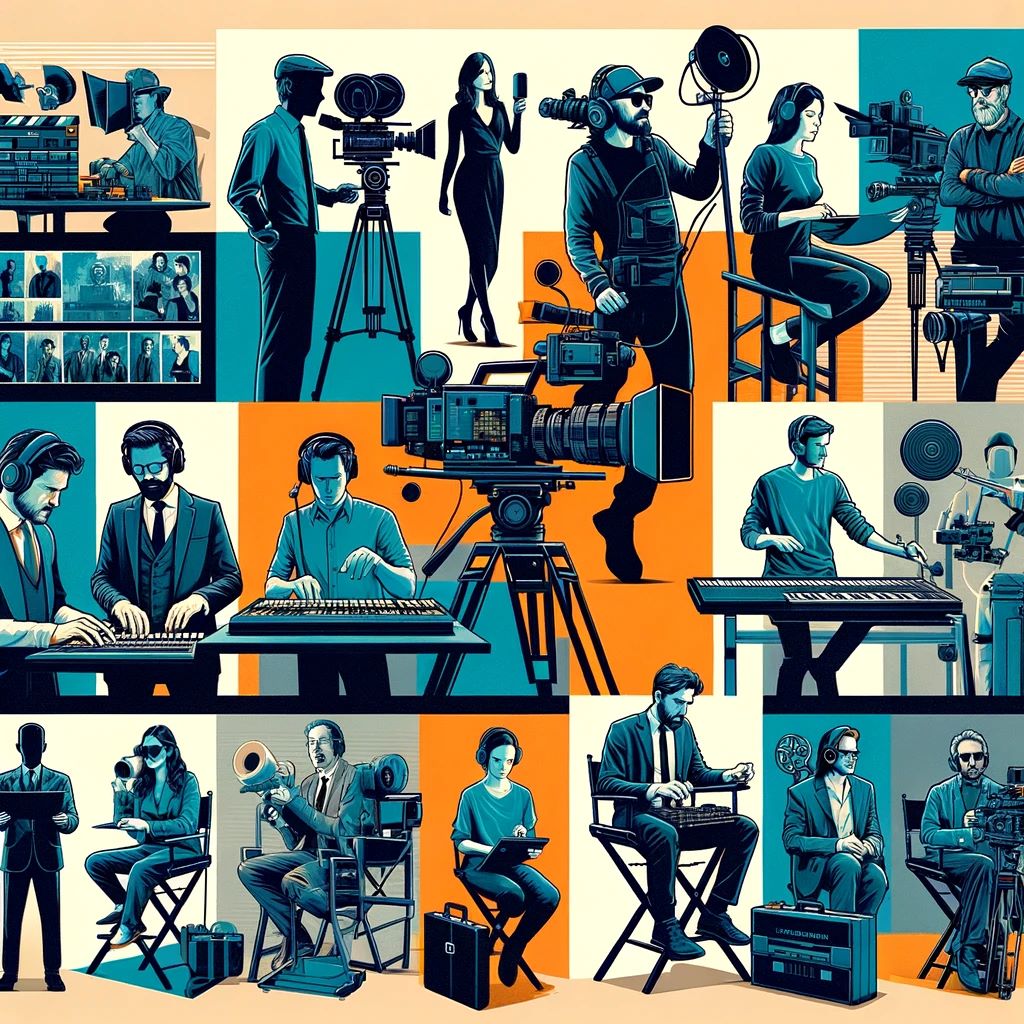
The audiovisual production covers a wide range of roles, each with a specific set of skills needed to perform it successfully. Let's look at some examples:
Producer
Skills:
- Planning and organization;
- Budget management;
- Effective communication;
- Negotiation skills;
- Leadership and team management;
- Problem solving.
Director
Skills:
- Creative vision and artistic direction;
- Leadership and communication;
- Decision making;
- Collaboration and teamwork;
- Adaptability and conflict management;
- Technical understanding of cinematography.
Director of photography
Skills:
- Technical knowledge of cameras and lighting equipment;
- Artistic sensitivity for composition and color;
- Ability to work under pressure;
- Communication and collaboration with the director and the production team;
- Technical problem solving.
Sound designer
Skills:
- Technical knowledge of sound and acoustics;
- Creativity and artistic sensitivity;
- Proficiency with audio editing and mixing software;
- Collaboration with the director and the post-production team;
- Attention to detail.
Editor
Skills:
- Proficiency with video editing software;
- Sense of rhythm and visual narrative;
- Attention to detail and patience;
- Communication with the director and producer to understand the project vision;
- Ability to work under tight deadlines.
Screenwriter
Skills:
- Creative and narrative writing;
- Research and character development;
- Ability to work in different genres;
- Effective communication of ideas;
- Collaboration with producers and directors.
Sound engineer / Sound technician
Skills:
- Technical knowledge of recording equipment and microphones;
- Ability to mix and master audio;
- Attention to detail and a good ear;
- Teamwork and communication;
- Problem solving and adaptability.
Graphic designer
Skills:
- Proficiency in graphic design and VFX software;
- Creativity and artistic sense;
- Ability to work under pressure and meet deadlines;
- Attention to detail;
- Collaboration with the director and the post-production team.
Assistant director
Skills:
- Organization and planning;
- Effective communication;
- Ability to work under pressure;
- Leadership and team management;
- Problem solving.
Location manager
Skills:
- Research and selection of locations;
- Negotiation and permit management;
- Logistics and planning;
- Communication and coordination with production teams and local authorities;
- Adaptability and problem solving.
Each of these roles plays a crucial role in the creation of audiovisual projects, from films and series to commercials and social media content.
Effectiveness in these roles depends both on specific technical skills as well as on interpersonal skills and on management.
Basics of audiovisual production
The fundamentals of audiovisual production are the basic concepts you need to know to carry out projects in this field. They include recording techniques, editing, lighting, scriptwriting and directing.
Audiovisual production involves a series of basic concepts, such as production planning, video and audio recording, editing and post-production, lighting and directing actors. These elements are essential to creating quality audiovisual content.
Types of audiovisual production
There are different types of audiovisual production, which include film production, television production, digital content and streaming production, documentaries, television programs and commercials. Each type of production has its own characteristics and specific requirements.
Areas of specialization in audiovisual production
The audiovisual production offers various areas of specialization. Some of them include film and television production, the production of digital content and streaming, documentary filmmaking, television programs and commercials. Each area requires specific skills and knowledge to develop projects.
Film and television production
Film and television production is one of the main areas within audiovisual production. In this specialization, films, television series and other audiovisual content are created to be shown on big and small screens.
Digital content and streaming production
The production of digital content and streaming is one of the most popular and fastest-growing areas within audiovisual production. It allows the creation and distribution of content directly through online platforms. This form of production has gained popularity thanks to the rise of streaming platforms such as Netflix, Amazon Prime and Disney+.
Some of the advantages of digital content and streaming production include:
- Greater reach and access: The content created can be distributed globally and reach a massive audience.
- Flexibility: Different content formats can be produced such as series, documentaries, short films and more.
- Interactivity: Content can be interactive and give users a more immersive experience.
- Greater creative control: Streaming platforms offer more creative freedom and allow creators to experiment with different styles and formats.
The digital content and streaming production also presents challenges, such as competition in the market and the need to adapt quickly to technological changes. Despite this, this area offers ample opportunities for those interested in audiovisual production and is a constantly evolving industry.
Tools and technology in audiovisual production
In audiovisual production, various tools and technologies are used to achieve high-quality results.
These include professional cameras, editing software, lighting equipment, sound systems, drones and virtual reality. Choosing the right tools is crucial to achieving success in audiovisual production.
Equipment and software used in audiovisual production
Audiovisual production requires the use of various specialized equipment and software.
Some common equipment includes professional cameras, tripods, microphones, lighting equipment, drones and stabilizers.
The most widely used editing software includes Adobe Premiere Pro, Final Cut Pro y Davinci Resolve.
Technological trends in audiovisual production
Audiovisual production is constantly evolving thanks to technological trends.
Some of these trends include virtual and augmented reality, 360-degree production and the use of drones to capture stunning aerial images.
These technologies are transforming the way audiovisual content is created and consumed.
Challenges and opportunities in the audiovisual production degree
The audiovisual production degree presents challenges such as market competition and rapid technological evolution.
However, it also offers opportunities for those who are creative and talented and seek to stand out in the industry and capitalize on new platforms and consumption trends.
Evolution of the audiovisual industry
The audiovisual industry has undergone rapid evolution in recent years, thanks to technological advances and changes in content consumption habits.
The emergence of streaming platforms and social media has revolutionized the way audiovisual content is produced, distributed and consumed.
This has generated new opportunities and challenges for audiovisual production professionals, who must adapt to these new formats and digital platforms to remain relevant in the market.
The growth of online audiovisual content has led to an increase in the demand for professionals in the field, as well as the need to develop new skills and knowledge in areas such as content production for social media, digital marketing and transmedia storytelling.
The audiovisual industry continues to evolve and provide opportunities for those creative and talented individuals who are willing to adapt to these changes and take advantage of new platforms and consumption trends.
Aspects to consider for a successful career in audiovisual production
To have a successful career in audiovisual production, aspects such as gaining practical experience, having effective communication skills, staying up to date with the latest technological trends and developing a network of contacts in the industry must be considered.
Audiovisual production is an exciting degree. Opportunities in this industry are abundant and promising for those who are willing to work hard and stay up to date.
Advantages of studying audiovisual production
The audiovisual production degree offers various advantages, such as the opportunity to work in a creative and exciting field, learn about cutting-edge technology and tools, and participate in projects that can have an impact on society.
In addition, there are many job opportunities in the audiovisual industry, which provides the possibility of developing a successful and satisfying career.