Study Electronic Engineering
Have you ever bought a mobile phone, a portable music player, an electronic organizer or any other electronic device and instead of turning it on what you feel like doing is opening it up to see how it works?
If the answer to the previous question is yes, perhaps you are going through what every electronic engineer has experienced and you are facing the possibility of choosing this degree as a study option once you have finished high school.
Electronics is present in our lives every day and the need for these professionals is constantly increasing, so keep reading to learn a little more about this fascinating university degree.
What is electronic engineering about?
In 1883 Tomás Alva Edison discovered the vacuum tube, used in light bulbs, thus giving birth to electronics. In 1904, another pioneer of electronics, John Ambrose Fleming invented the diode or thermionic valve using the so-called “Edison effect”. Later, in 1907, Lee de Forest invented the thermionic valve initially called the audion and popularly known as the triode.
Long-distance radiotransmission, invented by Guillermo Marconi in 1896, the invention of TV in 1927 and of the transistor in 1947 were events that gave a boost to electronics and created the need for a degree to train people interested in this area: electronic engineering.
Electronic engineers design and test electronic devices, from portable music players to global positioning systems and computer hardware. They supervise the production of the device and can also install it and take care of its maintenance.
These professionals also test satellites, flight systems and transmission equipment.
They must also be able to interpret technical manuals and understand government guidelines.
These engineers almost always work as part of a team, so communication skills are essential, especially when talking to people who are not familiar with the field.
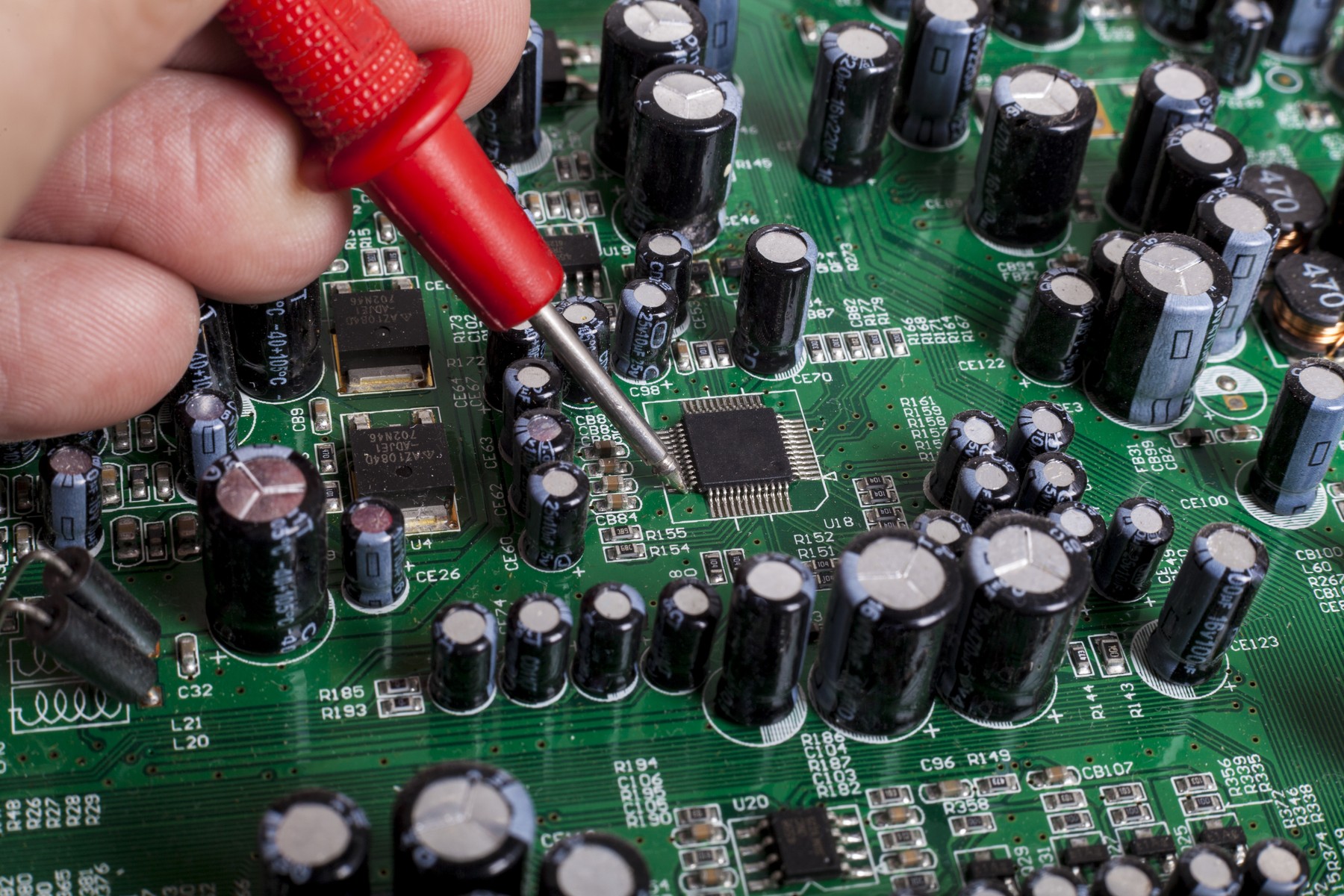
Electronic engineers must have a bachelor's degree in the field. A professional engineer license or graduate education can improve a candidate's employment prospects.
What is the profile of an electronic engineer like?
An electronic engineer must have an aptitude for numbers since mathematics, physics and calculus will be important subjects they will encounter during their time at university. Additionally, they must be a person with critical and analytical thinking, since they will face many problems they will need to know how to solve.
Anyone who wishes to train as an electronic engineer must also be a person with great organization and planning skills. They must know how to make decisions and be a person with initiative.
Other qualities sought in an electronic engineer are that they be:
- Independent
- Curious
- Ingenious
- Persistent
- Observant
Frequently asked questions about the electronic engineering degree
What is the duration of the degree?
Electronic engineering lasts four years in Spain and 240 study credits must be completed.
How much does it cost to study electronic engineering?
The prices for the first year of electronic engineering vary depending on the university where you want to study. For example, at the Universidad de Sevilla or at the Universidad de Cádiz the first year costs €757.
There are universities with intermediate costs for the first year, such as the Universidad del País Vasco with €1,186 or the Universitat Politècnica de València with €1,216.
Finally, there are schools with a higher price for the first year, such as the Universitat de Barcelona with €2,372 or the Universitat Politècnica de Catalunya with €2,551.
What cutoff score is needed to study electronic engineering?
Although there are cutoff scores of 5 to study electronic engineering, in this case we have listed the highest ones and one of 5 as a reference.
1st Universidad del País Vasco -12.557
2nd Universidad de Málaga - 11.069
3rd Universidad del País Vasco - 10.706
4th Universidad Politécnica de Madrid - 10.485
5th Universidad de Sevilla - 5
General subjects in electronic engineering
The most common subjects for studying electronic engineering in Spain are as follows:
- Linear Algebra and Geometry
- Chemistry
- General Physics
- Programming Fundamentals
- Differential and Integral Calculus
- Vector and Complex Analysis
- Mechanics and Waves
- Mathematical Methods
- Electromagnetism
- Analog Electronics
- Quantum Physics
- Power Electronics
- Thermodynamics and Statistical Physics
- Sensors and Actuators
- Microelectronics and Microsystems
Career opportunities and salary
Electronic engineers work in industries including research and development, engineering services, manufacturing, telecommunications and public administration.
Typically, electronic engineering professionals work indoors in offices. However, they may have to visit sites to observe a problem or a complex piece of equipment.
With an electronic engineering degree, you could hold project management positions, specialize in research, such as telecommunications, robotics or semiconductors, or work as an engineering consultant.
In Spain, a newly graduated person as an electronic engineer could earn on average about €1,887 per month.
How do I know if this degree is for me?
If you are a person who feels attracted to operating systems, to everything that has to do with hardware and software, you are also interested in science and technology, then you can consider this degree.
Also remember that it is important that you have to like numbers, you must be detail-oriented, be a person with analytical thinking and you must be willing to work as a team.
Being a curious and observant person is something that will also be highly valued for those who wish to train as electronic engineers.
If you are looking for a degree with a great future, this degree could be a brilliant idea.