Petroleum Engineering
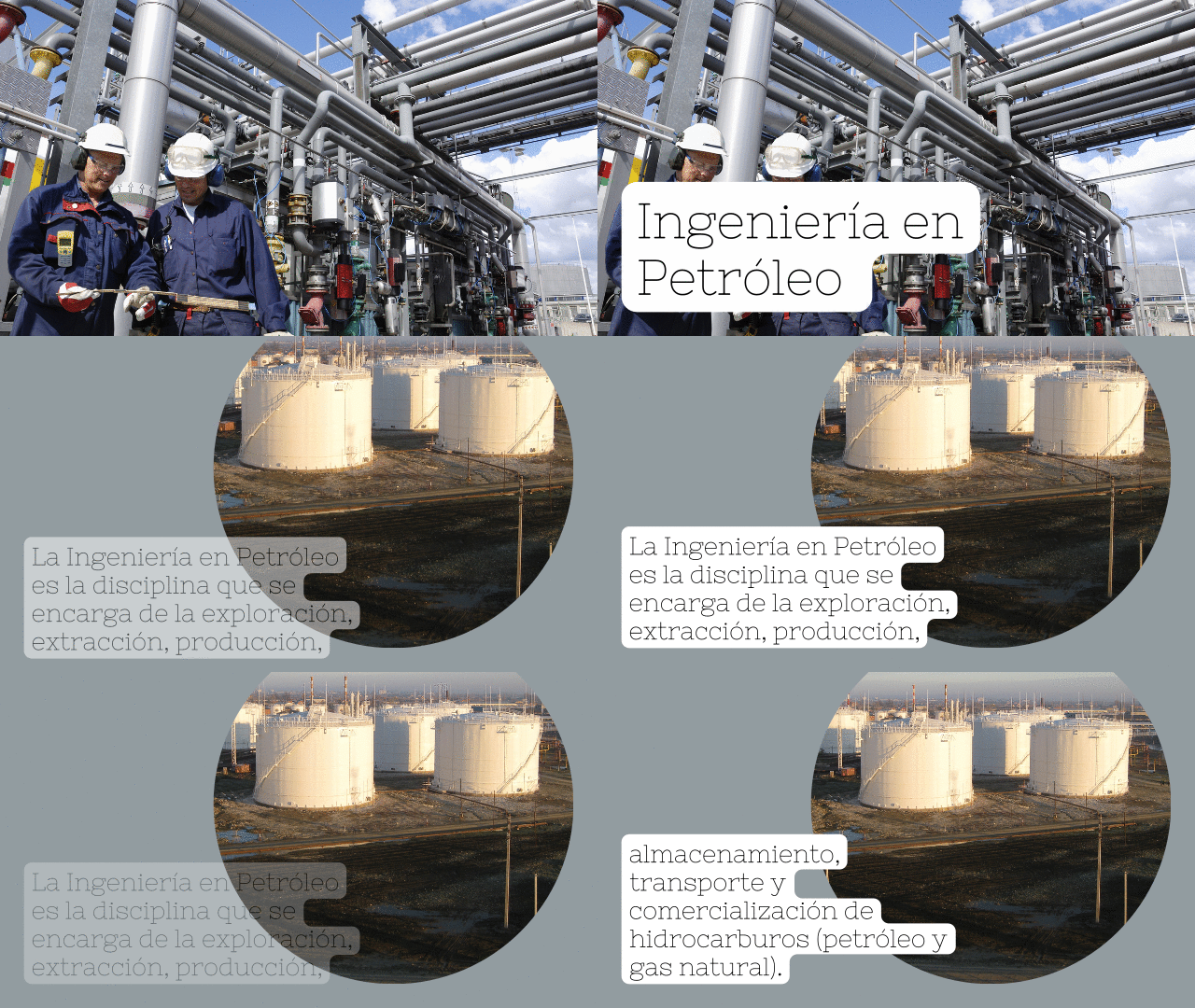
The Petroleum Engineering degree is the discipline responsible for the exploration, extraction, production, storage, transportation and marketing of hydrocarbons (oil and natural gas). It combines knowledge of geology, rock mechanics, drilling, production, economics and the environment to maximize the recovery of energy resources in a safe, efficient and increasingly sustainable way.

If you are exploring this degree, a key point to consider is that its job market is extremely broad, dynamic and not limited only to extraction: you can work operating wells, designing innovative tools for service companies, or advising on regulations in consulting firms.
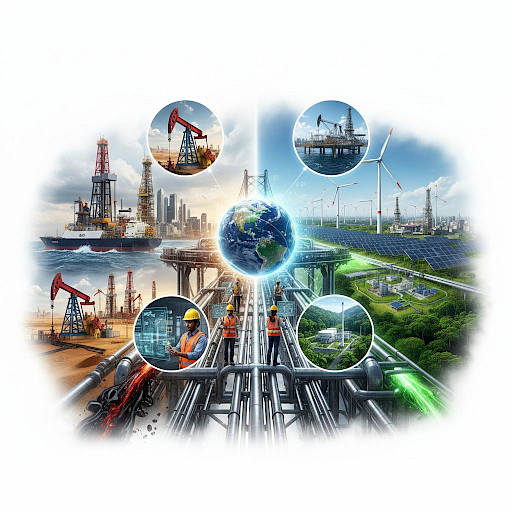
Another fundamental aspect for your future is the real impact of the profession; as an engineer you will be at the center of the global energy ecosystem and will have an active role in leading the transition toward cleaner energy sources through the development of sustainable and innovative extraction practices.
This degree is strategic at the global level because:
- Hydrocarbons still represent more than 50% of the world's energy mix.
- It is key to the energy sovereignty of countries.
- It constitutes one of the main sources of foreign currency for many economies.
- It is fundamental in the energy transition, since it allows existing resources to be optimized while cleaner technologies are developed.
What is Petroleum Engineering and why is it strategic?
The World's Energy Engine
What is Petroleum Engineering about and what is it used for?
The Petroleum Engineering degree is the technical and scientific branch dedicated to the safe and efficient assessment, exploration, drilling and extraction of oil, natural gas and other primary energy sources. This discipline is applied to design methods and infrastructure that allow hydrocarbons to be extracted from the subsurface (such as the work of a drilling engineer or a reservoir engineer), to optimize the production of mature wells, and to manage this valuable resource sustainably.

Why is Petroleum Engineering a strategic degree at the global level?
Globally, petroleum engineering is strategic because it sustains civil and industrial demand while serving as a bridge toward cleaner energies. This technical relevance, which drives sovereignty, is evident throughout the region: in Argentina, its professionals lead self-sufficiency through unconventional exploitation in Vaca Muerta; in Mexico, they are historic pillars of the economy, energy security and future environmental mitigation; in Ecuador, they face the challenge of optimizing extraction in the Amazon by operating under strict ecological protection standards; and in Peru, they are crucial for harnessing natural gas in complex geographies such as Camisea or off-shore areas, transforming the national energy matrix and reducing external dependence.
Some academic offerings:
Universidad Nacional del Comahue (UNCo) - Petroleum Engineering
- Program: 5-year undergraduate degree with in-person classes. Its curriculum (approved by CONEAU) consists of 38 subjects structured to train a professional capable of performing operational, calculation, design and management tasks in all stages of reservoir development.
- Requirements: It requires completion of a Professional Integrator Project and 192 hours of Professional Practice (PIP). It offers the possibility of taking the first years at the Bariloche campus and finishing in Neuquén.
- Distinctive subjects: Environmental Fundamentals in Engineering, five mandatory levels of English, Legislation and Professional Ethics, and Socio-Educational Practice.
- Standout value: Its integrated socio-environmental commitment. It is the offering that most humanizes engineering by requiring social practices, giving the technician a strong community perspective.
Universidad de Buenos Aires (UBA) - Petroleum Engineering
- Proposal: Degree with a theoretical duration of 5.5 years (11 four-month terms), made up of a Common Basic Cycle (CBC) and a Second Cycle. The curriculum has been updated to have a strong focus on the "Energy Transition", socio-environmental sustainability and the development of digital skills (Data Science, Artificial Intelligence).
- Requirements and Degrees: Requires passing a Final Integrative Project (Thesis or Professional Work) with 192 hours of practice, in addition to a verifiable level of English. It also grants an intermediate degree of "Bachiller Universitario en Ciencias de la Ingeniería - Trayecto Petróleo".
Universidad Nacional de Cuyo (UNCuyo) - Petroleum Engineering
- Proposal: Training aimed at practicing and developing new technologies with ethics and judgment to solve problems considering political, economic, social and environmental aspects. The degree lasts 5 years and includes a total of 51 curricular courses (3665 hours).
- Requirements: Includes 5 levels of English, Socio-Educational Practices, Supervised Professional Practice and a Final Degree Project to obtain the degree.
Escuela Superior Politécnica del Litoral (ESPOL) - Petroleum Engineering
- Proposal: 8-semester in-person degree, internationally accredited by EUR-ACE. Its design is based on four fundamental pillars: Drilling, Production, Reservoirs and an Environmental focus (HSEQ).
- Requirements: Students must complete 336 hours of practical experience (240 pre-professional and 96 of community service) and a Curricular Integration unit through an Integrative Project presented at the IDEAR Fair.
Universidad del Valle de México (UVM) - Petroleum and Gas Engineering
- Proposal: 4.5-year program highly focused on the impact of the sector on the development and economy of Mexico; studying oil as a crucial element for energy security, investment and the country's sustainable development.
- Technology and experience: Uses cutting-edge platforms (MATLAB, ALEKS, Minitab) and offers courses with certifications from Coursera and the Universidad de Cambridge. It has simulation laboratories and a strong push for international experience.
The job field of a petroleum engineer is broad and includes the following main career opportunities:
- Oil and gas companies: Working in well operation, production optimization, reservoir management and exploration supervision.
- Independent production: Opportunity to become an oil producer independently.
- Oilfield services companies: Dedicated to designing equipment and tools for the sector.
- Consulting firms: Creating your own business or joining firms to provide advice on projects and regulations.
- Public and private institutions: Practicing petroleum engineering in a wide variety of government organizations and private entities.
Graduate Profile: Petroleum Engineer
Upon graduating from the degree in Petroleum Engineering, you will become a highly qualified, strategic and visionary professional, prepared to lead the energy ecosystem of the future. Your comprehensive education will allow you to stand out in the industry through the following key competencies:

Technological and Operational Vanguard: You will have a solid scientific and technical background that will enable you not only to use current tools, but to learn, develop and innovate with new technologies.
You will be prepared for the challenges of industry 4.0 in the Upstream sector, mastering process automation and real-time remote operation, which will allow you to interpret disruptive industry events and agilely manage their resolution.
Strategic Resource Management: You will have the technical ability to cover all aspects involved in exploration, exploitation and production; from natural resource management to the comprehensive optimization of energy processes. You will become the specialized human talent the industry demands to adapt to new and more dynamic ways of working.
Sustainability and Socio-Environmental Responsibility: Your vision will go far beyond technical efficiency. You will execute your projects guaranteeing a sustainable development of energy resources, prioritizing at all times social and environmental responsibility for the direct benefit of society and the ecosystem.
Ethical, Critical, and Solution-Driven Leadership: You will be able to quickly join companies, operators, or public institutions, standing out for your ethical, critical, and creative attitude to identify and solve complex problems. When leading projects or making decisions, you will have the analytical ability to always consider the political, economic, social, environmental, and cultural aspects involved.
As a graduate, you will be an indispensable professional for the development of the modern economy. You will be the link that efficiently connects the extraction and processing of underground resources with technological innovation, always operating under the highest standards of sustainability and safety to meet global energy demand.