
Why study Film and TV Directing?
The Cinema is considered the seventh art because it includes various disciplines in its composition. Thanks to Cinema and Television, humanity is able to grasp through the visual and auditory senses an idea or perception of reality that is meant to be conveyed. Studying Film and TV Directing Cinema and TV is a perfect choice for those who need to bring to life a fictional or documentary story to be enjoyed by millions of viewers.
Do you want to be a Film Director?
Film Directing is one of the most popular degrees among young people, second only to that of Screenwriter. This is due to the importance of good directing in cinema: even the best written stories may not succeed if they are not well directed. On the other hand, a talented director can transform a simple script with no clear message into an impressive cinematic work.
Once the literary scripts and technical scripts are complete, the director's job is to bring them to life. Respecting the original vision of the screenwriter, the director creates a visual representation of the story. Satisfying all film fans is a challenge, given that their tastes vary widely. Some directors, for example, prefer to create an aesthetic that conveys beyond dialogue, known as nihilist cinema, while others lean toward using intense visual effects to achieve a different impact on the audience.
The Director of Cinema and TV becomes the eye through which the viewer will see the previously scripted story, although he may also intervene in the creation of the script, since he will be trained to do so. The graduate will be able to handle all the processes of creating a film, since during the degree he is given the tools to be able to take charge at any stage, although his particular task is to direct it.
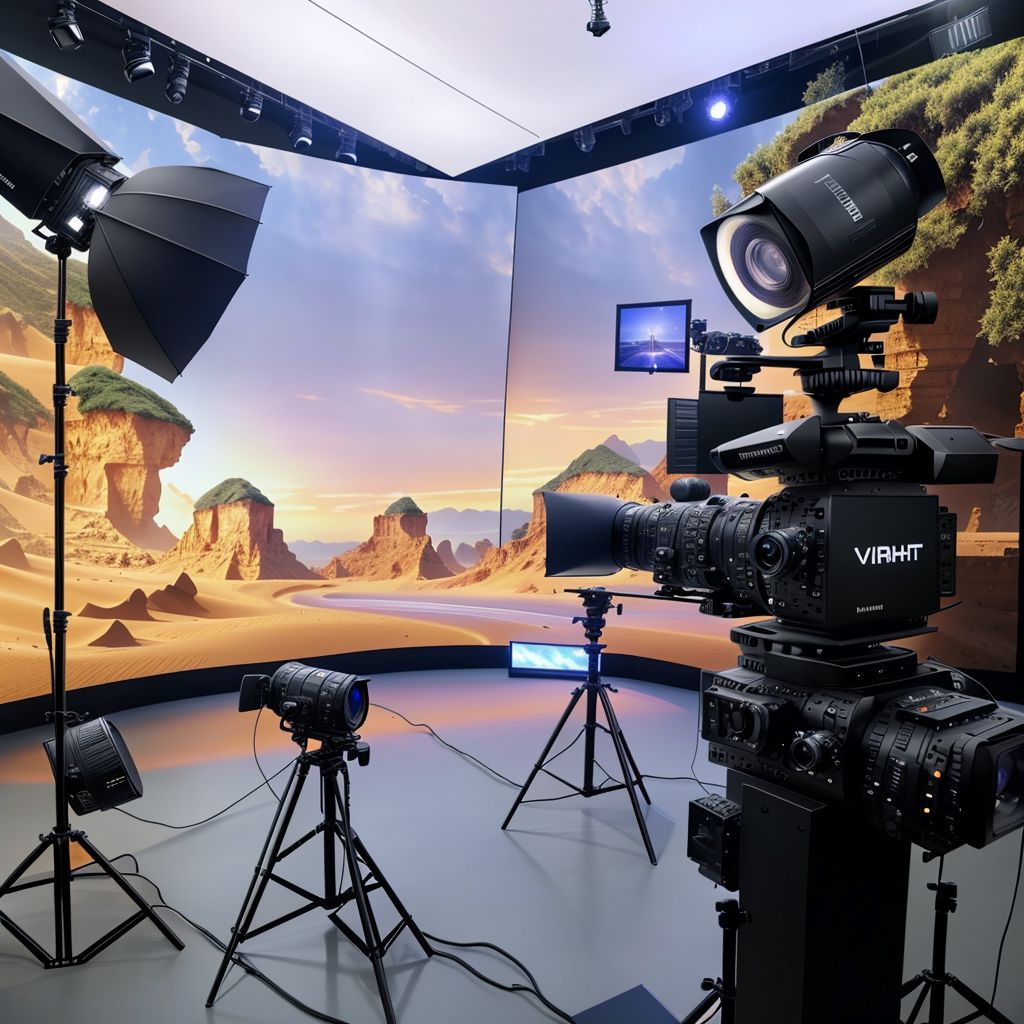
Regarding the disadvantages of studying Film Directing, they include high competitiveness in the industry, uncertainty regarding job stability and the need to constantly adapt to new technologies and market trends. In addition, the pressure to stay creatively relevant and the often intense workload can be challenging.
The high costs students must face, since renting and buying work tools have a high economic cost, as well as renting spaces for filming. However, many schools have the number of tools and environments necessary to give students the possibility of studying without investing extra.
The advantages of this degree include the opportunity to work in a creative and exciting industry, the possibility of influencing culturally through art, and the satisfaction of seeing an idea become a visual work. In addition, with the rise of streaming platforms and digital content, there is a growing demand for trained and creative directors.
Why study Film and TV Directing?
- Because you are passionate about Film and Television
- Because you are creative.
- Because every time you witness a scene in real life you are thinking about the music that should play, the lights that should illuminate it and the range of perspectives from which it could be viewed.
- Because you prefer to bring a written story to life rather than start from scratch creating it yourself.
- Because you believe that the audiovisual medium is the best for conveying concepts, ideas, ideologies and generating opinion.
- Because you are patient, since in general it is very difficult to get funding for audiovisual projects.
Studying Film and TV Directing is an exciting option for visual creatives, offering opportunities to influence society through art. Although it presents challenges, such as high costs and a competitive industry, the rewards can be enormously gratifying for those committed to their art.
At which universities can I study the Bachelor's Degree in Film?
The most famous film schools are: The New York Film Academy in Nueva York, United States, the Escuela Nacional de Cine in Distrito Metropolitano de Caracas, Venezuela, the Centro Universitario de Estudios Cinematográficos in Mexico, the Escuela Internacional de Cine y Televisión in Cuba, LA FEMIS: La fémis, Ecole Nationale Supérieure des Métiers de l'image et du son in France, the Escuela Louis Lumière in France, the American Film Institute in Los Ángeles, United States. In Spain: the Escuela Universitaria de Artes y Espectáculos, Centro d´Estudis Cinematogràfics de Catalunya, ECAM, the Universidad Camilo José Cela (UCJC), etc.