
Difference between athlete and sportsman
Sportsperson is someone who practices a sport; athlete may identify a track and field specialist or highlight systematic sports training. In Latin America, the scope of both words changes depending on the context, so the same person may be given both names.
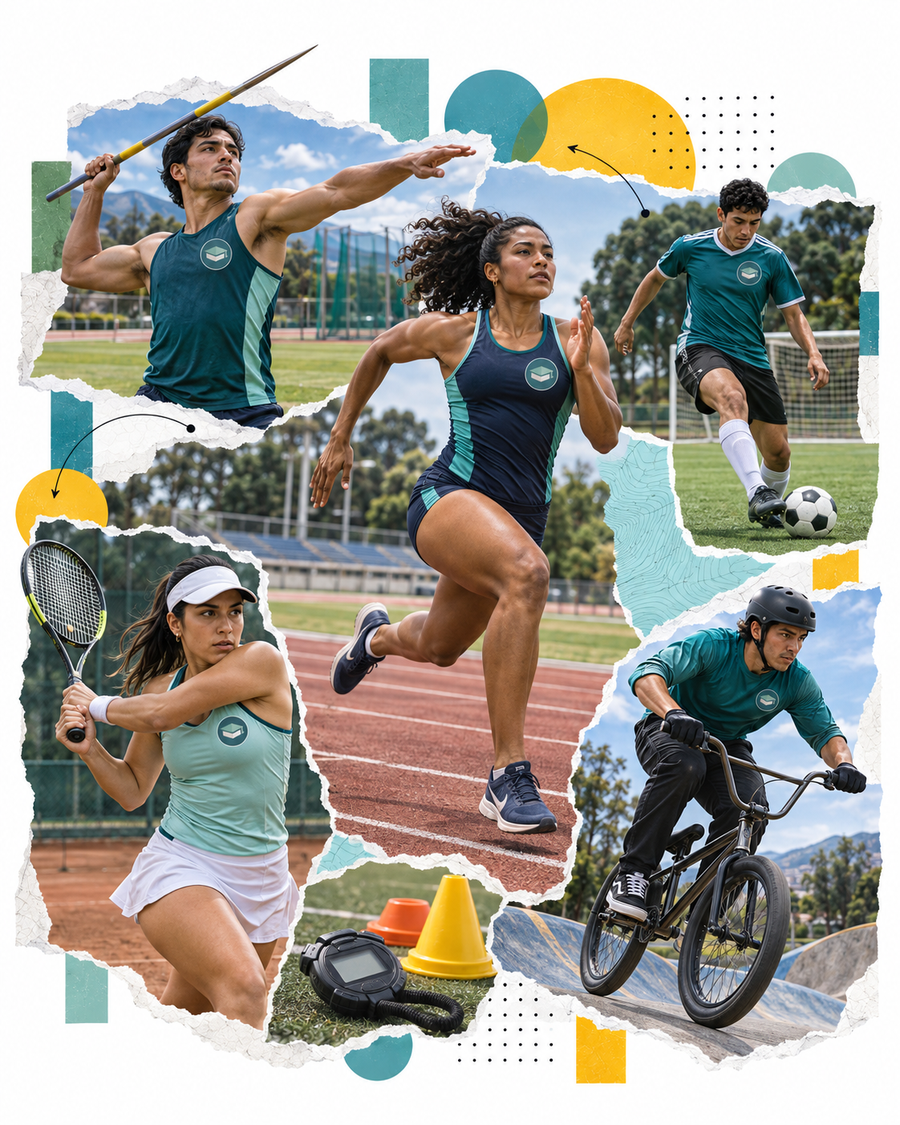
What is the difference between an athlete and a sportsperson
Sportsperson is the general term. The Diccionario del español de México, from El Colegio de México, includes both those who practice a sport professionally and those who do so without pursuing it as a career. The word covers both individual activities and team sports: tennis, swimming, soccer or cycling, among others.
Athlete has several uses in the sports field. In track and field it is used to name those who take part in races, jumps, throws and race walking. At the same time, the athlete entry in the same Mexican dictionary highlights the constant and disciplined practice of a sport or exercise. That meaning broadens its application to other disciplines.
The difference lies in what information each term provides: sportsperson places the person within the practice of a sport; athlete may indicate belonging to track and field or systematic training. The specialty completes the meaning: sprinter, race walker, gymnast or swimmer.
How these terms are used in Latin America
In Colombia, the glossary of the Secretaría de Deporte y Recreación de Popayán links athlete with high-level competition and demanding systematic training. In that document, the term highlights training aimed at achieving sports results, whatever the discipline.
In Argentina, the Argentine Olympic Committee Athletes' Commission brings together representatives of judo, swimming, rowing, hockey, surfing and athletics. In the language of that organization, athlete is a designation shared by sportspeople from various disciplines.
In Brazil, Article 6 of the Lei Geral do Esporte, published by the Presidency of the Republic, uses the Portuguese term atleta when talking about preparation for high performance in different sports. This use also has a broader scope than athletics.
Examples of Latin American athletes in athletics
Races, jumps and race walking allow us to observe different specialties within athletics. These men and women are athletes because of their discipline and also sportspeople because they belong to the world of sports:
- Marileidy Paulino, profile presented by the Comité Olímpico Dominicano. Sprinter from the Dominican Republic specializing in the 400 meters, an event in which she became world champion in Budapest 2023.
- Alison dos Santos, profile from the Confederación Brasileña de Atletismo. Brazilian 400-meter hurdles athlete and world champion in Eugene 2022. The profile is in Portuguese.
- Germán Chiaraviglio, profile from the Comité Olímpico Argentino. Argentine athlete specializing in pole vault. In his profile, this event appears under the name salto con garrocha.
- Kimberly García, recognition published by the Universidad Continental de Perú. Peruvian race walker and gold medalist in the 20 kilometers at the Santiago 2023 Pan American Games.
Examples of sportspeople from other disciplines
Outside track and field, sports person covers very different careers. In the broad uses described above, these people can also be called athletes. The name of the discipline makes it possible to distinguish what activity each one performs:
- Lionel Messi, official website. Argentine footballer and world champion with his national team. His career corresponds to a team sport.
- Mariana Pajón, biography on her official website. Colombian racing BMX cyclist, Olympic gold winner in Londres 2012 and Río 2016.
- Sergio Pérez, official website. Mexican racing driver in motorsport with a career in Fórmula 1. His site, in English, presents his career from karting to that category.
- Fernando González, career history on his official website. Chilean former professional tennis player and Olympic medalist in singles and doubles, two events within the same sport.
- Rebeca Andrade, profile from the Comité Olímpico de Brasil. Brazilian gymnast with Olympic medals in floor, vault, individual all-around and team competition. Her profile is in Portuguese.
- Ana Marcela Cunha, profile from the Comité Olímpico de Brasil. Brazilian open water swimmer, Olympic champion in the 10 kilometres in Tokio 2020. Her profile is in Portuguese.
What athletes and sportspeople do for work
When competition is a professional activity, their work consists of preparing for and taking part in sporting trials or matches. The Ministerio del Trabajo de Colombia's Atletas y deportistas profile groups both names in the same occupation and describes tasks shared across different disciplines: training, agreeing strategies with the coaching staff, competing, evaluating performance and taking part in sports promotion activities.
Specific tasks vary with the specialty. In athletics, preparation is geared to the event: sprint, hurdles, jumping or race walking. In football, individual preparation is combined with team strategy; in tennis, strokes and game decisions are practiced. The work is defined by those tasks and by the competitive environment, as well as by the title of athlete or sportsperson.
There are also professional activities linked to teaching the sport. In Chile, Fernando González describes his clinics, camps and exhibitions on his official website: he leads training sessions and teaches tennis techniques and strategies to participants of different levels. After his career as a competitor, he carries out teaching activities and takes part in sporting events.
Another possibility is to combine a sporting career with a career in another field. The biography of Paula Pareto at the Comité Olímpico Argentino documents that combination: the Argentine judoka is a doctor and was part of the COA medical team at Santiago 2023.
Practicing as a hobby can coexist with studies or a job unrelated to competition. To describe a person's employment situation, it is necessary to specify whether they compete professionally, teach their discipline or pursue another activity.