
What to study to become pope and how to reach the papacy
To understand what to study to become pope, it is helpful to first know how a priest is formed and how the bishop of Rome is chosen. There is no university degree in the papacy nor a succession of titles that guarantees reaching that responsibility. The usual path combines religious formation, higher studies and many years of service to communities.
For Catholics, the pope is the successor of the apostle Peter and shepherd of the universal Church. Although one may speak of an ecclesiastical path, its meaning is linked to vocation and service. Being a priest, religious or collaborating as a lay person has its own value, regardless of the offices a person may receive.
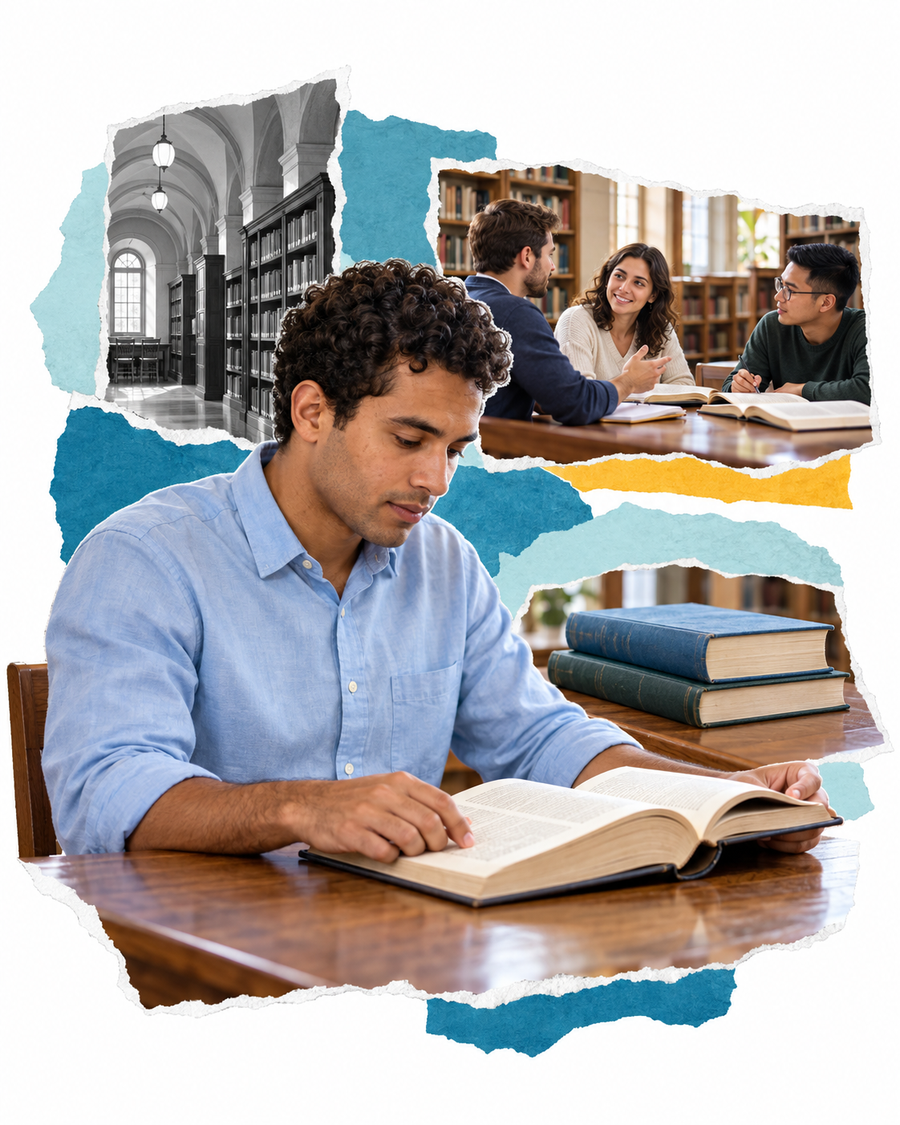
What is studied to become pope: philosophy, theology and integral formation
The usual preparation for the priesthood includes philosophy and theology. Canon 250 of the Code of Canon Law establishes at least six years of philosophical and theological studies, with two years devoted to philosophy and four to theology. This is a norm for priestly formation, not a universal length for all university qualifications. The complete path may incorporate other stages.
In philosophy, logic, ethics, theory of knowledge, metaphysics and history of thought are studied. This formation helps to examine arguments, understand questions about the person and engage in dialogue with different perspectives. In theology, the Christian faith is studied in depth and its interpretation within the Catholic tradition.
Theology includes Sacred Scripture, doctrine, morals, liturgy, history of the Church and pastoral preparation. Exegesis teaches how to interpret biblical texts considering their context; patristics studies the early Christian authors. Canon law provides knowledge of ecclesial norms and institutions. These areas appear in the academic provisions of Veritatis gaudium.
The learning includes prayer, community life, listening skills, and pastoral practice. Latin and other languages useful for formation or service in communities in different regions are also studied.
How the journey to the papacy unfolds
1. Discerning a vocation and understanding its demands
The beginning is usually a desire to dedicate one's life to the service of God and of a community. The person seeks accompaniment and examines their motivations, abilities, and availability. It can begin after secondary education or after having completed another degree and worked.
The decision must be free. The canon 1026, which protects the freedom of those receiving ordination, forbids forcing anyone to be ordained. Admission and preparation include an assessment of their maturity and suitability. Recognizing that another path is more appropriate can also be part of responsible discernment.
2. Entering priestly formation
The candidate may train as a diocesan priest, linked to a diocese, or within a religious institute. In the latter case, formation is also connected with the spirituality and life of their community.
The Ratio fundamentalis institutionis sacerdotalis organizes initial formation into four stages. The propaedeutic stage introduces formative life and discernment; it ordinarily lasts between one and two years. The discipleship stage is associated with philosophical studies; the configuration stage, with theological studies. The pastoral or vocational synthesis stage integrates preparation and service.
These stages address human, spiritual, intellectual, and pastoral dimensions. Passing subjects is one part of the process: maturity to live in community, take on commitments, and accompany people is also needed. Formation includes the protection of minors and vulnerable adults.
3. Receiving the diaconate
Before diaconal ordination, the candidate receives and exercises the ministries of lector and acolyte. The prerequisites for receiving orders include confirmation and the written expression of his free decision. In the ordinary path toward the priesthood in the Latin Church, the commitment to celibacy is publicly assumed, in accordance with the applicable provisions.
The deacon participates in the proclamation of the Gospel, preaching, certain celebrations and the service of charity. When he is preparing for the priesthood, it is called transitional diaconate. The permanent diaconate is another vocation, aimed at exercising that ministry in a stable way.
The general norm of canon 1031 sets 23 years of age for the diaconate of those destined for the priesthood and 25 for the presbyterate. Between the two ordinations an interval of at least six months is foreseen. There are other provisions for the permanent diaconate and possible dispensations; these minimums do not indicate how long each person's journey will last.
4. Being ordained a priest and serving a community
The presbyter, commonly called priest, can celebrate the Eucharist, administer sacraments according to the conditions established by the Church, preach and accompany people. His work can take place in parishes, missions, educational centers or pastoral services.
Preparation continues after the seminary. The decree Optatam totius, on priestly formation, envisages both practical learning and later formation. Some priests receive teaching, coordination or formation tasks for new candidates. Others devote their whole lives to parish or missionary service.
5. Pursuing further studies when service requires it
A priest may deepen his studies in theology, biblical studies, philosophy or canon law. Ecclesiastical faculties grant academic degrees such as the baccalaureate, licentiate and doctorate. The ecclesiastical baccalaureate is a higher-education degree, distinct from the school baccalaureate; the licentiate allows for deeper study in a specialty and the doctorate certifies advanced research training, normally through a thesis.
Academic degrees allow access to certain teaching and research roles according to the requirements of each institution. Veritatis gaudium establishes the licentiate as the degree required to teach in a major seminary or equivalent institution, and the doctorate as the degree required to teach in an ecclesiastical faculty, with the specific provisions on equivalent degrees, scholarly merit, and teaching ranks. Obtaining these degrees does not guarantee appointment as a bishop or cardinal.
6. Being considered suitable and appointed bishop
Canon 378, on the suitability of candidates for the episcopate, establishes, among other conditions, at least 35 years of age and five years as a priest. It also requires a good reputation, firm faith, prudence and human qualities, along with a doctorate or licentiate in Sacred Scripture, theology or canon law, or being truly expert in those disciplines.
The procedure includes consultations and the evaluation of candidates; the final judgment on suitability belongs to the Apostolic See. Meeting the requirements allows one to be considered, without guaranteeing appointment. The bishop has responsibilities for teaching, sanctifying, and governing; when he receives a diocese, he cares for that ecclesial community.
7. Receiving an appointment as cardinal
The pope chooses the cardinals, who assist him and form the College of Cardinals, which elects his successor according to the norms in force. The canons on the College of Cardinals describe its responsibilities and the qualities required for appointment.
The sacrament of Holy Orders has three degrees: diaconate, presbyterate, and episcopate. Being a cardinal is a dignity and an ecclesial responsibility, not a fourth degree of the sacrament of Holy Orders. Contemporary popes have usually been cardinals, although belonging to the College of Cardinals is not an indispensable requirement for being elected.
8. Being elected pope and accepting
When the pontificate becomes vacant due to death or resignation, the election is prepared. The apostolic constitution Universi Dominici Gregis, together with its subsequent amendments, governs the conclave. The cardinal electors vote in secret and a majority of at least two thirds of the votes counted in accordance with the election rules is required.
The age rule excludes as electors those who have turned 80 years old before the day on which the Apostolic See becomes vacant. That rule refers to participation in the voting, not to the possibility of being elected. The electors may elect someone from outside the College of Cardinals.
To be elected pope it is not essential to have previously been a cardinal or bishop. However, the person elected must be able to validly receive episcopal ordination; in accordance with current Catholic discipline, sacred ordination is reserved to baptized males.
The person elected must accept. According to canon 332, if he is already a bishop, he acquires the power proper to the pontificate from the moment he accepts the legitimate election. If he is not yet a bishop, he must immediately receive episcopal ordination. Afterwards his election and the pontifical name he has chosen are announced. The subsequent celebration of the beginning of the ministry is not the act that makes him pope.
Degrees related to religion and job opportunities
Theology can lead toward research, teaching and Christian formation. A theologian can study a doctrinal problem, prepare materials or teach classes, with the qualifications and authorizations required by each institution. Studying theology and receiving priestly ordination are different processes. Religious Sciences also allow exploring teaching, research and the study of religious traditions, depending on the focus of each program.
The Philosophy prepares philosophers to analyze arguments and work in ethics, research, and teaching. Biblical studies and ancient languages allow students to study texts, compare translations, and examine their context. Canon law is linked to advising institutions and working in ecclesiastical courts, according to the requirements of each role.
The Education and pedagogy are connected with educational centers and religious training. History, Anthropology and Sociology research communities, traditions, and institutions. Communication Sciences lead to work in religious publications and media, while music, architecture, and conservation play a part in cultural life and heritage.
There are also professionals in Social Work, health —with training in medicine or nursing, among other degrees—, business administration, and economics in organizations connected with the Church. For example, a person specializing in art conservation can work on a piece of sacred art; a Social Communication professional can prepare a diocesan publication; and a social worker can coordinate a community support program. These are possible fields, subject to qualifications and the conditions of the position.
If you are comparing these areas of study, the NoSeQueEstudiar career guidance test can serve as a starting point to explore interests. Discerning a religious vocation also requires specific accompaniment and is not resolved through an academic test.
Religious life, women's participation and lay service
Religious life has its own process of formation, novitiate and career of vows, described in the norms on formation in religious institutes. There are religious priests and others who live out their vocation without receiving ordination. Nuns can carry out educational, social, academic or contemplative tasks, depending on their community.
Current Catholic discipline reserves sacred ordination to baptized men, as established by the canon 1024. Since the pope must be a bishop, that condition also applies to access to the papacy. Women participate widely in formation, research, consecrated life and ecclesial service.
Lay people can also contribute from their career and their community life. These forms of participation have their own responsibilities and value; describing the path to the papacy does not imply establishing a scale of personal or spiritual importance.
A real trajectory: from studies and missions to the papacy
The official biography of Leo XIV shows the diversity of this journey. Robert Francis Prevost earned a degree in Mathematics in 1977 and also studied Philosophy. He joined the Orden de San Agustín and studied Theology and Canon Law. He was ordained a priest in 1982 and defended his doctoral thesis in Canon Law in 1985. He worked as a missionary, formator and teacher in Peru.
He later led his religious order, received episcopal ordination in 2014 and was bishop of Chiclayo. In 2023 he took on responsibilities in the Holy See and was made a cardinal. On May 8, 2025 he was elected pope. His journey illustrates how studies, community experience and diverse responsibilities can be combined, without constituting a mandatory model for everyone.
How long this path takes
There are formation requirements and minimum ages for certain ordinations, but there is no set timeline for becoming pope. A person may serve for decades as a priest and never be appointed bishop. Being a bishop or cardinal does not guarantee future election either.
For those considering a priestly vocation, the first concrete step is to seek support in their parish, diocese or religious community. For those interested in studying religion, it is advisable to compare programs, their content and the roles they prepare for. Both paths deserve a free, informed decision that respects personal convictions.