
Why study Theology?
Professionals with a Theology degree use a scientific framework for a religious explanation tied to faith, and for questions that men and women are still trying to reveal.
The Theology degree makes a scientific contribution to questions linked to the existence of God. Through coursework, methodological techniques are provided that train the professional so they can carry out various inquiries using philosophical theories that help when conveying, in the present, knowledge linked to faith.
Why study the Theology degree?
Theology is a science, and as such it has foundations and research methods. It is a degree that teaches how to break down unknowns that human beings have regarding faith, regarding the ways in which God has manifested Himself. In addition, during coursework students are given the possibility of having a critical attitude toward their beliefs. It is a very particular career aimed at people who are interested in this subject and who are truly passionate about the philosophical question of religion or of that which often cannot be seen or touched.
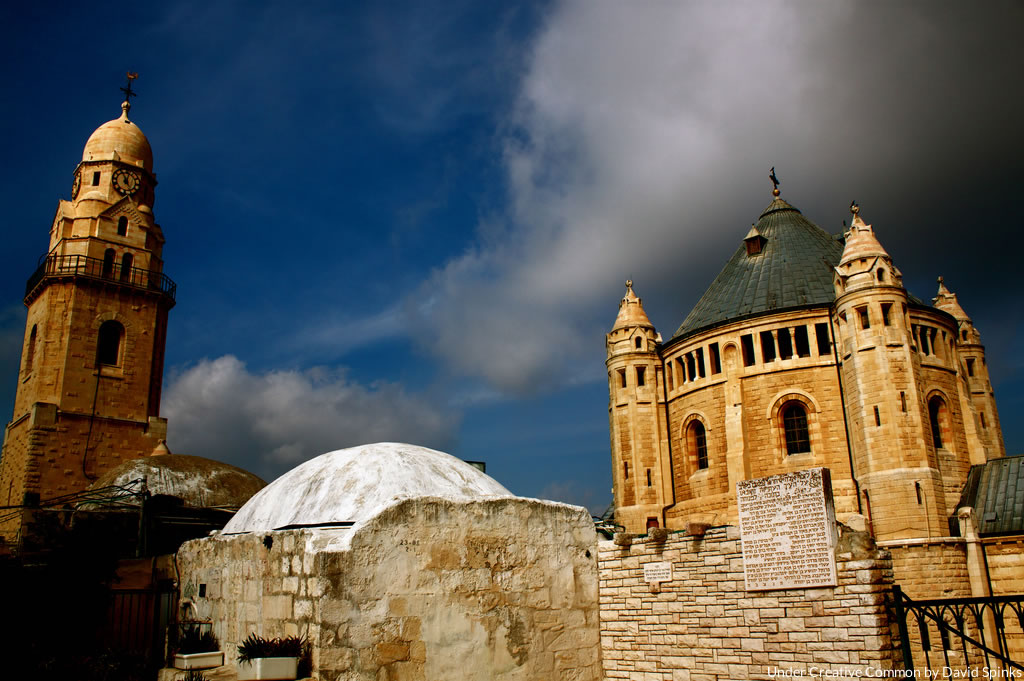
The Theology degree is offered at different educational institutions, usually linked to the religious sphere, and a university degree is awarded, granting a higher level of study to this career. It has different guidance paths, depending on the belief one wishes to study, always linked to God. Throughout the degree, diverse knowledge is acquired of matters linked to the work the professional will be able to perform, such as concepts of logic, of philosophy, the holy scriptures, and tools linked to research methods are taught. Moreover, there are subjects that are important when working with the different populations one works with, such as pedagogical theories and teaching matters. The curriculum, in its design, seeks to encourage the professional to be able to reflect, since as a theologian they will develop research on the different doubts that may arise and must answer with scientific consistency the questions asked of them.
In this sense, the theologian will have to work with diverse groups of people, from different social backgrounds and of different ages, which is why, during the course of the degree, the precise tools need to be provided so that all the necessary topics can be addressed that help convey ideas clearly, and so that they reach correctly those they wish to communicate with.
What are the advantages and disadvantages of the Theology degree?
A graduate of the Theology degree has the advantage of being seen as an authoritative voice on religious matters and all the belief issues it encompasses. As a professional, he is taken into account to debate various topics, and he can also position himself as a guide on the subject of God, and on the relationship of men and women with Him.
Among the degrees that appeal to a professional's vocation, it has good job opportunities, especially for those who dedicate themselves to ecclesiastical work.
The Theology degree can also present a disadvantage, which can arise within society itself. As it is a degree linked to a belief, whether in God or in a son or a messiah, there are many people who disbelieve those conceptions and denigrate all those who dedicate themselves to spreading them or providing explanations about them. In some circumstances, Theology graduates may have to face various challenges presented by the people around them attacking their beliefs and their theological studies.
What does a Theology professional do?
Graduates of the Theology degree can work in different roles. Some decide to enter the specific field of research, whether to observe ancient or contemporary manifestations of beliefs in God. Among the tasks that a Theology degree graduate can perform as a professional as a researcher, the study of ancient societies, of the sacred scriptures, the Bible, can also be highlighted.
In addition, he can be a point of reference for spreading a certain ideology, to spread the word of God, or to instruct families or society itself about belief and faith, about the messiah or about the sanctification of those who demonstrated the actions of an unseen being.
In this sense, one can aim to carry out pastoral work, integrating with society and its problems, collaborating with one's knowledge to resolve conflicts that arise in different groups of people. As a Theology professional, one can work as part of a team, with people who have pursued different careers to carry out multidisciplinary tasks, with historians, sociologists, among others.
Moreover, a theologian can pursue a teaching specialization and dedicate himself to teaching concepts related to Theology in schools, churches or universities. He can be consulted and taken into account for various interviews focused on the fusion between scientific theories and belief in God, or on contemporary debates arising about family customs and religious faith.
In some countries many priests have decided to train scientifically, by completing the degree in Theology. In this way, they can offer their wisdom and spread their faith with tools from different disciplines, giving credibility and weight to their words from a different perspective. Regarding this task, it is important that the professional be clear, concise, know how to convey his words and communicate his inquiries and answers to them in an understandable way.
Although Theology is linked to the Christian religion, today you can choose the degree in Theology focused on other religions or beliefs, such as Judaism. The main idea of the degree is to provide professionals with the necessary scientific tools to complement their belief in a divinity.