Why study Veterinary Medicine?
The animals are beings that need as much care as humans, so they require medical attention just like us. Studying the degree in Veterinary Science means committing to the animal world and its health from different fields, always striving for their physical and emotional well-being.
Studying Veterinary Science
In general, Veterinary Science is carried as a vocation throughout life. People who enter this degree are those who have always had an affinity with animals, whether domestic or wild species.
It is a very complex degree, since the number of species studied is countless, requiring the student to have great study skills, because they will spend a lot of time devoted to both theory and practice.
The career field afterward will not only involve animal care, but the graduate may choose preventive medicine related to health prevention and epidemiological control of conditions affecting both humans and animals, or animal production, linked to the production of different species with the goal of maximizing efficiency and economic profitability.
Practicing the veterinary career entails a series of challenges and rewards that vary depending on the chosen area of specialization. Working in a domestic animal Veterinary Clinic provides the satisfaction of contributing to pets' well-being by seeing them grow healthy and caring for them when they face illness. However, it also involves witnessing suffering and, at times, dealing with the loss of these beloved companions.
Communicating bad news about a pet's health to its family is an emotionally demanding task, but over time, one adapts to this aspect of the career. Moreover, a balance is found in recognizing that more animals leave the clinic in better health conditions than those that do not.
It is important to highlight that there are various paths in the veterinary career, and some colleagues choose to specialize in fields such as zoonoses, which present their own specific challenges.
The key to success in any area of veterinary science lies in staying constantly updated, since diseases in animals manifest in varied ways due to the broad diversity of species. Just as in human medicine, research and continuous training are essential to provide the best possible care to our four-legged patients.
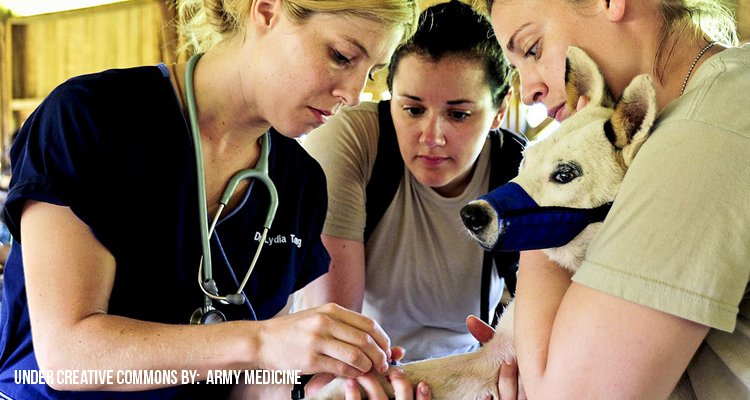
Why study Veterinary Medicine?
- Because you feel a strong interest in the scientific-biological area, especially in organic systems.
- Because you are curious about raising animals.
- Because you are interested in production.
- Because you value Science, especially the natural sciences.
- Because you want to apply your knowledge in a practical way, producing and making use of technology.
- Because you value nature and the environment.
- Because you feel great respect for animals.
- Because you are inclined to work in open spaces.
- Because you have ability in the scientific-biological area.
- Because you possess what is called “Naturalist Intelligence”.
- Because you believe you are capable of dealing emotionally with a sick or dying animal and, especially, with those around it.
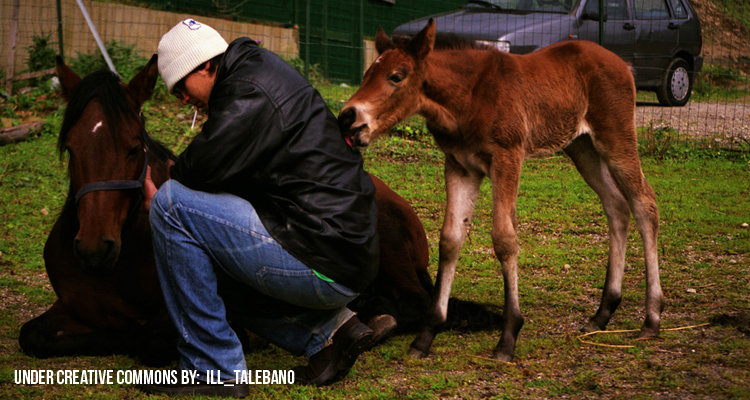
Where to study Veterinary Medicine?
In Argentina: the Universidad Nacional de La Plata, Universidad Nacional del Centro de la Provincia de Buenos Aires, Universidad de Buenos Aires, Universidad del Salvador, Universidad Nacional de Río Cuarto, Universidad Nacional de Villa María, Universidad Católica de Córdoba, Universidad Nacional del Nordeste, Universidad Nacional de La Pampa, Universidad Nacional de La Rioja, Universidad Católica de Salta, Universidad Nacional de Rosario, Universidad Nacional del Litoral, Universidad Juan Agustín Maza.
In Spain: in Córdoba: Universidad de Córdoba, Zaragoza: Universidad de Zaragoza UNIZAR, Canarias: Universidad de las Palmas de Gran Canaria, León: Universidad de León (UNILEON): Galicia: Universidad de Santiago de Compostela (USC), Barcelona: Universitat Autónoma de Barcelona (UAB), Madrid Universidad Complutense de Madrid (UCM), Universidad Alfonso X El Sabio (UAX), Murcia: Universidad de Murcia (UM), Valencia: Universidad CEU Cardenal Herrera, Univ. Católica de Valencia San Vicente Mártir (UCV).
In Guatemala: in the central zone the Universidad de San Carlos de Guatemala (USAC) within the Facultad de Medicina Veterinaria y Zootecnia offers training as a Médico Veterinario.
In Mexico: in Veracruz de Ignacio de la Llave offers the Bachelor's degree in Veterinary Medicine and Zootechnics and a total of 425 credits.
In Distrito Federal the Universidad Nacional Autónoma de México offers the Bachelor's degree in Veterinary Medicine and Zootechnics with a duration of 5 years.
In Sonora the Instituto Tecnológico de Sonora offers Veterinary Medicine and Zootechnics with a duration of 10 semesters.
In Tlaxcala the Universidad Autónoma de Tlaxcala offers the Bachelor's degree in Veterinary Medicine and Zootechnics designed to be completed in 10 semesters with a total of 64 Learning Units and 411 credits.
In Estado de México the Universidad Autónoma del Estado de México offers the Bachelor's degree in Veterinary Medicine and Zootechnics, with a total of 447 credits.
In Estado de México the Universidad Nacional Autónoma de México offers the Bachelor's degree in Veterinary Medicine and Zootechnics, with a duration of 5 years.
In Puebla the Benemérita Universidad Autónoma de Puebla offers the Master's degree in Veterinary Medicine and Animal Production, with a duration of 2 years.
In Nuevo León the Universidad Autónoma de Nuevo León offers the Master's degree in Veterinary Sciences with a duration of 2 years.
In Yucatán the Universidad Autónoma de Yucatán offers the Bachelor's degree in Veterinary Medicine and Zootechnics with a duration of 5 years.
In Jalisco the Universidad de Guadalajara offers the Bachelor's degree in Veterinary Medicine and Zootechnics with a duration of 4 years.
In Tepatitlan de Morelos the Universidad de Guadalajara offers the Bachelor's degree in Veterinary Medicine and Zootechnics with a duration of 4 years.
In Nayarit the Universidad Autónoma de Nayarit (UAN) offers Veterinary Medicine and Zootechnics with a duration of 4 years.
In Guanajuato the Universidad La Salle Noroeste offers the Bachelor's degree in Veterinary Medicine and Zootechnics with a duration of 5 years.
In Tamaulipas the Universidad Autónoma de Tamaulipas offers the title of Médico Veterinario Zootecnista with a duration of 8264 hours.
In Uruguay: Universidad de la República, Instituto Agroveterinario.