Studying in Mexico
To study in Mexico, you need to compare more than just the name of a university. The diploma, the campus, the format, the admission process, and the total cost determine whether an option fits your plan. If you are coming from abroad, you should also plan ahead for the recognition of your studies and immigration procedures.
Studying in Mexico: requirements, costs, and universities
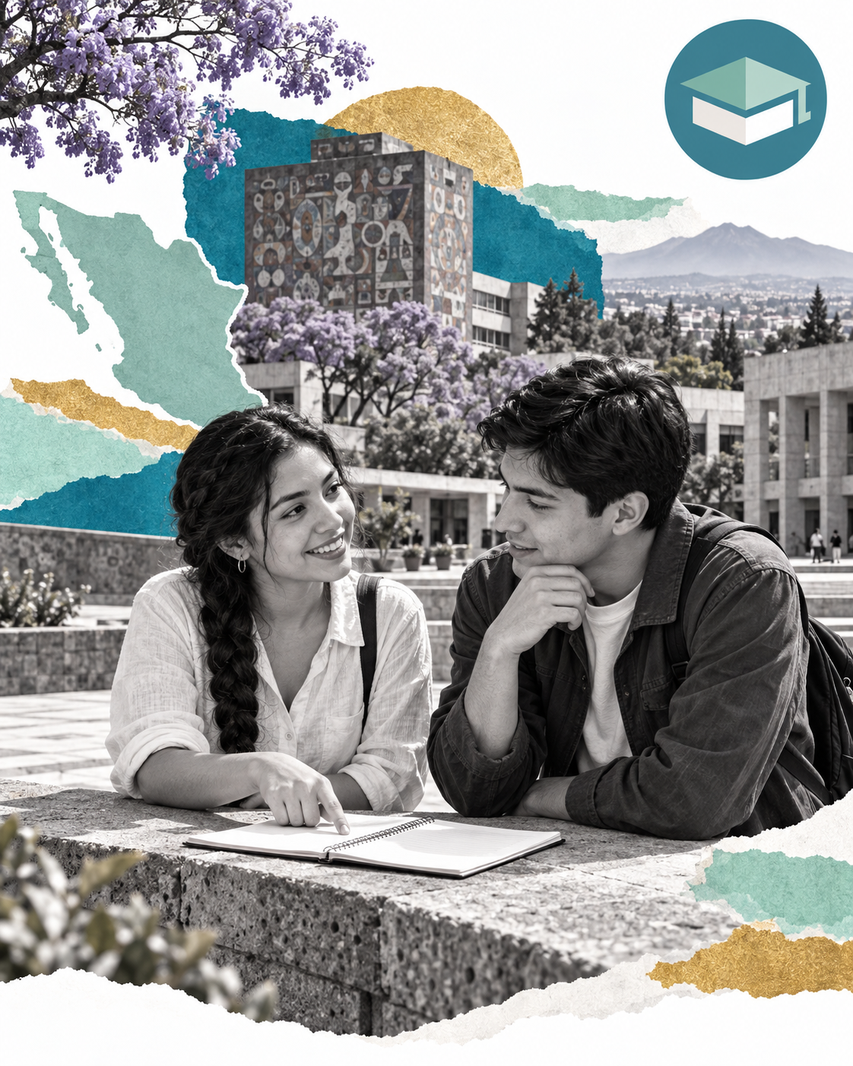
This guide brings together the points you should resolve before enrolling and a selection of institutions with official links to check their programs.
What degrees you can earn in Mexico
The General Law of Higher Education covers different levels of education. To choose, identify the diploma awarded by the program and its admission requirements:
- Higher University Technician or associate professional: post-high-school education focused on specific professional skills. If you want to continue on to a bachelor's degree, check what transfer options the institution recognizes.
- Bachelor's degree: professional training in a discipline. Engineering programs are part of this level; the length and graduation requirements depend on the program.
- Specialization, master's, and doctorate: postgraduate studies with their own requirements for prior education, admission, and graduation.
Before comparing years of study, ask for the full curriculum: subjects, internships, social service, and graduation options. Finishing your courses does not always mean you have met all the requirements to obtain the diploma.
How to verify the official validity of a degree
If you are considering a private institution, check its program in the Recognition System for the Official Validity of Studies, SIRVOES. The RVOE applies to a specific curriculum; it should not be interpreted as general recognition for the entire university.
Compare the name of the degree, the campus, the format, the authority that granted the recognition, and the agreement number. A program advertised as “RVOE pending” does not yet have that recognition granted.
The SEP explains the scope of the RVOE and the institutions authorized to grant it. Autonomous universities and other public institutions have a different legal framework: do not mechanically apply to a public university the same search used for a private degree.
Official validity and the relevance of the training are different aspects. After verifying recognition, review laboratories, internships, content, and academic support.
How admission works
There is no single mandatory exam for all Mexican universities. Each institution publishes its call for applications and establishes requirements, dates, documents, and selection criteria.
Some use the EXANI-II del Ceneval; others have their own procedures. Ceneval states that the institutions that administer its exam are responsible for publishing the registration conditions, venues, and corresponding contents.
For each option, prepare a list with high school certificate, required average, exam or interview, enrollment payment, and document submission date. If you are still finishing your studies, ask what provisional certificate they accept and when they require the final certificate.
Do not confuse paying for the selection process with securing a place. Also review how results are published and how much time you will have to complete enrollment.
Revalidation: if you studied high school outside Mexico
Revalidation makes it possible to give official validity to studies completed outside the Mexican education system. The Dirección General del Bachillerato publishes the procedure for foreign studies within its remit.
Among the documents it requests are academic records and certificates showing subjects, cycles, and grades. Before starting, confirm with the university which authority or procedure it accepts for your case.
A useful detail: for the procedure described by the DGB, its page states that it does not require an apostille and accepts a simple translation of documents in another language. This rule should not be automatically applied to other university, consular, or professional procedures.
If you already started a degree in another country, also ask how the recognition of completed subjects is evaluated. Admission and recognition of prior studies are separate decisions.
How much it costs to study and live in Mexico
Request a quote for the exact campus and degree. Distinguish between enrollment, tuition fees, laboratory fees, materials, insurance and graduation expenses. Do not assume that all public institutions have the same charges or that an advertised fee includes all of the training.
Calculate accommodation, food, transportation and connectivity separately. If you are moving, add travel, rental deposit and paperwork. Compare how much it costs to live near campus with the time and money that commuting daily would require.
To evaluate a scholarship, review the percentage or amount covered, the excluded items and the conditions for renewal. Confirm whether it accepts foreign students. Support announced by the university does not mean that it is available for any nationality, program or period.
Visa and documentation for foreign students
For studies of more than 180 days, consular information provides for the temporary resident student visa. The Ministry of Foreign Affairs explains how to process it and the need to carry out the corresponding exchange before the immigration authority once in Mexico.
Prepare your acceptance letter and check personal and financial requirements with the competent consulate. Consular information establishes a 30-day period from entry to process the residence card. The visa and that card correspond to different stages.
If the course is shorter or you already have another immigration status, verify the applicable procedure before traveling. Do not budget for employment income without confirming that your authorization allows that activity.
Where to study in Mexico? Institutions by state and city
Compare universities, technological institutes, teacher training schools and specialized centers in Aguascalientes, Baja California, Baja California Sur, Campeche and Chiapas. The list is organized by cities and towns to help you identify options near where you live or the place you want to move to.
Click on the name of each institution to visit its website and check degrees, formats, requirements, scholarships, and admission dates. Confirm with the institution that the program you're interested in is offered at the selected campus.
Institutions in Aguascalientes
Aguascalientes
- Centro de Estudios Superiores del Estado de Aguascalientes
- Centro de Investigación e Innovación en Tecnologías de la Información y Comunicación, Aguascalientes
- Centro Regional de Educación Normal de Aguascalientes
- Esc. Normal Sup. Fed. Profr. José Santos Valdés
- Escuela Bancaria y Comercial, Campus Aguascalientes
- Escuela Normal de Aguascalientes
- Instituto de Estudios Superiores ISIMA, Plantel Aguascalientes
- Instituto Escadia
- Instituto Tecnológico de Aguascalientes
- Instituto Tecnológico de la Construcción, Campus Aguascalientes
- Instituto Universitario del Centro de Mexico
- Tecnológico de Monterrey, Campus Aguascalientes
- Universidad Autónoma de Aguascalientes (UAA)
- Universidad Británica de Mexico
- Universidad Cuauhtémoc, plantel Aguascalientes
- Universidad de Estudios Avanzados
- Universidad de la Ciudad de Aguascalientes
- Universidad de la Policía y Ciencias de la Seguridad de Aguascalientes (UNPOL; antes IESPA)
- Universidad de las Artes
- Universidad de Santa Fe
- Universidad del Desarrollo Profesional (UNIDEP), plantel Aguascalientes
- Universidad del Valle de Atemajac (UNIVA), Aguascalientes
- Universidad Interamericana para el Desarrollo (UNID), campus Aguascalientes
- Universidad La Concordia
- Universidad Panamericana, campus Aguascalientes
- Universidad Pedagógica Nacional (UPN) U-011 Aguascalientes
- Universidad Politécnica de Aguascalientes
- Universidad Pontificia de Mexico, Campus Aguascalientes
- Universidad Tecnológica de Aguascalientes
- Universidad Tecnológica Metropolitana
- Universidad Villasunción
- UVM Aguascalientes - Universidad del Valle de Mexico
Asientos
Calvillo
- Universidad para el Bienestar Benito Juárez García, sede Calvillo
- Universidad Tecnológica de Calvillo
El Llano
El Retoño (municipality of El Llano)
Pabellón de Arteaga
Rincón de Romos
- Escuela Normal de Rincon de Romos Dr. Rafael Francisco Aguilar Lomelí
- Universidad Tecnológica del Norte de Aguascalientes, Campus Rincón de Romos
San Francisco de los Romo
Institutions in Baja California
Ensenada
- Centro de Enseñanza Técnica y Superior, Campus Ensenada
- Centro de Estudios Superiores de la Frontera, Campus Ensenada
- Centro de Investigación Científica y de Educación Superior de Ensenada (CICESE)
- Escuela Normal Estatal Prof. Jesús Prado Luna
- Fundación Telecomunicaciones para Educación y Desarrollo (Teleddes)
- Instituto Tecnológico de Ensenada
- Tecnológico de Baja California, Campus Ensenada
- Universidad Autónoma de Baja California, Campus Ensenada
- Universidad Autónoma de Durango, campus Ensenada
- Universidad de Ensenada
- Universidad de Tijuana, Campus Ensenada
- Universidad del Desarrollo Profesional (UNIDEP), plantel Ensenada
- Universidad Interamericana para el Desarrollo (UNID), campus Ensenada
- Universidad Vizcaya de las Américas, campus Ensenada
- Universidad Xochicalco, Campus Ensenada
Mexicali
- Benemérita Escuela Normal Educadora Rosaura Zapata
- Benemérita Escuela Normal Urbana Federal Fronteriza de Mexicali
- Benemérita Escuela Normal Urbana Nocturna del Estado
- Centro de Enseñanza Técnica y Superior, Campus Mexicali
- Centro de Estudios de Posgrado, Campus Mexicali
- Centro de Estudios Superiores en Ciencias Penales
- Centro de Estudios Universitarios de Baja California
- Escuela Normal del Valle de Mexicali Ejido Campeche
- Escuela Normal Experimental Mtro. Rafael Ramírez
- Escuela Superior de Comercio Exterior, Plantel Mexicali
- Instituto Superior de Filosofía
- Instituto Tecnológico de Mexicali
- Tecnológico de Baja California, Mexicali
- Universidad Autónoma de Durango, campus Mexicali
- Universidad Autónoma de Baja California, Campus Mexicali
- Universidad de Estudios Avanzados (UNEA), Campus Cuauhtémoc
- Universidad de Tijuana, campus Mexicali
- Universidad del Desarrollo Profesional (UNIDEP), plantel Mexicali
- Universidad Estatal de Estudios Pedagógicos
- Universidad Iberoamericana Tijuana, registro Campus Mexicali
- Universidad Pedagógica Nacional (UPN) U-021 Mexicali
- Universidad Politécnica de Baja California (UPBC)
- Universidad Vizcaya de las Américas, campus Mexicali
- Universidad Xochicalco, Campus Mexicali
- UVM Mexicali
Playas de Rosarito
San Quintín
- Universidad de Ensenada Campus San Quintín
- Universidad de Tijuana (CUT) Campus San Quintín
- Universidad Intercultural de Baja California
- Universidad para el Bienestar Benito Juárez García, sede San Quintín
Tecate
- Universidad Autónoma de Baja California, Campus Tijuana Unidad Tecate
- Universidad Autónoma de Baja California, Unidad Valle de las Palmas
Tijuana
- Centro de Enseñanza Técnica y Superior, Campus Tijuana
- Centro de Estudios Superiores de la Frontera
- Centro de Estudios Superiores del Noroeste (Cesun)
- Centro de Investigación para el Desarrollo Humano (CIDH)
- Centro de Investigación y Desarrollo de Tecnología Digital, Unidad Tijuana
- Centro de Vinculación y Desarrollo Regional Unidad Tijuana
- Colegio Mentor Mexicano
- Culinary Art School
- Educación Superior del Pacífico Escuela de Negocios
- El Colegio de la Frontera Norte, A.C.
- Escuela de Danza Gloria Campobello
- Escuela Normal Fronteriza Tijuana
- Escuela Superior de Artes Visuales
- Escuela Superior de Comercio Exterior, A.C., plantel Tijuana
- Instituto de Estudios Especializados
- Instituto de Estudios Superiores en Derecho Penal (INDEPAC), plantel Tijuana
- Instituto para el Desarrollo y Actualización de Profesionales (IDAP), Clínica Tijuana
- Instituto Tecnológico de la Construcción, Campus Tijuana
- Instituto Tecnológico de Tijuana
- Seminario Diocesano de Tijuana
- Tecnológico de Baja California, Campus Tijuana
- Universidad Autónoma de Baja California (UABC), campus Tijuana
- Universidad Autónoma de Durango, campus Tijuana 20 de Noviembre
- Universidad Autónoma de Durango, Campus Tijuana plantel Benítez
- Universidad CIES
- Universidad de Estudios Avanzados (UNEA), Campus Pedregal
- Universidad de las Californias Internacional (UDCI)
- Universidad de Tijuana (CUT), Campus Tijuana
- Universidad del Desarrollo Profesional (UNIDEP), Plantel Tijuana
- Universidad Humanitas, Campus Tijuana
- Universidad Iberoamericana (UIA) Tijuana
- Universidad Interamericana para el Desarrollo (UNID), Tijuana
- Universidad Pedagógica Nacional (UPN) U-022 Tijuana
- Universidad TecMilenio, Campus Tijuana Río
- Universidad Tecnológica de Tijuana (UTT)
- Universidad Vizcaya de las Américas, Campus Tijuana
- Universidad Xochicalco Campus Tijuana
- University of Advanced Technologies (UNIAT), Tijuana
Institutions in Baja California Sur
Cabo San Lucas
- Universidad Autónoma de Baja California Sur, sede Los Cabos
- Universidad de Los Cabos (referencia anterior: Instituto Sudcaliforniano de Estudios Superiores)
- Universidad de Tijuana (UDT) Campus Los Cabos
- Universidad del Desarrollo Profesional, plantel Los Cabos
- Universidad del Golfo de California, Plantel Hojazen
- Universidad del Golfo de California. Plantel Cabo San Lucas
Ciudad Constitución (municipality of Comondú)
- Escuela Normal Superior del Estado de Baja California Sur, extensión Ciudad Constitución
- Instituto Tecnológico Superior de Cd. Constitución (TECNM)
Ciudad Insurgentes (municipality of Comondú)
Guerrero Negro (municipality of Mulegé)
La Paz
- Benemérita Escuela Normal Urbana Profr. Domingo Carballo Félix
- Centro de Investigaciones Biológicas del Noroeste, S.C. (CIBNOR)
- Centro Interdisciplinario de Ciencias Marinas CICIMAR, Unidad Baja California Sur
- Escuela Normal Superior del Estado de Baja California Sur
- Instituto Cultural Tecnológico Cuincacalli La Paz
- Instituto Tecnológico de la Construcción, Campus Baja California Sur
- Instituto Tecnológico de La Paz
- Tecnológico de Baja California, Campus La paz
- Universidad Autónoma de Baja California Sur
- Universidad de Tijuana, Campus La Paz
- Universidad del Desarrollo Profesional (UNIDEP), plantel La Paz
- Universidad Internacional de La Paz
- Universidad Mundial, Campus La Paz
- Universidad Pedagógica Nacional, (UPN) U-03A La Paz
La Ribera (municipality of Los Cabos)
Loreto
- Centro Regional de Educación Normal Marcelo Rubio Ruiz
- Universidad Autónoma de Baja California Sur, sede Loreto
Los Cabos (municipality; locality to be confirmed)
San José del Cabo
- Escuela Normal Superior del Estado de Baja California Sur, extensión San José del Cabo
- Instituto Tecnológico de Estudios Superiores de Los Cabos (ITES Los Cabos)
- Universidad Mundial, campus Los Cabos
Santa Rosalía (municipality of Mulegé)
Institutions in Campeche
Calakmul
Calkiní
- Escuela Normal de Licenciatura en Educación Preescolar Profr. Pastor Rodríguez Estrada
- Instituto Tecnológico Superior de Calkiní (TECNM)
- Universidad para el Bienestar Benito Juárez García, sede Calkiní
Champotón
Chiná
Ciudad del Carmen
- Centro de Educación Náutica de Campeche (CENC)
- Centro de Estudios Superiores Isla del Carmen, A.C.
- Instituto Tecnológico de la Construcción, Campus Cd. del Carmen
- Universidad Autónoma del Carmen (UNACAR)
- Universidad del Desarrollo Profesional, Plantel Ciudad Del Carmen
- Universidad Interamericana para el Desarrollo (UNID), campus Ciudad del Carmen
- Universidad Mundo Maya, Campus Ciudad del Carmen
- Universidad Pedagógica Nacional (UPN) U-042 Cd. del Carmen
Escárcega
- Instituto Tecnológico Superior de Escárcega (TECNM)
- Universidad Autónoma de Campeche, Facultad de Ciencias Agropecuarias
- Universidad del Bienestar Benito Juárez García, sede Escárcega
Hecelchakán
Hopelchén
Lerma
San Antonio Cárdenas (municipality of Carmen)
San Francisco de Campeche
- Centro de Actualización del Magisterio Campeche
- Centro de Estudios Clínica e Investigación Psicológica (CECIP)
- Centro de Estudios Superiores del Sureste, Campus Campeche
- Centro de Vinculación y Desarrollo Regional del IPN, Unidad Campeche (antes Centro de Educación Continua)
- Colegio de la Frontera Sur (ECOSUR), Unidad Campeche
- Escuela de Puericultura del Sureste Dr. Manuel Acevedo Ruiz del Hoyo, A.C.
- Escuela Judicial del Estado de Campeche
- Instituto Campechano
- Instituto de Estudios en Derechos Humanos (INEDH)
- Instituto Pedagógico Campechano María de la Luz Ortega de Ruiz
- Instituto Tecnológico y de Estudios Superiores René Descartes, Plantel Campeche
- Universidad Anáhuac Mayab, sede de admisión Campeche
- Universidad Autónoma de Campeche
- Universidad Guadalupe Victoria
- Universidad Hispanoamericana Justo Sierra
- Universidad IEU, Campus Campeche
- Universidad Interamericana para el Desarrollo (UNID), campus Campeche
- Universidad Internacional Iberoamericana (UNINI México)
- Universidad Mundo Maya, Campus Campeche
- Universidad Pedagógica Nacional (UPN) U-041 María Lavalle Urbina
- Universidad Valle del Grijalva, Campus Campeche
- Universidad Vizcaya de las Américas, campus Campeche
Sihochac (municipality of Champotón)
Institutions in Chiapas
Altamirano
Amatenango del Valle
Arriaga
- Universidad Autónoma de Chiapas (UNACH) Escuela de Ciencias Administrativas
- Universidad del Pacífico de Chiapas
- Universidad para el Bienestar Benito Juárez García, Arriaga campus
Bella Vista
Chenalhó
Chiapa de Corzo
Chilón
Cintalapa
- Instituto Tecnológico Superior de Cintalapa (TECNM)
- Universidad para el Bienestar Benito Juárez García, sede Cintalapa, Ejido Lázaro Cárdenas
Comitán de Domínguez
- Instituto Tecnológico de Comitán
- Universidad Autónoma de Chiapas, Facultad de Ciencias Administrativas
- Universidad del Sureste (UDS)
- Universidad Valle de Grijalva, Campus Comitán
Escuintla
Frontera Comalapa
- Instituto Tecnológico de Frontera Comalapa
- Universidad para el Bienestar Benito Juárez García, sede Frontera Comalapa
Huehuetán
Huixtla
Ixtapa
Larráinzar
Las Margaritas
- Universidad para el Bienestar Benito Juárez García, Las Margaritas campus, La Esperanza
- Universidad para el Bienestar Benito Juárez García, Las Margaritas campus, Nuevo Momón
Mapastepec
Motozintla
Ocosingo
- Universidad Autónoma de Ciencias y Artes de Chiapas (UNICACH), sede Nueva Palestina
- Universidad para el Bienestar Benito Juárez García, sede Ocosingo
- Universidad Tecnológica de la Selva
Ocotepec
Ocozocoautla de Espinosa
Ostuacán
Palenque
- Universidad Autónoma de Ciencias y Artes de Chiapas (UNICACH) sede Palenque
- Universidad para el Bienestar Benito Juárez García, sede Palenque
- Universidad para el Bienestar Benito Juárez García, sede San Martín Chamizal
Pantepec
Pichucalco
- Universidad Autónoma de Chiapas (UNACH), Campus VII Pichucalco Escuela de Contaduría y Administración
- Universidad Valle del Grijalva (UVG) Campus Pichucalco
Pijijiapan
Pueblo Nuevo Solistahuacán
Reforma
Salto de Agua
San Cristóbal de las Casas
- Centro de Investigaciones y Estudios Superiores en Antropología Social, Unidad Sureste
- Centro Universitario San Marcos, San Cristóbal
- El Colegio de la Frontera Sur
- Instituto de Administración Pública de Chiapas
- Instituto de Estudios Superiores Manuel José de Rojas
- Universidad Autónoma Chapingo, Centro Regional Universitario Chiapas
- Universidad Autónoma de Chiapas, Campus III San Cristóbal de las Casas
- Universidad de Los Altos de Chiapas
- Universidad Intercultural de Chiapas
- Universidad Mesoamericana, Campus San Cristóbal de las Casas
- Universidad para el Bienestar Benito Juárez García, sede San Cristóbal de las Casas
Suchiapa
Tapachula
- Centro de Estudios Superiores de Tapachula
- Centro Universitario en Formación Artística
- Centro Universitario Interamericano del Pacífico, Tapachula
- El Colegio de la Frontera Sur, Unidad Tapachula
- Instituto de Estudios Superiores Aduanales, Universidad SEUAT
- Instituto de Estudios Superiores de Chiapas, Campus Tapachula
- Instituto Tecnológico de Tapachula
- Universidad Autónoma de Chiapas (UNACH) Campus IV Tapachula
- Universidad Autónoma de Ciencias y Artes de Chiapas (UNICACH) sede Tapachula
- Universidad del Soconusco, Campus Tapachula
- Universidad del Tacaná
- Universidad Interamericana para el Desarrollo (UNID), campus Tapachula
- Universidad Pedagógica Nacional (UPN) U-072 Tapachula
- Universidad Politécnica de Tapachula
- Universidad Valle del Grijalva Campus Tapachula
Tapilula
Teopisca
Tonalá
- Escuela de Ciencias Administrativas, Unidad Istmo-Costa Tonalá. Campus IX
- Universidad Autónoma de Ciencias y Artes de Chiapas (UNICACH) sede Tonalá
- Universidad del Pacífico de Chiapas, campus Tonalá
Tuxtla Gutiérrez
- Centro de Actualización del Magisterio Tuxtla Gutiérrez
- Centro de Estudios de Posgrado, Campus Tuxtla Gutiérrez
- Escuela Bancaria y Comercial, Campus Chiapas
- Escuela de Enfermería del Estado
- Escuela de Medicina Alternativa
- Escuela Gestalt de Arte y Diseño de Tuxtla
- Escuela Normal de Licenciatura en Educación Primaria del Estado de Tuxtla Gutiérrez
- Escuela Normal de Licenciatura en Educación Rural Mactumactza
- Escuela Normal Superior de Chiapas
- Escuela Superior de Trabajo Social Jesús Aquino Juan
- Instituto de Estudios Superiores de Chiapas
- Instituto de Estudios Superiores Isima, Plantel Tuxtla Gutiérrez
- Instituto de Estudios Superiores Sor Juana Inés de la Cruz
- Instituto Nacional de Estudios Fiscales
- Instituto para el Desarrollo y Actualización de Profesionales, Sede Tuxtla Gutiérrez
- Instituto Tecnológico de la Construcción, campus Chiapas
- Instituto Tecnológico de Tuxtla Gutiérrez
- Instituto Tecnológico y de Estudios Superiores de Monterrey, Campus Chiapas
- Universidad Autónoma de Chiapas (UNACH)
- Universidad Autónoma de Ciencias y Artes de Chiapas (UNICACH)
- Universidad de Ciencia y Tecnología Descartes
- Universidad de Estudios Superiores de Tuxtla (antes Escuela de Estudios Superiores de Tuxtla)
- Universidad del Sur, Tuxtla Gutiérrez
- Universidad Linda Vista, Plantel Tuxtla Gutiérrez
- Universidad Maya campus Tuxtla Gutiérrez
- Universidad Pablo Guardado Chávez
- Universidad Pedagógica Nacional (UPN) U-071 Tuxtla Gutiérrez
- Universidad San Marcos
- Universidad Valle del Grijalva (UVG), campus Tuxtla
Tuzantán
Venustiano Carranza
- Universidad Autónoma de Ciencias y Artes de Chiapas (UNICACH) sede Venustiano Carranza
- Universidad para el Bienestar Benito Juárez García, sede Venustiano Carranza
Villa Corzo
- Universidad Autónoma de Ciencias y Artes de Chiapas (UNICACH) sede Villa Corzo
- Universidad para el Bienestar Benito Juárez García, sede Villa Corzo, Revolución Mexicana
Villaflores
- Instituto de Estudios Superiores del Sureste
- Universidad Autónoma de Chiapas (UNACH) Facultad de Ciencias Agronómicas
How to choose between the options
Narrow the list down to three programs and compare degree, content, internships, costs, and requirements. Ask for concrete answers: what you will learn, what facilities you will use, when you will do your internships, and what you will need to complete to graduate.
If your main doubt is still about your career, explore our degrees directory. Identifying your interests before choosing a city or paying an enrollment fee will help you build a more consistent decision.