Degrees in Virtual Reality
Virtual reality: what it is and what it is used for
Virtual reality is a technology that allows users to experience a computer-generated environment in an immersive way and in real time. Through devices such as virtual reality glasses and motion controllers, users can interact with virtual objects and environments as if they were real.
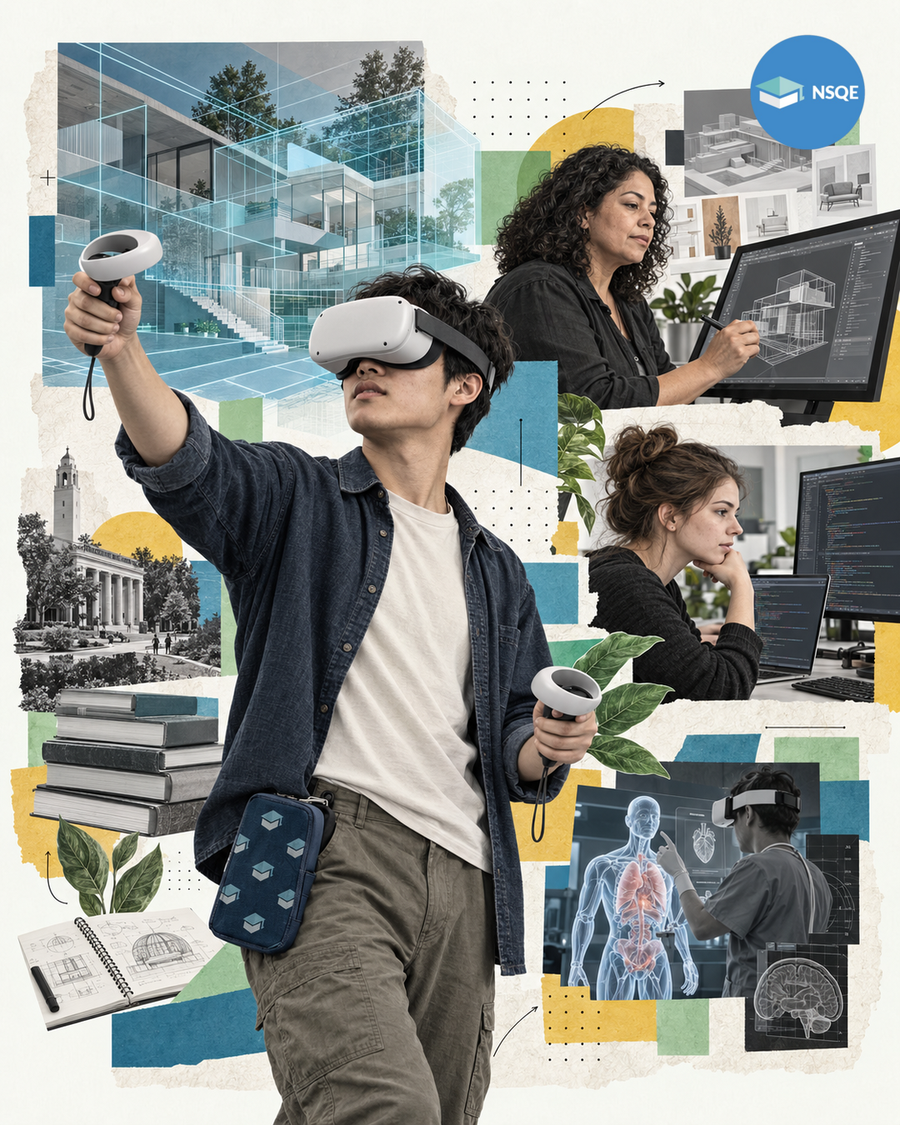
What do you need to study to become a virtual reality app designer?
To become a virtual reality app designer, you need to acquire a combination of technical and creative skills. Having programming knowledge is essential, as it will allow you to develop interactions in virtual environments, become familiar with the popular game engines used in virtual reality, such as Unity or Unreal Engine, skills in video game design and development, graphic design and 3D modeling, using software like Maya or Blender.
Skills and Knowledge Needed to Enter the Field of Virtual Reality
To work in the field of virtual reality and augmented reality, you need to have technical knowledge in areas such as programming, animation, 3D, programs to create virtual reality, and graphic design.
In addition, skills such as creativity, problem-solving ability, and teamwork are required.
What to study to work in augmented reality?
There are different educational options around Virtual Reality and video game development.
From the engineering degree or video game development, bootcamp, free and paid courses, specializations like master's degrees and training programs in virtual reality, which can help those interested acquire the skills needed to work in this field.
Basics: specialization course in video game development and augmented reality, video game programming course, 3d design and virtual reality.
Technical program: technician in virtual and augmented reality.
Combined: the virtual reality and video games degree (engineering)
Engineering: engineering in virtual reality and digital game design, degree in engineering in technologies for animation and video games, engineering in video game development and virtual reality.
Master's degree: master's in virtual, augmented and mixed reality development, the university master's in extended reality: virtual, augmented and mixed, the master's in graphic computing virtual reality simulation.
What is a virtual reality developer?
A virtual reality developer is a professional who specializes in the creation and programming of experiences and immersive applications using virtual reality technology (VR).
Virtual reality combines visual, auditory and tactile elements to create a simulated environment in which users can interact and explore.
As a virtual reality developer, your main task will be to use specific software and tools to design and build virtual environments or interactive applications that provide immersive experiences to users.
This involves programming 3D visual elements, developing intuitive and realistic interactions, and optimizing performance to ensure a smooth experience.
What does a virtual reality developer do?
A virtual reality developer creates immersive experiences using virtual reality (VR) technology. This involves designing and developing interactive virtual environments, programming 3D visual elements, optimizing performance, creating visual content and carrying out thorough testing.
They are also responsible for maintaining and updating existing applications. The goal of the virtual reality developer is to offer users immersive and realistic experiences in the virtual world.
The virtual reality developer has an active profile in contributions to open source projects or active participation in game development communities and forums.
Skills of the virtual reality developer
A virtual reality developer must have programming skills, experience with scripting languages such as LUA, Python, knowledge of game engines such as Unity or Unreal Engine, Knowledge of Agile/Scrum methodologies and tools such as Taskade, proficiency in 3D modeling, experience in the implementation of multiplayer features, design skills, logical thinking and problem solving, optimization experience, creativity, collaboration and teamwork skills, and a genuine passion for virtual reality.
These skills allow them to create immersive and realistic experiences, work effectively on multidisciplinary projects and adapt to the changing demands of the virtual reality field.
The developer who works in an educational environment, for example helps universities in the application of immersive virtual reality to teaching.
Job Opportunities in the Virtual Reality Field
become a virtual reality developer
Virtual reality is used in a wide variety of sectors, from the entertainment industry to education and medicine in areas of video game design and development.
Professionals in virtual reality and augmented reality can work in roles such as software developers, user experience designers and visual effects artists.
Salaries in the virtual reality field vary according to the type of job and geographic location, but in general, professionals in this field have growth prospects and constantly evolving job opportunities.
The salary of an independent virtual reality developer is 90 US dollars/hour.
You can find virtual reality job openings at companies such as: Meta, Microsoft, Quintar, Geomagical, among others.
Example of job responsibilities of a Lead Game Developer
- Lead a team of game developers in the design, development and implementation of high-quality game projects.
- Develop, maintain and optimize game workflows, ensuring optimal performance and usability.
- Continuously research and incorporate best practices from the game development and Virtual Reality industry.
- Collaborate with cross-functional teams, including art, design and quality assurance, to ensure seamless integration of game assets.
- Participate in the planning, estimation and scheduling of virtual reality and augmented reality applications as the team's main driving force.
Challenges and Future Trends in the Virtual Reality Field
Despite advances in virtual reality technology, challenges still exist in the industry, such as the lack of standards and the need for more advanced hardware.
Challenges:
Hardware: Although virtual reality hardware technology has advanced significantly in recent years, challenges still remain in terms of comfort, weight and cost. Improving ergonomics and reducing the prices of virtual reality devices will continue to be a challenge for expanding mass adoption.
Natural interaction: Achieving more natural and realistic interaction within the virtual world remains a challenge. Developers are working on ways to integrate gestures, eye tracking and other technologies to improve the user experience.
Nausea and dizziness: Some people experience side effects such as dizziness or nausea when using virtual reality devices for prolonged periods. Reducing these effects and improving comfort for users is a major challenge.
High-quality content: Creating high-quality and engaging content for virtual reality applications can be costly and time-consuming. Developers must find efficient ways to produce immersive experiences without compromising quality.
Future Trends
Virtual reality reinvents teaching in university classrooms: the use of virtual reality in university teaching is revolutionizing university classes by offering immersive experiences that allow students to explore complex concepts and virtual environments, thereby enhancing their learning and understanding in a unique way.
Greater adoption: Virtual reality adoption is expected to continue growing in the coming years, especially in sectors such as education, entertainment, tourism, healthcare, and industrial design.
Social Virtual Reality: Social interaction in virtual environments is emerging as a major trend. Platforms and applications that allow people to connect and share experiences in real time will gain popularity.
Augmented Reality and Technology Convergence: The integration of virtual reality with augmented reality (AR) and other emerging technologies, such as machine learning and artificial intelligence, will open up new possibilities and immersive experiences.
Business Applications: Virtual reality is increasingly being adopted in business for employee training, simulations, product design, and team collaboration.
Improvements in Graphics Quality: With advances in graphics technology and increased processing power, virtual reality experiences will offer more realistic and detailed graphics.
VR Content Streaming: Virtual reality content streaming and delivery solutions will improve the accessibility and distribution of high-quality VR experiences.
Virtual reality also has the potential to have a significant impact on society and the economy, from virtual reality applied to design and education—for example, the use of artificial intelligence and virtual reality to improve learning and training—to the tourism industry and healthcare, such as the example where virtual reality applied in simulators helps patients with eating disorders and phobias.
The degrees in virtual reality offer a wide variety of job opportunities in a constantly growing industry.