
Pilot
What is a pilot?
A pilot is a professional trained to operate and steer an aircraft in order to transport passengers, goods or perform specific tasks. They can work for commercial airlines, private companies, government agencies or the armed forces.
Some professional pilots also work for private individuals, provide services on private planes, operate cargo flights or dedicate themselves to teaching. Aviation is a diverse professional field, with opportunities in the public and private sectors, as well as in education.
What does pilot mean?
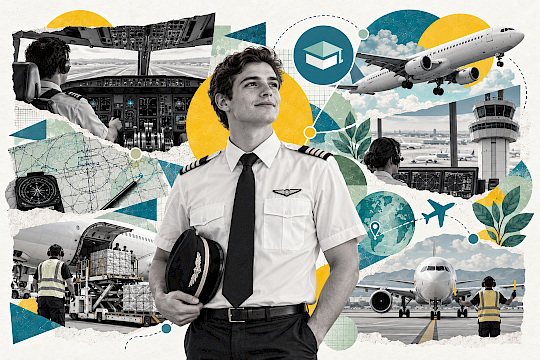
The word pilot is used to identify the person who drives, directs or controls a vehicle. In aviation, it is the professional who is authorized to fly airplanes, helicopters or other aircraft.
Although colloquially it is said that the pilot is “the one who drives the plane”, their job is much more complex. In addition to controlling the aircraft, they must plan the flight, check weather conditions, calculate the necessary fuel, check the weight and communicate with air traffic control.
The terms piloto aviador, piloto de aviación, piloto de avión and aviador are often used as synonyms. However, “aviador” can also be applied more broadly to a person related to the practice or history of aviation.
What does a pilot do?
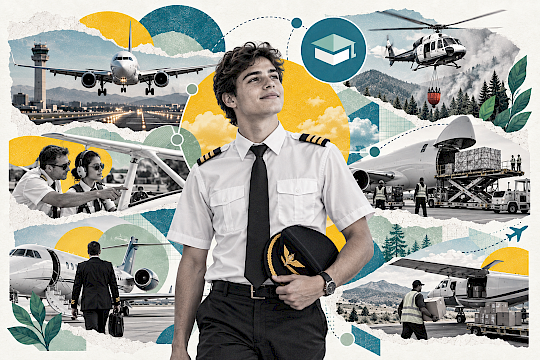
Depending on the area of the industry in which they work, a pilot may be responsible for transporting civilians, members of the armed forces, private goods, commercial products or other types of cargo.
The type of aircraft used depends on their specialization. Some pilots fly helicopters, while others operate large commercial airplanes capable of carrying dozens or hundreds of passengers. There are also cargo pilots who transport mail, automobiles, industrial equipment, medicines and other goods from one area to another.
Flying airplanes is not only about taking off, keeping the aircraft in flight and landing. Before each trip, the pilot must study the route, check the weather, review the documentation and confirm that the aircraft is in safe condition.
During the flight they must monitor the instruments, follow the authorized route, communicate with controllers and be prepared to respond to weather changes, technical failures or unforeseen situations.
A partial list of jobs as a pilot
■ National, regional or international airline pilot
■ Commercial pilot
■ Corporate pilot
■ Cargo pilot
■ Airline pilot
■ Certified flight instructor
■ Traffic pilot
■ Military pilot
■ Forestry pilot
■ Advertising pilot
■ Parcel transport pilot
■ Test pilot
■ Private flight pilot
Airline pilots
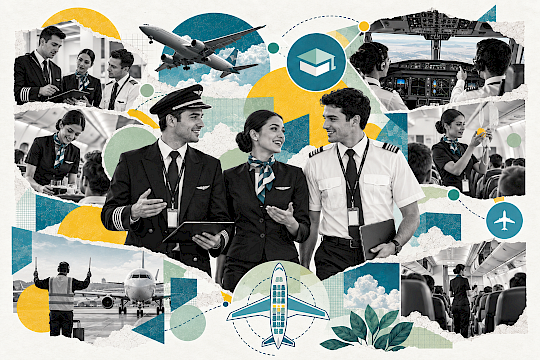
The best-known pilots are those who work for airlines transporting passengers. Their main responsibility is to operate the aircraft safely, although an important part of their workday takes place before and after the flight.
Before departure, pilots check the weather conditions, confirm the flight plan, check the amount of fuel and perform inspections of the aircraft. They also study the technical logs to know its condition and check whether there are observations that must be taken into account.
During the flight they are responsible for the safety of passengers and crew. In some situations they need to make decisions in seconds and stay in constant contact with air traffic control and the corresponding authorities.
The airline pilot usually works on scheduled passenger or cargo flights. Depending on their experience and ratings, they may work as co-pilot or first officer and later be promoted to captain.
What is a commercial pilot?
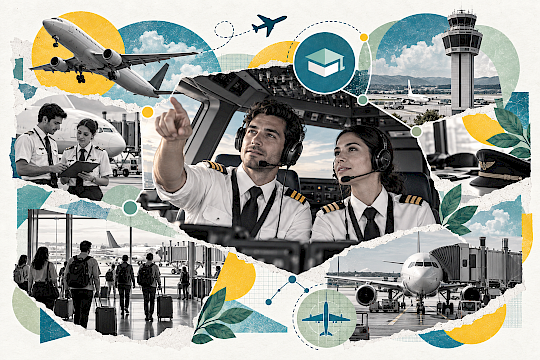
A commercial pilot is a professional who holds the license and ratings necessary to receive payment for piloting an aircraft, in accordance with the regulations of the country in which they work.
The commercial pilot degree combines theoretical knowledge with a large amount of practical training. The subjects studied include meteorology, navigation, aerodynamics, communications, air regulations, flight planning, aircraft operation and emergency procedures.
A commercial airplane pilot can work in passenger transport, executive flights, tourist operations, special services or freight transport. To work for an airline they normally need to accumulate experience, flight hours and additional ratings.
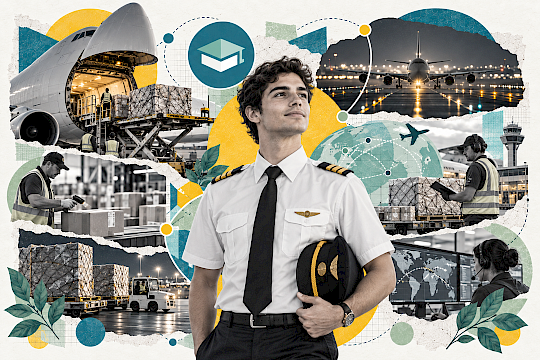
Cargo pilots
Commercial cargo pilots work similarly to passenger pilots. The main difference is that they transport goods instead of people.
A cargo pilot can transport packages, food, medicine, animals, vehicles, machinery or industrial products. Some cargo flights take place at night so that the goods arrive at their destination during the early hours of the day.
Although they do not carry passengers, the responsibilities related to safety, planning, weight, fuel and weather conditions are equally important.
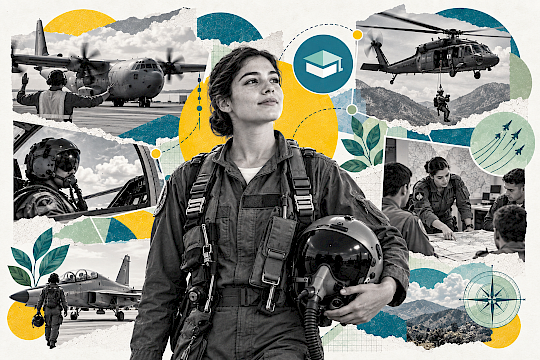
Military pilots
There are also aviation degrees within the armed forces. Military pilots transport personnel, soldiers, equipment or goods for the government.
They can fly transport planes, fighters, bombers or helicopters on combat, rescue, surveillance or reconnaissance missions. Some military officers work as test pilots, evaluating prototypes of new or experimental aircraft.
Military training includes flight training, physical preparation, operational discipline and knowledge related to the missions the pilot will have to carry out.
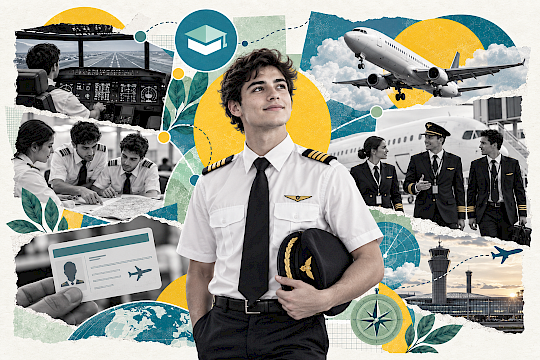
Private and corporate aviation pilots
In the private sector, professional pilots usually operate light aircraft, light planes or executive jets. They can be hired by companies, businesspeople, celebrities or other people who need to have private air transport available.
A private aviation pilot can work exclusively for a company or provide services to different clients through an authorized company.
The professional pilot who works in private aviation should not be confused with the private pilot license. In many countries, this license allows flying for personal purposes, but not receiving payment for doing so. To work as a pilot, a commercial or professional license is normally needed.
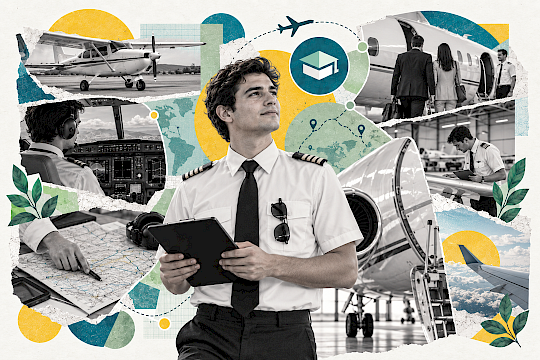
Is pilot a degree, a career or a trade?
Pilot is mainly a specialized and regulated career. To practice it, it is necessary to study, complete practical training, pass medical and theoretical evaluations, accumulate flight hours and obtain the corresponding licenses.
It can also be considered a trade because of its strong practical component. However, it is not enough to learn to control the plane: the pilot must know air regulations, understand how the aircraft works and demonstrate that they can make safe decisions.
Training can take place in a flight school, aviation academy, military institution, or university. Not all programs award a university degree, but they must lead to the licenses and ratings required by the aviation authority.
That is why, when asking whether pilot is a degree, a career, or a trade, the most accurate answer is that it is a professional career with significant practical training.
Is a pilot the same as an aircraft crew member?
The pilot is part of an aircraft's crew, but not all crew members are pilots.
The crew may include the captain, co-pilot, flight attendants and, in certain operations, other professionals. Pilots are responsible for operating the aircraft, while cabin crew attend to passengers and apply safety procedures inside the airplane.
In a crossword puzzle, a definition like “aircraft pilot” usually has “aviator” as the answer. In contrast, “aircraft crew member” is a broader expression and the answer will depend on the number of letters requested.
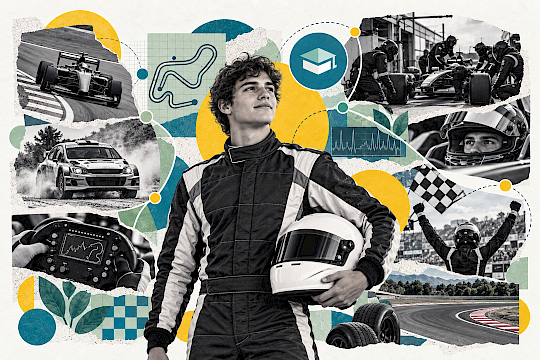
Race car driver
The word pilot is also used outside aviation. A race car driver is a professional who drives racing cars.
Auto or race car drivers compete in championships, speed, endurance, or rally events. They need to understand vehicle behavior, interpret technical information, work with mechanics and engineers, and react quickly to changes on the track.
Although the race car driver and the aviator pilot share skills such as concentration, coordination, and the ability to make decisions under pressure, they belong to different careers.
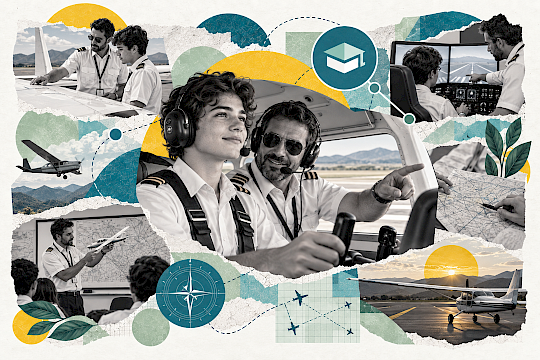
Pilot instructors
Pilots with enough experience may choose to work as instructors or establish an aviation school.
As flight instructors, they teach future aviators the fundamentals needed to operate an aircraft. Lessons may include safety, meteorology, navigation, aviation history, regulations, and normal and emergency procedures.
The instructor works with students both on the ground and during practice flights and prepares them to obtain their pilot license or certificate.
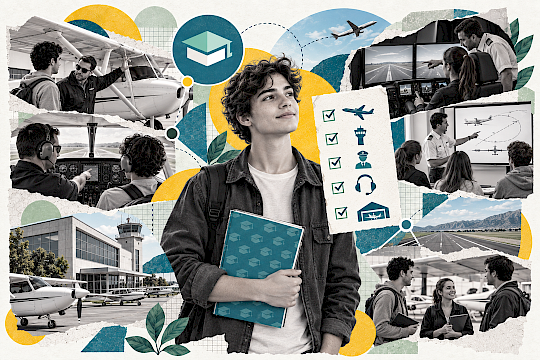
Choosing a flight instructor and school
If your goal is to receive professional and comprehensive flight training, one of the most important decisions is choosing who will teach you. Before enrolling, you should ask the following questions:
■ Does the school allow you to take a trial flight with an instructor?
■ Does the school have its own campus or facilities? Were you allowed to see them?
■ Does it have insurance and the corresponding coverage?
■ Is there an affordable place to live near the school?
■ Does it offer an official degree along with flight training?
■ Does it offer or recommend any financing system?
■ What are its prices?
■ How much will the complete training cost?
■ What expenses must be paid in advance?
■ Can you pay monthly or in installments?
■ What is the refund policy?
■ What is its policy on changing instructors?
■ What conditions appear in the training contract or agreement?
■ How many hours will you need to obtain the licenses and ratings you are seeking?
■ Are the reception offices tidy and clean?
■ Does the staff answer questions clearly?
■ Are the airplanes new or recent models?
■ How is aircraft maintenance carried out?
■ Are the classrooms well-lit and spacious?
■ What is the pass-to-fail ratio of the last graduating class?
■ Are you allowed to talk to current students and graduates?
■ Are there any complaints or reports against the school?
■ Does the school have simulators?
■ How old are the simulators?
■ How long has it been operating at its current location?
■ Were you given the résumés of the professionals who teach the courses?
■ If it is affiliated with an airline, is there a job agreement or is only an interview provided?
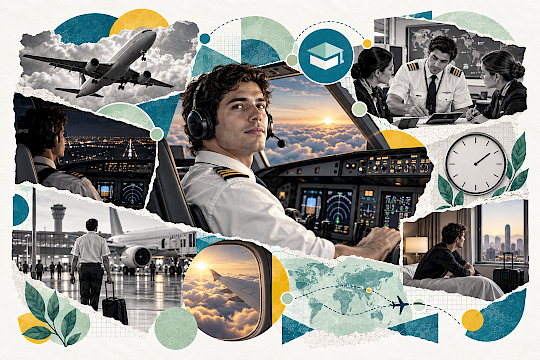
What is a pilot's workplace like?
Pilots rarely work a conventional 40-hour work week. Airline schedules, weather conditions, delays and technical problems can make them work overnight, on weekends or on holidays.
Commercial airline pilots may also spend nights in distant cities or countries. Aviation regulations establish duty limits and minimum rest periods, although the exact conditions vary by country, type of operation and company.
In some work schedules, pilots can log approximately 75 to 80 flight hours per month. However, their total workday is longer because it also includes planning, meetings, inspections, preparation, and post-flight tasks.
The main workplace is the cockpit, a small space that demands constant attention, coordination, and communication. Pilots work alongside other professionals and must stay calm even in unexpected situations.
Being a professional pilot involves much more than learning to fly a plane. It is a career that demands responsibility, ongoing preparation, discipline, and decision-making skills. Licenses, ratings, and knowledge must be kept up to date throughout your entire professional life.