
Why study Aviation?
The Aviation degree is perhaps one of the most exciting for adventurous people who like to travel to different places and learn about diverse cultures. Being a pilot requires a very great responsibility, since on him depends that a flight is normal and that the risks of accidents due to handling failures are minimized. In addition, extensive knowledge of regulations from different countries, geography, air routes and weather phenomena is necessary.
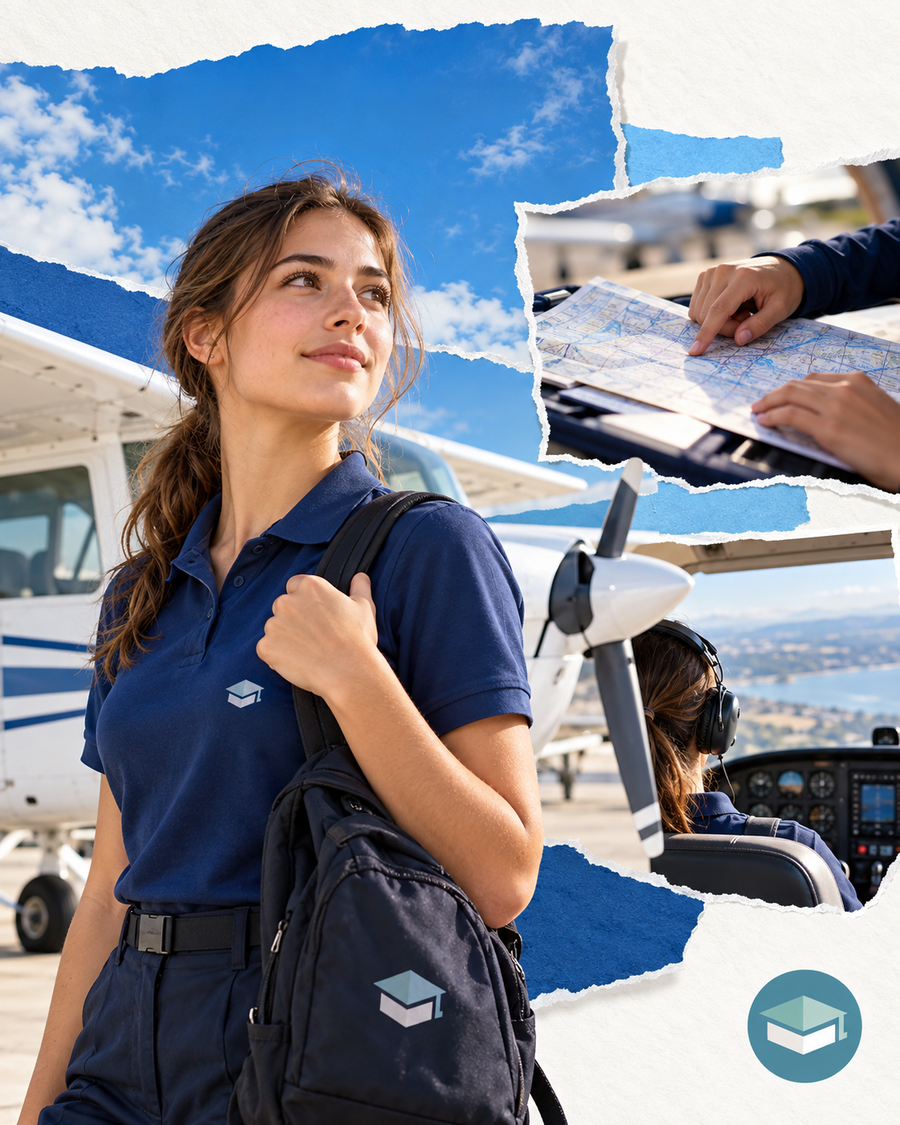
An aviator has to feel passion for the air, those people who prefer routine tasks should not approach this degree; much less those who suffer from vertigo or phobia problems. The professional field is very broad, since it is not limited to passenger air transport, but the field opens to the commercial, military, state, among others. In addition, he has to be a person psychologically prepared to face risky situations without panicking, since it is very common for airplanes to enter storms or have to make emergency landings in which calm must prevail.
Aviation is considered vital for both national defense and the economy.
Studying Aviation
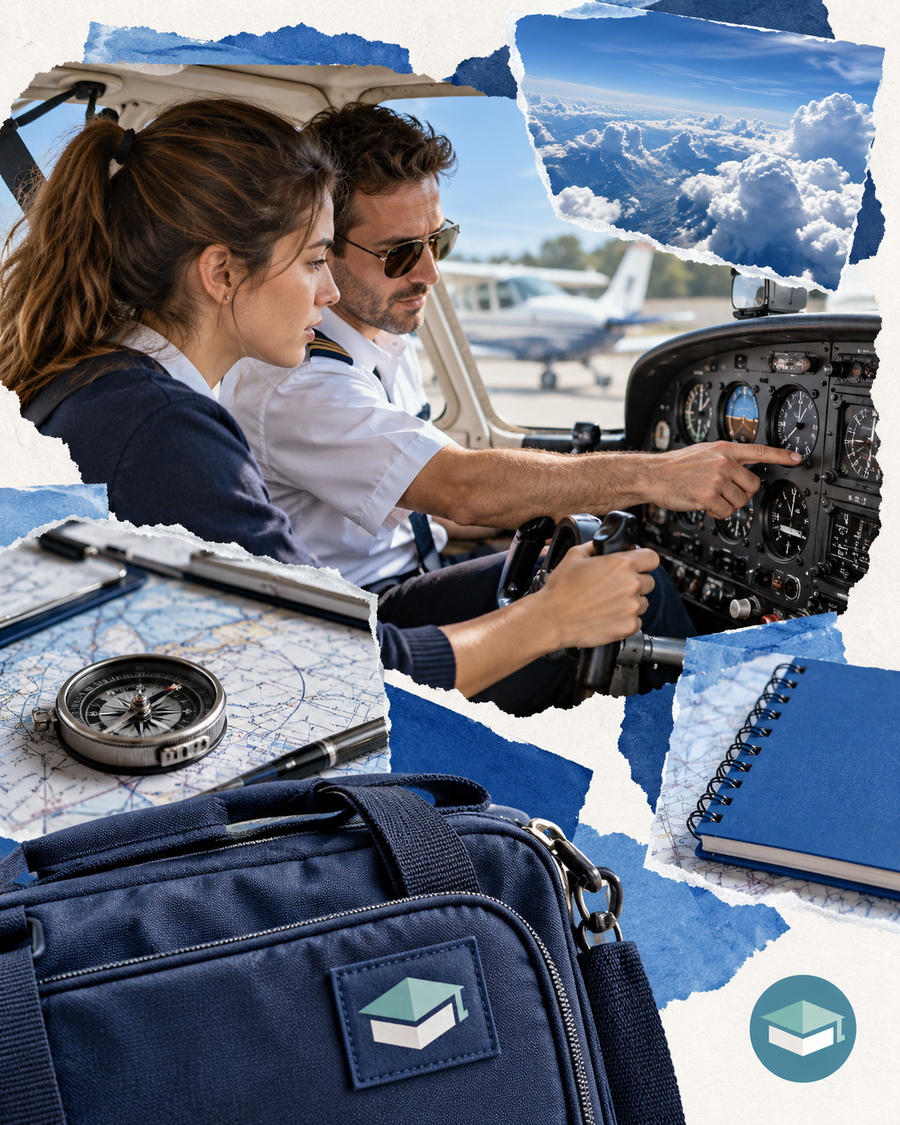
Studying Aviation allows you to learn to operate aircraft, understand how a flight is organized and participate in an activity that connects cities, transports goods and brings services to hard-to-reach places. For those interested in technology, navigation and teamwork, it can become a career with different specialties.
The opportunity to travel and get to know other destinations is part of its appeal. But the interest in this degree is also discovered in less visible tasks: interpreting the weather, preparing a route, calculating fuel, reviewing procedures and practicing until performing a maneuver with precision. If you are excited to understand how an airplane works and apply that knowledge, you have a concrete reason to explore this training.
The field covers passenger aviation, cargo, instruction, private flights and specialized operations. Each activity has its own requirements and working conditions. Therefore, before choosing a school, you should identify what role you want to perform and in what country you plan to train or work.
Why study Aviation?
Because it combines technical learning, practice, and responsibility for a real operation. During training, you go from studying concepts to using them in preparing and carrying out flights. Progress shows in concrete actions: maintaining a trajectory, communicating clearly, recognizing a limitation, and organizing work in the cockpit.
These are some reasons to consider the degree:
- Understand flight technology. Learning about the relationship between aerodynamics, engines, instruments, and performance helps you understand aircraft behavior.
- Apply knowledge from different disciplines. Meteorology, navigation, and weight and fuel calculations come together in a single operation.
- Work with other people. Coordination with instructors, crew members, controllers, and ground staff is part of the activity.
- Develop a specialty. You can focus your training toward transport, instruction, or other operations, meeting the requirements of each role.
- Take part in services that are useful to the community. Medical flights and aerial support for firefighting show applications that go beyond tourism.
- Keep learning continuously. New aircraft, procedures, and ratings require studying and training throughout your professional life.

What knowledge you will put into practice
The FAA aeronautical knowledge handbook brings together content such as aerodynamics, aircraft systems, instruments, meteorology, navigation, and human factors. It is useful for seeing the variety of topics a pilot studies, although the program you take will need to follow your country's authority.
For example, preparing a route involves connecting distance, wind, fuel, and alternate aerodromes. Analyzing weight and balance lets you review how the load is distributed and whether the operation respects the aircraft's limits. Interpreting a weather report helps evaluate the expected conditions and adjust the plan.
You also learn to communicate information briefly and precisely, follow checklists, and recognize mistakes. Discipline plays a daily role: logging a practice session, reviewing what went well, and training again on what still needs attention.
Safety as part of daily work
Professional preparation focuses on detecting hazards, respecting limits and keeping alternatives available. A flight may be delayed, rerouted or cancelled when conditions require it. Knowing when to modify a plan is part of a pilot's job.
The training includes procedures for abnormal situations and emergencies. Practising them allows you to become familiar with the expected response and coordinate tasks. For those choosing a degree, this means that willingness to study and follow procedures matters more than seeking intense thrills.
Medical fitness is assessed through the applicable aviation requirements. In Spain, for example, AESA distinguishes between the medical certificates according to the licence, including Class 1 for professional pilots. Consulting an authorised centre or examiner before committing to a major investment helps to clarify this requirement.
Examples of training and activity in different countries
Looking at other countries lets you learn about different paths and applications of aviation. The following examples show specific options; the choice depends on your professional goal and the entry requirements for each programme.
- Argentina: training and specialization. The ANAC publishes information on licenses, ratings and exams for aeronautical personnel. To get started, you can review the instruction and training centers and compare the scope of their programs with the activity you want to pursue.
- Spain: different paths to professional piloting. AESA explains the integrated and modular training paths. This distinction makes it possible to compare a program organized as a complete path with training completed in stages. When requesting information, check admission requirements, schedule and included content.
- United States: university studies and flight. The Bachelor of Science in Aeronautical Science from Embry-Riddle combines academic studies with pilot training at its Daytona Beach and Prescott campuses. It is an example of university training linked to flight practice.
- Canada: licenses and ratings for different goals. Transport Canada distinguishes private, commercial and airline transport licenses, as well as ratings such as instrument flying, multi-engine and instruction. Its information helps identify which preparation corresponds to each path.
- Australia: aviation serving health. The Royal Flying Doctor Service performs aeromedical evacuations in rural and remote areas. In these operations, pilots and health teams work together to transport patients who need hospital care.
- Chile: aerial support against fires. CONAF documents the use of aircraft to fight forest fires, such as the addition of a C-130 Hércules for the 2025-2026 season. This field offers insight into a specialized application of aviation linked to protecting people and territories.
If you want to study in one country and work in another, check the requirements for recognition or conversion of the license, language and work authorization in the destination before enrolling. That review lets you compare programs according to the place where you are going to use your training.
What career paths you can explore
Passenger transport is one of the best-known options, but there are also cargo activities, corporate flights, instruction and specialized air operations. Access to each position depends on the license, ratings, experience and the operator's requirements.
Teaching deserves special attention if you like explaining and supporting learning. An instructor must observe how the student works, detect difficulties and organize practice to correct them. It is a role with specific preparation, in addition to flight experience.
You can also explore other careers in the sector, such as air traffic control, maintenance, flight dispatch or airport management. Each has its own training path: when comparing degrees, check what diploma or license the program awards and what tasks it prepares you for.

What a pilot's professional life is like
The workday includes preparation, checks and coordination, in addition to time in the air. Destinations and conditions change according to the operation: a regular passenger route, a day of instruction and a medical transfer have different dynamics.
The Bureau of Labor Statistics pilot job description notes that schedules are usually variable and that overnight stays away from home are more common among airline pilots. This is an aspect to consider along with shifts, work base and rest periods.
To learn about a position, ask about its real tasks, hiring requirements and how the workday is organized. When comparing pay, identify country, role, experience and contract conditions; a figure from another market is of little use if it corresponds to a professional stage different from yours.
How instruction hours and the simulator are used
The hours completed during training can count toward the experience required for a license when they meet the applicable requirements and are properly logged. In the United States, the 14 CFR 61.51 rule governs the logging of training and aeronautical experience used to meet requirements.
Simulator time has specific conditions for recognition. The DGAC of Chile explains that authorized flight synthetic trainers can earn credits in accordance with approved regulations and programs. When comparing schools, ask them to specify which exercises are done in an aircraft, which ones in a simulator, and how each one counts.
What to check before choosing where to study
- Course objective: license or rating you will obtain and requirements to enroll.
- Authorization: approval of the school and the program by the competent authority.
- Training availability: aircraft, instructors, simulators, and frequency of practical sessions.
- Full budget: theory, practical hours, exams, fees, materials, and additional expenses.
- Learning organization: student follow-up, makeup classes, and procedures in case of delays.
- Later path: additional training and experience needed for the position you are interested in.
A visit to the school, a conversation with instructors and students, and an introductory activity can help you learn about the experience of studying Aviation. Pay attention to both the flight itself and the prior preparation: there you will find much of the work you will learn to do.
If your goal is to work for an airline, you can learn more about how to become an airline pilot. If you are still exploring, compare the specialties that interest you most and the programs that allow you to get closer to them.