
Online Architecture and design courses
Discover how artificial intelligence and chat GPT can be useful tools in the daily work of architects and designers.
Learn about the educational offering of artificial intelligence courses for architects and designers, where you will learn to create innovative and personalized solutions that improve energy efficiency, reduce costs, and increase safety in your projects.
Get ready to lead the architecture industry with the skills and knowledge you will gain by studying artificial intelligence!
Architecture and design impacted by Artificial Intelligence
Artificial intelligence is transforming architecture by changing the way architects design and construct buildings, improving efficiency and reducing costs.
AI is driving changes in how buildings and structures are projected and built, from the design stage to building management.
AI is based on machine learning, a system that uses algorithms to analyze large amounts of data and quickly identify patterns.
As a tool, AI helps architects design more efficient and sustainable buildings by analyzing data about climate and location, and finding solutions to design problems that would otherwise be difficult to solve.
It is transforming the way buildings are constructed and building automation systems. Lighting, temperature, and other systems can be automatically monitored and adjusted based on user needs.
Artificial intelligence is having a significant impact on architecture in several ways. For example, architects can use artificial intelligence to analyze large amounts of data and create more energy-efficient and sustainable building models.
They can also use machine learning algorithms to optimize building design and improve the efficiency of construction processes, and it can assist in urban planning by analyzing traffic patterns, land use, and other data to create more sustainable and livable cities.
Artificial intelligence is transforming architecture by changing the way architects design and construct buildings, improving efficiency and reducing costs.
The implementation of technologies such as artificial intelligence in architecture opens up new possibilities and opportunities.
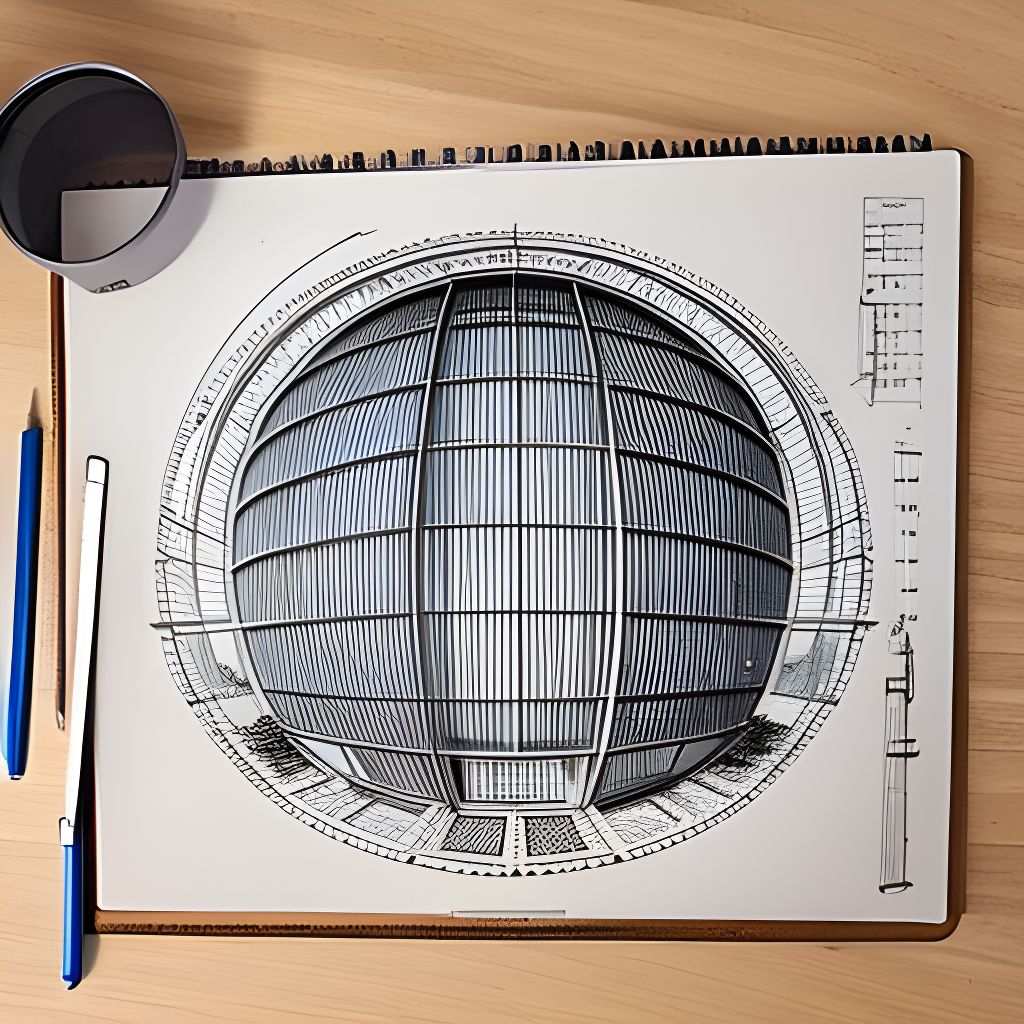
Artificial intelligence is transforming architecture
AI-assisted design
Artificial intelligence is being used by architects to generate more precise automated designs that are more efficient in terms of resources.
Systems help optimize designs to meet the specific requirements of each project, such as reducing energy consumption or maximizing natural light.
AI can analyze data and provide accurate recommendations, allowing architects to create more sustainable and efficient designs.
Customized designs
Artificial intelligence is being used in architecture to generate customized and original designs that adapt to the needs and preferences of a particular person and can generate designs that adapt to the cultural and climatic preferences of a particular region, incorporating natural cooling features, privacy, and other elements that suit the specific needs of the area.
Automated quality control
Artificial intelligence is used to simulate construction and analyze risks, allowing architects and builders to visualize the project before starting it and fix problems in advance. AI-based construction simulations can help detect problems related to design, structure, or access.
Automated planning and construction
Artificial intelligence is improving efficiency in the planning and construction of buildings. AI systems can analyze site topography and determine the best time to begin construction, minimizing the impact of weather conditions during the course of the work.
Smart building management
Artificial intelligence is changing building management and maintenance by monitoring and controlling lighting, heating, and air conditioning systems, optimizing energy consumption and reducing costs. It can also improve security through security cameras and traffic monitoring, identifying suspicious activity and alerting security teams in real time.

Challenges and considerations of artificial intelligence in architecture
Implementing AI in architecture and construction requires training and advanced technical skills.
AI also raises concerns about data privacy and security.
It is important to carefully consider how AI will be integrated into architecture and how these challenges can be addressed to maximize benefits and minimize risks.
Disadvantages of artificial intelligence in architecture
Although artificial intelligence can provide efficient, optimized, data-based solutions, it may lack human perspective and sensitivity to users' specific needs and desires. The use of artificial intelligence in architecture also raises ethical and privacy issues regarding the collection and use of user data.
How is Chat GPT applied to architecture?
Chat GPT (Generative Pre-trained Transformer) is an artificial intelligence application that uses natural language processing techniques to generate coherent and relevant text in response to a given input.
In architecture, Chat GPT can be used to help architects quickly generate detailed descriptions of buildings and spaces, which can be useful when presenting concepts to potential clients or when working on design proposals.
For example, Chat GPT can be used to generate building descriptions based on specific criteria, such as location, intended use, and aesthetics. It can also be used to generate detailed descriptions of specific building elements, such as lighting, ventilation, and traffic flow.
In addition, Chat GPT can also be used to generate automated answers to frequently asked customer questions, which can save time and improve efficiency in the design process.

Can Chat GPT replace an architect?
No, ChatGPT cannot replace an architect. Although ChatGPT can generate detailed descriptions of buildings and spaces, its ability to understand and respond to the client's specific requirements and the project's needs is limited.
An architect is a trained professional capable of designing creative and functional solutions for spaces and buildings that meet the client's specific requirements and respect construction constraints.
An architect's work involves considering multiple factors, such as urban context, sustainability, aesthetics, structural safety, and use of space. These are factors that ChatGPT cannot effectively address.
Architects will continue to be necessary to provide creative and customized design solutions that meet the specific needs and requirements of the project and the client.

Are there artificial intelligence courses for architecture?
Yes, there are artificial intelligence courses for architecture that can help architects learn how to apply artificial intelligence in their work. These courses can be online or in-person and can vary in duration and focus.
For example, some courses focus on how to use specific artificial intelligence tools for building design and urban planning, while others focus on the introduction to artificial intelligence and its broader applications in architecture. There are also training programs that focus on programming and developing custom artificial intelligence algorithms for architecture and design projects.
A popular artificial intelligence course for architects (in English) is the Harvard one, Artificial Intelligence, machine learning and the built environment, Fundamentals and proptech applications
The course highlights the role of artificial intelligence and machine learning in the real estate industry and how there is still an untapped opportunity for those who can adapt these technologies to real estate problems.
The course covers Artificial Intelligence applied to Architectural projects, generative design in Architecture, presenting projects to clients with AI, immersive experiences in Architecture, neural networks, Big Data, deep learning and machine learning, it also includes modules on ethics and Intellectual property. In advanced mode you can find applications in home automation, construction and security in architecture, automatic planning, construction and security in Architecture.
It is a program focused on the practical applications of AI and ML in architecture, urban planning and landscaping.
The program includes lectures, hands-on exercises and group discussions on topics such as property valuation, floor plan generation and recommendation engines. The course explores the current state of artificial intelligence and machine learning in architecture, landscape, urban planning and the real estate sector, with an emphasis on Proptech.
Participants will gain machine learning project management skills and learn how to better evaluate and compare algorithm-driven real estate products and services.
Overall, these courses can be a valuable tool for architects looking to learn how to apply artificial intelligence in their work.
The impact of computational tools on architectural design and production
Recent developments in Artificial Intelligence and Machine Learning are leading to a new revolution in computing, with neural networks predicting shopping preferences, music recommendations and health diagnoses at high speed.

Artificial Intelligence and Machine Learning
It was not until the late 1990s and early 2000s that there was a renaissance in AI thanks to advances in computing power and the availability of large amounts of data.
The new revolution in AI focused on the creation of generative models, such as Generative Adversarial Networks (GANs), which can produce synthetic data without the need for new inputs. This has led to new possibilities for AI as a creative partner.
The digitization of technical drawing through CAD systems changed the way architectural projects are produced. Despite this, analog methods are still used in the early stages of architectural design.
Young architects and digital natives are increasingly using computational tools at every stage of the design process.
CAD platforms are improving their ability to seamlessly integrate early conceptual drawings with advanced modeling and information tools.
Floor plans were one of the first mediums for artificial intelligence-assisted architectural design and machine learning, with early attempts using relational representations of functional units and random heuristics.
Modern AI/ML floor plan generation involves generating a semantic partition of a floor plan and applying it to the basic design from a building footprint.
The generation of detailed building plans from graphic information remains the subject of in-depth study and complemented by ongoing research questioning how a more direct connection can be achieved with the mental processes we use to conceptualize such designs.
Overall, the courses offered are in English and are for Architecture graduates, Architects Interior Designers, final-year Architecture Students, Building Engineers, Decorators, Technical Architects, Set Designers and Professionals from the art world.