Driving the Present and the Future: A Journey Through Chemical Engineering
Chemical engineering stands as a fundamental discipline at the intersection of science, technology and creativity. This branch of knowledge encompasses a broad spectrum of approaches and applications that shape our world in unimaginable ways.
Etymology of chemical engineering
Etymologically, chemical engineering merges the precision of engineering with the versatility of chemistry. At its core, it seeks synergy between these two forces to create innovative solutions to complex problems.
Objectives
Its objectives are as vast as they are fascinating: from the design of efficient chemical processes to the creation of products that improve our quality of life.
The fields of action in this discipline are as diverse as molecules themselves, ranging from energy production to the manufacture of advanced materials.

The profile of a chemical engineer
The chemical engineer profile is characterized by a diverse set of skills and knowledge that enable them to tackle technical and scientific challenges in a variety of industrial contexts. These professionals are a bridge between science and industry, applying fundamental principles of chemistry and engineering to create practical and meaningful solutions. Below, some of the key characteristics that define the profile of a chemical engineer are explored in detail:
Extensive Technical Knowledge: Chemical engineers have a solid background in chemistry, physics and mathematics, which allows them to understand molecular interactions, chemical reactions and physical phenomena behind industrial processes. This fundamental knowledge enables them to address a wide range of challenges and applications.
Complex Problem Solving: The essence of chemical engineering lies in the ability to solve complex problems. Chemical engineers identify obstacles in processes and systems, analyze data and apply their deep understanding to design innovative solutions. This skill translates into process improvement, systems optimization and the implementation of efficient technologies.
Creativity and Innovation: Creativity is a fundamental pillar in the chemical engineer's profile. These professionals not only apply existing scientific principles, but also find novel ways to approach problems and develop products. The ability to think innovatively is crucial for designing more efficient, safe, and sustainable processes.
Communication and Collaboration Skills: Effective communication is essential in chemical engineering. Chemical engineers work in multidisciplinary teams, where they must communicate ideas and results clearly and comprehensibly. This skill not only facilitates collaboration, but also helps convey technical information to non-specialized audiences.
Ethics and Responsibility: Given the influence that chemical engineering has on society and the environment, chemical engineers must consider the ethical implications and responsibility aspects in their decisions. They evaluate the risks associated with chemical processes and design systems that minimize hazards and maintain safety.
Focus on Sustainability: Sustainability is a key aspect of the chemical engineer's profile today. Professionals in this field seek to create processes and products that minimize environmental impact and maximize efficiency in the use of resources.
Risk and Safety Management: Workplace safety and risk management are essential elements in the chemical engineer's profile. They evaluate and minimize the hazards associated with chemical substances and industrial processes, ensuring a safe environment for workers and the community.
Adaptability and Continuous Learning: Since technology and industry demands are constantly evolving, chemical engineers must be willing to learn and adapt to new techniques, tools, and approaches. Continuous learning is essential to stay up to date and competitive in a constantly changing environment.
The chemical engineer profile reflects a balance between scientific knowledge and practical skills, as well as a deep understanding of how to apply these elements for the benefit of society. Chemical engineers are agents of change who drive innovation, safety, and sustainability across a wide range of industries and applications.

Fields of Action
Applications
The applications of chemical engineering are omnipresent in our daily lives, from the food we consume to the medicines that cure us. It is deeply rooted in various industrial sectors, such as petrochemicals, pharmaceuticals and food, paving the way for amazing technological developments.
Industrial sectors
Tasks of the chemical engineer
The tasks of the chemical engineer are multifaceted and crucial to society. These professionals master the alchemy of converting raw materials into essential products. They are the wizards behind process optimization, industrial safety and sustainability.
Chemical engineer: who is he, what does he do and where does he work?
A chemical engineer, in essence, is an architect of matter. His profile is distinguished by a unique combination of scientific curiosity and technical skills. They become problem solvers, capable of transforming abstract theories into tangible realities.
But, what exactly does a chemical engineer do? His work ranges from researching new materials to managing large-scale production. And, as for his work environment, these professionals can be found from research laboratories to production plants, from academic settings to global corporations.
The key question is: why study Chemical Engineering?
The answer lies in the opportunity to unleash creativity in pursuit of innovation. It is an open door to a world where every chemical reaction becomes an act of creation.
Why study Chemical Engineering?
Choosing where to study Chemical Engineering is a crucial step. Various universities around the world offer high-quality programs that nurture the potential of future chemical engineers.
Specializations in this discipline are diverse and exciting. From biotechnology to nanotechnology, chemical engineers can choose a path that resonates with their passions.
A Degree in Chemical Engineering lays the foundation for an exciting career. This educational program provides theoretical and practical knowledge, preparing students to face real-world challenges.
Chemical engineering embraces diverse teaching methods, from lectures to hands-on experience in cutting-edge laboratories. This educational versatility ensures that future chemical engineers are prepared to face any obstacle.
Career field
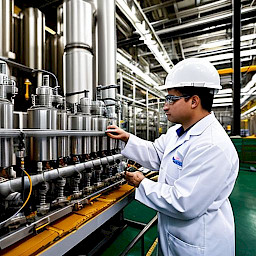
The career field of chemical engineering is a vast territory of opportunities. Whether in the manufacturing industry, research, or the development of sustainable technologies, these professionals play a crucial role in the evolution of society.
So, do you identify with the desire to explore the depths of matter and transform it into revolutionary breakthroughs? If so, you will embark on the three stages of the educational model: the initial exploration, where you will discover your passion; and specialization, where you will forge a unique path.
How can you specialize?
The path is yours to take. From environmental chemistry to process engineering, each specialty offers a world of possibilities.
And if you are looking for related degrees, you will have no shortage of options. From materials engineering to biochemistry, chemical engineering gives you a solid foundation to explore other related fields.
Degree in Chemical Engineering
The Degree in Chemical Engineering is a university-level educational program that provides students with the theoretical and practical foundations necessary to become qualified chemical engineers. This program covers a wide range of scientific and engineering disciplines, preparing students to address challenges in the production, design, and development of chemical and industrial processes.
The curriculum of the Degree in Chemical Engineering covers subjects such as general chemistry, thermodynamics, chemical kinetics, unit operations, reactor design, heat and mass transfer, and project management, among others. These subjects allow students to understand the fundamental principles of chemistry and how to apply them in solving practical problems in various industrial areas.
In addition to technical training, the program usually includes aspects related to professional ethics, workplace safety, environmental management, and sustainability. This reflects the importance of ethical and environmental considerations in the practice of chemical engineering, given its impact on society and the environment.
Most of the Degree in Chemical Engineering programs also incorporate practical experiences, such as laboratories and projects, that allow students to apply the concepts learned in a real environment. These experiences help develop problem-solving, teamwork and communication skills, which are essential for a successful career in this field.
Once the Degree in Chemical Engineering is completed, graduates are prepared to enter a variety of roles in industries such as chemical, petrochemical, pharmaceutical, energy, food and many others. They can also choose to continue their education through postgraduate programs or specialization in specific areas of chemical engineering.
The Degree in Chemical Engineering is an educational platform that equips students with technical knowledge and practical skills to address chemical engineering challenges in a variety of industrial sectors.
Related Degrees
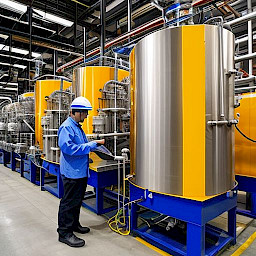
Materials Engineering: Materials engineers specialize in the development, design and selection of materials for specific applications. They work on the creation and improvement of materials that have particular properties, such as strength, durability, electrical or thermal conductivity, for use in a variety of industries, from electronics to aerospace.
Environmental Engineering: Environmental engineers apply principles of chemical engineering to address environmental issues, such as natural resource management, water and air pollution, and energy sustainability. They design systems and technologies that help mitigate negative impacts on the environment.
Process Engineering: Process engineers focus on designing, optimizing and controlling chemical and industrial processes. Their focus encompasses efficiency, safety and quality in the production of chemical, pharmaceutical, petrochemical products and more.
Biochemical Engineering: This discipline merges chemical engineering concepts with biology to develop biotechnological processes. Biochemical engineers work on the production of chemicals, food and medicines through the use of microorganisms and biological systems.
Pharmaceutical Engineering: Pharmaceutical engineers apply chemical engineering knowledge to the production and formulation of pharmaceutical products. Their work ranges from designing manufacturing processes to researching and developing new therapies and medications.
These related degrees build on the principles and skills gained in chemical engineering, adapting them to specific contexts and particular challenges in fields such as materials, environment, biotechnology and health. Each of these options offers exciting and meaningful opportunities for those who have a foundation in chemical engineering and want to explore interconnected areas.
Chemical engineering is a gateway to innovation and change. From ancient alchemy to modern solutions, this discipline has maintained its transformative essence. If you are passionate about science, technology, and practical impact on the world, chemical engineering could be your path to a bright future full of possibilities.