
Universities and Global Opportunities for Chemical Engineering
In a Chemical Engineering program, you will explore areas such as general chemistry, thermodynamics, heat and mass transfer, unit operations, reactor design, separation processes, and more. You will also cover environmental, food, pharmaceutical, and materials engineering.
You will learn about automation, process safety, bioengineering, and product innovation. These areas will provide you with a solid foundation to address challenges in various industrial sectors.
Reasons to study Chemical Engineering
Studying Chemical Engineering offers numerous reasons to consider this exciting degree:
Sustainable Innovation: Contribute to the development of technologies and processes that minimize environmental impact and promote sustainability.
Diversity of Industries: Chemical Engineering spans from the pharmaceutical and food industry to energy and electronics, giving you diverse specialization options.
Problem Solving: Develop skills to address complex challenges, find solutions, and optimize processes to improve everyday life.
Innovation and Development: Participate in the creation of new products, materials, and technologies that positively impact society.
Global Career: The demand for chemical engineers is global, offering opportunities to work in different countries and cultures.
Competitive Compensation: Chemical engineers often have attractive salaries due to their technical specialization and in-demand skills.
Multidisciplinary Collaboration: Work with professionals from diverse areas, fostering a comprehensive approach to solving complex problems.
Variety of Roles: From process design to research, Chemical Engineering offers a wide range of roles, allowing you to find the area you are passionate about.
Personal Development: Acquire leadership, communication, and decision-making skills that will be useful in all areas of life.
Impact on Society: Contributes to improving people's quality of life through safer, more efficient and sustainable products.
Studying Chemical Engineering is an exciting choice that will give you opportunities to grow professionally, innovate and make a difference in the constantly evolving world.

Where will I be able to work when I graduate?
After graduating in Chemical Engineering, you will be able to work in various industries such as chemical, pharmaceutical, food, energy, personal care, automotive and more. There are also opportunities in research, consulting, quality and management. Your choice will depend on your interests and skills.

Best Universities for Chemical Engineering
The choice of educational institution is a crucial factor for those who aspire to study Chemical Engineering. Both in LatAm, Asia and Europe, there are outstanding options that offer quality programs in this discipline.
The Best Chemical Engineering Universities in Colombia
Colombia has renowned institutions that provide solid programs in Chemical Engineering. These universities offer a comprehensive education and research opportunities in this field:
- Universidad Nacional de Colombia;
- Universidad de los Andes;
- Universidad de Antioquia;
- Universidad Industrial de Santander;
The Best Chemical Engineering Universities in the UK and in Europe
Europe is a popular destination for those seeking academic excellence in Chemical Engineering. Among the leading universities in this discipline are:
- Imperial College London, (United Kingdom);
- ETH Zurich, (Switzerland);
- University of Cambridge, (United Kingdom);
- Technical University of Munich, (Germany);
Options at Prestigious Universities in Latin America
- Universidad Nacional Autónoma de México (Mexico);
- Universidad de Buenos Aires (Argentina);
- Universidad de Chile (Chile);
- Universidad de Campinas (Brazil);
Universities in Asia offering Chemical Engineering programs:
- Universidad Nacional de Singapur (Singapore);
- Universidad Tecnológica de Nanyang (Singapore);
- Universidad de Tokio (Japan);
- Universidad de Tsinghua (China);
- KAIST Instituto Avanzado de Ciencia y Tecnología de Korea (South Korea);
- Universidad Nacional de Taiwán (Taiwan);
- Universidad Tecnológica de Bandung (Indonesia);
These institutions are recognized for their educational quality and for offering academic programs in Chemical Engineering that prepare students for a successful career in this discipline.

Studying chemical engineering at universities provides the opportunity to acquire solid knowledge in industrial chemistry, chemical processes and their impact on the environment. In the chemical engineering school, chemical engineering courses range from wastewater to chemical plants.
The official degrees in chemical engineering prepare you to address challenges such as wastewater management and the optimization of chemical processes in industry. In addition, chemical engineering university gives you the opportunity to specialize in areas crucial to the environment and society.
Subjects such as industrial chemistry will allow you to thoroughly understand the operation of chemical plants and their impact on the environment.
If you are interested in studying chemical engineering, explore the chemical engineering course options and earn a degree that will allow you to contribute significantly to industry and to environmental well-being.

Student Profile and Professional Prospects in chemical engineering
When studying Chemical Engineering, students acquire knowledge in various subject areas. This allows them to explore a broad field of work once they graduate. Career prospects include:
- Chemical Engineer in the chemical, pharmaceutical industry and more;
- Research and development of new products and processes;
- Quality management and regulatory compliance;
- Design and optimization of industrial processes.

Occupational Profile
The occupational profile of a chemical engineer covers a wide range of roles and responsibilities in various industries. Chemical engineers are highly trained professionals who apply scientific and technical principles to design, develop, optimize and supervise chemical processes and products in different sectors. Here is a typical occupational profile for a chemical engineer:
Design and Development: Chemical engineers play a key role in the design and development of new processes, products and technologies. They use their knowledge of chemistry and engineering to create innovative solutions, from the formulation of chemical products to the optimization of manufacturing processes.
Research and Analysis: The chemical engineers can carry out research to solve complex problems and develop new approaches to production and design. They perform detailed analyses to evaluate the technical and economic feasibility of projects and processes.
Operations and Production: The chemical engineers oversee production operations in industrial plants. They ensure that processes are carried out safely, efficiently and in compliance with regulations and quality standards.
Optimization and Control: The chemical engineers work on process optimization, maximizing efficiency and minimizing waste. They implement control systems to maintain consistency and quality in production.
Environmental Management and Safety: Chemical engineers play an important role in environmental management and safety in industry. They design processes that minimize environmental impact and ensure compliance with occupational safety and health regulations.
Product Research and Development: Chemical engineers can work on the research and development of new chemical products and materials. From pharmaceutical products to personal care products, they contribute to the creation of advanced and sustainable solutions.
Consulting: Many chemical engineers work as consultants, lending their expertise to companies to improve processes, develop strategies and solve technical challenges.
Teaching and Academic Research: Some chemical engineers dedicate themselves to teaching and research in academic institutions. They impart knowledge to future generations and contribute to the advancement of knowledge in the field.
Management and Leadership: With experience, chemical engineers can advance to management and leadership roles in industry. They oversee teams, make strategic decisions and ensure the success of projects.
The occupational profile of a chemical engineer is diverse and dynamic. Professionals in this field have the ability to make an impact across a wide range of industries, from chemistry and energy to pharmaceuticals and food, contributing their expertise to the creation, optimization, and improvement of processes and products that drive global progress.

Curriculum
It is important to keep in mind that curricula may vary by university and country. This example is a general representation of the common courses and areas of study in Chemical Engineering:
Example Curriculum for Chemical Engineering
First Year: Engineering and Chemistry Fundamentals
- General Chemistry;
- Mathematics for Engineers;
- Introduction to Chemical Engineering;
- Applied Physics;
- Chemistry Laboratory;
- Linear Algebra and Geometry;
- Applied Thermodynamics.
Second Year: Foundations of Chemical Engineering
- Organic Chemistry;
- Integral and Differential Calculus;
- Heat and Mass Transfer;
- Chemical Kinetics;
- Thermodynamics of Multiphase Systems;
- Unit Operations I (Distillation, Absorption, Extraction);
- Materials and Structure of Matter.
Third Year: Applications and Specialization
- Unit Operations II (Evaporation, Crystallization, Filtration);
- Separation Processes;
- Reactor Engineering;
- Environmental Engineering and Sustainability;
- Chemical Plant Design;
- Food Engineering;
- Industrial Internships.
Fourth Year: In-Depth Study and Projects
- Chemical Process Design;
- Process Simulation;
- Process Control;
- Chemical Engineering Projects;
- Elective I: Biotechnology;
- Elective II: Renewable Energies;
- Ethics and Professional Responsibility.
Fifth Year: Integration and Application
- Elective III: Nanotechnology;
- Degree Project in Chemical Engineering;
- Economics and Project Management;
- Chemical Engineering Research Seminar;
- Elective IV: Pharmaceutical Processes;
- Elective V: Polymer Engineering;
- Advanced Professional Internships.
The minimum number of ECTS credits (European Credit Transfer and Accumulation System) by enrollment type and year may vary depending on the university and country. The ECTS credits are a standard measure used in the European education system to quantify student work in a course.
Full-time: In a full-time Chemical Engineering program, the minimum number of ECTS credits per academic year is usually between 60 and 75 credits, which represents a full academic load.
Part-time: For part-time students, the number of ECTS credits per year may be lower, depending on the course load the student chooses to take.
Remember that these values may vary depending on the university and country, as well as the structure of the curriculum.

Chemical Engineering graduate profile
The graduate profile of a Chemical Engineering program reflects the skills, knowledge and competencies that a student acquires during their training and that qualify them to perform successfully in the field of chemical engineering. Here is a typical graduate profile:
Technical Competencies:
- Mastery of the fundamental principles of chemistry, thermodynamics and heat and mass transfer;
- Ability to design and analyze chemical processes and unit operations, considering safety, efficiency and sustainability aspects;
- Knowledge in the formulation and design of chemical products, materials and personal care products;
- Ability to use process simulation and design software, as well as analysis and optimization tools.
Practical Skills:
- Skill in handling equipment and laboratory techniques to carry out experiments and chemical analyses;
- Ability to implement process control systems and evaluate their effectiveness;
- Experience in managing and mitigating environmental and safety risks in the chemical industry;
- Aptitude for developing and executing research and product development projects.
Environmental Awareness and Sustainability:
- Understanding of the environmental impacts of chemical processes and the ability to propose sustainable solutions;
- Ability to evaluate the life cycle of products and processes and make decisions based on environmental considerations.
Communication and Collaboration Skills:
- Ability to communicate technical information effectively, both in writing and orally, to technical and non-technical audiences;
- Aptitude for working in multidisciplinary teams and collaborating on interdepartmental projects.
Ethics and Professional Responsibility:
- Awareness of the ethical and legal aspects associated with chemical engineering and the ability to make ethical decisions in complex situations.
Continuous Learning:
- Willingness to stay up to date on technological and scientific advances in the chemical industry and to engage in continuing education.
Leadership and Management:
- Ability to take on leadership and management roles in teams and projects;
- Ability to make data-based decisions and lead effectively.
The graduate profile in Chemical Engineering reflects a professional trained to address technical and ethical challenges in the chemical industry and related areas.
This profile combines solid technical foundations with practical, communication, and collaboration skills, preparing graduates to be leaders in innovation, sustainability, and technological advancement in the field.

Spaces designed for learning Chemical Engineering
The spaces designed for learning in Chemical Engineering play a crucial role in training future highly skilled engineers and professionals. These environments are meticulously planned to optimize the understanding and application of complex concepts, fostering collaboration, innovation, and practical skills development.
In universities and educational centers, Chemical Engineering laboratories are essential. These laboratories are equipped with state-of-the-art instrumentation that allows students to carry out real experiments and analyses. Here, students can apply theories learned in the classroom, work with chemical reactions and unit processes, and understand how they work in practice.
Modern classrooms are designed for interaction and active participation. They are often equipped with advanced audiovisual technology that facilitates the presentation of complex concepts, and allow for group discussion and teamwork.
In the Chemical Engineering field, design projects are crucial for developing practical skills. The design and collaboration spaces are created for students to work together on engineering projects that simulate real-world situations. Here, they can apply theory to specific challenges, fostering creativity and problem-solving.
The libraries specialized in Chemical Engineering provide access to key academic and scientific resources, from books to journals and specialized databases. These spaces allow students to delve deeper into research and stay up to date with the latest developments in the field.
The spaces designed for learning in Chemical Engineering are essential to providing a comprehensive, hands-on education. These environments encourage exploration, experimentation, and collaboration, preparing students to face real challenges in the industry and contribute to technological and scientific advancement.

A Degree with Impact and Opportunities
Chemical Engineering is a discipline with a profound impact on multiple industries. The rigorous training and global projection of this degree provide opportunities to excel in the workplace and research field. The universities mentioned offer programs that prepare students to face challenges and contribute to scientific and technological advancement.
Whether choosing an institution in LatAm, exploring options in Europe, or considering opportunities in California, Chemical Engineering offers a path full of possibilities for those passionate about science, technology, and creating innovative solutions.
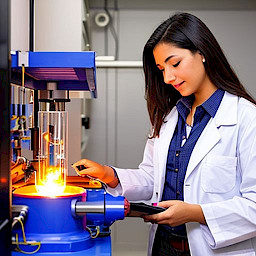
Global Opportunities
Career opportunities in the chemical sector, especially aimed at students pursuing a Bachelor's degree or Chemical Engineering and a Master's degree in Industrial Chemistry.
Singapore stands out as one of the leading global hubs in energy and the chemical industry, highlighting its significant contribution in terms of production and research.
Singapore's constant effort to stay at the forefront of industry progress, especially through the development of Jurong Island, an integrated complex that is home to leading chemical and energy companies such as BASF, ExxonMobil, Lanxess, Mitsui Chemicals, Shell and Sumitomo Chemicals. Currently, investments attracted to Jurong Island exceed S$35 billion.
Singapore stands out as one of the most important chemical hubs worldwide, hosting significant operations of more than 100 global chemical companies. According to the government roadmap known as the Energy and Chemicals Industry Transformation Map, sustained growth is expected in this industry that will result in the generation of added value of around 12.7 billion dollars. In line with this projection, the creation of nearly 1,400 new jobs by 2025 is anticipated. This momentum is largely attributed to the implementation of advanced manufacturing technologies, particularly in strategic areas such as petrochemicals and specialty chemicals.
The chemical industry in the ASEAN, China and India region will continue to experience solid growth, with estimated real growth rates of between 1% and 3%. This increase in demand and activity also extends to the advanced chemistry sector, which encompasses fields such as new materials, biomedicine and biotechnology, anticipating even more pronounced growth. As these developments materialize, a persistent and strong demand for academic programs such as the Master's in Chemical Sciences is expected. This demand is expected in both local and broader regional markets, which positions this degree as a highly valuable and relevant option for training and professional development.
Women in Chemical Engineering: Breaking Barriers and Transforming Industries
In a constantly evolving world, women are playing an essential role in all aspects of society, including chemical engineering. As the chemical industry moves toward innovation and sustainability, women are challenging traditional barriers and leaving a lasting mark on this field.
Historically, chemical engineering has been a predominantly male field. However, today, women are redefining the landscape of the industry. From process design and research into new materials to production optimization and quality management, women chemical engineers are demonstrating that their ability to tackle technical challenges and lead teams is unmatched.
As diversity becomes a strength in chemical engineering, women's unique perspectives and creativity are driving innovation in products and processes. Women chemical engineers are inspiring future generations to pursue their passions and challenge gender stereotypes in the field.
By breaking barriers and forging new paths, women in chemical engineering are contributing to the advancement of the industry and creating a future in which equity gender and professional excellence go hand in hand.