Why study Environmental Engineering?
Because you are aware that the world needs a break and, to achieve this, it is necessary to use renewable energy, change food production and its consumption habits, to help make the world sustainable.
Study Environmental Engineering
In recent years, the importance of cleaning and protecting our environment has come to the forefront. Increased government regulations and public pressure have made companies everywhere begin to operate in a more environmentally responsible way. To do this, the skills and knowledge of environmental engineers are needed.
What is Environmental Engineering?
Environmental Engineering uses a combination of science and engineering to help improve our natural world. People in this field work to improve the quality of land, water and air for the proper habitation of humans and other life forms. This can include cleaning up hazardous sites, controlling air pollution and managing wastewater. If this seems like the career you have always dreamed of, find the university that best suits you and start training for the career of your life.
What type of people might be interested in this degree?
If you are thinking about embarking on a career dedicated to environmental engineering, you must be a person who is very sensitive to the environmental cause. In addition, you should be interested in sciences such as biology, mathematics, chemistry and physics, among others.
Your role as an environmental engineer will involve providing plentiful supplies of drinking water, developing systems to reduce pollutants in the air, water and hazardous waste; anticipating the effects of pollutant transport, and correcting inadequate disposal situations involving hazardous materials.
As an environmental engineer, you will have to seek solutions to public health threats and improvements in compliance with the law surrounding sanitation and construction, waste disposal, recycling, industrial hygiene and environmental sustainability.
What type of work does an Environmental Engineer do? What scope does the degree have?
If we take into account the answer to what environmental engineering is, we must adopt a broad approach to understand it. This branch of science uses the principles of chemistry and biology to solve a wide range of environmental risks and issues. Environmental Engineers can manage radioactive exposure, design municipal water supplies, research environmental projects, quality control, scientific data analysis and carry out hazardous waste disposal studies. In general, any task or activity that concerns the health of the environment locally or worldwide falls within the scope of an environmental engineer.
What are the job prospects in Environmental Engineering?
It is said that this is the degree of tomorrow, as states and organizations are becoming aware of the harmful impact that economic and social activity has on the environment and therefore, professionals capable of adequately planning the management of public and private institutions will be required in order to make such activities sustainable for the natural environment.
For this reason, the job prospects for the environmental engineer may be favored, finding various areas of action in their professional development.
This graduate will be able to carry out their activities in companies in the field of agriculture, mining, industry, agroindustry, energy or construction, among others.
They will also be able to work in public organizations, planning and managing appropriate measures for compliance with current legislation on environmental protection. They will be able to act as an environmental auditor in various sectors, managing interdisciplinary work groups for adequate pollution control, prevention and treatment.
They will also be able to work as an independent professional, focused on environmental consulting for different companies or organizations, carrying out certifications, audits, evaluations and environmental impact studies.
Teaching and research is another area of action for this engineering professional.
- A specialist is trained to carry out environmental pollution studies, can design, implement and execute plans to improve or prevent environmental deterioration;
- can evaluate, direct and supervise environmental impact studies, and is also prepared to identify polluting sources and prepare plans or generate policies for their improvement.
- Design strategies for the use, conservation and protection of natural resources;
- Work in teams or groups to protect and solve environmental problems;
- Design and develop regulations for the preservation of natural heritage;
As we can see, the opportunities to enter the job market will be very varied for those who decide to study Environmental Engineering.
What is studied in Environmental Engineering?
This degree requires an investment of between four and five years of study. It is a very comprehensive degree in which core subjects such as mathematics, physics, chemistry or general biology will be covered, plus more specific subjects including environmental chemistry, thermodynamics, physical chemistry, ecology, microbiology, environmental issues, applied technologies, planning and environmental management, legislation and economics, etc.
Advantages of studying Environmental Engineering
The diverse sectors in which you can develop as a professional is a considerable advantage to take into account, because thanks to it you will find a wider number of job opportunities and at the same time, specialize in the field that interests you most, without needing to cover all fronts.
It is an exciting degree, those who study it say they feel satisfaction from the simple fact of learning to exploit natural resources sustainably, thus helping in the care and recovery of the environment.
Having such a comprehensive curriculum, studying Environmental Engineering will provide you with very in-depth knowledge in always fundamental subjects such as mathematics, physics, chemistry, biology, etc. so if you do not find a job in the environmental sector that satisfies you, you will be able to get involved in other complementary jobs without any problem.
The job openings for environmental engineers are growing slowly, but at a steady pace, so the degree has good prospects in the medium and long term.
You will have the possibility of working independently or as an employee.
The knowledge that the degree provides you will allow you to work as a professional anywhere in the world you choose.
Disadvantages of studying Environmental Engineering
Although states and organizations are becoming aware of the impact that economic activity has on the environment, economic interests are still above this issue, so you will encounter numerous obstacles in the practice of your career, linked to legislation that is not respected or prevention treatments that are not carried out, mainly due to not making the adequate monetary investment in them.
You will not always be able to make decisions, in many cases, you will only be able to advise and give your opinion on what should be done in certain situations, so that the activity of a company or organization is sustainable and the environmental impact is minimal, but the final decision will fall on those who hire you.
Although the study plan is very comprehensive, the trade-off is that you will have to dedicate several years of effort to obtain the degree.
Many of the subjects covered in Environmental Engineering are complex and require greater dedication to successfully overcome them.
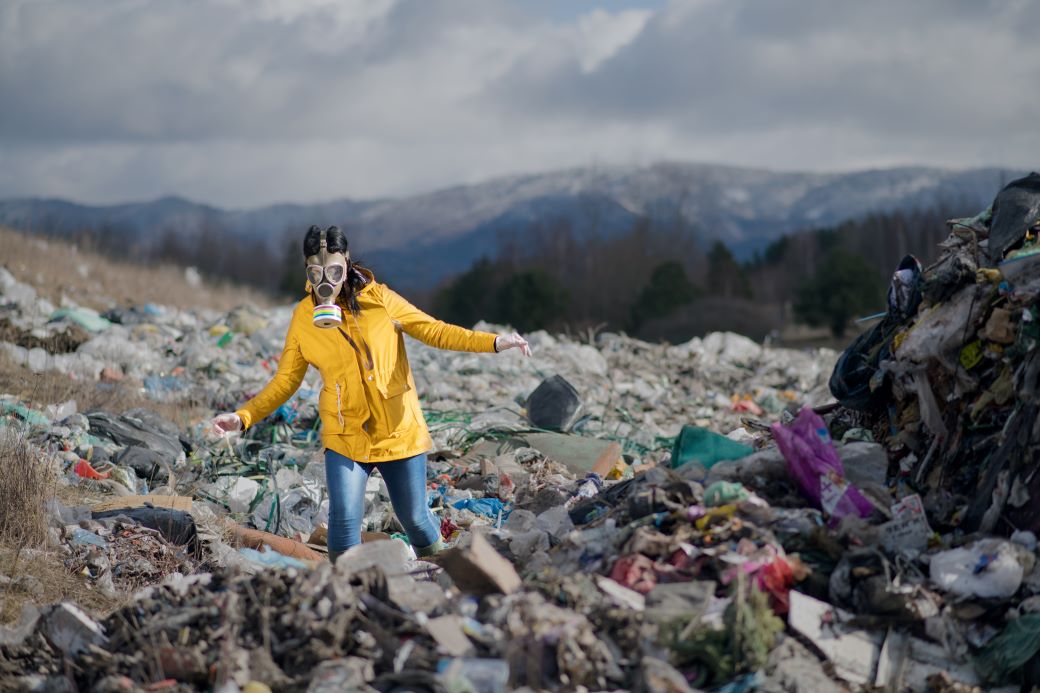
In which sectors are Environmental Engineering professionals required?
Because our planet is going through a delicate situation, currently, environmental engineers have a broad job field. A graduate of Environmental Engineering will be able to work among other sectors, in Public Institutions, the private sector, non-governmental organizations, education, research. Since an environmental engineer will be trained for management, measurement, project design and the application of the technology necessary to improve our planet.
At which universities can I study Environmental Engineering?
In Argentina: Universidad de Buenos Aires, Universidad Tecnológica Nacional, Universidad Católica Argentina, Universidad Nacional de San Juan, Universidad Nacional de Cuyo, Universidad Nacional de La Rioja, Universidad Nacional de Tres de Febrero, Universidad Nacional del Litoral, Universidad FASTA, etc.
In Bolivia: Universidad Simón I. Patiño, Universidad Católica Boliviana San Pablo, Universidad Tecnológica Boliviana, etc.
In Chile: Universidad de Valparaíso, Universidad de Chile, Fiaudec Facultad Ingeniería Agrícola, Pontificia Universidad Católica de Chile, Universidad Católica de Temuco, Universidad de Santiago de Chile, Universidad de las Américas, Universidad de los Lagos, Duoc UC, etc.
In Colombia: The Universidad Santo Tomás (First university cloister of Colombia) offers the Environmental Engineering program with a duration of 10 semesters. Universidad EAN, Universidad Nacional de Colombia, Universidad de La Salle, Universidad Surcolombiana, Universidad Sergio Arboleda, Uniciencia Corporación Universitaria de Ciencia y Desarrollo, Unisangil, Universidad del Bosque, Universidad Pedagógica y Tecnológica de Colombia, Corporación Universitaria del Huila, Universidad Manuela Beltrán, Universidad Antonio Nariño, etc.
In Ecuador: Universidad Agraria del Ecuador, Universidad San Francisco de Quito, Universidad Técnica del Norte, Universidad Politécnica Salesiana, Escuela Politécnica Nacional, Universidad de Especialidades Espíritu Santo, Pontificia Universidad Católica del Ecuador, Universidad Nacional de Chimborazo, etc.
In Spain: it is known as Environmental Sciences and can be studied in Alicante: Universidad Miguel Hernández de Elche (UMH), Ávila: Universidad Católica de Ávila (UCAV), Albacete: Universidad de Castilla la Mancha (UCLM), Badajoz: Universidad de Extremadura, Galicia: Universidad de vigo, Barcelona: Universitat Autónoma de Barcelona (UAB), Universitat de Barcelona (UB), Girona: Universitat de Girona (UDG), VIC: Universitat de VIC (UVIC), Madrid: Universidad de Alcalá de Henares (UAH), Universidad Autónoma de Madrid (UAM), Universidad Rey Juan Carlos (URJC), Murcia: Universidad de Murcia (UM), País Vasco: Universidad del País Vasco, Salamanca: Universidad de Salamanca, Valencia: Universitat Politécnica de Valencia (UPV), Universitat de Valencia (UV), Granada: Universidad de Granada, Málaga: Universidad de Málaga, Córdoba: Universidad de Córdoba, Jaén: Universidad de Jaén, Sevilla: Universidad de Sevilla, Asturias: Universidad de Oviedo.
In Mexico: Universidad Autónoma Metropolitana, Instituto Politécnico Nacional, Insituto Tecnológico de Celaya, Universidad de Guanajuato, Universidad Juárez Autónoma de Tabasco, Universidad del Valle de México, Universidad Veracruzana, Universidad Valle de Bravo, Universidad de Quintana Roo, Tecnológico y de Estudios Superiores de Occidente, Universidad Metropolitana de Puebla, Universidad Autónoma de San Luis Potosí, Benemérita Universidad Autónoma de Puebla, Universidad del Mar etc.
In Peru: Universidad Peruana Unión, Universidad Alas Peruanas, Universidad Nacional de Ingeniería, Universidad Nacional Agraria La Molina, Facultad de Ingeniería Ambiental, Universidad César Vallejo, Universidad Nacional Tecnológica del Cono Sur de Lima, Universidad Nacional Federico Villarreal, Universidad SEL, etc.
In Venezuela: Universidad Nacional Experimental del Táchira, Universidad Nacional Experimental Marítima del Caribe, Universidad de Falcón, etc.