
What is Journalism about?
Journalists have the need to discover and understand what is happening, whether it is a crime, a financial crisis, a fashion trend or a cultural or sporting event.
These professionals deliver this information as an engaging story to an audience that needs to know it in depth.
Journalism today is totally different from what it was 20 years ago.
With the emergence of the internet, social media and smartphones or mobile devices, as well as apps that allow live streaming, journalism has become a career with many more tools to reach different parts of the world immediately. However, academic training to become a professional is still necessary and therefore we want to tell you more in depth about this fascinating university degree.
What is journalism about?
Journalists uncover facts to report the news as objectively as possible. Reporters, correspondents and news analysts inform the public about events and news occurring at the international, national and local level.
These professionals spend a lot of time meeting with contacts, researching events and conducting interviews in order to write or record a story. The work is often fast-paced to meet deadlines or be the first to break the news.
Multimedia skills are increasingly in demand, so journalists can add audio, video and graphics to adapt stories for different platforms, including newspapers, magazines, television, live radio, websites, podcasts and social media.
Some reporters are self-employed, covering individual stories for a fee or pitching their own stories to news organizations.
They also work in radio and television, sharing their opinions with their audience, based on their expertise on a particular topic, such as politics, economy and business, entertainment or sports.
Most reporters and correspondents work full-time. Travel is common and may include being exposed to risks in dangerous situations such as war zones or natural disasters. Schedules change as news happens and may include nights and weekends.
What is the profile of a journalist like?
Journalism is for those people who are curious and who feel inspired to tell stories. As professionals, they must care about handling accuracy well and about knowing how to coordinate and properly manage deadlines.
Aspiring journalists must be individuals who think critically and enjoy building networks and talking to people.
One of the most important aspects journalists must master is taking care of the quality of language and keeping up with current events and the most important events happening around them.
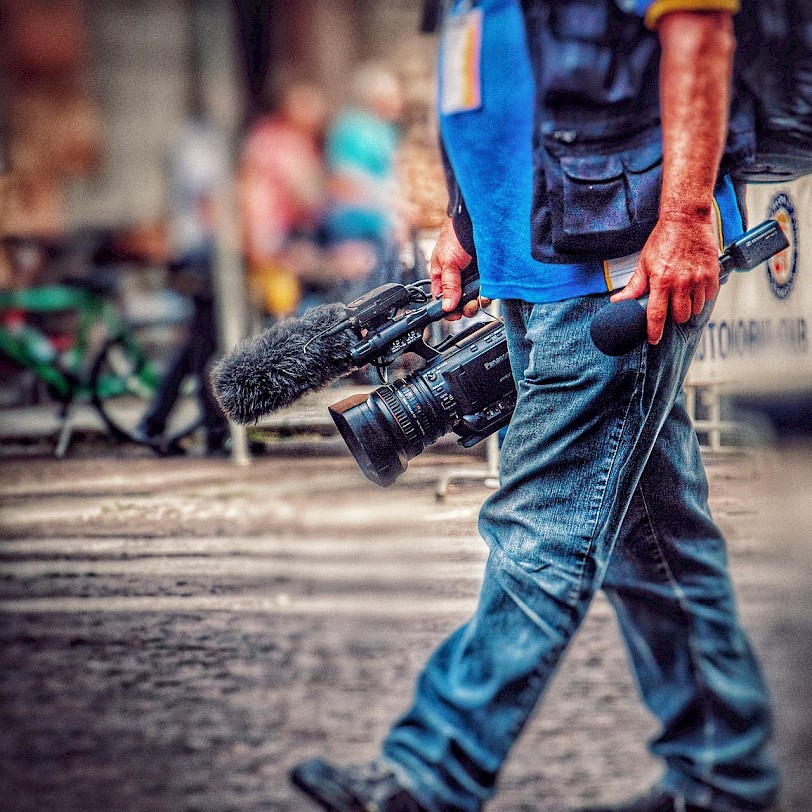
Most frequently asked questions about the Journalism degree
What is the duration of the degree?
Anyone who wishes to study journalism must complete 240 study credits, which are earned in the four years of the university degree.
How much does it cost to study Journalism?
The cost of studying the first year of Journalism in Spain is as follows:
Universidad de Navarra: €11.100
Universidad CEU San Pablo: €10.950
Universidad Complutense de Madrid: €1.282
Universidad Autónoma de Barcelona: €2.146
Universidad Pompeu Fabra: €2.356
What cutoff grade is needed to study Journalism?
To name a few examples:
Universidad Complutense de Madrid: 7.84 Universidad Autónoma de Barcelona: 9.73 Universidad Pompeu Fabra: 11.76 Universitat de València: 10.844 Universidad de Zaragoza: 10.820 Universidad Carlos III de Madrid: 10.341 Universidade de Santiago de Compostela: 10.174 Universitat Autònoma de Barcelona: 10.094

General subjects in Journalism
Some of the general subjects in Journalism are:
- Sociology of Communication
- Creativity and Communication
- Emotional Intelligence and Psychology of Communication
- Oral Communication
- Structure of Political Institutions
- Advertising and Public Relations
- Fundamentals of Audiovisual Communication
- Journalistic Writing
- Communication and Graphic Art
- Reports and Interviews
- Analysis and Opinion Journalism
- Journalism and Film
- History of Democratic Spain
- Journalism and Literature.
Career opportunities and salary
Before the appearance of the internet, journalism graduates used to work in newspapers, magazines, news agencies, television channels, radio stations, publishing companies, universities, public relations and some production companies.
Now, with the presence of the internet, and the tools we have already mentioned in the first paragraphs (mobile devices, social media, live streaming apps, etc.), journalists have the opportunity to work writing for websites, be a freelance reporter, be a copywriter (advertising writer) and be a consultant or advisor. They can do all of this from anywhere in the world thanks to this new way of working which is being a digital nomad.
As for a journalist's salary in Spain, the annual average is currently around €35,000.
How do I know if this degree is for me?
If you are a person who feels interest and curiosity about current events, national and international happenings, who likes culture, politics, science, the arts, history and sports, this may be a degree that interests you.
If you also like to express yourself freely and want others to be able to do so as well, debating ideas and seeking the truth, journalism is your path.