
Writing
Writing is an essential tool for communication and human expression, with a rich history and indisputable cultural relevance.
Writing consists of representing ideas or language through signs on a medium, being crucial for documenting and sharing knowledge and culture.
The importance of writing in communication
Writing is fundamental for transmitting and preserving knowledge, facilitating the spread of ideas and interaction across diverse cultures and eras.
Degrees related to writing
The degrees related to writing cover a wide range of fields, allowing writers to apply their skills in diverse contexts. Some of these degrees include:
- Writer or Author: Creates works of fiction, non-fiction, poetry, scripts and more.
- Journalist: Researches, writes and reports news for newspapers, magazines, television or websites.
- Editor: Reviews, selects and prepares manuscripts for publication, working on books, magazines, newspapers or digital content.
- Advertising copywriter (Copywriter): Writes advertising and promotional material for products, services, and brands.
- Technical writer: Creates user manuals, guides, articles and documents that explain complex technical information in an accessible way.
- Screenwriter: Writes scripts for films, television, theater or video games.
- Content editor: Plans, writes and edits content for digital platforms, including blogs, social media and websites.
- SEO content writer: Writes search engine optimized content with the goal of improving ranking and online visibility.
- Ghostwriter (Ghostwriter): Writes content that will be published under another person's name, such as books, speeches, articles, and more.
- Translator or Interpreter: Translates writings from one language to another, maintaining the tone, style and accuracy of the original.
- Text proofreader (Proofreader): Reviews written texts to correct spelling, grammar and punctuation errors.
- Writing teacher: Teaches writing skills in schools, universities or workshops.
- Communications consultant: Helps organizations develop and execute internal and external communication strategies.
- Grant writer: Writes proposals to obtain funding from governments, foundations and other organizations.

History of Writing
Writing emerged more than 5000 years ago as a form of record-keeping and communication. Systems such as Egyptian hieroglyphs and Sumerian cuneiform are early examples.
Origin and evolution of writing
Writing was born in Mesopotamia more than 5000 years ago, evolving from pictograms to complex alphabets used in the modern world. Throughout history, humanity has developed varied writing systems such as Egyptian hieroglyphs, cuneiform, the Phoenician alphabet and contemporary Latin.
Literary Genres
The literary genres classify works into categories such as narrative, poetry and drama, offering distinctive structures and themes for each artistic creation.
Characteristics and structures of creative writing
The creative writing is characterized by its originality, stylistic use of language and structural flexibility, allowing the author's artistic and personal exploration.
Writing Tools
The modern tools include word processors, proofreading software and mobile applications, facilitating and enriching the writing process.
Instruments and programs for writing
The writers use technologies such as word processors and mobile applications that offer automatic corrections and facilitate writing.
The instruments and programs for writing have evolved significantly over time, offering writers a wide range of tools to facilitate their work, from creating drafts to final publication.
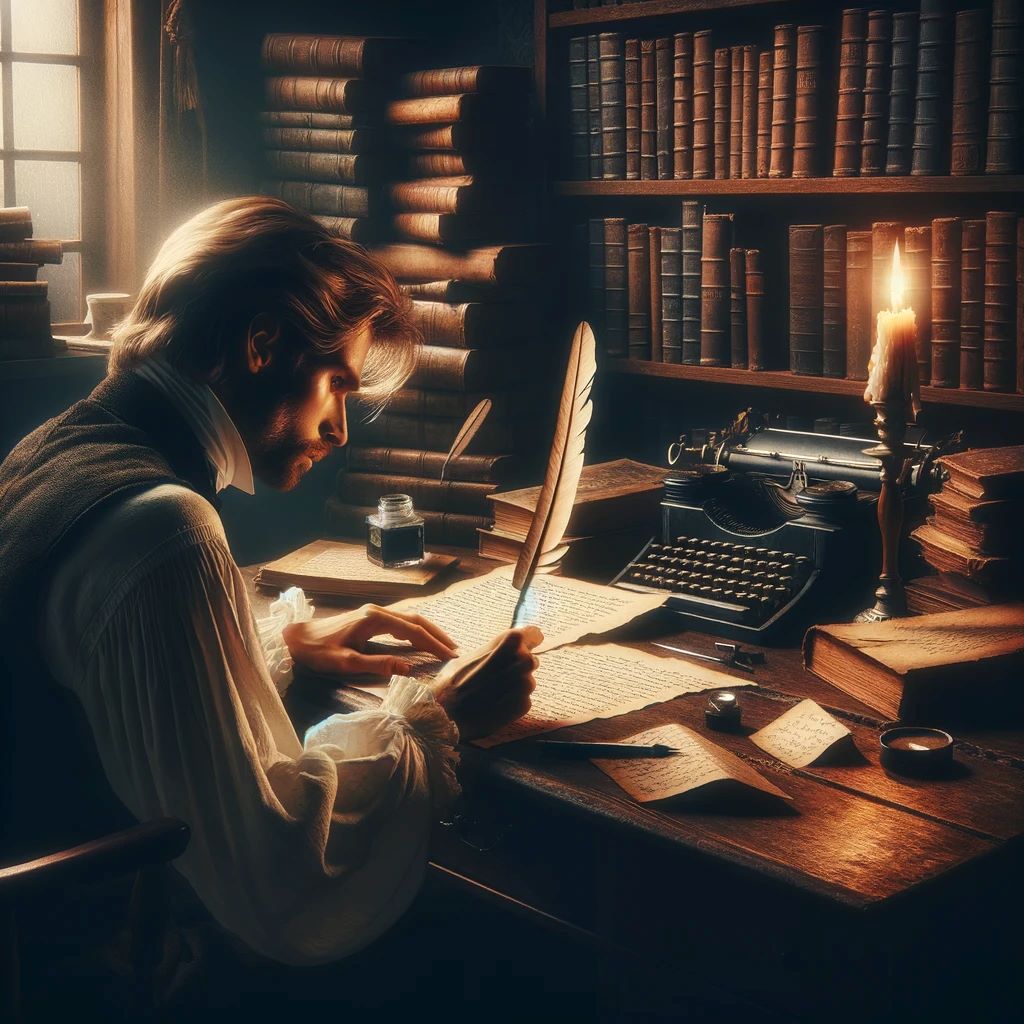
Traditional Instruments
- Pencil and Paper: The most basic and accessible method for capturing ideas anywhere.
- Typewriter: Although in disuse, some people still prefer the tactile feel of typewriters for the creative process.
- Bulletin Boards or Whiteboards: Useful for outlining ideas, planning plots or organizing projects.
Writing Programs and Applications
- Microsoft Word: One of the most widely used word processors, with advanced features for editing and formatting documents.
- Google Docs: A cloud-based word processor that allows real-time collaboration among multiple users.
- Scrivener: Especially popular among writers of novels, scripts, and research papers, it offers advanced tools for organizing and structuring complex projects.
- Final Draft: The industry standard for film and television scriptwriting, with specific tools for script formatting.
- Evernote: A note-taking app that lets you organize ideas, research excerpts, and drafts in one place.
- Grammarly: A proofreading and writing improvement tool that checks grammar, spelling, and clarity.
- Hemingway Editor: An editor focused on clarity and brevity, flagging complex sentences and suggesting simplifications.
- Ulysses: An app for writers focused on minimalist design to avoid distractions, with features for organizing and exporting texts to various formats.
- ZenWriter: An app that provides a calm, minimalist writing environment designed to foster concentration.
Research and Reference Tools
- Zotero: A free tool for collecting, organizing, and citing research from academic sources.
- Mendeley: A reference manager and social network for researchers to store documents, annotate them, and collaborate online.
Sync and Backup Applications
- Google Drive: Offers cloud storage, integration with Google Docs and collaboration tools.
Digital writing and its impact on the creative process
Digital writing has revolutionized text creation, increasing efficiency and opening up possibilities for authors on multiple platforms.
Writing Techniques and Styles
Exploring diverse techniques is crucial to developing a unique style in writing. Consistent practice and experimentation are key to creative evolution.
The importance of knowing different writing techniques
Knowing various techniques enriches writing, giving versatility and depth to the text, which is crucial to capturing the reader's attention.
How to develop your own style in writing
To forge a unique writing style, it is essential to read a lot, write regularly and experiment with different techniques and literary genres.