
What is Mechanical Engineering?
The mechanical engineering is a branch of engineering that focuses on the design, analysis, manufacturing and maintenance of mechanical systems. Mechanical engineers use principles of physics, mathematics and materials science to develop solutions to problems related to energy, mechanics and materials.
The work areas of mechanical engineering are very broad, including the mechanical and metallurgical engineering, the mechanical and mechatronics engineering, the mechanical and electrical engineering, the mechanical and automotive engineering, the mechanical and metallurgical engineering, the mechanical and electromechanical engineering, among others.
The importance of mechanical engineering in industry is fundamental, since mechanical engineers are responsible for designing and manufacturing machinery and systems that are essential for the production of goods and services. In addition, mechanical engineers are also in charge of the research and development of new technologies and materials that can improve the efficiency and safety of mechanical systems.

How much does a mechanical engineer earn?
The average salary of a mechanical engineer varies by industry and workplace, but in general, mechanical engineers have an average salary of around $80,000 dollars a year in the United States.
Factors that influence a mechanical engineer's salary include work experience, level of education, additional skills and certifications, and geographic location. For example, mechanical engineers with more experience and education usually earn higher salaries than recent graduates.
Salary differences by industry and workplace are also significant. Mechanical engineers who work in the aerospace industry, the automotive industry and the energy industry usually earn higher salaries than those who work in the construction industry or the food industry.
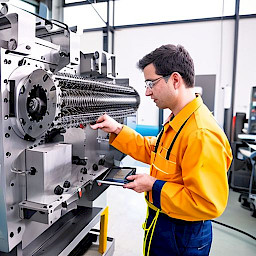
Mechanical engineer professional development
The professional development of a mechanical engineer involves continuing education, specialization in specific areas, obtaining relevant certifications, participation in challenging projects, establishing professional networks and seeking mentorship.
Developing soft skills, taking on roles with greater responsibility, contributing with publications and technical presentations, considering postgraduate education and staying up to date with the latest trends are key steps to grow in your career and have a significant impact on the industry.

There are several ways you can increase your salary as a mechanical engineer:
- Continue your education and obtain additional certifications in specialized areas of mechanical engineering;
- Gain experience in different areas of mechanical engineering, which will allow you to have a broader vision that is valuable to employers;
- Develop soft and leadership skills, such as the ability to work in a team, effective communication and project management;
- Negotiate your salary and benefits when accepting a job or during a salary review;
- Job prospects for mechanical engineers.
The industries with the greatest employment opportunities for mechanical engineers include the aerospace industry, the automotive industry, the energy industry and the technology industry. However, there are also opportunities in other industries, such as the construction industry and the food industry.
To find work as a mechanical engineer, it is important to have a good network of contacts and be willing to look for opportunities in different places. It is also important to have a well-crafted resume and cover letter, and be prepared for technical and behavioral interviews.
In the exciting world of engineering, two disciplines that shine with their own light are mechanical engineering and metallurgy. The synergy between these two areas is evident in the creation of materials and components that drive industrial innovation. In addition, the integration of mechanical engineering and mechatronics has led to the conception of intelligent and autonomous systems that transform our way of interacting with technology.
If you're wondering where to study mechanical engineering, the options are varied, from prestigious universities to specialized institutions, the range of possibilities for entering the world of mechanical engineering is wide. But don't stop there, because mechanical engineering is also intertwined with other branches, such as mechanical and electrical engineering, creating professionals capable of designing systems that combine mechanical power with electrical efficiency.
Within this exciting landscape, mechanical and automotive engineering emerges as a branch that literally moves the world. Imagine designing vehicles that are not only functional, but also safe and sustainable, paving the way toward the future of mobility.
In parallel, mechanical and metallurgical engineering reveals to us the modern alchemy behind cutting-edge materials, creating components that push the limits of strength and durability.
However, we cannot forget the versatility of mechanical and electromechanical engineering, which ranges from robotics industrial to process automation. These engineers become masters of synchronization between the mechanical and the electrical, bringing to life systems that seem taken straight from science fiction.
What type of engineering is right for you? The answer lies in your passions and skills. To discover what your ideal path could be, you can try our career test that will give you valuable guidance in your search.
If you are drawn to gears and constantly moving machinery, mechanical engineering could be your path. If you feel an affinity for energy and electronics, mechanical and electrical engineering could be your niche. And if engines are your passion, mechanical and automotive engineering awaits you with open arms.
On this journey, mechanical engineers become architects of innovation. Their training spans from thermodynamics to fluid dynamics, and their problem-solving ability is unmatched. As a result, their job field is as broad as it is diverse.
From the manufacturing industry to space exploration, from medicine to renewable energy, mechanical engineers are everywhere, forging a future that only they can imagine and create.