
Why study Radiology?
Radiology is a medical specialty that uses imaging both for the diagnosis and treatment of diseases and to visualize the inside of the human body.
Study Radiology
Because you are interested in diagnosing patients with injuries or illnesses through the use of medical imaging and finding the best treatment for their cure or recovery. Radiologists are doctors who specialize in the diagnosis and treatment of both diseases and injuries through the use of imaging such as X-rays, computed tomography, magnetic resonance imaging, nuclear medicine, ultrasound, etc.
To become a radiologist, you first need to study medicine and then complete an exam and a residency that lasts around four years. In this residency, radiologists can specialize in different areas.
These doctors also usually study for one or two more years to complete a specialization in a subspecialty within radiology, in particular, among others chest imaging, cardiovascular radiology or nuclear medicine.
The methods used in radiology must be performed by doctors specialized in this area, who are trained and certified under necessary medical circumstances. That is why radiologist physicians must study for at least four more years after graduating in medicine; in these studies they must learn about radiological safety and the optimal performance of radiological methods, as well as their correct interpretation.
What type of people might be interested in this degree?
Radiology is used in conjunction with the vast majority of medical specialties to diagnose problems in different areas of the human body, including the brain, heart, digestive system and almost any organ or system within the body.
Radiologists must have thorough training in human anatomy and the medical and scientific principles related to human health. In addition, radiologists must be comfortable with technology, as they will frequently be working in a team. Finally, radiologists must be highly focused, have excellent vision and analytical ability.
What kind of work does someone who has studied Radiology do? What is the scope of the degree?
Advances in technology over the last ten to twenty years have created a boom in Radiology studies. Nowadays there is a wide variety of machines with new imaging technology, and there has been new development of radiological equipment that uses cutting-edge technologies, including nuclear and radioactive materials, magnetic resonance, computers, cameras and digital ultrasound imaging to name a few. Radiology enables doctors to diagnose a large number of diseases more accurately and quickly in a much less invasive way than exploratory surgery or other medical methods, which is why radiologists are in high demand in the world of medicine.
In which sectors are Radiology professionals needed?
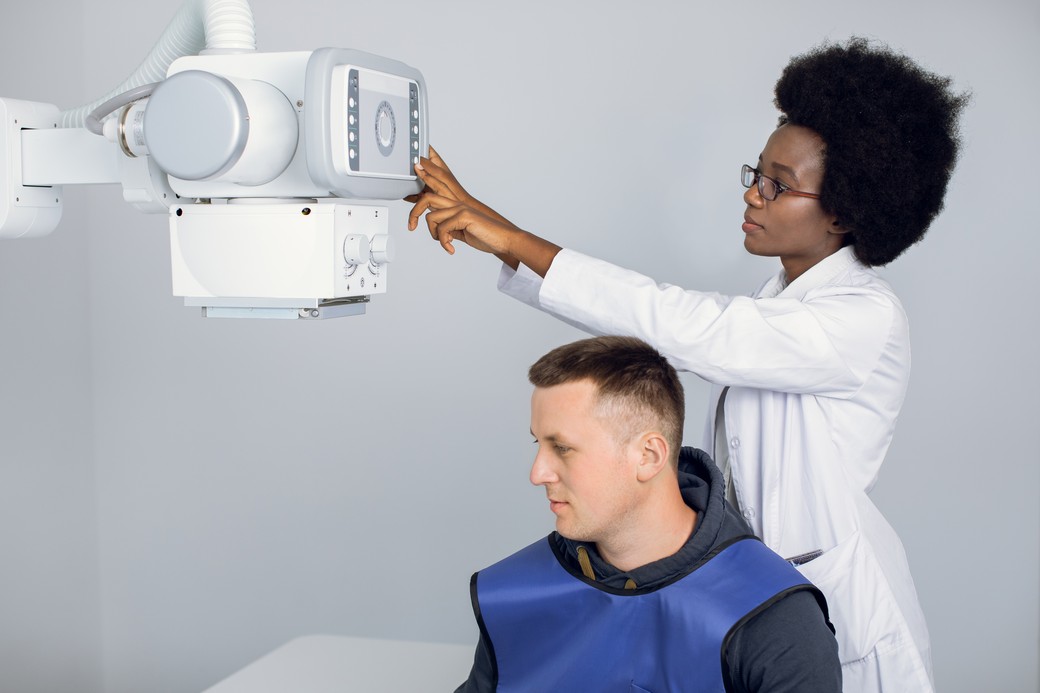
Many doctors who specialize in Radiology usually work in hospitals, whether public or private, or in other places where radiology procedures are carried out. Radiologists are there to help other doctors in the diagnosis and treatment of different diseases. Radiologists decide when a radiological study may be necessary to understand a patient's problem and, to do so, they ask each patient different questions.
At which universities can I study Radiology?
In all countries there is the possibility of pursuing the degree in radiology as a medical specialty or pursuing a technical degree.
In Argentina: The Universidad del Salvador offers the Bachelor's Degree in Technology for Diagnostic Imaging, with a duration of 4 years and with a title of Graduate in Technology for Diagnostic Imaging.
Universitas - Estudios Superiores offers in the Ciudad de la Plata, the Higher Technical Degree in Health Technology with a Specialty in Radiology, with a duration of 3 years.
The Universidad Nacional de General San Martín offers the University Technical Degree in Diagnostic Imaging, with a duration of 3 years.
In the province of Formosa The Universidad Nacional de Formosa offers the Bachelor's Degree cycles "Bachelor's Degree Cycle in Radiology and Imaging" with a duration of 2 years.
The Universidad de Buenos Aires offers the Bachelor's Degree in Bioimaging Production, with a duration of 5 years.
In the Province of Córdoba, the Universidad Nacional de Córdoba offers the Bachelor's Degree in Bioimaging Production, with a duration of 4 years.
In La Rioja, La Universidad Nacional de La Rioja offers the Bachelor's degree in Bio-Image Production, with a total of 4 years.
Universidad de la Marina Mercante offers the Bachelor's degree in Bioimaging Production, with a total of 4 years.
El Instituto Superior de Ciencias de la Salud offers the tertiary degree of Technician in Magnetic Resonance Imaging, with a duration of 3 years and the degree of Radiology Technician in 2 years.
La Universidad Abierta Interamericana offers the Bachelor's degree in Bioimaging Production, with a total of 4 years of coursework.
In the Province of Salta, la Universidad Católica de Salta offers the University Technical degree in Bio-Image Production, with a duration of 3 years and awards the title of University Technician in Bio-Image Production.
In Colombia: Universidad El Bosque, Universidad de Cartagena, Universidad del Rosario, Universidad del Norte, Universidad Javeriana, etc.
In Spain: The universities that offer this technical degree are: Universidad Católica de Valencia “San Vicente Mártir”, Universidad de Cádiz, etc. Otherwise, in the rest of the universities it is necessary to study medicine first and then specialize in radiology. Some Spanish universities where you can study: la Universidad Autónoma de Madrid, la Universidad Autónoma de Barcelona, la Universidad de Navarra, la Universidad de Granada, la Universidad Complutense de Madrid, etc.
The radiodiagnosis specialty lasts 4 years and requires prior Bachelor's studies in Medicine. Radiology was born as a medical specialty after the discovery of X-rays in 1895. In Spain its initial name was Electroradiology, which in 1984 was split into the specialties of Radiodiagnosis, Radiation Oncology and Nuclear Medicine.
In Guatemala: la Universidad Galileo offers "University Technician in Radiology and Diagnostic Imaging" with a duration of 3 years and with a total of 159 academic credits. La Universidad Mariano Gálvez offers the Master's degree in Radiology and Diagnostic Imaging. La Universidad de San Carlos de Guatemala offers the Specialty in Radiology and Diagnostic Imaging.
La Escuela Nacional de Enfermería de Cobán offers the course of Technician in Diagnostic Radiology with a duration of 18 months (Three Semesters).
In Mexico: In Nayarit, el Instituto de Estudios Tecnológicos y Superiores "Matatipac" A.C. offers training as a Radiology Technician with a duration of 9 four-month terms.
In Guadalajara (Jalisco), la Universidad de Guadalajara in the health area offers training as a Higher University Technician in Radiology and Imaging, with a total of 238 credits.
In Xalapa, the Universidad Veracruzana offers the postgraduate degree in Radiology and Imaging in in-person format with a duration of 3 years.
In Michoacán, the Instituto Dr. Carlos Coqui offers the degree of Higher University Technician in Radiology and Imaging with a duration of 2 years.
In San Luis Potosí, the Colegio de Estudios Científicos y Tecnológicos del Estado de San Luis Potosí (CECyTe SLP) offers the technician degree in Radiology over 6 semesters.
In Paraguay: The Universidad Nacional de Asunción offers the Bachelor's Degree in Radiology and Imaging, with a total duration of 4 years.
In Venezuela: Universidad Arturo Michelena (UAM), Universidad Rafael Urdaneta, etc.